When Is a Higher Compression Section Price Worth the Investment?
A higher compression section price is worth paying when the upgrade solves a demonstrated production constraint: glued seams reopening after discharge, cartons shifting under pressure, or a folder gluer slowing down to give adhesive enough time to develop handling strength. The premium becomes harder to justify when the existing section already delivers consistent bonding at the speed and product mix the plant actually needs.
The purchase decision should connect equipment features to saleable output and operating cost. Longer compression travel, better pressure adjustment, and automated settings can create value, but each needs a clear purpose. A capable compression section cannot compensate for an unsuitable adhesive, inaccurate glue application, or poor folding alignment upstream.
Start with the bonding problem the premium must solve
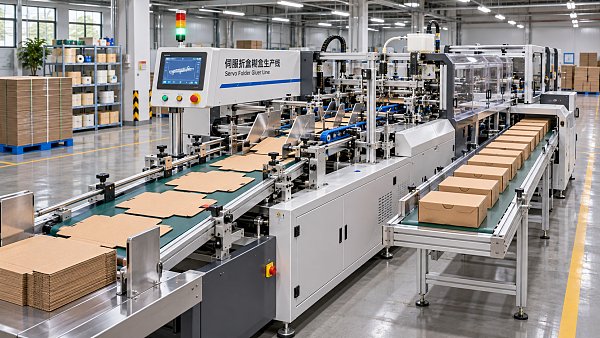
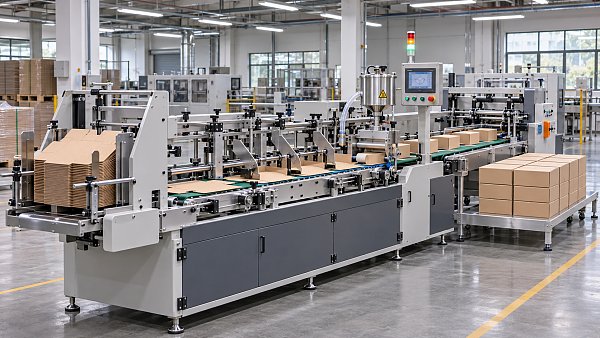
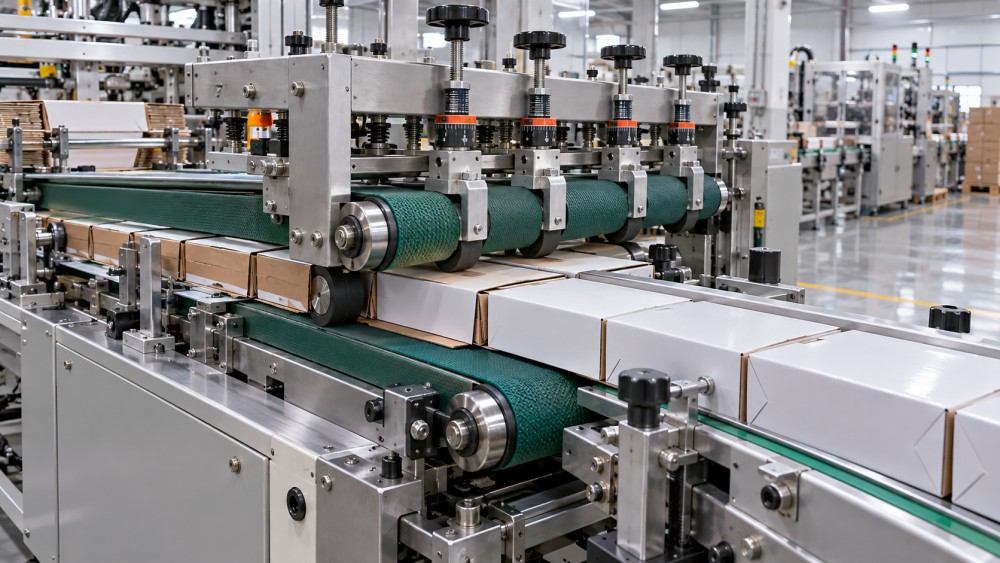
In a folder gluer, the compression section holds folded cartons in position while the adhesive joint develops enough strength for subsequent handling. Depending on the machine configuration, cartons may travel in an overlapping stream between belts. Consistent contact helps prevent freshly glued flaps from lifting or moving before the bond can withstand discharge and packing.
This makes compression part of a process involving adhesive application, folding accuracy, carton presentation, and delivery. If glue is missing from part of a seam, additional pressure will not restore it. If a coated surface resists the selected adhesive, a longer compression section may still leave an unreliable joint.
Before comparing quotations, identify where and when the defect appears. A seam that opens immediately after discharge suggests a different investigation from one that fails during later handling. Check glue placement and quantity, adhesive suitability, board condition, fold alignment, and actual time under pressure. These observations help establish whether the proposed upgrade addresses the cause.
A useful purchase justification names the affected products, the present limitation, and the improvement required. “Reduce seam opening on coated folding cartons at the planned production rate” is a stronger requirement than “upgrade to a more advanced compression unit.”
What a higher compression section price should buy
Quotation comparisons become meaningful when they separate physical capacity from control, adjustment, and serviceability. A more expensive configuration may offer value in several areas, but buyers should avoid treating a longer feature list as evidence of better results.
Enough effective compression time
Adhesive needs suitable contact conditions and time to develop handling strength. At the same transport speed, a longer effective compression path generally provides more time under pressure. Raising belt speed reduces that time unless the travel path or operating arrangement changes.
For a straightforward continuous path, residence time is approximately the effective compression length divided by belt speed. Use the compression belt’s actual speed for this calculation. The folder gluer’s upstream speed may differ, particularly where cartons are transferred into an overlapping stream.
Physical length alone is an incomplete specification. Entry and exit areas may not provide the same pressure as the central working zone. Carton spacing, overlap, and transfer behavior also affect usable performance. Ask suppliers to relate their proposed configuration to the intended carton sizes, adhesive system, and throughput.
Pressure that holds the seam without damaging the carton
More pressure is not automatically better. The section must maintain contact across the glued area while avoiding unwanted marking, distortion, or crushing. Corrugated products require particular care because excessive local pressure can damage the flute structure.
The useful capability is controlled, repeatable pressure across the required working area. Depending on the design, this may involve adjustable zones, compliant contact elements, or accessible mechanical adjustments. The commercial benefit comes from keeping different products stable without prolonged trial-and-error setup.
Pressure settings also need to accommodate changes in folded thickness. A configuration that works well on a simple straight-line carton may need different settings or additional provisions for cartons with uneven folded profiles.
Stable transport and practical adjustment
Cartons must enter, travel through, and leave the compression section without shifting or disrupting the folded shape. Belt tracking, transfer geometry, speed coordination, and handling of overlapping cartons all deserve attention. A smooth demonstration on one easy carton does not establish suitability for a varied production schedule.
Automated adjustment or stored job settings can be valuable where frequent changes consume production time. Their value depends on what the machine actually recalls and how much manual work remains. A stored setting that still requires extensive repositioning may offer less benefit than the quotation suggests.
Match the specification to the work that earns revenue
Product mix and utilization determine how often premium capabilities will be used. A plant processing similar cartons in long runs may benefit more from stable transport and straightforward maintenance than from extensive adjustment automation. A plant changing frequently between different formats may place greater value on accessible controls and repeatable setup.
Include the difficult jobs in the evaluation. Relevant challenges may include small formats, wide cartons, uneven folded thickness, sensitive printed surfaces, or board grades that behave differently during folding. Select them from actual orders and credible future demand.
A premium justified mainly by an uncertain future product range deserves a separate business case. Buying spare capability can be sensible, but its cost should remain visible rather than being absorbed into a general claim of flexibility.
Calculate the return from usable improvements
Evaluate the price difference between suitable alternatives, including the cost of installation and operation. For a retrofit, this can include controls integration, guarding, conveying changes, floor-space requirements, commissioning, and production interruption. For a new line, compare complete configurations with equivalent scope.
A practical calculation is:
Simple payback period = incremental installed cost ÷ expected annual net operating benefit.
The annual benefit should reflect the plant’s own workload and records. Useful components include avoided scrap and rework, lower setup labor, reduced unplanned downtime, and additional contribution from saleable output. Deduct extra energy, maintenance, consumables, and service costs attributable to the upgrade.
Be careful with throughput assumptions. If the folder gluer already supplies cartons faster than the packing area can handle them, higher compression capacity may create little additional shipment volume. Likewise, recovered machine hours have limited financial value when demand is insufficient to use them.
Quality savings need similar discipline. Count defects the proposed section can reasonably prevent. Do not assign all gluing rejects to compression when records also show missing adhesive, inaccurate folds, or unsuitable material combinations. Avoid counting the same recovered production twice as both scrap savings and additional output.
Run the calculation under an expected workload and a more conservative workload. If the premium is attractive only when every benefit reaches its most optimistic level, the purchase depends on assumptions that need stronger evidence.
Use the acceptance trial to test the investment case
The strongest comparison is a controlled trial using representative blanks, the intended adhesive, and agreed quality criteria. Demonstrations should include the production conditions responsible for the proposed premium, rather than only a convenient carton that runs easily.
Define what success means before the trial. Relevant measures include sustained saleable output, seam integrity, surface appearance, carton shape, stoppages, setup time, and startup waste. Record operating conditions so results can be compared fairly between configurations.
A useful trial sequence includes:
- Run a representative standard job: establish normal production behavior and the adjustments required.
- Run the limiting product: test the format or material that currently causes bonding or handling problems.
- Change between jobs: measure the complete transition through acceptable production, including manual intervention.
- Check stop-and-restart behavior: inspect cartons affected by changed residence time or interrupted flow.
- Assess cartons after discharge: check immediate handling stability and bond performance after the agreed conditioning period.
Immediate seam closure does not establish final bond strength. Conversely, a seam that eventually develops strength may still be unsuitable if it opens during normal packing. Both stages matter, and the agreed inspection method should reflect the carton’s material and intended use.
Where speed is central to the purchase, distinguish a brief peak from sustained operation. Record good cartons produced over the trial, along with stops and adjustments. This connects the demonstration to the output assumptions used in the financial evaluation.
Check the costs that remain after installation
Maintenance access can affect long-term value as much as an additional control feature. Belts, bearings, pressure components, and adjustment mechanisms need routine attention. Difficult cleaning or replacement access can turn a minor task into a longer production interruption.
Compare the proposed maintenance requirements, wear-part availability, replacement procedures, and service support. For automated systems, include troubleshooting access, settings backup, and operator training. These details help determine whether the plant can sustain the performance shown during acceptance.
Retrofits also need a clear responsibility boundary. Mechanical fit, speed coordination, emergency-stop integration, and downstream transfers must work as a system. Establish who will commission the combined equipment and demonstrate the agreed performance. An attractive component price can lose its advantage if integration work is left outside the quotation.
When the premium is difficult to justify
A lower-priced section can be the sound choice when it consistently meets bonding and handling requirements across the actual product range. That is especially relevant where utilization is modest, formats change infrequently, or the line’s output is constrained elsewhere.
The premium is also difficult to defend when the supplier cannot connect its additional features to measurable improvements. Greater nominal length, more controls, or a higher advertised speed does not establish value without suitable operating conditions and demonstrated results.
Before selecting a configuration, turn the comparison into a purchase requirement: defined products and materials, required saleable output, acceptable seam and appearance quality, changeover expectations, and an agreed acceptance method. Then compare the complete installed cost against the benefits those requirements support.
Pay more when the proposed section can demonstrate an improvement the plant will use often enough to recover its cost. When a simpler configuration meets the same production requirements reliably, the lower investment preserves capital for the constraint that actually limits performance.
Related News
 When Is a Servo Folder Gluer Line Worth the Investment?Is a servo folder gluer line worth the investment? Explore the production challenges, ROI factors, and supplier questions that can guide your decision.Ms. Vivienne Cross
 US Justice Department Investigates Pricing by Major Corrugated Packaging ProducersThe US Justice Department is investigating containerboard pricing by major corrugated packaging producers. Explore potential implications for buyers and supply chains.Ms. Vivienne Cross
 What Affects Folder Gluer Machine Price and Total Cost?Folder gluer machine price is only part of the investment. Discover what drives costs and how to compare quotes, operating expenses, and long-term value.Ms. Vivienne Cross
 How Roll Handling Equipment Price Affects Project ROIRoll handling equipment price affects more than upfront costs. Learn how to compare installed costs, quantify savings, and build a stronger project ROI case.Ms. Vivienne Cross
 How Stacking Machines Reduce Bottlenecks in Sheet PlantsStacking Machines reduce sheet plant bottlenecks by improving pile quality and flow. Discover how to choose and integrate the right system.Ms. Vivienne Cross
 Italian Packaging Machinery Sales Up Just 0.9% as Orders Fall 4.7%Italian packaging machinery sales rose just 0.9% as orders fell 4.7%. Explore UCIMA's figures and what weaker demand could mean for buyers and exporters.Ms. Vivienne Cross