What Determines Folder Gluer Machine Cost and Long-Term ROI?
Folder gluer machine cost includes the equipment itself, installation, training, consumables, maintenance and the production losses incurred while the line is brought into service. A lower quotation can lead to a higher operating cost if it excludes the tooling, support or capabilities required for the intended carton mix. The most useful comparison is the cost of producing an acceptable finished carton over the investment period, alongside the cash required to achieve that output.
Long-term return depends on the work assigned to the machine. A line processing long runs of straight-line cartons has different economics from one handling short runs of complex crash-lock boxes. Rated speed matters, but saleable output, changeover time and reliable glue quality determine how much of that speed becomes revenue or cost savings.
What is included in the equipment price?
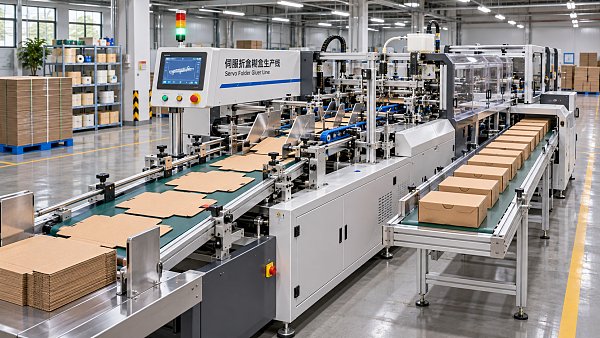
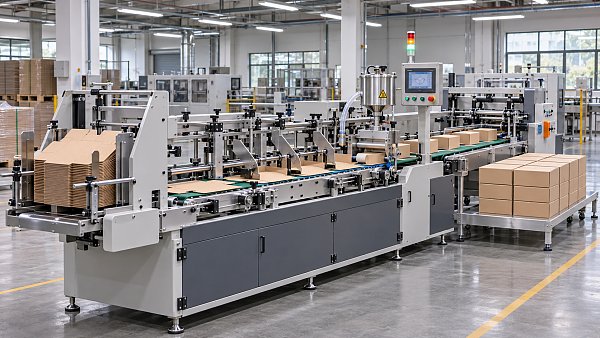
A quotation starts with the machine configuration: working width, feeder, folding sections, glue application, compression and delivery. Costs rise when the job mix requires additional folding mechanisms, more sophisticated controls, inspection or downstream handling. Two machines described as folder gluers can therefore have substantially different capabilities even before installation is considered.
Working width needs particular attention. A larger machine accommodates larger blanks, but the relevant measurement is the range of blank dimensions that can be fed, folded and delivered reliably, not simply the maximum width in a brochure. Very small cartons, narrow panels or unusual proportions can require special guides or handling components even when the blank fits within the stated range.
The folding configuration also affects the initial investment. Straight-line cartons follow a comparatively simple path. Crash-lock bottoms, four-corner or six-corner formats and other complex designs require suitable folding devices and setup capability. Buying a machine only for the current average job can restrict future work; specifying every available attachment can tie up capital in capacity that is rarely used. A representative order history provides a better basis for defining the configuration.
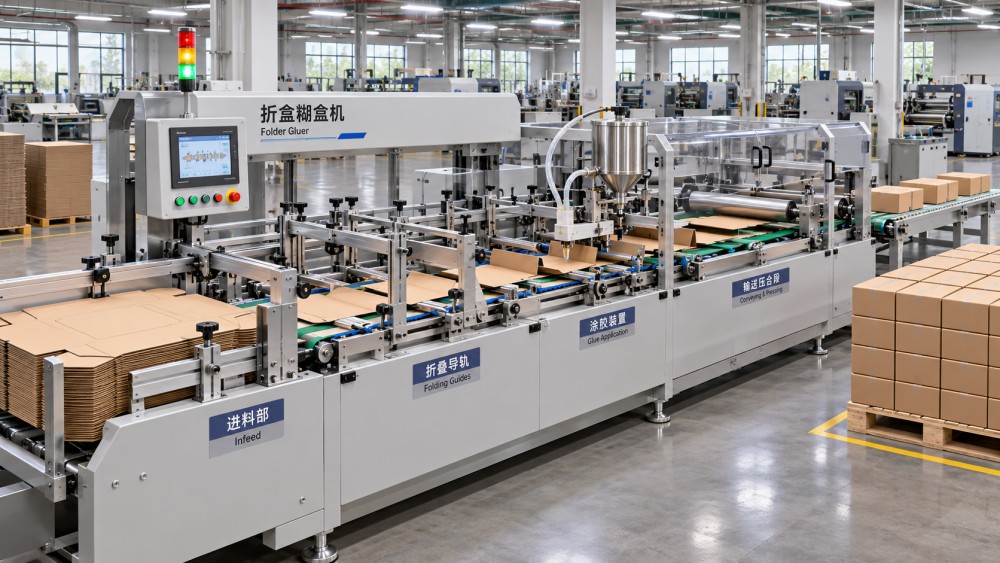
Glue systems deserve separate quotation detail. Application equipment, pumps, hoses, nozzles and controls should match the adhesive and the glue patterns required. A difficult-to-bond coated surface, for example, can require a different adhesive arrangement or surface treatment. The cost of that arrangement belongs in the project comparison, as do its cleaning and consumable requirements.
Turn the quotation into an installed project cost
The amount approved for purchase should reflect the machine ready for production at the agreed site. Transport and insurance, import charges where applicable, unloading, rigging and positioning can all sit outside the equipment price. The same is true of electrical connections, compressed air, extraction or other site work required by the selected configuration. Confirm utility specifications with the supplier before assigning a budget: a capacity shortfall can require additional site expenditure.
Installation and commissioning are separate from delivery. Establish whether the quotation covers mechanical assembly, connection, initial setup, production trials and correction of issues found during acceptance. Travel, accommodation, overtime and repeat visits should be identified where they are chargeable. Training needs a defined scope too: a short demonstration is different from training across shifts on actual carton styles, adhesive settings and routine fault recovery.
Allow for the transition from the existing process. Trial material, setup waste, temporary overlap between lines and any planned production interruption have a cost, even when they do not appear on a supplier invoice. Conversely, do not count proceeds from disposal of an existing machine until its sale value and removal obligations have a credible basis.
Financing charges, taxes and depreciation affect the financial assessment, but they are not interchangeable with the machine's operating cost. Treat recoverable taxes consistently, include financing only in the appropriate cash-flow model, and avoid counting depreciation as an additional cash expense after including the purchase price.
Rated speed is not saleable output
A headline speed is useful for establishing mechanical capability under stated conditions. It does not establish the number of good cartons produced during a shift. Blank size, board stiffness, creasing accuracy, adhesive behavior and carton geometry all influence the speed at which the line can run without jams, skewed folds or failed bonds.
Upstream quality matters. Inconsistent die-cutting or weak creases can make a folder gluer appear unreliable when the folding path is responding to variable blanks. Equally, a machine that runs a standard sample well may need more adjustment for coated stock, thin board or a carton with a demanding bottom fold. Performance comparisons should use the same representative blanks and quality criteria.
For capacity planning, calculate good output from available production time after changeovers, interruptions and quality losses. Use measured performance from the existing operation where possible, then state separately what improvement is assumed for the proposed machine. A supplier demonstration can inform that assumption, but a controlled trial with selected jobs is more persuasive than a maximum-speed figure alone.
Additional capacity has financial value only when it removes a constraint or supports work that can be sold or reassigned. If die-cutting, packing or customer demand already limits production, a faster gluer may spend more time waiting. In that situation, its return may come from shorter setups or fewer rejects rather than extra volume.
Operating costs that change the return
Changeovers and labor
Frequent short orders make setup time financially significant. Motorized adjustments, stored settings and accessible folding sections can reduce time between jobs, but their value depends on the number and complexity of changes. Compare the time from the last acceptable carton of one job to the first acceptable carton of the next, including adjustments and quality approval. Timing only the mechanical setting misses part of the production loss.
Labor savings require the same care. A faster setup does not automatically eliminate a position or a shift. Record whether the proposed configuration changes staffing, overtime or the time available for other productive work. Counting the full wage of a person who remains assigned to the line would overstate the cash saving.
Waste, adhesive and quality losses
Rejected cartons consume board, ink, die-cutting capacity, adhesive and handling time. Savings from a lower reject rate should reflect the cost already added to the blank at the point of rejection, not just the price of unprinted board. Separate startup waste from running waste: better setup controls address one source, while stable feeding, folding and glue application address others.
Adhesive cost is influenced by application quantity, pattern, operating speed and the bond required. Insufficient glue can lead to open cartons or returns; excessive glue increases consumption and can contaminate belts or cause cartons to stick together. A glue inspection or detection system adds capital cost, yet its economic value depends on the defects it can detect and the cost of undetected failures. Confirm the inspection coverage and the procedure for rejecting or isolating suspect cartons.
Energy should be assessed from the equipment's expected operating profile, including idle time and any auxiliary systems. Installed electrical capacity is a site-planning figure, not a direct measure of actual consumption. Use measured data or a clearly stated load assumption and local energy rates; compare it with the existing process on the same basis.
Maintenance and downtime
Belts, guides, bearings, glue nozzles and other wear components create recurring expenditure. Their replacement intervals vary with materials, operating hours, cleaning and adjustment. Request a recommended maintenance schedule and a priced list of relevant wear parts, then distinguish planned service from breakdown repairs.
Downtime also has different costs depending on the production plan. A stoppage on a fully loaded bottleneck can cause overtime, missed delivery or lost contribution. A stoppage with available backup capacity may have a smaller financial effect, although it can still disrupt scheduling. Applying the full selling price of every unproduced carton as a loss ignores material costs that were never incurred and orders that can be recovered later.
Service availability affects the exposure. Response commitments, remote diagnostics, access to local technical support and lead times for critical parts should be documented. Holding selected spares adds inventory cost but can reduce the duration of a breakdown; the appropriate balance depends on the consequences of waiting for a replacement.
Build a defensible ROI model
Start with a baseline period that represents the actual mix of carton styles, order lengths and materials. Record production hours, good cartons, setup time, rejects, labor, maintenance and relevant energy and adhesive costs. Exclude unusual events or identify them separately so that a single disruption does not distort the comparison.
Then model the proposed machine against the same workload. Include the full installed investment and any recurring software, inspection, service or consumable costs. Annual operating benefit should reflect measurable reductions in cash costs plus contribution from additional sales that the line can actually support. Avoid counting the same gain twice: for example, time saved in changeovers cannot be valued both as a full labor saving and as additional production unless the model demonstrates both effects independently.
Simple payback period equals the initial installed investment divided by the expected annual net cash benefit. It is a useful screening measure when the benefit is positive and reasonably stable, but it ignores the timing of cash flows after payback, the time value of money and residual value. A discounted cash-flow model provides a fuller comparison for a longer investment horizon. Use a consistent discount rate, project life and treatment of taxes across alternatives.
Do not assume every benefit begins immediately after commissioning. A ramp-up period can affect early cash flow while settings are established and the production team becomes familiar with the equipment. Include expected major service costs and any residual value at the end of the model; where resale proceeds are uncertain, show their effect separately rather than relying on them to justify the purchase.
Test the assumptions that move the result
A single payback figure conceals uncertainty. Recalculate the result with lower realized throughput, a smaller reduction in rejects and longer commissioning. Test a weaker order volume when the business case relies on selling additional capacity. If the investment remains viable only at the supplier's maximum rated speed, the approval depends on an assumption that needs stronger evidence.
Compare alternatives over the same period and production volume. A lower-priced machine can be preferable for a stable, simple carton mix, while a more automated configuration can justify its premium where frequent changes absorb substantial productive time. The point at which the premium pays back is determined by the actual savings and usable capacity, not the number of features listed in the quotation.
Link payment to demonstrated performance
The purchase agreement should identify the configuration, included accessories and responsibilities for site preparation, installation and training. It should also define the materials and carton styles used for acceptance, the quality criteria for an acceptable carton and the measurement period for output. A speed test without agreed blank specifications and reject treatment leaves room for conflicting interpretations.
Where commercial terms permit, tie an appropriate portion of payment to commissioning or acceptance against those agreed conditions. Record outstanding defects, their correction process and the point at which warranty coverage begins. Performance on a representative job provides a firmer basis for closing the project than a quotation figure alone.
Related News
 When Is a Servo Folder Gluer Line Worth the Investment?Is a servo folder gluer line worth the investment? Explore the production challenges, ROI factors, and supplier questions that can guide your decision.Ms. Vivienne Cross
 US Justice Department Investigates Pricing by Major Corrugated Packaging ProducersThe US Justice Department is investigating containerboard pricing by major corrugated packaging producers. Explore potential implications for buyers and supply chains.Ms. Vivienne Cross
 What Affects Folder Gluer Machine Price and Total Cost?Folder gluer machine price is only part of the investment. Discover what drives costs and how to compare quotes, operating expenses, and long-term value.Ms. Vivienne Cross
 How Roll Handling Equipment Price Affects Project ROIRoll handling equipment price affects more than upfront costs. Learn how to compare installed costs, quantify savings, and build a stronger project ROI case.Ms. Vivienne Cross
 How Stacking Machines Reduce Bottlenecks in Sheet PlantsStacking Machines reduce sheet plant bottlenecks by improving pile quality and flow. Discover how to choose and integrate the right system.Ms. Vivienne Cross
 Italian Packaging Machinery Sales Up Just 0.9% as Orders Fall 4.7%Italian packaging machinery sales rose just 0.9% as orders fell 4.7%. Explore UCIMA's figures and what weaker demand could mean for buyers and exporters.Ms. Vivienne Cross