Steam Boiler Price Factors That Shape Industrial Energy Budgets
For a corrugated board plant or commercial printing facility, a boiler is rarely the most visible asset on the production floor. It sits in the utility room while the corrugator, flexographic press, die-cutter, and folder gluer receive most of the attention. Yet when steam quality becomes unstable, the effects quickly appear everywhere: warped board, weak adhesive bonding, slower warm-up, inconsistent moisture balance, lost production time, and difficult conversations about energy bills.
That is why steam boiler price should not be treated as a simple equipment-shopping question. The quoted purchase price matters, but it is only one part of a larger industrial energy decision. For packaging producers, the real cost is shaped by steam demand, fuel availability, operating hours, water treatment, emissions requirements, maintenance capability, and the consequences of an unexpected shutdown during a high-volume order.
A lower initial quote may be sensible for a limited-duty facility. In another plant, the same choice can create years of excess fuel use, frequent maintenance interruptions, and restricted production capacity. Decision-makers need to compare boilers not only by nameplate output, but by how well each system fits the way the factory actually runs.
Why Boiler Costs Matter So Much in Paper and Packaging Production
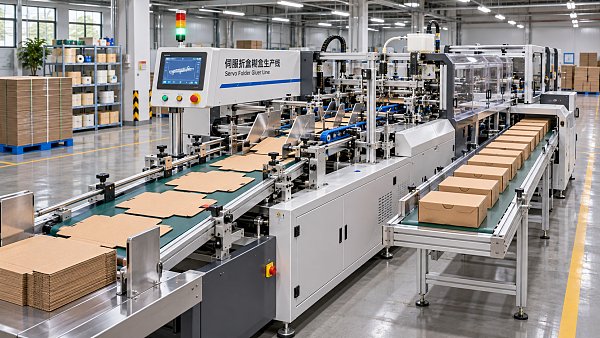
Steam plays a direct role in many paper-based packaging processes. On a corrugated board line, it supports paper preheating, single facer operation, starch adhesive setting, double facer bonding, and board drying. A stable steam supply helps operators maintain moisture balance and bonding strength as paper grades, ambient conditions, and production speeds change.
In printing and converting environments, steam may also support drying, humidity control, process heating, cleaning operations, or building utilities. The exact load varies, but the commercial issue is the same: unstable heat supply can turn a manageable production schedule into a chain of delays.
For this reason, the boiler purchase decision should be connected to the plant’s operating model. A factory producing long, predictable corrugated runs has a different demand profile from a carton converter handling frequent job changes, variable shifts, and seasonal order peaks. The best boiler configuration is not always the largest unit or the lowest-priced one. It is the option that delivers the required steam reliably, efficiently, and safely under real operating conditions.
What Is Included in a Steam Boiler Price?
When buyers compare offers, they often find that two quotations with similar boiler capacity have very different prices. This is not necessarily a warning sign, but it does require careful review. The scope behind the quotation may be substantially different.
A basic package may include the boiler body, burner, standard controls, and essential safety devices. A more complete industrial package can include feedwater pumps, economizers, blowdown systems, deaeration equipment, water softening or reverse-osmosis treatment, fuel handling, condensate recovery, chimney or flue components, emissions-control equipment, automation panels, remote monitoring, installation supervision, and commissioning support.
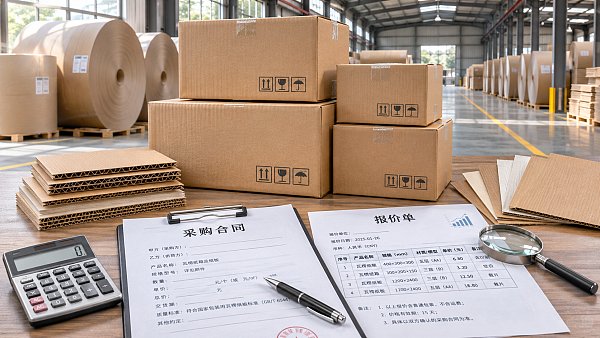
In practical terms, buyers should ask one question before comparing any number: What exactly is included in the delivered and operational system? A lower boiler price can become less attractive once the plant adds the equipment required to make the system compliant, safe, and usable.
- Boiler type and rated steam output
- Design pressure, operating pressure, and steam temperature requirements
- Fuel system and burner configuration
- Efficiency-enhancing components such as economizers
- Water treatment and feedwater system scope
- Control architecture, sensors, and integration capability
- Freight, civil works, pipework, installation, and commissioning
- Local inspection, permitting, emissions, and safety obligations
Quotes should be normalized into a common comparison sheet. This avoids the common mistake of comparing a bare boiler package with a fully engineered steam plant.
Capacity Sizing: The Cost of Getting It Wrong
Steam capacity is one of the strongest influences on steam boiler price, but oversizing and undersizing can both be expensive in different ways.
An undersized boiler may struggle during corrugator start-up, high-speed production, cold-weather operation, or simultaneous demand from multiple process areas. Operators may compensate by reducing line speed, delaying job starts, or running equipment under less stable conditions. On a corrugated line, that pressure can affect board flatness, adhesive performance, and the plant’s ability to keep delivery commitments.
Oversizing feels safer, especially when a facility is planning growth. However, a boiler that spends most of its life at very low load may cycle more frequently and operate below its best efficiency range. It also requires more capital at the start, and larger auxiliary equipment may follow.
Good sizing begins with a steam-load profile rather than a rough estimate based only on installed machinery. Review average demand, peak demand, seasonal variation, warm-up load, planned capacity expansion, and the likelihood that major consumers will run at the same time. For packaging plants, order mix matters. A corrugator running wide board at high speed creates a different demand pattern from a factory with short runs and frequent stops.
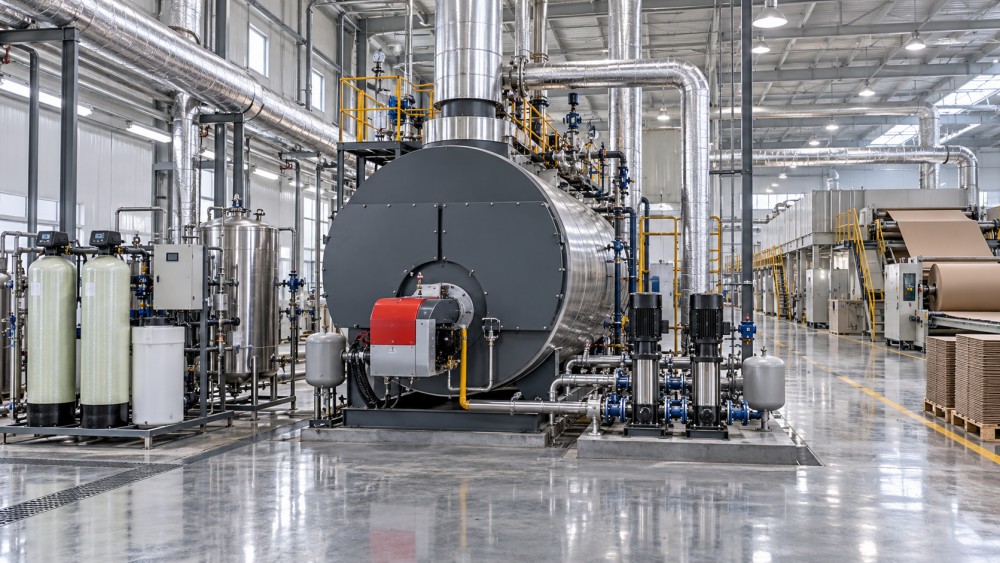
Some facilities benefit from a modular arrangement with two or more boilers rather than one large unit. This can provide redundancy, allow one unit to be serviced without a complete utility shutdown, and improve part-load operation. It is not automatically the lowest-cost route, but it deserves consideration where uptime is commercially critical.
Fuel Choice Can Reshape the Long-Term Budget
The boiler itself is only part of the financial picture; fuel often becomes the dominant operating expense over the asset’s working life. Natural gas, LPG, diesel, fuel oil, biomass, electricity, and site-specific alternative fuels each create a different balance of capital cost, efficiency, supply risk, maintenance workload, and emissions management.
Natural gas systems are often valued for controllability and comparatively clean combustion where supply is available. Their economics, however, depend on regional gas pricing, supply reliability, connection costs, and future policy exposure. Oil-fired systems may be practical where gas infrastructure is limited, but fuel storage, price volatility, and emissions requirements require attention.
Biomass can be attractive for facilities with secure access to suitable fuel and sufficient space for storage and handling. It generally involves more complex fuel preparation, ash handling, cleaning, and operator involvement than a gas-fired system. Electric steam boilers may offer a compact option in certain locations, particularly where electricity supply, tariff structure, and decarbonization goals support their use. Their viability should be evaluated through actual energy-cost modeling rather than broad assumptions.
Decision-makers should ask suppliers to show expected fuel consumption at realistic load points, not only at ideal full-load conditions. A boiler’s seasonal efficiency may be more meaningful than a headline efficiency figure if the plant runs variable schedules.
Efficiency Is Not a Marketing Number
Efficiency discussions can become misleading when they focus only on combustion performance. In a packaging factory, useful energy reaches the process only after steam generation, distribution, pressure control, condensate return, and heat transfer. Losses in any of these areas affect the energy budget.
Key factors include stack temperature, excess air control, burner modulation, insulation quality, blowdown management, steam-trap condition, condensate recovery rate, and leaks in the distribution network. An efficient new boiler connected to a poorly maintained steam system will not deliver its expected value.
For corrugated producers, steam control should also be considered alongside machine settings. Poorly controlled steam can create operating instability that operators attempt to correct through paper tension, glue application, or speed adjustments. That may increase waste and obscure the original utility problem. The energy project therefore needs input from maintenance, production, and process teams—not only purchasing.
Automation and Controls: A Cost That Can Protect Production
Controls affect both the initial steam boiler price and the daily discipline of operation. Basic systems may be sufficient for simple, steady loads. More advanced control packages can monitor pressure, water level, fuel use, feedwater conditions, alarms, and operating trends. They may also support load sequencing across multiple boilers and connect to factory energy-management platforms.
For a modern packaging plant, visibility has practical value. If energy consumption rises unexpectedly, if condensate return falls, or if the boiler begins cycling abnormally, maintenance teams can investigate before the issue becomes a line stoppage. Production data does not replace experienced operators, but it gives them better warning signals.
When evaluating automation, avoid buying features simply because they appear sophisticated. Instead, define the decisions the plant needs to make: Who needs alarms? Is remote access permitted? Can utility data be linked with corrugator output, waste levels, and shift performance? Is the site capable of maintaining the control system over time?
Installation Conditions Often Create the Biggest Budget Gaps
A boiler house project can be more complex than the boiler quotation suggests. Existing buildings may need ventilation upgrades, foundations, drainage, fuel piping, electrical work, water supply improvements, stack modifications, fire protection, noise controls, and access space for maintenance. Local regulations may require inspections, documentation, qualified operators, or emissions testing before the system can be commissioned.
These items should be identified during project planning, not after the equipment arrives. A supplier’s proposal may be technically sound while still excluding site works that the buyer assumed were included. Clear responsibility boundaries between the boiler vendor, engineering contractor, civil contractor, and plant team are essential.
It is also wise to consider future access. Can burners, pumps, valves, and control components be serviced without dismantling surrounding infrastructure? Is there room to add a second unit, an economizer, or expanded water treatment later? Boiler rooms that are difficult to maintain tend to become expensive over time.
Maintenance, Water Quality, and the Price of Reliability
Industrial boiler reliability is closely linked to water quality. Scale, corrosion, dissolved oxygen, suspended solids, and poor blowdown practices can reduce heat transfer, damage components, and raise fuel consumption. In severe cases, water-side problems can create safety risks and unplanned downtime.
Buyers should assess local water characteristics and include treatment requirements in the initial project scope. This is particularly important for facilities that expect continuous production or operate high-value corrugating and converting equipment. A short interruption in steam supply can be far more costly than the maintenance item that might have prevented it.
Service support should be reviewed with the same care as technical specifications. Ask about spare-parts availability, recommended preventive-maintenance intervals, local technician coverage, training for plant personnel, and documentation quality. A lower-priced boiler from a supplier with limited service access may carry more operational risk than a slightly higher-cost package supported by trained technicians and readily available parts.
A Better Way to Compare Boiler Investment Options
Instead of asking, “Which supplier has the lowest steam boiler price?” procurement teams can use a more useful question: “Which option gives our plant the lowest practical cost of reliable steam over its expected operating life?”
A structured comparison should include capital expenditure, projected annual fuel use, water treatment, labor, planned maintenance, expected spare parts, installation scope, compliance costs, downtime exposure, and expansion flexibility. Where possible, calculate scenarios for current production and anticipated future output. This is especially valuable in packaging markets where e-commerce demand, board grades, order frequency, and customer service expectations can change quickly.
Suppliers should be asked to state their assumptions clearly. What fuel price is used? At what load is efficiency calculated? Does the proposal include economizer performance? What water quality is assumed? Which site services are excluded? Transparent assumptions make it easier to identify where a low quote may be hiding future cost.
Questions Decision-Makers Should Bring to the Supplier Meeting
- What steam-load data was used to size this boiler?
- How does the unit perform at normal partial-load conditions?
- Which components are included, and which are supplied by others?
- What fuel-quality and water-quality conditions are required?
- How will the boiler support peak corrugator demand and start-up periods?
- What redundancy is available if the primary unit is offline?
- What monitoring data can be captured and integrated with plant systems?
- What are the recommended maintenance tasks, spare parts, and service response arrangements?
- Which permits, emissions controls, and operator requirements apply at the installation site?
For packaging businesses, steam generation is not merely a utility purchase. It is part of the production system that supports board quality, machine availability, energy discipline, and customer delivery performance. A thoughtful review of steam boiler price factors allows leaders to move beyond the initial quotation and choose a system that fits the plant’s real operating demands—today and as the business evolves.
Related News
 When Is a Servo Folder Gluer Line Worth the Investment?Is a servo folder gluer line worth the investment? Explore the production challenges, ROI factors, and supplier questions that can guide your decision.Ms. Vivienne Cross
 US Justice Department Investigates Pricing by Major Corrugated Packaging ProducersThe US Justice Department is investigating containerboard pricing by major corrugated packaging producers. Explore potential implications for buyers and supply chains.Ms. Vivienne Cross
 What Affects Folder Gluer Machine Price and Total Cost?Folder gluer machine price is only part of the investment. Discover what drives costs and how to compare quotes, operating expenses, and long-term value.Ms. Vivienne Cross
 How Roll Handling Equipment Price Affects Project ROIRoll handling equipment price affects more than upfront costs. Learn how to compare installed costs, quantify savings, and build a stronger project ROI case.Ms. Vivienne Cross
 How Stacking Machines Reduce Bottlenecks in Sheet PlantsStacking Machines reduce sheet plant bottlenecks by improving pile quality and flow. Discover how to choose and integrate the right system.Ms. Vivienne Cross
 Italian Packaging Machinery Sales Up Just 0.9% as Orders Fall 4.7%Italian packaging machinery sales rose just 0.9% as orders fell 4.7%. Explore UCIMA's figures and what weaker demand could mean for buyers and exporters.Ms. Vivienne Cross