How Can Straight Line Folder Gluers Reduce Carton Production Costs?
How Can Straight Line Folder Gluers Reduce Carton Production Costs?
Rising labor costs, material waste, and tight delivery schedules are pushing carton manufacturers to look beyond equipment purchase prices. Straight Line Folder Gluers can lower production costs by automating folding and gluing, improving adhesive consistency, and reducing manual handling on compatible carton designs. However, actual savings depend on production volume, job mix, setup time, and how well the machine fits the surrounding production process.
The useful question is not simply, “How fast does it run?” It is, “What does it cost to produce an accepted, packed carton?” A machine running below its advertised maximum can still be a good investment if it delivers predictable output with fewer rejects. Conversely, a fast machine that regularly waits for blanks or overwhelms the packing crew may change very little.
Start with the cartons the machine will actually process
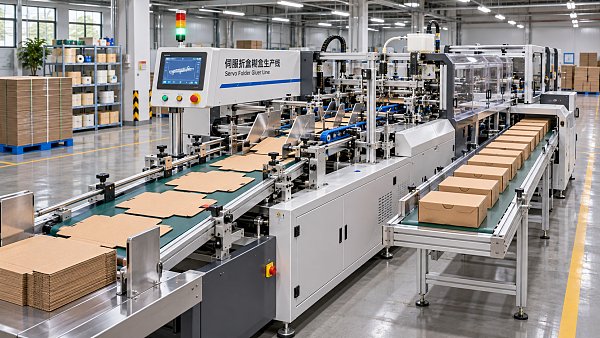
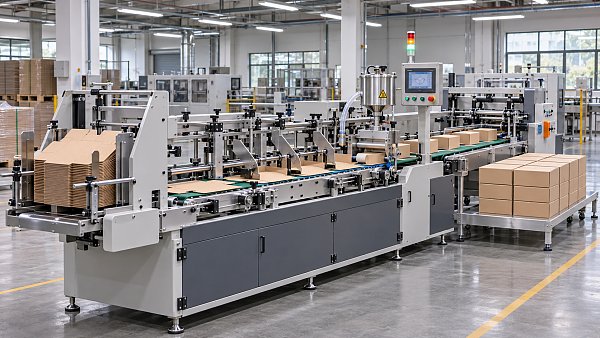
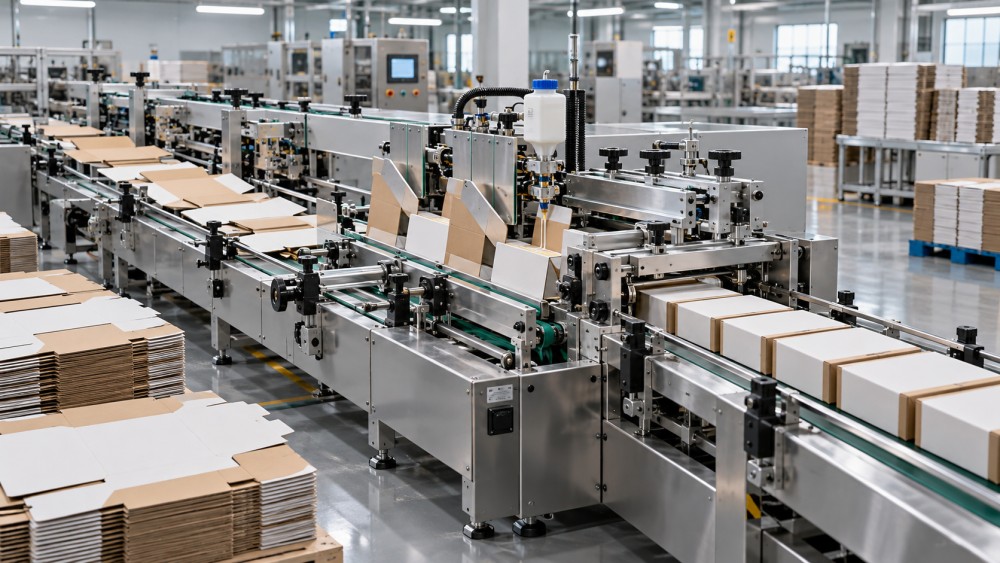
A straight-line folder gluer is primarily suited to compatible cartons with a longitudinal glue seam, such as many side-seam folding cartons. It feeds prepared blanks, guides the panels through folding, applies adhesive, and maintains pressure while the bond develops. Pre-breaking sections, where fitted, can help condition creases for subsequent erection.
That does not make every straight-line machine suitable for every paper-based package. Crash-lock bottoms and four- or six-corner boxes generally require additional folding capabilities. Corrugated applications also need specific verification: board thickness, flute profile, blank size, feeding behavior, and compression requirements differ from those of folding carton board. Compatibility should be demonstrated, not inferred from the equipment category.
Review the order book before reviewing brochures. Identify which jobs fit the proposed machine, how often they repeat, and how much production time they represent. A dedicated straight-line configuration can be economical for recurring side-seam work. If much of the workload requires unsupported constructions, a lower purchase price may simply leave more work on another line or with a subcontractor.
Labor savings depend on the whole shift, not one operation
Automated folding and gluing can replace repetitive hand folding, manual adhesive application, and transfers between separate workstations. The benefit is especially relevant where compatible orders consume substantial manual finishing time or create overtime before dispatch.
But removing manual folding does not remove material handling. Blanks still need to reach the feeder. Finished cartons need counting, inspection, packing, and movement to dispatch. If delivery remains manual, increasing gluer output can move the labor bottleneck to the end of the line.
During a supplier trial, observe the complete crew arrangement. Count feeder support, machine operation, packing, material replenishment, and quality checks. Include the time spent clearing stoppages and handling rejected cartons. Compare labor hours per thousand accepted cartons rather than quoting the number of people standing beside the machine.
There is also a financial distinction between releasing labor capacity and eliminating expense. Reassigning employees may enable more output without additional hiring, but it does not automatically reduce payroll. An investment proposal should separate avoided overtime, avoided recruitment, redeployed hours, and genuine cash savings.
Protect the value already built into each blank
By the time a blank reaches the gluer, it may already carry the cost of board, printing, coating, die-cutting, and stripping. Rejecting it at this stage wastes more than raw paper. Preventing folding and bonding defects therefore deserves as much attention as increasing speed.
Controlled feeding, consistent alignment, correctly positioned folding guides, and suitable belt pressure can reduce variation in seam placement and carton squareness. Adhesive application must match the glue flap, substrate, operating speed, and required bond. Too little adhesive risks an open seam; too much can squeeze into the carton or contaminate surfaces.
The cheapest adhesive setting is not necessarily the one using the smallest amount. It is the lowest controlled application that reliably meets the bond requirement. Coatings, varnishes, and laminated surfaces can affect adhesion, so trials should use actual production blanks and the intended adhesive.
Do not expect the gluer to repair poor upstream work. Inconsistent creases, warped blanks, dimensional variation, or inadequate waste stripping can cause feeding and folding problems. If those defects remain, operators may have to slow the machine to keep it running.
Inspection can help contain losses, provided its limits are understood. Depending on configuration, glue monitoring or vision equipment may detect missing adhesive, application-position errors, or incorrect printed content. Detection does not itself prove bond strength. Physical bond checks, carton squareness checks, and erection trials remain necessary, with sampling defined around product risk and customer requirements.
Changeover time can outweigh rated speed
For long, repeat runs, stable operating speed matters greatly. For a plant handling frequent short orders, setup losses may matter more. A machine that reaches a higher peak speed but takes longer to adjust can deliver fewer accepted cartons across the shift.
Evaluate changeover from the last accepted carton of one job to the first consistently accepted cartons of the next. Measuring only the mechanical adjustment misses trial blanks, adhesive checks, feeder tuning, and packing preparation. These activities consume both time and material.
Stored settings, position indicators, accessible adjustments, and repeatable setup procedures can be valuable. Their usefulness depends on what is actually recalled or automated. A recipe may restore selected positions while leaving other adjustments entirely manual. Ask the supplier to demonstrate a meaningful size change rather than switching between nearly identical blanks.
Scheduling also affects the result. Grouping compatible jobs by size, substrate, or adhesive arrangement may reduce repeated adjustments. However, delivery commitments and work-in-progress limits can restrict that approach. Cost calculations should reflect the plant’s realistic schedule, not an ideal sequence that production cannot maintain.
Calculate cost per accepted carton before calculating payback
A useful comparison puts the existing process and proposed process on the same basis:
Conversion cost per accepted carton = relevant conversion costs over a defined period ÷ accepted cartons produced during that period.
Include direct labor, adhesive, electricity, relevant compressed-air use, maintenance, replacement parts, and equipment ownership costs. Account separately for the accumulated value of rejected blanks, or include it consistently in the conversion model. Either approach can work; mixing accounting boundaries between options cannot.
Use measured output that includes normal setups and stoppages. Nameplate speed is not a production forecast. If a supplier quotes belt speed in meters per minute, the carton rate still depends on blank length, spacing, and stable feeding conditions.
- Establish the baseline: record crew hours, accepted output, setup waste, running rejects, downtime causes, and outsourced finishing expense.
- Define installed cost: include transport, installation, utilities, training, initial spares, and any necessary feeding or delivery equipment.
- Build a conservative operating case: allow for training, maintenance, realistic utilization, and the actual eligible workload.
- Test sensitivity: check whether the investment remains workable with fewer shifts, shorter runs, or slower sales growth.
For simple cash payback, divide the total installed investment by expected annual net cash benefit. Keep non-cash accounting charges separate from that cash calculation. Additional capacity should count as a financial benefit only where there is credible demand and a realistic contribution margin; unused capacity is not a saving.
Integration and maintenance decide whether savings last
A folder gluer operates between processes that can constrain its output. Die-cutting and stripping must supply usable blanks at the required pace. Delivery, packing, and pallet handling must remove finished cartons without frequent interruptions. Layout matters too: obstructed replenishment routes can undermine an otherwise capable installation.
Automatic feeding, counting, packing, or palletizing may be justified when measured handling demand warrants them. They should not be added merely because they are available. For some plants, a simpler delivery arrangement and better material staging will address the immediate bottleneck at lower cost.
This system-level assessment is consistent with the equipment coverage of Global Commercial Print & Corrugated Packaging Intelligence (CPCS): converting machinery needs to be evaluated alongside upstream quality, inspection, downstream handling, and production management, rather than as an isolated purchase.
Maintenance can be overlooked in purchase comparisons. Belt condition, guide alignment, adhesive-system cleanliness, and compression settings all influence consistency. Request a maintenance schedule and a priced list of normal wear parts. Confirm local service availability, parts lead times, and which repairs plant technicians can perform. A lower acquisition cost can be offset by expensive downtime if routine parts are difficult to obtain.
Make the acceptance trial resemble a production day
Send representative blanks, including demanding sizes and substrates rather than only the easiest repeat order. Agree beforehand on accepted output, reject definitions, staffing, changeover measurement, bond checks, and delivery conditions. Run long enough to observe feeding, adhesive application, compression, and packing under steady operation.
Record why the line stops. Repeated feeder adjustments suggest a different problem from packing congestion or adhesive interruptions. Those distinctions determine whether the remedy is machine configuration, operator training, upstream quality control, or additional handling equipment.
Straight Line Folder Gluers make the strongest cost case where compatible work is recurring, manual finishing or unstable gluing is expensive, and surrounding processes can support the output. Before signing, require evidence of accepted cartons per staffed hour on your own job mix. That figure, together with waste and changeover records, is a more dependable purchasing basis than the fastest speed demonstrated on an easy carton.
Related News
 When Is a Servo Folder Gluer Line Worth the Investment?Is a servo folder gluer line worth the investment? Explore the production challenges, ROI factors, and supplier questions that can guide your decision.Ms. Vivienne Cross
 US Justice Department Investigates Pricing by Major Corrugated Packaging ProducersThe US Justice Department is investigating containerboard pricing by major corrugated packaging producers. Explore potential implications for buyers and supply chains.Ms. Vivienne Cross
 What Affects Folder Gluer Machine Price and Total Cost?Folder gluer machine price is only part of the investment. Discover what drives costs and how to compare quotes, operating expenses, and long-term value.Ms. Vivienne Cross
 How Roll Handling Equipment Price Affects Project ROIRoll handling equipment price affects more than upfront costs. Learn how to compare installed costs, quantify savings, and build a stronger project ROI case.Ms. Vivienne Cross
 How Stacking Machines Reduce Bottlenecks in Sheet PlantsStacking Machines reduce sheet plant bottlenecks by improving pile quality and flow. Discover how to choose and integrate the right system.Ms. Vivienne Cross
 Italian Packaging Machinery Sales Up Just 0.9% as Orders Fall 4.7%Italian packaging machinery sales rose just 0.9% as orders fell 4.7%. Explore UCIMA's figures and what weaker demand could mean for buyers and exporters.Ms. Vivienne Cross