How Automatic Shrink Wrapping Machines Reduce Film Waste and Costs
How Automatic Shrink Wrapping Machines Reduce Film Waste and Costs
Film waste can quietly erode packaging margins through oversized wraps, inconsistent sealing, and repeated rework. Automatic shrink wrapping machines offer a practical way to address these losses by improving film feeding accuracy, package positioning, and process consistency. However, savings depend on matching equipment capabilities to product dimensions, film specifications, and production demands—not simply increasing line speed.
For a printing company wrapping catalog bundles, a carton plant protecting finished folding boxes, or a manufacturer grouping products for distribution, the commercial question is the same: how much film, labor, and energy does each acceptable pack consume? A faster machine is useful only if it improves that result without creating damage or shifting the bottleneck elsewhere.
Find the waste before specifying the machine
Film losses are not limited to the offcuts collected beside the sealer. Excess film left around every package may cost more over a long production run than visible scrap. Rejected packs, startup trials, damaged roll ends, and partially used rolls left after changeovers also belong in the calculation.
An oversized wrap can become the default because it tolerates poor product positioning. Operators leave extra clearance to avoid catching a carton corner in the sealing jaw. That solves an immediate production problem, but it makes excess material part of the standard pack. Automation can remove some of that allowance by making positioning more repeatable.
Before requesting quotations, record film consumption across representative orders, including short runs and awkward products. Separate routine consumption from startup scrap, trim, and rewrapping. Record pack dimensions and film specifications alongside the figures. Comparing kilograms per shift without considering the product mix can make a good process look inefficient—or hide a poor one.
Where automation actually reduces film consumption
Controlled feeding reduces unnecessary wrap length
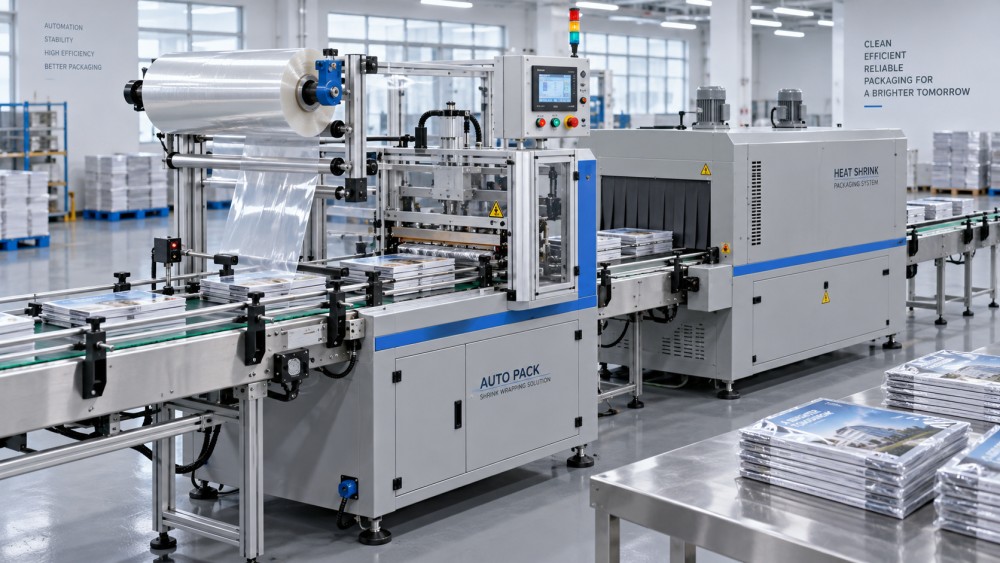
Depending on the machine design, sensors, encoder feedback, and controlled film drives coordinate film delivery with product movement. Instead of relying on an operator to judge each wrap, the system applies repeatable settings for the selected product. The benefit is a more consistent film envelope, with enough allowance for sealing and shrinking but less unnecessary overhang.
Film unwind control matters here. A heavy roll, abrupt acceleration, or inconsistent tension can stretch the web or disturb tracking. A controlled unwind helps stabilize feeding, but it does not compensate for unsuitable film or poor threading. Buyers should ask how the machine controls tension as roll diameter changes, not merely whether the feed motor is servo-driven.
Stable positioning makes tighter settings practical
A stack of printed brochures may arrive slightly skewed; a bundle of folding cartons may vary in height because it traps air. Guides, metering belts, and suitable infeed handling can present these products more consistently to the sealing area. With less positional variation, the wrapping recipe can use smaller allowances without increasing jaw strikes or incomplete enclosure.
The limit is physical, not digital. Unstable stacks, sharp corners, and irregular bundles may still need more film or different handling. Reducing the allowance until a perfect sample barely passes is not a robust production setting. Leave room for normal variation in the actual product.
Repeatable sealing prevents a second film cycle
A failed seal wastes more than the small section around the defect. The pack may need to be opened, stripped, and wrapped again. Automatic control of sealing temperature, timing, and pressure can reduce this variation when the machine supports those adjustments and the settings suit the film.
Maintenance remains part of the solution. Dirty sealing surfaces, worn coverings, jaw misalignment, and film contamination can undermine repeatability. If a line repeatedly produces weak seals, adding heat is not always the answer. It may burn through the film while leaving the underlying mechanical problem untouched.
Machine format and film choice set the savings ceiling
Not all automatic shrink wrapping machines create the same package or the same waste stream. L-sealers, side-seal systems, and sleeve wrappers serve different applications. Trim requirements, product-length flexibility, enclosure style, and changeover procedures differ. A sleeve wrapper suitable for a distribution multipack should not be treated as equivalent to a fully enclosing system used for printed retail products.
Film width deserves particular attention. If the factory keeps one wide roll for many narrow products, improved feed accuracy will not eliminate width-related waste. More appropriately sized rolls may lower consumption, but additional stock sizes increase inventory and roll changes. The best arrangement depends on order frequency and how production can group similar jobs.
Thinner film is another option, not an automatic saving. Polyolefin and polyethylene shrink films can have different sealing, shrinking, strength, and handling characteristics; even films within the same material family vary by grade. A lower gauge must survive corners, transfers, palletizing, and distribution without increasing rejects. Compare cost per acceptable pack rather than roll price alone.
For paper-based products, shrink force and tunnel exposure also need checking. An attractive tight wrap can bow a lightweight carton, mark a sensitive printed surface, or distort an unsupported bundle. Where moisture protection matters, verify the finished pack: perforations, openings, and seal quality mean shrink wrapping should not automatically be treated as a moisture barrier.
Keep the shrink tunnel inside the cost calculation
The tunnel determines whether a correctly sealed pack becomes an acceptable finished pack. Conveyor speed, temperature, airflow, and film behavior work together. Uneven shrinking, holes, or excessive distortion can erase the material savings achieved at the wrapper.
Increasing temperature to cure every defect is a poor troubleshooting habit. A pack may need different exposure time, better airflow distribution, revised perforation, or a more suitable film. Trials should inspect the cooled package, not just the package leaving the tunnel, because appearance and handling performance can change during cooling.
Energy should be measured under the intended operating pattern. A tunnel processing long, steady runs has a different cost profile from one kept hot through frequent interruptions. Warmup, standby operation, exhaust requirements, and restart procedures affect the result. Lower film consumption does not necessarily mean lower electricity consumption.
Measure savings against saleable output
A useful primary measure is film mass consumed divided by accepted packs produced. Include startup material and rejected wraps within a clearly defined measurement period. For mixed-size production, compare results by product family; otherwise, changes in package size will obscure the machine’s performance.
The supporting measures explain whether a lower film figure is commercially meaningful:
- First-pass acceptance: packs accepted without stripping, resealing, or rewrapping.
- Changeover loss: elapsed time and film consumed from the last accepted pack of one job to stable production of the next.
- Operator time: feeding, roll replacement, adjustment, clearing faults, and removing scrap—not just time spent at the controls.
- Energy per accepted pack: wrapper and tunnel consumption over a representative production schedule.
- Unplanned downtime: stop duration and cause, including upstream starvation and downstream blockage.
For the investment model, calculate net annual savings after additional maintenance, consumables, energy, and other operating costs. Divide the installed investment by that net saving for a simple payback estimate. Include conveyors, electrical work, guarding, training, and commissioning in the investment—not only the machine quotation.
Be conservative about labor savings. If the operator still builds every bundle and manually loads the infeed, the project may improve consistency without removing a full position. Released operator time has value, but it becomes a cash saving only when staffing, overtime, or outsourced work actually changes.
Test the difficult jobs before committing
A supplier demonstration using one easy product proves little about a mixed-order factory. Provide samples representing small and large dimensions, unstable stacks, sensitive printed surfaces, and difficult corners. Use the proposed production film, and include a roll replacement and a product changeover in the trial.
Agree acceptance criteria before testing: pack integrity, appearance, film consumption, sustained accepted output, changeover time, and permitted product damage. Examine wrapped samples after cooling and representative handling. A brief run at maximum speed should not replace a test long enough to reveal tracking drift, seal contamination, or recurring stops.
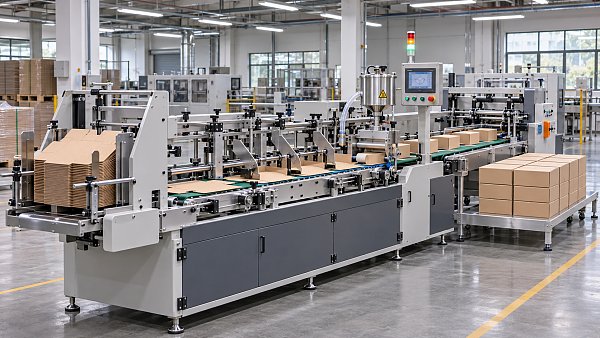
Integration deserves the same attention. A folder gluer may deliver in bursts, while a shrink wrapper needs controlled spacing. Buffering, bundle formation, and downstream accumulation must accommodate that mismatch. This is consistent with the system-based equipment evaluation covered by Global Commercial Print & Corrugated Packaging Intelligence (CPCS): operating value depends on the connected process, not an isolated nameplate speed.
Automatic shrink wrapping is most convincing when the factory can identify a specific loss mechanism and demonstrate that the proposed line reduces it. If excess wrap length, unstable positioning, or repeated seal failures dominate the baseline, automation has a clear target. If the larger problem is unsuitable film, poor bundle formation, or fragmented scheduling, address that alongside the machine purchase. Require measured performance on your own product mix before treating projected savings as an investment return.
Related News
 When Is a Servo Folder Gluer Line Worth the Investment?Is a servo folder gluer line worth the investment? Explore the production challenges, ROI factors, and supplier questions that can guide your decision.Ms. Vivienne Cross
 US Justice Department Investigates Pricing by Major Corrugated Packaging ProducersThe US Justice Department is investigating containerboard pricing by major corrugated packaging producers. Explore potential implications for buyers and supply chains.Ms. Vivienne Cross
 What Affects Folder Gluer Machine Price and Total Cost?Folder gluer machine price is only part of the investment. Discover what drives costs and how to compare quotes, operating expenses, and long-term value.Ms. Vivienne Cross
 How Roll Handling Equipment Price Affects Project ROIRoll handling equipment price affects more than upfront costs. Learn how to compare installed costs, quantify savings, and build a stronger project ROI case.Ms. Vivienne Cross
 How Stacking Machines Reduce Bottlenecks in Sheet PlantsStacking Machines reduce sheet plant bottlenecks by improving pile quality and flow. Discover how to choose and integrate the right system.Ms. Vivienne Cross
 Italian Packaging Machinery Sales Up Just 0.9% as Orders Fall 4.7%Italian packaging machinery sales rose just 0.9% as orders fell 4.7%. Explore UCIMA's figures and what weaker demand could mean for buyers and exporters.Ms. Vivienne Cross