Folder Gluer Line Cost Factors That Shape Payback and ROI
For a finance approver, folder gluer line cost is rarely a question with a single useful answer. A supplier quotation may show the machine price, a list of options, and an installation term. Yet the purchase decision will be judged years later by a different set of numbers: sellable output per shift, cost per carton, labor hours avoided, waste prevented, unplanned downtime, maintenance spending, and the ability to accept more profitable work without adding another production bottleneck.
That distinction matters because folder gluers sit near the end of the carton converting process. By the time a blank reaches the folding and gluing section, paperboard, printing, die-cutting, and often foil or window-patching costs have already been incurred. When a line runs inconsistently, applies glue inaccurately, or struggles with changeovers, the loss is not merely machine time. It is value that has already been added to the carton.
A sound investment review therefore treats the folder gluer as part of a production and cash-flow system, not as an isolated piece of capital equipment. The goal is not to buy the cheapest line or automatically choose the most automated one. It is to identify the configuration whose lifetime economics fit the plant’s order profile, labor situation, quality exposure, and growth plan.
Start with the cost boundary, not the equipment price
The quoted purchase price is visible and easy to compare. The full project cost is less tidy. Financial approval should distinguish between the machine acquisition cost, the commissioning cost, and the operating cost over its useful life.
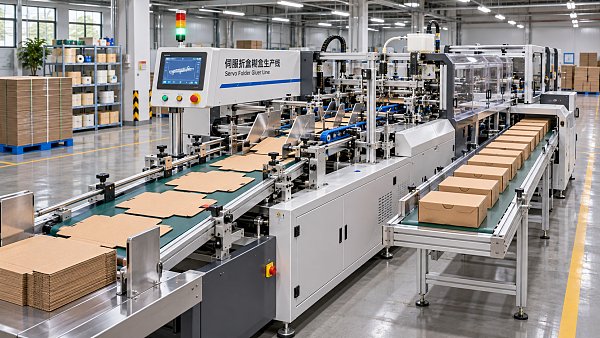
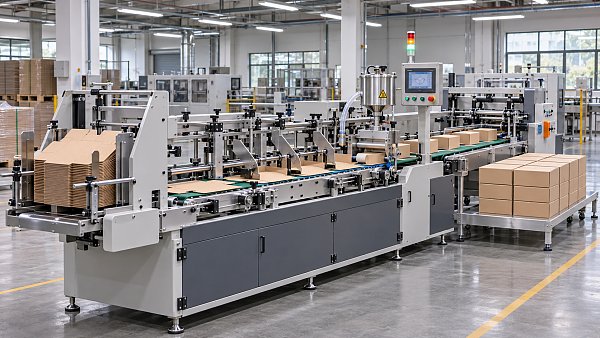
Machine acquisition normally includes the base folder gluer, feeder, folding sections, carrier section, delivery, glue system, safety equipment, and controls. Depending on the specification, it may also include pre-folding, crash-lock bottom capability, four- and six-corner modules, inline quality inspection, barcode verification, ejection, counting, batching, or downstream packing and palletizing interfaces.
Commissioning costs are frequently underestimated during early approval discussions. These can include freight, import duties where applicable, foundation or floor preparation, electrical upgrades, compressed air, extraction, glue supply arrangements, installation labor, operator training, spare-parts packages, production trials, and the cost of reduced output while the line is being brought into routine use. If a new machine changes the factory layout or requires die-cutting tolerances to be tightened, those related costs should also be recognized.
The third category is where the business case is won or lost. Labor, adhesive consumption, electricity, replacement belts and bearings, service support, planned maintenance, rejects, rework, and lost production during stoppages may collectively outweigh the initial price difference between two lines. Finance teams do not need to predict every future event perfectly; they need a realistic range of operating assumptions and a clear view of which assumptions carry the most risk.
What actually drives folder gluer line cost?
There is no universal “right” price because folder gluer lines are configured around carton styles, substrate ranges, throughput targets, and required levels of automation. A compact straight-line unit for recurring standard cartons has a very different cost structure from a high-speed multipurpose line expected to process pharmaceutical cartons, retail sleeves, crash-lock bottoms, complex multi-point cartons, and short-run branded work.
Format range and carton complexity
Line width, carton length, board thickness range, and the number of folding configurations all influence capital cost. A plant producing a narrow, stable mix of straight-line cartons may receive limited value from broad-format capacity or advanced multi-corner modules. Conversely, a converter serving cosmetics, food, healthcare, promotional packaging, and e-commerce inserts may lose opportunities if the selected line cannot handle the formats customers increasingly request.
Approvers should ask a practical question: what proportion of projected volume requires each capability? “Possible to run” is not equivalent to “profitable to run at production speed.” A line that handles a difficult carton only after extensive setup and frequent intervention may not deliver the capacity assumed in the investment model.
Feeding, alignment, and transport stability
High-speed output depends on more than the rated maximum speed. Reliable feeding, blank separation, side alignment, folding consistency, and controlled transfer through the carrier section determine whether that speed can be maintained without damaging cartons or creating glue-related defects.
Features that improve stability may appear expensive in a quotation, but their value should be considered against the cost of stop-start running. On a busy shift, operators dealing with scuffing, skewing, opened seams, inaccurate folds, or carton jams can consume a surprising amount of productive time. The financial impact grows when defects are discovered after packing rather than at the folder gluer.
Glue system choice and verification
Cold glue and hot-melt systems have different operating characteristics, consumable costs, maintenance needs, warm-up requirements, and application strengths. The appropriate choice depends on carton construction, substrate coating, production speed, customer specifications, and the required bond performance.
Glue application control is particularly important because excess adhesive wastes material and may cause cosmetic defects, while insufficient or misplaced adhesive risks open cartons in filling, distribution, or retail handling. For high-consequence applications, inline glue detection or vision inspection can add to the project cost but may reduce exposure to customer claims, recalls, and batch-level rework. The right question is not whether inspection is “premium”; it is whether the cost of an undetected failure is material to the business.
Rated speed is not the same as earned capacity
A folder gluer may be marketed with an impressive maximum speed, but finance cases should be built on effective production capacity. Effective capacity reflects the reality of the plant: job setup, make-ready sheets, carton complexity, planned cleaning, quality checks, operator breaks, routine adjustments, and unplanned stoppages.
A useful internal calculation is:
Sellable output per shift = planned operating time × actual running efficiency × acceptable-carton yield
Actual running efficiency is not simply uptime. It includes how close the line runs to an appropriate production speed after allowing for changeovers and minor stops. Acceptable-carton yield accounts for the cartons that pass quality requirements rather than just the number counted at delivery.
When comparing suppliers, request performance discussions around representative jobs, not only ideal samples. Provide the suppliers with a mix of current and expected carton styles, board grades, dimensions, glue patterns, and order sizes. Then ask how each configuration addresses the difficult jobs that consume disproportionate time today.
Changeover time often matters more than peak speed
In plants with long, repetitive runs, a robust standard line may generate a compelling return without extensive automation. The economics change in a short-run environment. Commercial packaging converters increasingly manage frequent artwork changes, seasonal promotions, SKU proliferation, and customer demand for quick delivery. In that setting, minutes spent setting guides, belts, carriers, folding hooks, and glue positions become a direct capacity constraint.
Automated or memory-assisted setup functions can reduce dependency on individual operator experience and improve repeatability from one repeat order to the next. They do not eliminate the need for skilled operators, especially on complex cartons, but they can shorten the time between jobs and make performance more predictable across shifts.
For approval purposes, avoid treating faster changeover as a vague productivity claim. Estimate the current average number of changeovers per week, the realistic time reduction per changeover, and the value of the released time. That value may come from additional saleable cartons, overtime avoided, fewer delayed deliveries, or the ability to consolidate work that would otherwise be outsourced.
Labor savings should be measured honestly
Automation is often justified by reduced headcount, yet the real financial result may be more nuanced. A new folder gluer line may allow one operator to oversee more output, reduce manual packing activity, or make it easier to staff difficult shifts. But a labor saving only becomes a direct cost reduction if hours can actually be removed from the payroll or from paid overtime.
In many factories, the stronger case is labor redeployment. Experienced people can move from repetitive handling tasks toward quality control, preventive maintenance, job preparation, or other bottlenecks. That can still create substantial value, but it should be modeled as recovered capacity or risk reduction rather than an immediate wage saving.
Ask for the labor model across the entire process. A fast gluer that overwhelms a manual packing area may simply move the bottleneck downstream. Likewise, an automatic packer, counter, or conveyor can look like an optional extra until the cost of manual collection, counting errors, and unstable stacks is visible in the process map.
Waste has a larger value than its material cost
Rejects at the folder gluer represent more than paperboard. They can include printed sheets, die-cutting work, coatings, foil, window film, ink, energy, and the labor embedded in prior stages. If the defect reaches packing or dispatch, the cost can also include sorting, replacement production, expedited freight, and damaged customer confidence.
A credible ROI model values waste at its accumulated conversion cost, not at scrap-board value. It should separate normal setup waste from recurring defects caused by unstable feeding, inaccurate folding, glue failures, or delayed quality detection. This distinction reveals whether capital features such as inspection, ejection, registration support, or improved delivery control have a measurable economic role.
Maintenance and uptime belong in the financial model
A lower-priced machine with limited local service, hard-to-source components, or weak diagnostic capability can be costly during a breakdown. In carton converting, downtime is especially disruptive when delivery dates are tight and the line is part of a linked workflow. A machine’s reliability cannot be guaranteed by a brochure, but due diligence can reduce uncertainty.
Review the recommended preventive maintenance plan, expected wear parts, remote support arrangements, local technician availability, critical spare-parts lead times, and training scope. It is also worth checking whether routine adjustments and cleaning can be carried out safely and quickly by the production team. Maintenance accessibility influences not just repair cost, but whether small issues are addressed before they become lost shifts.
Build payback around scenarios, not a single optimistic forecast
A practical payback model should include a conservative case, an expected case, and a high-utilization case. The conservative case may assume slower ramp-up, modest demand growth, and partial realization of labor or waste benefits. The expected case should use evidence from current jobs and operating data. The high-utilization case can show the upside if the sales pipeline and production plan support it.
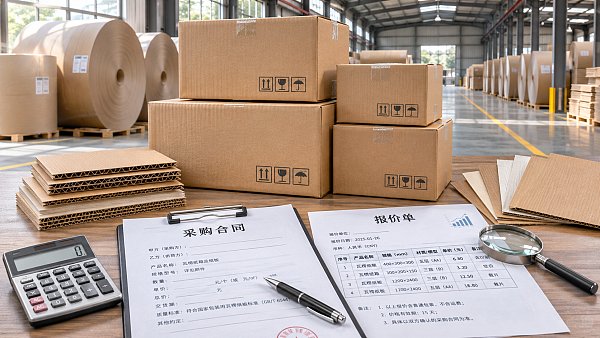
Cash benefits may include contribution margin from added sellable capacity, reduced outsourcing, avoided overtime, lower reject costs, reduced adhesive use, fewer quality claims, and labor savings or redeployment. Costs should include depreciation treatment where relevant to internal reporting, financing charges, service contracts, consumables, training, planned maintenance, and a reasonable allowance for commissioning disruption.
Two formulas are useful, provided the assumptions behind them are transparent:
Simple payback period = total project investment ÷ annual net cash benefit
ROI = annual net benefit ÷ total project investment × 100
These metrics are helpful screening tools, but finance approvers should also consider the timing of cash flows, tax treatment, residual value, and whether the investment protects strategically important accounts. A line with a slightly longer payback may be the sounder decision if it improves quality assurance, supports future carton formats, and reduces dependence on a fragile manual process.
Questions that expose weak folder gluer investment cases
- Is the projected volume based on confirmed demand, current bottleneck data, or a maximum-speed assumption?
- Which carton types generate the greatest margin, and can the proposed line run them consistently?
- Have setup, inspection, packing, and material-handling constraints been included, or only machine running time?
- Does the model count labor savings that cannot realistically be captured?
- What is the financial cost of a glue or fold defect escaping into a customer shipment?
- Are utilities, installation, operator training, spare parts, and ramp-up losses included in the folder gluer line cost?
- How will actual throughput, waste, downtime, and changeover performance be measured after commissioning?
The final question is important because capital approval should not end when the purchase order is signed. Establish baseline metrics before installation and review them after the line reaches stable production. This creates accountability for the investment and improves the quality of future equipment decisions.
A finance-ready way to compare proposals
Rather than comparing quotations line by line, normalize each proposal around the same production requirements. Use identical job mixes, annual volumes, shift patterns, labor rates, waste assumptions, adhesive pricing, and service horizons. Then identify where a supplier’s configuration changes the operating model: fewer changeovers, higher sellable yield, less manual handling, broader carton capability, or better defect containment.
For many businesses, the best folder gluer line is not the one with the lowest acquisition cost or the highest published speed. It is the line that turns the plant’s actual mix of work into dependable, saleable output with controllable risk. When the folder gluer line cost is evaluated through lifetime cash performance rather than purchase price alone, the approval discussion becomes clearer: not “What does this machine cost?” but “What does this production capability return, and under what conditions?”
Related News
 When Is a Servo Folder Gluer Line Worth the Investment?Is a servo folder gluer line worth the investment? Explore the production challenges, ROI factors, and supplier questions that can guide your decision.Ms. Vivienne Cross
 US Justice Department Investigates Pricing by Major Corrugated Packaging ProducersThe US Justice Department is investigating containerboard pricing by major corrugated packaging producers. Explore potential implications for buyers and supply chains.Ms. Vivienne Cross
 What Affects Folder Gluer Machine Price and Total Cost?Folder gluer machine price is only part of the investment. Discover what drives costs and how to compare quotes, operating expenses, and long-term value.Ms. Vivienne Cross
 How Roll Handling Equipment Price Affects Project ROIRoll handling equipment price affects more than upfront costs. Learn how to compare installed costs, quantify savings, and build a stronger project ROI case.Ms. Vivienne Cross
 How Stacking Machines Reduce Bottlenecks in Sheet PlantsStacking Machines reduce sheet plant bottlenecks by improving pile quality and flow. Discover how to choose and integrate the right system.Ms. Vivienne Cross
 Italian Packaging Machinery Sales Up Just 0.9% as Orders Fall 4.7%Italian packaging machinery sales rose just 0.9% as orders fell 4.7%. Explore UCIMA's figures and what weaker demand could mean for buyers and exporters.Ms. Vivienne Cross