Brother Starts Molded Pulp Production from Corrugated Waste at Vietnam Plant
Brother Industries, Ltd. announced that its Vietnam manufacturing plant, BIVN, began producing molded pulp from internally generated corrugated cardboard waste in July 2026. The material is used for protective cushioning in printers and other products. For packaging manufacturers, material suppliers and procurement teams, the development raises practical questions about recycled material specifications, cushioning verification and purchasing acceptance. The supplied information identifies a manufacturing change but does not establish any new regulation, certification requirement or trade rule.
BIVN Turns Internal Corrugated Waste into Protective Packaging
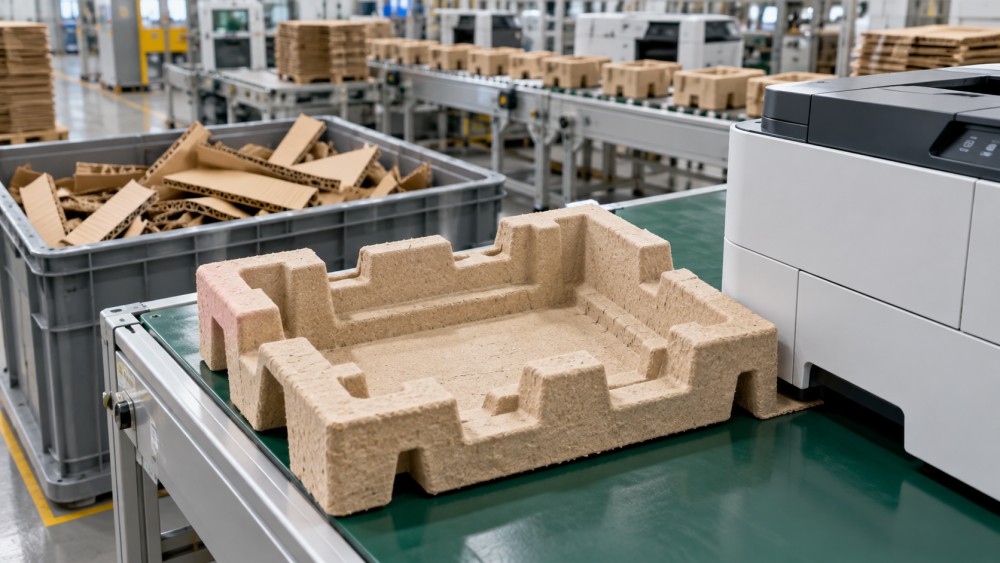
According to the supplied event summary, BIVN formally started molded pulp production in July 2026 using corrugated cardboard waste generated within the factory as its raw material.
The molded pulp products primarily provide cushioning protection for printers and other products. The summary states that the initiative maintains cushioning performance while enabling factory waste recycling and packaging reduction.
Material Acceptance Becomes a Practical Supply Chain Question
Packaging suppliers may face more specific material discussions
From an industry perspective, the initiative could encourage discussions between manufacturers and packaging suppliers about the relationship between recovered raw materials and finished packaging performance. Suppliers involved in comparable projects may need to clarify material specifications, production consistency and the evidence supporting cushioning claims. These are potential procurement considerations; the supplied information does not confirm that Brother has introduced new supplier requirements.
Procurement teams may review how packaging changes are approved
Analysis suggests that buyers assessing a similar material change could need to distinguish recycled material content from suitability for product protection. Relevant purchasing discussions may cover approved packaging specifications, supporting technical documents and procedures for accepting a material substitution. The announcement does not establish a customer acceptance policy or demonstrate approval across all products.
Delivery partners may need evidence tied to the packaged product
For manufacturers and supply chain service providers, a possible operational issue is whether changed cushioning remains suitable for the products and delivery conditions involved. Where a customer or contract specifies packaging performance, the parties could review whether existing evidence covers the proposed material. The input does not identify a new shipping restriction, export documentation requirement or mandatory test.
Practical Checks Before Extending the Packaging Change
Connect cushioning claims to supporting records
As a practical recommendation, companies considering a comparable approach should review the technical basis for accepting molded pulp cushioning. Useful records could include the packaging specification, the product configuration assessed and any relevant performance evaluation. Although the summary states that cushioning performance is maintained, it provides no test method, acceptance threshold or supporting report.
Document the origin and handling of recovered material
Analysis suggests that recording where corrugated waste originates and how it enters production could support material consistency and traceability. For procurement and quality teams, the immediate question would be whether internal records adequately connect the recovered input with the resulting packaging. The supplied information does not describe BIVN's material controls or establish a mandatory traceability system.
Check applicable purchasing and certification conditions
Companies evaluating similar packaging could review relevant customer specifications, contractual approval procedures and any certification conditions applicable to their own products or packaging. Such a review would help determine whether additional documentation or assessment is needed. No particular certification scheme, regulatory approval or compliance outcome is identified in the input, so the production launch should not be treated as evidence that those conditions have been satisfied.
Validate supply assumptions before revising purchasing plans
As an operational consideration, manufacturers could assess whether the quantity and consistency of internally generated corrugated waste match their intended packaging needs. Procurement plans could then reflect the scope actually supported by production evidence. The supplied summary contains no capacity, output, cost or delivery data, so it does not support conclusions about replacement volumes, purchasing savings or lead-time improvements.
A Manufacturing Implementation Signal with Limited Regulatory Implications
Editorial analysis: this development is best understood as a reported implementation of internal material recycling in protective packaging. It provides a concrete example of factory corrugated waste being used as a production input, but the information supplied does not connect that action to a newly issued policy or an industry-wide obligation.
Its relevance to industry rules therefore lies in possible questions about specifications, purchasing acceptance and evidence requirements when packaging materials change. Whether those questions lead to revised procurement documents, certification reviews or broader supplier requirements remains unconfirmed.
Further information on product coverage, performance verification and actual production operation would help establish how widely the approach could be applied. Subsequent customer requirements or official rule changes, if documented, would need to be assessed separately.
Assess Broader Adoption Through Performance and Acceptance Evidence
On the supplied facts, BIVN has introduced molded pulp production that uses internally generated corrugated waste for protective packaging while maintaining cushioning performance. The practical industry significance is the connection between material recovery and a defined packaging function.
The appropriate response is to assess comparable applications against product protection needs, documented specifications and relevant purchasing conditions. At this stage, the event supports observation of a manufacturing practice; it does not establish a new compliance deadline, certification obligation or trade requirement.
Basis of Reporting and Points Requiring Further Verification
This article is based solely on the news title, event date and event summary provided by the user. No specific official source link was included in the input, and the reported announcement and implementation details remain subject to further verification.
Potential verification sources include the company's official announcement and supporting technical disclosures. Any subsequent regulatory or standards-related claims would require the relevant official documents. Continued observation should focus on company implementation, supporting performance evidence, changes to purchasing specifications, any applicable certification interpretations and industry feedback. No such subsequent developments are confirmed by the supplied material.
Related News
 When Is a Servo Folder Gluer Line Worth the Investment?Is a servo folder gluer line worth the investment? Explore the production challenges, ROI factors, and supplier questions that can guide your decision.Ms. Vivienne Cross
 US Justice Department Investigates Pricing by Major Corrugated Packaging ProducersThe US Justice Department is investigating containerboard pricing by major corrugated packaging producers. Explore potential implications for buyers and supply chains.Ms. Vivienne Cross
 What Affects Folder Gluer Machine Price and Total Cost?Folder gluer machine price is only part of the investment. Discover what drives costs and how to compare quotes, operating expenses, and long-term value.Ms. Vivienne Cross
 How Roll Handling Equipment Price Affects Project ROIRoll handling equipment price affects more than upfront costs. Learn how to compare installed costs, quantify savings, and build a stronger project ROI case.Ms. Vivienne Cross
 How Stacking Machines Reduce Bottlenecks in Sheet PlantsStacking Machines reduce sheet plant bottlenecks by improving pile quality and flow. Discover how to choose and integrate the right system.Ms. Vivienne Cross
 Italian Packaging Machinery Sales Up Just 0.9% as Orders Fall 4.7%Italian packaging machinery sales rose just 0.9% as orders fell 4.7%. Explore UCIMA's figures and what weaker demand could mean for buyers and exporters.Ms. Vivienne Cross