Are Pile Feeders Worth the Cost for Faster Sheet Handling in 2026
In 2026, finance approvers are under a different kind of pressure than they were a few years ago. Equipment requests no longer come with a simple “replace old machine” explanation. They come wrapped in labor shortages, shorter delivery windows, rising paper costs, and production managers asking for more throughput without adding headcount. That is exactly why the question around Pile Feeders has become more important: are they just another capital expense, or are they one of the few upgrades that can materially improve sheet handling economics?
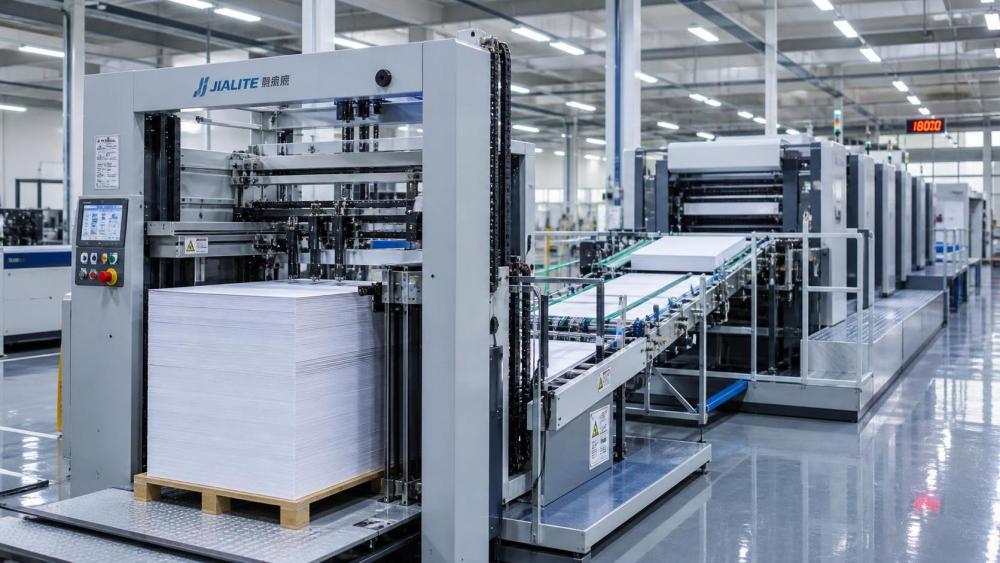
For many print and packaging operations, especially those handling folding carton, commercial print sheets, or paper-based packaging components, feeding is easy to underestimate. It looks like a support function. In practice, it can quietly determine whether the rest of the line runs smoothly or keeps waiting for material. For a finance team, the real issue is not whether a pile feeder is technically better than simpler manual or semi-automatic sheet loading. The real issue is whether faster, more stable feeding changes labor demand, uptime, spoilage, and output enough to justify the spend.
That answer depends less on brochure speed and more on where the feeder sits in your actual workflow.
Why sheet feeding has become a financial issue, not just an operating one
In commercial print and corrugated packaging plants, bottlenecks do not always come from the headline equipment. A press, die-cutter, folder gluer, or finishing system may be rated for high output, yet actual line performance often drops because sheet supply is inconsistent. Operators pause to reload. Sheets arrive unevenly. Registration suffers. Skew, doubles, and interruptions create downstream waste. Small delays repeat all shift long, and finance only sees the symptoms later: overtime, lower asset utilization, and margin leakage.
That is why pile feeders increasingly show up in capex discussions alongside larger converting and printing investments. They are not glamorous machines, but they influence the productivity of more expensive assets. If a feeder allows a press or converting unit to stay closer to its practical operating speed, then the value calculation has to include the protected performance of the entire line.
For finance approvers, this changes the framing. You are not buying feeding in isolation. You are buying continuity at the front end of a production process that may include printing, die-cutting, inspection, conveying, stacking, and palletizing.
Where Pile Feeders tend to earn their keep
Not every plant needs them. A low-volume shop with long runs, stable staffing, and limited format variation may not gain enough to support the investment. But in 2026, many operations are moving in the opposite direction: shorter runs, more order changeovers, mixed board grades, more SKU variation, and tighter delivery expectations. Under those conditions, pile feeders start to make economic sense more often.
They usually create the clearest value in environments where:
- Sheet handling is frequent and labor-intensive
- Mainline equipment is capable of running faster than the current feeding method allows
- Production interruptions during replenishment are common
- Sheet alignment and consistent presentation affect print, die-cut, or finishing quality
- Labor availability is unreliable or expensive
- Plants want to reduce operator fatigue and repetitive manual handling
That last point matters more than some financial models admit. In many factories, manual sheet loading does not fail because the process design is wrong. It fails because the process depends too heavily on consistent operator stamina across long shifts. When labor markets are tight, that becomes a business risk, not just a human resources issue.
What finance should measure before approving a purchase
A common mistake is to evaluate pile feeders only by purchase price versus expected output increase. That is too narrow. The better approach is to assess them against the costs they can remove or reduce over time.
Start with these questions:
1. How much labor is tied up in feeding today?
If a line requires one or more operators primarily to keep sheets supplied, aligned, and moving, that labor should be quantified honestly. Even when those workers perform multiple tasks, feeding dependency still has a cost. In some plants, the feeder’s value is not full labor elimination but labor redeployment to quality checks, setup support, or downstream packing.
2. How often does the line slow down because of material presentation?
This is where many business cases are either won or lost. A machine may not fully stop, yet still run below efficient speed because sheet flow is inconsistent. Those “soft losses” can be hard to capture, but production teams usually know where they occur. If the feeder stabilizes line rhythm, the gain may come from fewer micro-stoppages rather than dramatic speed jumps.
3. Does feeding quality affect waste and rework?
Misfeeds, double sheets, skewed entry, edge damage, and poor pile separation can create more than scrap. They can affect print registration, die-cut accuracy, creasing quality, and downstream folding performance. In packaging plants, a feeding problem can travel through the line and become a finishing problem later.
4. Will the feeder improve utilization of higher-value assets?
This may be the strongest justification. If a pile feeder helps a press, die-cutter, or converting system operate closer to realistic capacity, the return should be linked to those machines, not viewed as a standalone feeding upgrade.
Faster does not always mean better, and finance teams know this instinctively
Vendors often position pile feeders around speed. That is understandable, but speed alone is a weak approval argument. Finance approvers tend to ask a harder question: what kind of speed? Peak speed on ideal stock? Average shift speed across mixed jobs? Or sustainable speed without added maintenance, jams, and spoilage?
In print and packaging, sustainable throughput matters more than nameplate performance. A feeder that runs slightly slower on paper but delivers cleaner pile separation, steadier sheet presentation, and fewer stoppages may produce stronger economics than a faster unit that becomes sensitive during grade changes or short-run setups.
This is especially relevant in corrugated and paper-based packaging environments, where sheet quality, warp, flute profile, coating, and stack condition can vary. A pile feeder should therefore be evaluated for adaptability, not just speed claims. Financially, adaptability protects utilization across a broader job mix.
Hidden cost categories that often justify the investment
The strongest business cases for pile feeders usually come from costs that were never fully measured before. A careful approval process should look beyond visible labor and consider the following:
- Downtime cost: brief but repeated interruptions reduce daily output and create schedule pressure later in the shift.
- Waste cost: damaged or misfed sheets consume material, ink, coating, adhesive, and machine time.
- Overtime risk: lines that underperform early often recover with overtime, which hides root-cause inefficiency.
- Operator dependency: output quality becomes too dependent on individual skill and attentiveness.
- Maintenance knock-on effects: poor sheet presentation can increase stress on downstream transport and registration systems.
- Planning instability: when feeding is unpredictable, schedule confidence drops and urgent jobs become harder to absorb.
For financial decision-makers, these categories matter because they affect total operating cost, not just departmental convenience. A pile feeder that reduces variability can improve forecasting accuracy for production planning as well as actual output.
When a Pile Feeder may not be worth the cost
Not every equipment proposal deserves approval, and finance teams should be comfortable saying no when the use case is weak.
A pile feeder may be difficult to justify if the line already has sufficient feeding automation, if volumes are too low to create meaningful payback, or if the real bottleneck sits somewhere else, such as makeready time, drying, die changes, inspection, or downstream packing. In those cases, better feeding will not solve the plant’s main performance problem.
Another warning sign is when the business case relies entirely on theoretical speed gains while ignoring job mix. If most work is short-run, highly variable, or constrained by frequent changeovers, then the feeder’s value must come from setup efficiency, labor reduction, and consistency, not pure throughput.
Finance should also be cautious if the proposal does not address integration. A feeder can be technically capable and still underdeliver if pile logistics, sheet transfer, operator access, or line control interfaces are not thought through in advance.
Questions worth asking vendors before signing off
A practical approval discussion usually gets better when finance asks operational questions early. You do not need to become a process engineer, but you do need enough clarity to separate real value from optimistic assumptions.
- What sheet sizes, substrates, and pile conditions can the feeder handle consistently?
- How does performance change across mixed paper grades or corrugated sheet conditions?
- What operator involvement is still required during normal production?
- How does the feeder affect changeovers, not just long-run feeding?
- What upstream and downstream equipment interfaces are needed?
- What maintenance routines and consumables should be budgeted?
- Can the supplier explain expected value in terms of uptime, waste, labor, and protected line capacity rather than only speed?
Those questions align well with how platforms such as CPCS approach packaging machinery evaluation: not as isolated machine features, but as part of a larger production system where uptime stability, order change efficiency, material handling, and long-term operating cost matter as much as purchase price.
The 2026 reality: system-based investment decisions
Across commercial printing and corrugated packaging, equipment buying has shifted. Plants are less willing to judge machines only by initial cost, and more likely to evaluate how they influence the economics of the full workflow. That shift is one reason pile feeders are getting more attention. They sit at a point in the process where a relatively targeted investment can support labor efficiency, line stability, and better performance from more expensive downstream assets.
For finance approvers, this does not mean every pile feeder request should be approved. It means the decision should be made with a wider lens. If the feeder reduces manual dependency, improves sheet consistency, protects print or converting quality, and helps the line sustain efficient throughput, then its value may be larger than its category suggests.
On the other hand, if feeding is not the true constraint, or if the proposal lacks a clear link to measurable operating gains, then the capital is probably better used elsewhere.
So, are Pile Feeders worth the cost?
In many high-volume or labor-constrained print and packaging operations, yes, Pile Feeders can be worth the cost in 2026. But not because they are faster in a general sense. They are worth it when faster sheet handling translates into less labor exposure, fewer interruptions, more stable quality, lower waste, and stronger utilization of the rest of the line.
That is the standard finance should hold. Not “Is this machine impressive?” but “Does this investment improve operating economics in a way we can defend six, twelve, and twenty-four months after installation?”
When that question is answered clearly, pile feeders stop looking like an accessory purchase and start looking like what they often are: a practical lever for making production capacity more real, more stable, and more profitable.
Related News
 Folder Gluer Line Cost Factors That Shape Payback and ROIExplore folder gluer line cost factors that shape payback and ROI—from automation and changeovers to waste, labor, uptime, and lifetime cash performance.Ms. Vivienne Cross
 Steam Boiler Price Factors That Shape Industrial Energy BudgetsSteam boiler price depends on capacity, fuel, efficiency, installation, and reliability. Discover how to control lifecycle costs and protect packaging production.Ms. Vivienne Cross
 How Paperboard Converting Machines Reduce Waste and Improve ThroughputPaperboard Converting Machines reduce waste, speed up setup, stabilize production, and improve carton quality. Explore smarter ways to boost throughput and yield.Ms. Vivienne Cross
 Is an Offset Press Cost-Effective for Short-Run Carton Jobs?Is an offset press economical for short-run carton work? Explore break-even costs, setup waste, quality demands, and workflow factors to choose the most profitable print route.Ms. Vivienne Cross
 How Shaftless Unwind Stands Reduce Changeover Time and Material WasteShaftless unwind stands reduce roll-change time, stabilize web tension, and cut paper waste for more efficient corrugated and packaging production.Ms. Vivienne Cross
 How an Automatic Paper Reel Handling System Improves Mill SafetyDiscover how an automatic paper reel handling system reduces crush risks, forklift traffic, and downtime while improving mill safety and reliable production flow.Ms. Vivienne Cross