What Drives the Total Cost of a Web Tension Control System
The Purchase Price Is Only One Cost Line
A web tension control system can look like a modest line item beside a press, laminator, slitter rewinder, coating line, or corrugator upgrade. That impression often changes once engineering work, commissioning time, material losses, controls integration, and maintenance support are included. For a financial approver, the useful question is not “What does the controller cost?” It is “What will it cost to achieve stable tension at the operating speeds, web widths, substrates, and job-change pattern this plant actually runs?”
The answer varies substantially. A simple unwind brake control arrangement on a stable, low-speed process has a different cost profile from a multi-zone closed-loop system coordinating unwinds, infeed sections, print units, dryers, rewinds, and automatic splicing. In packaging and converting operations, poor tension is rarely an isolated technical fault. It can surface as registration drift, wrinkles, web breaks, uneven coating, poor die-cutting alignment, roll defects, excess trim waste, slower speeds, or rejected finished goods.
That is why the lowest quotation can be expensive over the life of the asset, while the highest quotation is not automatically justified. Total cost depends on whether the proposed system matches the line’s mechanical condition and process demands, whether its interfaces are fully scoped, and whether its controls can remain supportable after installation.
Start With the Required Control Architecture
The largest driver of installed cost is usually system scope. “Web tension control” can describe anything from a manual brake adjustment with a basic indicator to a coordinated, closed-loop control system with load cells, dancers, servo drives, web-guiding interfaces, recipe settings, and production-data connections. Comparing these under one price heading produces misleading conclusions.
A financial review should establish which sections require active control and why. An unwind handling heavy paper or corrugated medium may need a different braking range and sensor design from a film, foil, labelstock, lightweight paper, or coated substrate application. A process with a single unwind and stable roll geometry may be adequately served by a focused control loop. A line that accelerates rapidly, runs multiple substrate grades, includes splices, or depends on close print-to-convert registration may require several coordinated zones.
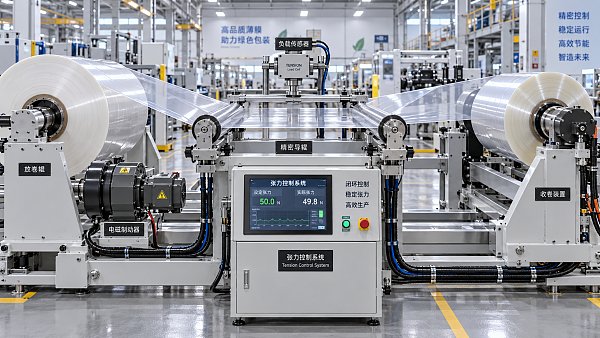
The costs associated with architecture typically include:
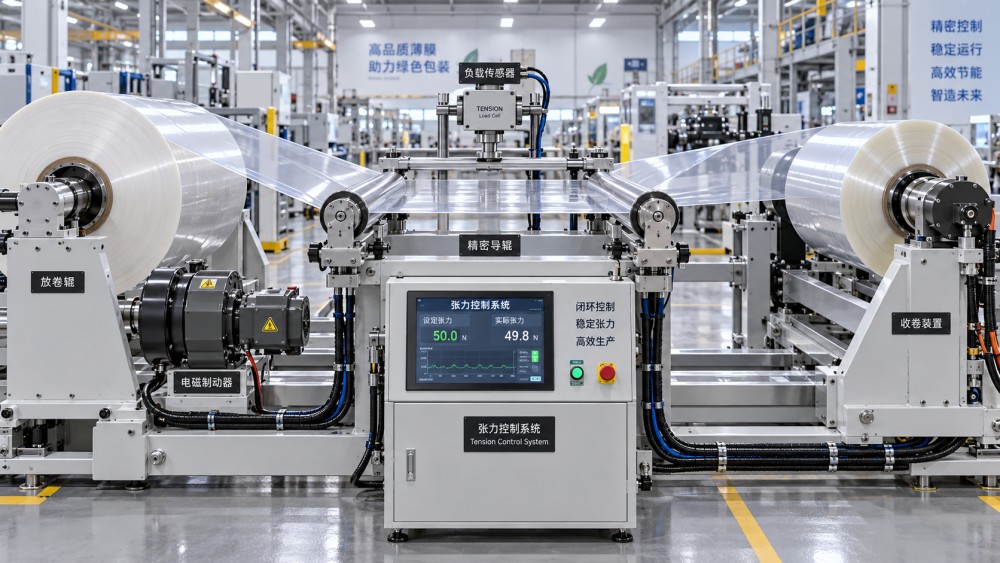
- Load cells, dancer assemblies, ultrasonic or diameter sensors, and their mounting hardware.
- Pneumatic brakes, electromagnetic brakes, clutches, servo motors, drive upgrades, and actuator controls.
- A tension controller, PLC function blocks, motion-control hardware, operator interface screens, and safety-related integration.
- Wiring, cabinets, power conditioning, fieldbus communications, and environmental protection appropriate to the machine location.
- Mechanical modifications to idler rolls, unwind stands, brake shafts, dancer mechanisms, or roll-loading arrangements.
- Integration with web guiding, splice detection, print registration, dryer control, speed references, and line-stop logic.
Each item should be treated as a separate cost category in the approval package. A supplier quotation that lists only “controller,” “sensor,” and “installation” may conceal major exclusions. For example, a quoted controller may assume that the existing brake is suitable, the machine has a reliable speed reference, and load-cell mounts are rigid enough to generate usable signals. Those assumptions may not hold on an older converting line.
A more sophisticated architecture should be justified by a specific operational problem. If the line’s main loss is operator adjustment during frequent job changes, recipe control and repeatable setpoints can have economic value. If web breaks happen mainly because rolls are loaded off-center or because a worn brake cannot respond smoothly, adding advanced software without correcting the mechanical cause will not create the expected return.
Installation Risk Often Separates a Good Quote From a Complete Budget
Many tension-control projects are approved on an equipment price that does not reflect the work required to make the system function reliably. The commissioning phase is where incomplete scope becomes visible. A plant may then face additional downtime, expedited parts, unplanned fabrication, external controls labor, or a dispute over responsibility between the machine builder, electrical contractor, and control supplier.
Installation cost is affected by the condition and accessibility of the existing machine. Retrofit work can require new mounting frames, guarding changes, shaft modifications, cable routing through congested areas, panel-space expansion, or replacement of obsolete drives. A new line avoids some retrofit uncertainty, but it introduces coordination risk: tension control needs defined electrical, mechanical, software, and acceptance-test responsibilities before the machine is built.
Controls integration deserves particular scrutiny. The tension system must normally exchange information with the master line speed, emergency-stop logic, acceleration and deceleration profiles, splice events, and drive controls. If the plant expects tension data to appear in a supervisory system or production dashboard, the required tags, protocols, data ownership, and cyber-access boundaries should be specified early. A controller with communication capability does not by itself provide a finished plant-data integration.
Financial approvers should ask for a commissioning plan rather than accepting a generic statement that start-up is included. The plan should identify the expected production stoppage, prerequisites before arrival, test materials, substrate range, calibration method, acceptance conditions, and the party responsible for resolving mechanical issues found during tuning. This converts installation risk from an open-ended contingency into an assessable project cost.
Material Waste and Lost Output Usually Matter More Than Controller Power Consumption
A web tension controller consumes relatively little electricity compared with dryers, heaters, compressors, large motors, or a full printing and converting line. Energy use can matter where drives or pneumatics are being redesigned, but it is rarely the main economic case for tension control. Material utilization and uptime usually carry more weight.
For packaging producers, a single unstable web event can consume material before the fault is recognized and can also create downstream loss. In flexographic or gravure processes, tension variation may affect registration and force a quality hold. In laminating or coating, it can contribute to wrinkles, curl, uneven application, or unusable roll build. In slitting and rewinding, poor tension may create telescoping, loose rolls, edge damage, or customer-facing defects discovered after shipment. The cost is broader than the damaged web at the point of failure.
The financial model should therefore separate three effects:
- Direct scrap: substrate, ink, adhesive, coating, film, paper, board, and other materials discarded during breaks, setup, or unstable running.
- Recovery loss: labor and machine time required to stop, rethread, restart, stabilize the line, inspect output, and restore normal speed.
- Quality exposure: rework, downgraded output, delayed shipment, or customer complaints where tension variation affects the finished product.
These losses should not be estimated from ideal line speed alone. The relevant baseline is the line’s actual performance: how often it slows down, how much material is consumed during restart, how many jobs require manual tension adjustment, and how often production is limited to a narrower operating window than the machine was designed to handle. Even when plant records are imperfect, a short period of structured observation can produce a more credible investment case than a generic supplier claim about waste reduction.
The same discipline applies to projected benefits. A proposal should link expected improvements to the mechanism that produces them. Faster brake response may reduce tension excursions during acceleration. Better load-cell feedback may improve control accuracy. Stored recipes may reduce setup variation. A new unwind arrangement may stabilize roll changes. These are different benefits, with different assumptions. Treating them all as one percentage improvement makes approval easier on paper but weaker in practice.
Serviceability Is a Long-Term Cost Decision
A web tension controller manufacturer should be evaluated partly as a long-term support partner, especially when the system will sit inside a production asset with a much longer life than its original electronics. Controllers, displays, sensors, drives, communication modules, and software revisions can all become future cost factors. A low acquisition price can lose its advantage if replacement components are difficult to source, documentation is incomplete, or only one specialist can diagnose the system.
Support cost is influenced by practical questions:
- Are standard components used where appropriate, and can critical spare parts be identified before commissioning?
- Can the plant access electrical drawings, parameter backups, alarm descriptions, calibration procedures, and software versions?
- Does the design allow a failed sensor, controller, or drive module to be replaced without extensive retuning?
- Who can provide remote troubleshooting, and what access is required for it?
- Are operators and maintenance staff trained differently, with clear limits on which settings should be changed?
- Can the system continue to operate in a controlled fallback mode if a noncritical interface fails?
These details are particularly important for factories running varied jobs with limited in-house automation support. A highly capable system that operators cannot diagnose may lead to unnecessary service calls and conservative operating behavior. Conversely, a stripped-down system may leave production teams dependent on manual adjustments that erase the intended productivity gain. The appropriate level of sophistication is the level the plant can maintain consistently.
Normalize Supplier Bids Before Selecting on Price
When comparing offers, financial approvers should request a common commercial and technical basis. Otherwise, one supplier may quote a full retrofit with mechanical work, panel construction, on-site tuning, and operator training, while another quotes components only. The apparent price difference then says little about total cost.
A bid comparison should show the number of control zones, sensor type and quantity, actuators included, existing components retained, panel and wiring scope, PLC or drive integration, software functions, commissioning days, training, travel, warranty terms, spare-parts recommendations, and exclusions. It should also state the intended substrate range, maximum and minimum usable tension, speed conditions, roll dimensions, and assumptions about line condition.
Acceptance criteria deserve the same attention as hardware. A useful acceptance definition might cover stable running through specified speed changes, repeatable setpoints for agreed materials, controlled response during splice or roll-change conditions, alarm behavior, and documented calibration. It should avoid vague promises such as “improved tension” unless the measurement method and operating conditions are defined.
Supplier capability matters because tension control sits at the intersection of mechanics, drives, sensing, and process knowledge. However, a familiar brand name or a technically impressive demonstration should not substitute for scope clarity. The supplier best positioned to reduce total cost is the one that can explain the operating limits of the proposed arrangement, identify dependencies outside its own equipment, and document how the system will be handed over to the plant.
Build the Approval Case Around Avoided Loss, Not a Theoretical Payback
The strongest investment case usually combines measurable avoided loss with a transparent allowance for risk. Start with the installed project cost: equipment, mechanical and electrical work, engineering, production downtime, commissioning, training, initial spares, and any required controls upgrades. Then identify benefits that can be traced to current operating conditions: fewer web breaks, lower setup scrap, less time spent adjusting tension, improved usable speed, reduced rework, or fewer quality holds.
Some benefits should remain outside the base calculation unless the plant can substantiate them. Extra sales capacity, premium pricing, customer retention, and labor reductions may be possible outcomes, but they are less defensible when they depend on several changes beyond tension control. Keeping the primary case conservative improves decision quality and makes post-installation review meaningful.
The final approval should also distinguish between a correction project and a capability project. A correction project addresses a known cost of instability on an existing line. Its economics depend on restoring predictable operation. A capability project supports a new substrate range, higher automation level, faster changeover, or a new production process. Its value should be assessed against the broader equipment strategy, not charged entirely to the tension-control package.
For financial approvers, the practical conclusion is straightforward: fund a web tension control system as an operating-performance investment only after its full installed scope, expected loss reduction, and maintenance ownership are visible. The controller itself is a small part of the decision. The lasting cost is determined by how well the system fits the machine, the material, and the production discipline around it.
Related News
 What Drives the Total Cost of a Web Tension Control SystemWeb tension controller manufacturer insights: uncover total system costs, from installation and integration to waste reduction, uptime, and long-term support.Prof. Kaelen Sterling
 How Real Time Ink Viscosity Sensors Improve Flexo Press StabilityReal time ink viscosity sensors help flexo printers stabilize color, reduce waste, and control ink drift with faster, data-driven adjustments.Prof. Kaelen Sterling
 How to Compare Ink Viscosity Sensors Price Against Process ValueInk viscosity sensors price is only one factor. Learn how to compare sensor costs with quality, waste reduction, automation needs, and long-term press value.Prof. Kaelen Sterling
 Ink Handling Systems: Choosing the Right Setup for Viscosity ControlInk handling systems for flexographic printing: discover how to choose viscosity control, circulation, cleaning, and automation setups that reduce waste and improve color consistency.Prof. Kaelen Sterling
 How to Choose an Ink Recirculation System Manufacturer for Stable Print QualityChoose an ink recirculation system manufacturer that delivers stable print quality through precise flow control, ink compatibility, cleanability, and reliable automation.Prof. Kaelen Sterling
 How Precision Intermittent Motion Drives Improve Indexing AccuracyPrecision intermittent motion drive solutions improve indexing accuracy, reduce vibration, and stabilize dwell performance for high-speed packaging and converting equipment.Prof. Kaelen Sterling