What Determines Plate Cylinder Price and How to Budget for Replacement
Why Plate Cylinder Replacement Deserves Financial Attention
For financial approvers, a plate cylinder is easy to underestimate. It may appear on a maintenance request as a single replacement item, often with a specification number, a supplier quotation, and a delivery lead time. Yet the plate cylinder price can influence far more than the spare-parts budget. It can affect print consistency, press availability, waste levels, customer approval risk, and the ability to complete scheduled jobs without costly interruption.
This is especially relevant in commercial printing, flexible packaging, label production, and corrugated pre-printing, where cylinder condition directly affects image transfer and registration. A cylinder that is technically usable but no longer stable may create recurring quality losses that are difficult to trace in monthly accounts: excessive make-ready sheets, rejected batches, color variation, customer claims, overtime, or lost production slots.
The practical question is therefore not simply, “What is the price of a replacement cylinder?” It is, “What cost is the business accepting by delaying, over-specifying, or poorly sourcing this replacement?” A sound budget review should compare the acquisition cost with the operational exposure of the decision.
The Quotation Price Is Only the Starting Point
Plate cylinder pricing varies widely because a cylinder is not a fully standardized commodity. Two items described with the same broad name can differ in diameter, face width, material, surface treatment, mounting configuration, balance requirements, engraving or machining precision, and compatibility with a specific press model. A lower quotation may reflect a valid alternative, but it may also omit requirements that the production team assumes are included.
For finance teams, the first discipline is to separate the quoted unit price from the total landed and operational cost. A quotation should be reviewed for more than the headline number:
- Base cylinder body, shaft, journals, gears, bearings, or mounting accessories included or excluded.
- Material grade and surface finish, particularly where corrosion resistance, wear resistance, or repeated cleaning matters.
- Machining, engraving, plating, coating, or balancing requirements.
- Freight, packaging, insurance, import duties, and local handling costs.
- Inspection records, dimensional certificates, runout tolerances, and acceptance criteria.
- Warranty coverage and the supplier’s response obligations if the cylinder fails commissioning.
- Expected lead time, expedited production charges, and the cost of holding safety stock.
A replacement that appears inexpensive before delivery may become expensive if it requires additional fitting work, causes extended press adjustment, or arrives after a production-critical failure. Conversely, a higher-priced cylinder may be justified when it reduces changeover time, improves stability on high-value jobs, or gives the site access to dependable technical support.
What Actually Drives Plate Cylinder Price?
Dimensions and mechanical design
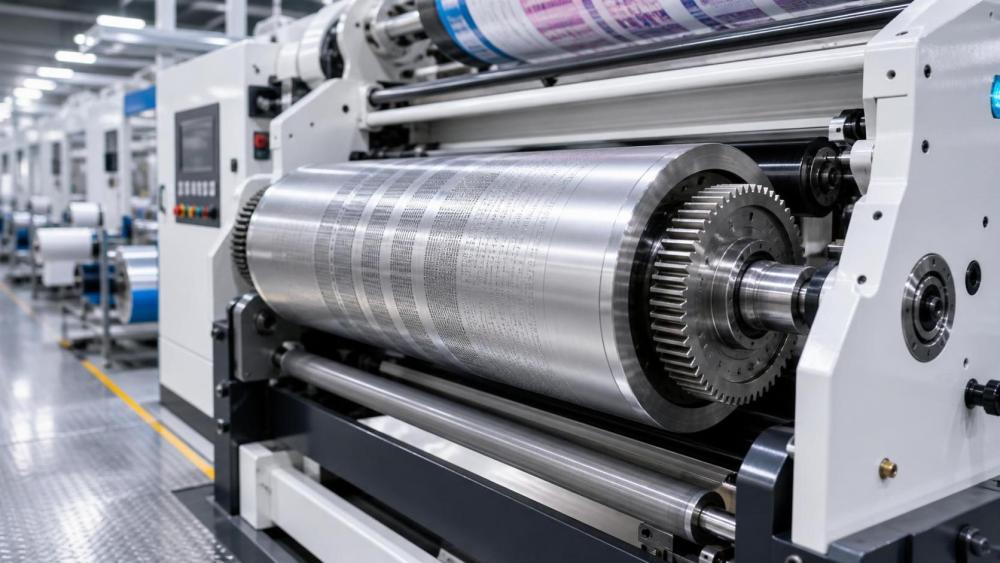
Diameter, repeat length, face width, wall thickness, shaft arrangement, and gear configuration are fundamental cost drivers. Larger cylinders consume more material and may require more demanding machining and balancing. Cylinders designed for high-speed presses or wide-web applications also face tighter requirements for concentricity and dynamic stability.
Financial reviewers should be cautious when comparing pricing across different cylinder dimensions. A simple price-per-unit comparison can be misleading because the larger or more complex cylinder may carry disproportionate manufacturing, transport, and handling costs. The relevant comparison is between technically equivalent components for the same press and production duty.
Material and surface specification
Steel, aluminum, composite constructions, plated surfaces, and specialized coatings can all appear in different printing and converting environments. The appropriate choice depends on press design, plate mounting method, ink and cleaning chemistry, humidity, expected run length, and the required print quality.
A lower-cost material is not automatically a poor decision. In short-run or low-duty applications, an economical specification may be entirely adequate. But where cylinders face continuous production, aggressive solvents, frequent plate changes, or strict brand-color requirements, a cheaper material can create a false economy through wear, corrosion, or unstable print performance.
The procurement file should clearly state why the proposed material matches the actual operating environment. “Equivalent material” is not a sufficient approval basis unless the supplier identifies the properties being treated as equivalent and the factory confirms that those properties meet its process requirements.
Precision, balancing, and print-quality requirements
High-quality printing depends on more than the press itself. Cylinder runout, surface condition, balance, and mounting accuracy can affect registration, pressure uniformity, vibration, and image consistency. In precision packaging work, these variables may influence barcode readability, fine text clarity, process color repeatability, and the visual consistency expected by brand owners.
For a basic replacement, the necessary tolerances may be relatively straightforward. For a cylinder used in high-speed flexographic work, premium labels, security-related print, pharmaceutical cartons, or demanding repeat jobs, tighter tolerances can materially increase the price. Those costs should be evaluated against the value at risk. A printing defect on a low-margin transit carton job does not have the same financial consequence as a defect on regulated packaging or a national brand launch.
Finance should ask production and quality teams to classify the cylinder by application criticality. This helps avoid two opposite mistakes: approving a premium specification where a standard one would perform adequately, or approving a minimal-cost item for a production point where failure produces outsized commercial consequences.
Press compatibility and retrofit work
Replacement cylinders are often purchased years after the original press installation. Over that period, equipment may have been modified, gears may have been replaced, control systems may have changed, and local maintenance practices may have altered the effective configuration. The original part number can be useful, but it should not be treated as complete technical validation.
Compatibility risk is particularly important when buying from a third-party supplier. The cylinder may fit physically but still introduce issues with plate mounting, gear mesh, registration setup, automated changeover systems, or operating speed. Any proposal involving reverse engineering, adaptation, or non-original components should include a documented dimensional review and a defined commissioning responsibility.
A modest saving on purchase price can disappear quickly when installation requires repeated adjustment or when the press loses a shift of production. The approval decision should therefore include the cost of internal engineering time and trial production, not merely the supplier invoice.
Replacement Timing Changes the Economics
There are three common moments when a business buys a plate cylinder: after a failure, before a predicted failure, or as part of a planned capacity or quality upgrade. Each has a different cost profile.
Emergency replacement is usually the least favorable purchasing condition. The plant has limited negotiating leverage, expedited manufacturing may be required, shipment choices become more expensive, and technical checks may be compressed. If the press is a bottleneck asset, the downtime cost can exceed the cylinder price within a short period. The real financial issue is not whether the urgent quotation is high; it is whether the organization had adequate condition monitoring and contingency planning to avoid the emergency.
Planned replacement generally offers better control. The business can verify dimensions, seek competitive quotations, schedule installation during a planned shutdown, and retain the removed component for inspection or possible repair. It also allows procurement to evaluate whether a redesigned or upgraded cylinder would improve operating performance enough to justify the added spend.
Upgrade-driven replacement needs the strongest business case. A cylinder with improved surface durability, reduced vibration, easier plate mounting, or better compatibility with automated workflows may create measurable operating benefits. However, those benefits should be quantified in terms that finance can test: fewer changeover minutes, reduced waste rate, higher usable press availability, lower external repair spending, or improved yield on specified jobs.
Do Not Assume Repair Is Always Cheaper
Repair, resurfacing, replating, regrinding, or journal restoration can be economically attractive, particularly for large or specialized cylinders. In some cases, restoring an existing cylinder shortens lead time and preserves compatibility with an older press. But repair should not be approved solely because its quotation is lower than the price of a new cylinder.
The key question is whether the repair restores the component’s functional life and tolerance profile to a level appropriate for the intended use. A repair can be poor value when the cylinder has repeated damage, insufficient remaining wall thickness, persistent runout, unstable balancing characteristics, or a history of causing quality problems after previous refurbishment.
Before approving repair, ask for an inspection report that covers the relevant condition indicators. Depending on the cylinder design, this may include surface wear, corrosion, runout, concentricity, journal condition, gear wear, cracking risk, coating thickness, and balance status. The report should identify both what will be repaired and what limitations will remain afterward.
A useful internal rule is to compare the expected cost per remaining productive year, rather than simply comparing repair cost with replacement cost. A repaired cylinder that lasts one year and requires additional press adjustment may be less economical than a new cylinder with a longer predictable service life.
Budgeting Should Include Production Risk
A maintenance budget often captures the direct cost of components but not the financial effect of reduced output. For plate cylinders, this gap can be significant because the part sits within a process where small mechanical deviations can create large downstream losses.
The production-risk calculation does not need to be overly complex. Finance and operations can use a practical scenario model based on the press involved:
- Expected hours of downtime if the cylinder fails unexpectedly.
- Contribution margin or avoidable loss associated with unavailable press time.
- Estimated waste during restart, registration adjustment, and color approval.
- Potential cost of delayed customer shipments, expedited logistics, or outsourced production.
- Likelihood and financial impact of quality claims if an aging cylinder remains in service.
- Cost of labor, engineering support, and spare-component inventory.
The result will not be a perfectly precise number, and it does not need to be. Its value is in making the tradeoff visible. A cylinder replacement request becomes much easier to evaluate when the approver can see both the purchase cost and a reasonable estimate of exposure under continued operation.
This is particularly important for facilities handling short runs and frequent job changes. In those environments, equipment availability is not only a capacity issue. It affects scheduling flexibility, delivery reliability, and the ability to absorb late-order changes without disrupting the entire production plan.
How to Compare Suppliers Without Reducing the Decision to Price
Competitive bidding remains useful, but the comparison must be normalized. Procurement teams should request a common technical specification and require suppliers to identify exceptions explicitly. Without this discipline, three quotes may look comparable while covering materially different products and services.
For a financially meaningful comparison, consider five areas: technical conformity, delivery reliability, quality assurance, support capability, and commercial terms. A supplier with a low unit price but no demonstrated ability to validate dimensions or respond to an installation issue may transfer risk back to the buyer. This matters most where the plant has limited in-house machining expertise or where the press cannot be taken offline for prolonged troubleshooting.
Supplier capacity is also relevant. A vendor may be competitive for routine cylinders but unable to support urgent replacement, specialty coatings, precision balancing, or documentation requirements. For critical assets, it can be reasonable to qualify more than one source, even when one supplier remains the preferred commercial choice.
Original equipment manufacturers may offer the strongest compatibility assurance, while independent suppliers may offer cost advantages or faster local service. Neither route is universally superior. The decision should reflect asset criticality, the age of the press, the availability of drawings and technical records, and the factory’s ability to manage commissioning risk.
Questions That Improve an Approval Request
A well-prepared request should allow a financial approver to understand what is being bought, why it is needed now, and what happens if the decision is deferred. The strongest requests generally answer the following questions clearly:
- What is the current cylinder condition, and what evidence supports replacement or repair?
- Which press, product categories, and customer commitments depend on it?
- Is this a standard replacement, an emergency purchase, or an upgrade?
- What technical requirements are mandatory, and which are optional improvements?
- How do the quoted options differ in material, precision, warranty, lead time, and included services?
- What is the expected installation window and anticipated production interruption?
- What is the likely financial impact of deferring the decision?
This format also improves post-investment review. Once the replacement is installed, the plant can compare actual downtime, setup waste, print quality, and maintenance demand with the assumptions used in the approval. Over time, those records make future plate cylinder budgets more credible and reduce reliance on urgent judgement calls.
A More Useful View of “Lowest Cost”
In a packaging or printing operation, the lowest plate cylinder price is not necessarily the lowest-cost decision. It may be the right choice for a non-critical press, a temporary production requirement, or a well-understood standard component. But for a bottleneck machine, a quality-sensitive application, or an asset with limited redundancy, the decision should be framed around lifecycle value and production protection.
That means approving enough technical verification before purchase, giving maintenance teams a planned replacement path, and distinguishing between a cylinder that is merely operational and one that remains economically reliable. When those distinctions are reflected in the budget, replacement spending becomes easier to defend because it is tied to uptime, usable output, and customer-service risk rather than a spare-part line alone.
Related News
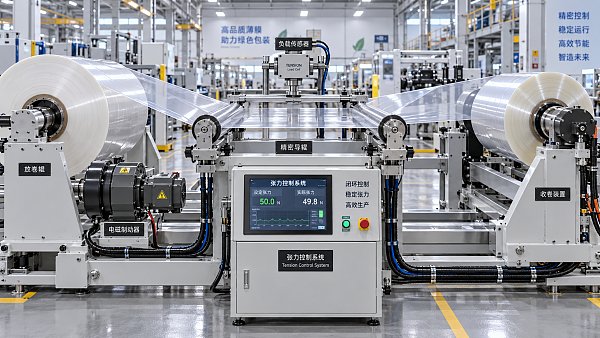
 What Drives the Total Cost of a Web Tension Control SystemWeb tension controller manufacturer insights: uncover total system costs, from installation and integration to waste reduction, uptime, and long-term support.Prof. Kaelen Sterling
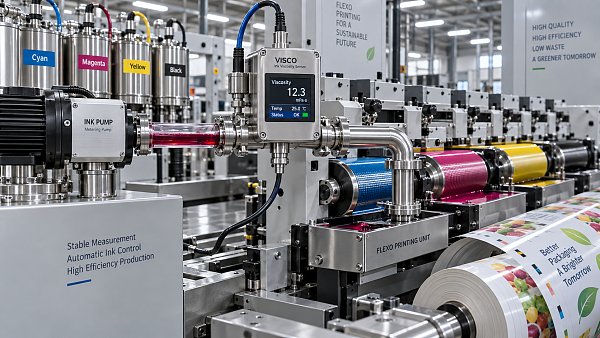
 How Real Time Ink Viscosity Sensors Improve Flexo Press StabilityReal time ink viscosity sensors help flexo printers stabilize color, reduce waste, and control ink drift with faster, data-driven adjustments.Prof. Kaelen Sterling
 How to Compare Ink Viscosity Sensors Price Against Process ValueInk viscosity sensors price is only one factor. Learn how to compare sensor costs with quality, waste reduction, automation needs, and long-term press value.Prof. Kaelen Sterling
 Ink Handling Systems: Choosing the Right Setup for Viscosity ControlInk handling systems for flexographic printing: discover how to choose viscosity control, circulation, cleaning, and automation setups that reduce waste and improve color consistency.Prof. Kaelen Sterling
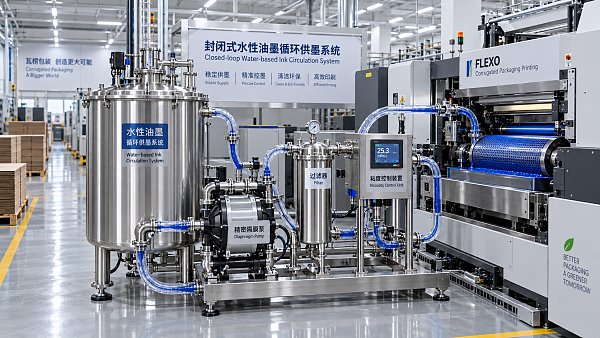
 How to Choose an Ink Recirculation System Manufacturer for Stable Print QualityChoose an ink recirculation system manufacturer that delivers stable print quality through precise flow control, ink compatibility, cleanability, and reliable automation.Prof. Kaelen Sterling
 How Precision Intermittent Motion Drives Improve Indexing AccuracyPrecision intermittent motion drive solutions improve indexing accuracy, reduce vibration, and stabilize dwell performance for high-speed packaging and converting equipment.Prof. Kaelen Sterling