How to Choose an Ink Recirculation System Manufacturer for Stable Print Quality
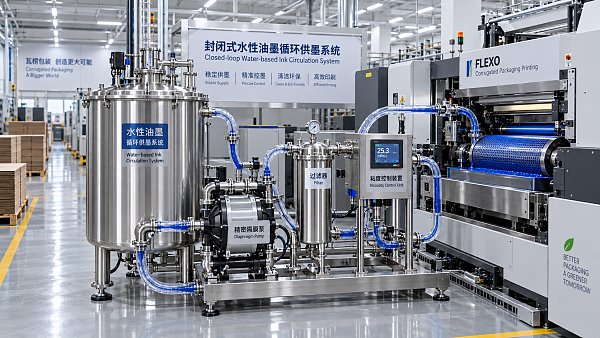
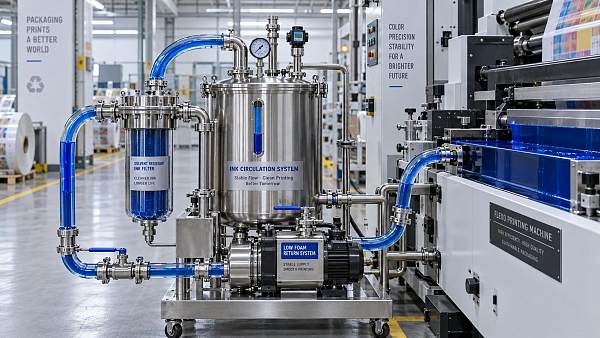
Stable print quality depends less on whether ink is simply “moving” and more on whether the circulation system keeps ink in a controlled condition from the supply container to the print station and back again. A manufacturer should therefore be assessed as a process-control partner, not merely as a pump or hose supplier.
For flexographic, gravure, offset, and packaging print operations, poor recirculation design can appear on press as density drift, inconsistent hue, foam, sediment-related defects, viscosity instability, contamination, delayed start-up, or excessive ink loss during wash-up. The most suitable ink recirculation system manufacturer is the one able to demonstrate that its system architecture matches the ink chemistry, press configuration, production speed, cleaning regime, and quality-control requirements of the intended application.
Start with the failure modes that the system must prevent
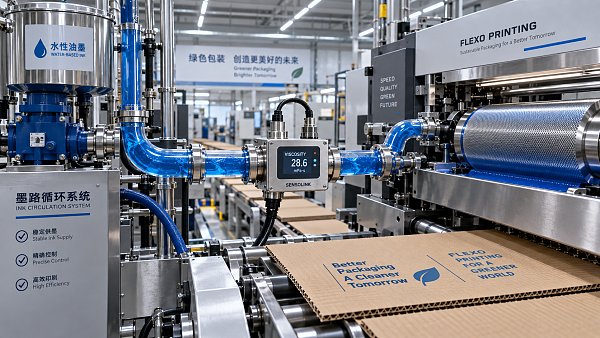
Technical evaluation becomes more reliable when it begins with the defects or operating constraints that must be controlled. “Stable print quality” is too broad to be a useful specification on its own. A water-based flexographic line printing corrugated board may need to manage viscosity change caused by evaporation, pigment settling during intermittent operation, and foam generated by return flow. A solvent-based packaging press may place greater emphasis on closed-loop handling, solvent compatibility, vapor control, grounding, and safe recovery during cleaning. UV, metallic, white, opaque, or highly pigmented inks can introduce further challenges involving shear sensitivity, settling behavior, filtration, and line flushing.
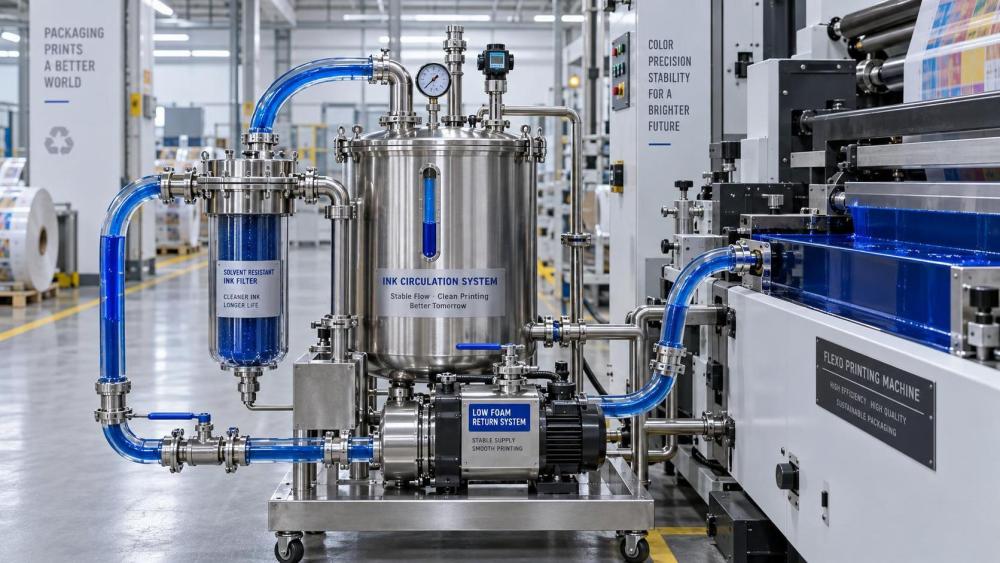
The manufacturer should be able to translate these conditions into a defined fluid path: tank geometry, agitation method, pump selection, supply and return line sizing, filtration arrangement, sensor placement, valve logic, and wash-up sequence. A supplier that only quotes flow rate and tank volume without discussing the source of current color variation is not yet addressing print stability.
It is also important to distinguish between a system intended to transfer ink and one intended to condition ink continuously. Transfer-only arrangements may move material efficiently but still allow viscosity, temperature, solids distribution, or air content to change before ink reaches the chamber, fountain, or tray. In high-speed printing, that difference is consequential because the press may amplify small fluid inconsistencies into visible density or color variation.
Assess the hydraulic design, not just the pump model
Recirculation performance is governed by the complete loop. Pump capacity matters, but it cannot be evaluated in isolation from line length, elevation changes, restrictions at filters and valves, print-unit demand, ink rheology, and return-flow behavior. An oversized pump can create excessive agitation, splashing, foaming, or unnecessary shear. An undersized pump may fail to maintain consistent supply at the most demanding print station or may respond too slowly when viscosity changes.
Manufacturers should provide a hydraulic basis for the proposed configuration, including expected operating flow, pressure range, pipe diameters, return capacity, and acceptable pressure drop across critical components. The evaluation should also establish whether each print deck receives independent regulation. Centralized systems can simplify bulk handling, but individual colors or units may still require separate flow, pressure, or viscosity control because their ink coverage, pigment loading, anilox volume, and running conditions differ.
Pressure stability at the print unit is often more useful than a nominal maximum pressure figure. In a chambered doctor blade flexographic press, unstable feed pressure can contribute to leakage, inconsistent chamber filling, and variable ink transfer. In open fountain or tray arrangements, the concern may be avoiding turbulence and level fluctuation. The proposed design should identify the controlled variable at the press interface rather than assuming a single pump setting will suit every job.
System response during start, stop, acceleration, and job change also deserves scrutiny. A loop that appears stable at steady speed may behave poorly when the press pauses, when a unit is disengaged, or when several stations call for ink simultaneously. Request an explanation of how bypasses, pressure relief, return routing, and control logic behave under these non-steady conditions.
Ink compatibility is a materials and process question
Compatibility should be documented for all wetted components, not described in general terms. The relevant list includes pumps, seals, diaphragms, hoses, rigid pipework, filter housings, valves, sight glasses, sensor bodies, tank linings, gaskets, and adhesive or coating materials used in assemblies. Water-based, solvent-based, UV, and specialty inks can interact very differently with elastomers and plastics. A component that performs well with one formulation may swell, harden, leach contaminants, or lose sealing performance with another.
Compatibility review should include cleaning agents and flush fluids as well as production ink. In practice, wash-up chemistry can be more aggressive than the ink itself. If the system will be used for food-contact packaging work, low-migration applications, pharmaceutical cartons, or other controlled packaging categories, the assessment should also consider contamination control, cleaning validation requirements, and the risk of retained residue in dead legs or difficult-to-drain components.
High-opacity white, metallic, fluorescent, and heavily pigmented inks require particular attention. Their particle behavior can make simple tank mixing inadequate. The supplier should explain whether the proposed agitation strategy prevents settlement without introducing excessive air or altering the ink structure. A technically credible answer will address tank shape, mixer location, agitation intensity, return-entry position, and whether recirculation alone is sufficient for the ink class concerned.
Viscosity, temperature, and pH control must match the chemistry
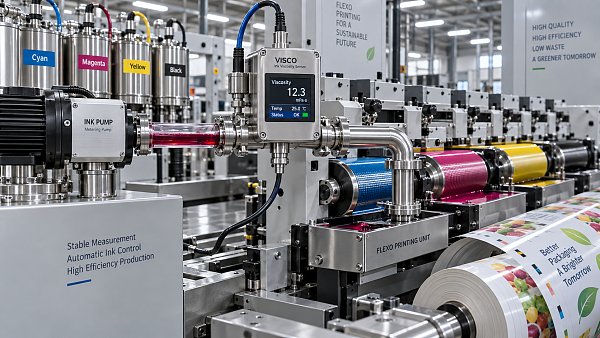
A recirculation system cannot maintain color consistency if its measurement method does not reflect the ink’s actual operating behavior. Viscosity is frequently treated as the primary control variable, but the appropriate method depends on the ink and the required precision. Some operations use cup-based checks and manual adjustment; others require inline measurement and automatic replenishment. Neither approach is automatically superior. The correct choice depends on ink formulation, job tolerance, press speed, process discipline, and the consequences of deviation.
The important question is whether the supplier can explain the relationship between its control method and the ink’s rheology. Non-Newtonian inks may not behave predictably when assessed only by a simple viscosity number. Temperature changes can alter flow and transfer characteristics even when a nominal viscosity reading appears acceptable. Water-based inks may additionally require pH management, while solvent-based inks may need carefully controlled solvent addition and closed handling.
Ask where sensors are located, how often they are calibrated, how they are protected from fouling, and what happens when a sensor gives an implausible reading. A sensor placed in a stagnant zone, near a dosing point, or downstream of an improperly designed return may produce misleading control actions. The manufacturer should define alarm limits, manual override procedures, and the logic used to prevent excessive automatic addition of water, solvent, or additive.
Temperature management is often overlooked in small systems but becomes increasingly important as ink volume, circulation distance, ambient variation, and press speed rise. Heat can enter the loop through pumps, mechanical agitation, nearby drying equipment, and the production environment. If cooling or heating is proposed, its control range and integration with viscosity management should be evaluated together rather than as separate accessories.
Control foam, air entrainment, and filtration at their source
Foam is not merely a cosmetic tank issue. Entrained air can affect ink transfer, density consistency, pump behavior, sensor accuracy, and chamber performance. Many foam problems originate in return-line design: a return pipe discharging above the liquid surface, excessive return velocity, sharp restrictions, leaks on the suction side, or a tank layout that repeatedly entrains air into the feed zone.
A capable ink recirculation system manufacturer should be able to show how the tank separates air from the ink before it returns to the pump inlet. Useful design features may include a submerged or diffused return, sufficient residence time, baffles, a calm suction zone, and a tank volume appropriate to the circulation rate. The exact solution varies by ink and press, but a generic promise of “anti-foam design” is not enough.
Filtration has a similarly direct effect on print stability. The correct filter rating must protect pumps, valves, chambers, and anilox systems without becoming a chronic source of pressure drop or pigment removal. Filter selection should reflect pigment particle size, viscosity, contamination risk, and the sensitivity of downstream components. The system should permit filter inspection and replacement without creating large spills, introducing air, or requiring an extended press stoppage.
Where frequent job changes are expected, filter housing accessibility and drainability matter as much as nominal filtration performance. A design that is difficult to open, clean, or re-prime tends to create avoidable variability during restart.
Evaluate cleanability as a quality-control requirement
Ink recovery and wash-up are often treated as secondary concerns during purchase discussions, yet they influence both repeatable color and operational reliability. Residual ink trapped in low points, oversized manifolds, blind branches, valve cavities, or pump chambers can contaminate the next color or alter the behavior of a fresh batch. The risk is especially significant where short production runs, frequent color changes, or tightly specified brand colors are involved.
The manufacturer should provide a clear drainability concept. This includes tank bottom geometry, pipe slopes where applicable, low-point drains, valve placement, and the ability to flush each circuit effectively. Ask whether the proposed system supports dedicated color loops, quick-disconnect components, pigging, automated flushing, or recovery routing. These choices involve trade-offs: a highly centralized arrangement may reduce equipment count, while dedicated circuits may reduce cross-contamination and changeover risk.
Cleaning time should not be assessed only by the duration of a nominal wash cycle. The more relevant measure is whether the system can be returned to a known clean state without repeated manual intervention. Review the amount of flush medium required, the method for confirming completion, the handling of recovered ink, and the safety of cleaning operations. If color control is critical, the supplier should also clarify which portions of the loop remain difficult to validate after wash-up.
Integration with the press and factory controls determines practical value
Even a well-engineered standalone loop can underperform if it does not communicate properly with the press and the site’s operating routines. Interfaces should be defined early: start/stop signals, press-speed references, viscosity or temperature status, tank-level alarms, pump fault signals, interlocks, emergency-stop behavior, and recipe handling. For multi-color or multi-press installations, the architecture for identifying each ink circuit and preventing incorrect routing is particularly important.
Automation should be judged by its ability to reduce uncontrolled variation, not by the number of screens or data points. Useful functions include controlled dosing, level management, alarm history, batch traceability, recipe limits, and trend data that can help diagnose recurring density instability. However, the system must remain understandable and serviceable when automation is unavailable. Manual operation modes, local controls, alarm prioritization, and clear operating procedures are not optional details.
Data integration should also be proportionate to the plant’s existing systems. A request for production or quality data may be legitimate, but it should specify ownership, available communication protocols, historical data storage, cybersecurity responsibilities, and the practical use of the information. A vague claim of “smart connectivity” does not establish that the recirculation system will support process control.
Service capability should be tested through documentation and response scenarios
Supplier evaluation should include what happens after commissioning. Ink systems combine mechanical components, fluid behavior, instrumentation, and press-specific operating conditions. When a defect arises, the ability to isolate whether the cause is ink formulation, sensor drift, pump wear, filter blockage, air ingress, control logic, or press-side conditions is central to maintaining uptime.
Review the manufacturer’s documentation package: process and instrumentation diagrams, electrical schematics, component lists, recommended spare parts, maintenance intervals, cleaning instructions, calibration procedures, and fault-finding guidance. These documents should correspond to the actual delivered configuration rather than a generic brochure. The quality of documentation is often an early indicator of whether future maintenance can be managed systematically.
Spare-parts strategy should focus on critical consumables and failure-sensitive components such as seals, diaphragms, filters, valves, sensors, hoses, and pump parts. Confirm component availability, interchangeability, lead times, and whether proprietary controls or software create a long-term dependency. Remote support can be valuable, but it does not replace the need for clear site-level diagnostic capability.
Use acceptance criteria that connect the system to print results
The strongest purchasing specification does not ask a supplier to guarantee “excellent color.” It defines measurable operating performance that supports stable printing. Acceptance criteria can include pressure stability at designated operating conditions, flow delivery to each print unit, temperature-control range, sensor accuracy and repeatability, response to level or viscosity deviation, filtration arrangement, wash-up sequence, drainability, alarm functions, and verification of materials compatibility.
Factory acceptance testing and site acceptance testing should reflect the intended ink type and production configuration as closely as practical. A water test may confirm basic pump operation, but it does not prove performance with a pigmented, shear-sensitive, or foam-prone production ink. Where full ink testing is not feasible before installation, the remaining assumptions should be explicit and converted into commissioning checks.
Choosing an ink recirculation system manufacturer is ultimately a decision about controllability. The preferred supplier is not necessarily the one offering the highest nominal flow rate, the most automation, or the lowest equipment cost. It is the one that can define the fluid process clearly, identify the variables that threaten print consistency, and provide a system that remains cleanable, maintainable, and stable under the conditions the press will actually face.
Related News
 What Drives the Total Cost of a Web Tension Control SystemWeb tension controller manufacturer insights: uncover total system costs, from installation and integration to waste reduction, uptime, and long-term support.Prof. Kaelen Sterling
 How Real Time Ink Viscosity Sensors Improve Flexo Press StabilityReal time ink viscosity sensors help flexo printers stabilize color, reduce waste, and control ink drift with faster, data-driven adjustments.Prof. Kaelen Sterling
 How to Compare Ink Viscosity Sensors Price Against Process ValueInk viscosity sensors price is only one factor. Learn how to compare sensor costs with quality, waste reduction, automation needs, and long-term press value.Prof. Kaelen Sterling
 Ink Handling Systems: Choosing the Right Setup for Viscosity ControlInk handling systems for flexographic printing: discover how to choose viscosity control, circulation, cleaning, and automation setups that reduce waste and improve color consistency.Prof. Kaelen Sterling
 How to Choose an Ink Recirculation System Manufacturer for Stable Print QualityChoose an ink recirculation system manufacturer that delivers stable print quality through precise flow control, ink compatibility, cleanability, and reliable automation.Prof. Kaelen Sterling
 How Precision Intermittent Motion Drives Improve Indexing AccuracyPrecision intermittent motion drive solutions improve indexing accuracy, reduce vibration, and stabilize dwell performance for high-speed packaging and converting equipment.Prof. Kaelen Sterling