When Zero Defect Glue Detection Systems Deliver a Measurable ROI
A glue detection system earns a measurable return when the cost of undetected adhesive defects is already visible somewhere in the operation: rejected cartons at packing, manual opening inspections, unstable pallet loads, rework after a downstream complaint, or disputed responsibility when a failed pack reaches the field. The purchase case becomes credible when those losses can be connected to a specific glue failure mode, a defined inspection point, and a realistic response to a reject signal.
Adhesive inspection is often evaluated as a quality upgrade. That framing is incomplete. Its economic value comes from preventing defective blanks or cartons from absorbing additional printing, folding, packing, transport, and handling cost. A missing glue line found immediately after application is a low-cost event. The same defect found after filling, case packing, or distribution can involve product loss, line interruption, investigation time, and a traceability problem that extends beyond the original carton.
Where the return begins
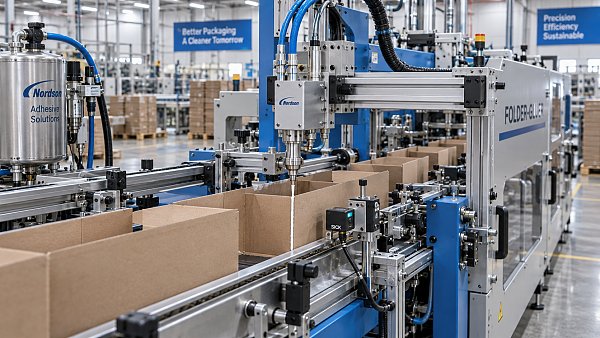
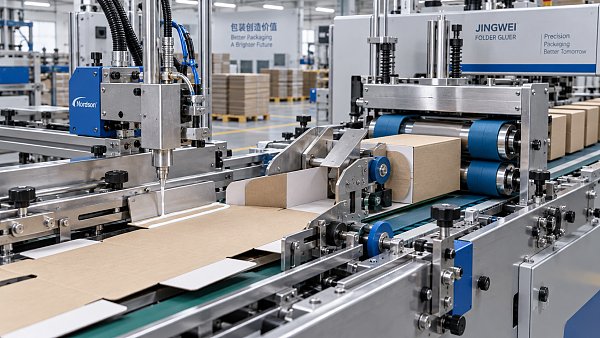
Folder-gluer and corrugated converting lines create different forms of adhesive risk. On folding cartons, the relevant defect may be a missing side-seam bead, an intermittent pattern, insufficient adhesive coverage, a bead placed outside the compression zone, or glue transferred onto an unintended panel. On corrugated cases, the failure may involve a skipped glue tab, a weak manufacturer's joint, a distorted blank that no longer meets the applicator consistently, or adhesive that is present but fails to bond because board condition or compression has changed.
These failures do not carry the same financial consequence. A cosmetic adhesive mark on an outer shipping case may be recoverable. A weak glue seam on a carton carrying loose product can cause a pack-out stoppage or a product spill. A partially formed pharmaceutical or food carton may create a more serious release decision even when the visual defect is small. The correct ROI model therefore starts with defect severity and escape location, not with the inspection system's advertised detection capability.
Return is strongest where inspection replaces a costly uncertainty. Lines with frequent job changes, several glue patterns, variable board surfaces, high production speed, or limited opportunities for manual sampling often have that uncertainty. A stable, low-volume line with a single forgiving glue application may still benefit from monitoring, but the avoided-loss value will be smaller and a simpler verification method may be sufficient.
Separate the defect from the cause
A camera, sensor, or adhesive-presence device can establish that a target condition is absent, incomplete, displaced, or outside a permitted area. It does not automatically explain why. Treating every reject as an application failure leads to wasted adjustment time and a misleading estimate of system value.
For example, an apparent missing bead can result from a blocked nozzle, low adhesive supply, a delayed valve response, an encoder timing error, blank skew, a warped panel, or a detection window that no longer aligns after a format change. A weak bond may appear identical at final inspection whether adhesive was missing, the substrate was too cold, compression was inadequate, or the adhesive had been contaminated. Presence detection and bond-strength assurance are related controls, but they are not interchangeable.
That distinction matters during specification. A system intended to verify adhesive placement should be assessed on its ability to locate the pattern against the actual blank position and line speed. If the business concern is seam integrity after folding, the inspection architecture may need an additional station after compression, a mechanical opening test on sampled units, or process controls around adhesive temperature, viscosity, and compression dwell. Paying for high-resolution image analysis will not solve a bonding issue caused by unsuitable board moisture or poor fold geometry.
Quantify the avoidable cost before selecting the technology
A practical calculation does not need invented precision. It needs agreed boundaries. Start with a period of representative production, then identify the product families where glue defects are plausible and commercially meaningful. Review line reject records, rework logs, complaint investigations, packer stoppages, and manual inspection labor. Records are often incomplete because defective cartons are scrapped under broad categories such as setup waste or conversion loss. A short structured observation period is usually more useful than forcing a confident estimate from weak historical codes.
For each defect class, calculate the cost that is genuinely avoidable when the defect is detected at the proposed station. This can include the value of the blank and adhesive, subsequent conversion already added, labor for sorting or rework, packaging material consumed downstream, and disposal. Include the cost of a line hold only where the detection logic will actually stop or divert product. A system that generates frequent uncertain alarms can add downtime rather than remove it.
The annual benefit is not the total value of all detected faults. It is the value of faults that would otherwise escape, multiplied by the proportion the proposed installation will reliably catch, minus losses introduced by false rejects, extra maintenance, verification material, and response time. Installation cost also includes guarding changes, brackets, lighting, encoder integration, reject hardware, controls programming, commissioning, format setup, and training. Omitting those items produces a return estimate that fails when the project reaches the line.
Detection reliability is a production-system question
High-speed operation places limits on every inspection method. Adhesive can be transparent, reflective, dark, foamed, thin, or applied over printed artwork. Hot-melt glue changes appearance as it cools. Cold glue may blend into absorbent board. Substrate variation changes contrast, while dust, fibers, and adhesive stringing can contaminate lenses or inspection windows. A demonstration using clean samples at reduced speed establishes little about a real production environment.
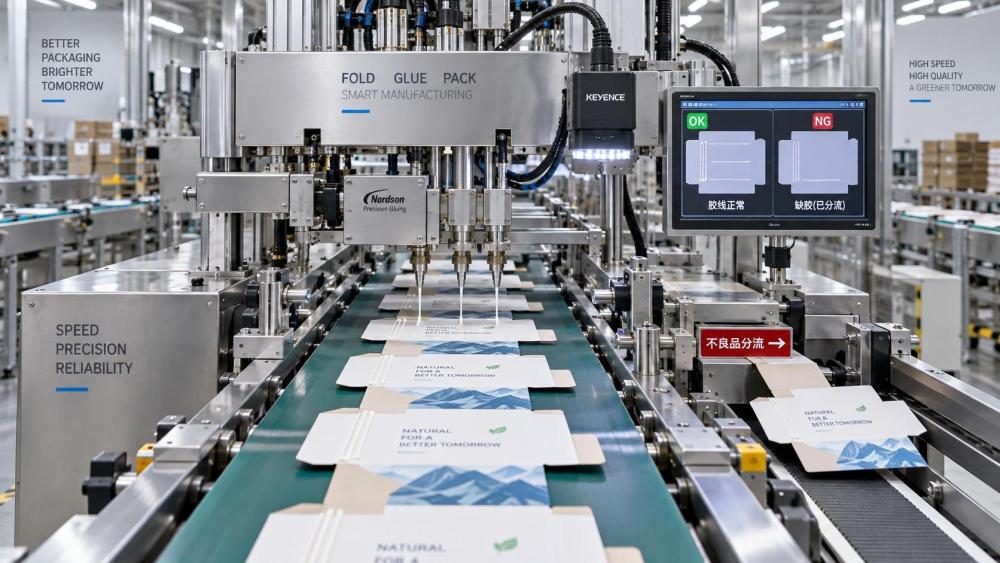
The system should be tested with approved production material, actual glue grades, the shortest and longest expected blanks, representative print coverage, normal variation in registration and feed position, and the intended maximum line speed. Fault samples are equally important. Deliberately create missing, short, shifted, split, and excess glue patterns that correspond to the risks being controlled. A detector that identifies a completely absent bead but misses a short interruption near a load-bearing seam may provide false confidence.
Resolution alone is easily misread. A small pixel size does not guarantee useful performance when the field of view is unstable, the adhesive does not contrast with the substrate, or the trigger timing varies. Conversely, a less complex sensor may be highly effective where the process uses a consistent, well-defined glue dot or bead and the goal is simple presence confirmation. The selection question is whether the chosen method distinguishes acceptable normal variation from a defect that requires action.
False rejects have a direct cost
A zero-defect objective should not be interpreted as an instruction to reject every ambiguous unit. Excessive sensitivity can create a hidden tax: operators bypass alarms, divert bins fill with good cartons, and production personnel lose trust in the inspection result. Acceptance limits should be built around the functional glue area, not an idealized visual image. A bead's edge may vary without affecting seam strength; a gap within a specified critical zone may not.
During commissioning, classify rejects into confirmed defects, acceptable process variation, blank-position errors, and system-related errors. This provides the data needed to tune thresholds without masking genuine failures. It also exposes whether the larger opportunity lies in application control, feed stability, or inspection itself.
Placement determines whether a defect is still recoverable
The most attractive location is usually as close as practical to adhesive application, before folding or compression makes rework difficult. At that point, the system can reject an individual blank or signal a process interruption with minimal added value at risk. However, inspection immediately after application has limitations: the glue may still be visually unstable, and placement before folding cannot prove that the panel folded correctly over the adhesive.
A second inspection point after folding may be justified where seam closure is the critical failure mode. It needs enough clearance, stable carton presentation, and a view of the relevant seam. The line layout may make that difficult, especially where cartons overlap, transfer at high speed, or enter a compression section. Trying to inspect through inaccessible machinery often creates a fragile installation that is expensive to service.
Reject handling deserves equal attention. A detection result has little value if the affected blank cannot be removed reliably, identified in a downstream batch, or held during a controlled stop. The reject mechanism must match product speed, carton stiffness, spacing, and accumulation behavior. For certain jobs, a traceable alarm and defined quarantine procedure may be more suitable than automatic rejection; for others, manual handling cannot keep pace with output.
Job changeover and data discipline affect payback
Short-run work changes the economics. More formats and glue recipes create more opportunities for setup mistakes, while each job may produce too little volume to absorb lengthy inspection setup. Recipe management should store the inspection region, tolerances, trigger relationship, product orientation, reject response, and relevant glue pattern for each approved format. An operator selecting the wrong recipe can produce a stream of misleading results even when the hardware is functioning correctly.
A useful system records enough context to investigate a reject: job identifier, time, lane or applicator channel, inspection result, image or event evidence where appropriate, and disposition. The purpose is not to accumulate data without action. Repeated faults on one nozzle, one blank orientation, or one shift transition reveal where maintenance or setup controls need attention. The same records support targeted containment when a downstream issue is reported.
Data should be retained at a level that matches the operational risk. Storing every image at full resolution may impose unnecessary infrastructure and review burden. Retaining event evidence for rejects, settings changes, alarms, and selected verification samples is often more workable. The specification should define this explicitly instead of treating storage as an afterthought.
Conditions that weaken the purchase case
There are situations where a full vision-based glue detection system will not produce a convincing return. Low production volumes with infrequent adhesive defects may not justify the integration and maintenance overhead. Products that can be easily opened and verified later in the process may be protected by a less expensive control. An unstable upstream process can also overwhelm inspection; when blank feeding, crease quality, adhesive supply, and folder alignment all fluctuate, the project may first require basic process correction.
That does not make inspection irrelevant. It changes the sequence of investment. Stabilize the applicator, establish acceptable glue patterns, confirm substrate variation, and define containment actions. Then select detection capability around the residual failure modes. Inspection works best as evidence that a controlled process remained within its approved condition, rather than as a permanent substitute for process control.
A defensible approval standard
A measurable ROI is present when the proposed system has a defined defect target, detects that target under representative production conditions, triggers an action that prevents downstream cost, and operates without creating unacceptable false rejects or changeover burden. The financial model should include the full installed and operating cost, while the benefit estimate should be tied to losses that inspection can truly prevent.
Before release, require a production trial with documented defect samples, line-speed testing, reject verification, format changes, and a clear rule for alarm disposition. This turns the investment from a promise of “zero defects” into a controlled barrier against specific adhesive failures. That level of proof is what makes the return measurable rather than assumed.
Related News
 How to Choose a Glue Dispensing System Manufacturer for Your LineChoose a glue dispensing system manufacturer with confidence. Compare adhesive compatibility, line integration, testing, and lifecycle costs to find the right fit for your production line.Spatial Folding Strategist
 How to Fix Weak Glue Bonds on Carton Folder Gluers at High SpeedsCarton Folder Gluers losing bond strength at high speeds? Learn how to optimize glue placement, adhesive selection, and compression to reduce rejects and keep production running reliably.Spatial Folding Strategist
 How Window Patching Machines Apply Film to Folding Carton WindowsDiscover how Window Patching Machines apply film to folding cartons. Learn key controls for precise placement, strong bonds, and fewer rejects before choosing your equipment.Spatial Folding Strategist
 How Does a Crash Lock Pre Breaking Unit Improve Carton Folding?Discover how a crash lock pre breaking unit reduces crease resistance, improves carton folding consistency, and supports reliable opening—with practical setup tips to avoid board damage.Spatial Folding Strategist
 How a Folder Gluer Pre-Breaking Unit Improves Carton Fold QualityDiscover how a folder gluer pre breaking unit improves carton fold quality and reduces spring-back. Get practical setup tips for consistent seam alignment and smoother production.Spatial Folding Strategist
 How to Evaluate a Cold Glue System Manufacturer for Reliable BondingChoose a cold glue system manufacturer with proven application control, uptime-focused design, seamless integration, and responsive service for reliable bonding.Spatial Folding Strategist