Using Plasma Treatment to Improve Adhesion on Films and Coated Boards
Adhesion failures on films and coated boards rarely begin at the point where a laminate separates or an ink scratches off. The visible defect is often the final result of a surface that was chemically unsuitable for the ink, coating, adhesive, or glue applied to it. Plasma treatment addresses that condition at the material surface. It raises surface energy, removes weak contamination, and creates polar functional groups that improve wetting and bonding without requiring a heavy primer layer.
For converting lines handling plastic films, metallized webs, extrusion-coated paperboard, varnished carton stock, or coated corrugated components, plasma treatment can be placed immediately before the operation that needs adhesion: printing, coating, laminating, window patching, coding, or gluing. Its value depends on matching the treatment method, exposure, web condition, and downstream chemistry to the actual failure mode.
Start with the bonding symptom, not the treatment unit
“Poor adhesion” covers several different problems. Ink can appear visually acceptable after printing yet fail a tape test after curing. A water-based coating can show pinholes or crawl marks because it did not wet the substrate evenly. Lamination can pass initial inspection and then delaminate after winding, slitting, or storage. Carton glue can hold on uncoated fiber areas while releasing from a varnished or polymer-coated panel.
These conditions do not all require the same response. Surface treatment is most relevant when the liquid material cannot spread uniformly, when a low-energy film resists bonding, or when a coated surface carries oils, silicone-like slip additives, dust, moisture, or weak boundary layers. It cannot correct an adhesive selected for the wrong substrate, insufficient curing, an incompatible ink system, excessive coating weight variation, or a mechanically overstressed bond.
A useful first distinction is between wetting failure and cohesive failure. Wetting failure occurs when ink, coating, or adhesive retracts from the surface, leaves voids, or forms an uneven film. Plasma often has a direct effect because a more energetic surface allows the liquid to spread. Cohesive failure occurs within the adhesive layer, ink film, varnish, paper surface, or coating itself. Raising surface energy may improve the interface while leaving the primary weakness unchanged.
What plasma changes at the surface
Plasma is an energized gas containing reactive species. When applied under controlled conditions, those species interact with only the outermost surface of the substrate. The intended result is not bulk material modification. Film stiffness, board caliper, and barrier structure should remain functionally unchanged when the process is properly selected and controlled. The target is a clean, activated surface that accepts the next layer more consistently.
On polyethylene, polypropylene, polyester, and similar films, activation commonly increases the surface's affinity for polar ink vehicles, coatings, and adhesives. On coated boards, the effect can be different: treatment may remove loose dust and surface contamination, improve the wetting of a glue or coating, or activate a polymeric topcoat. The same board grade can behave differently on its print side, reverse side, aqueous-coated area, UV-varnished area, metallized patch, and exposed paper edge. Treating the material name as the whole specification is a frequent source of bad trials.
Corona treatment and flame treatment are also used for surface activation. Plasma is often considered where a more controlled treatment environment, lower thermal load, complex geometry, selective treatment, or difficult coating chemistry makes conventional approaches less suitable. Atmospheric plasma is commonly integrated inline for moving webs and sheets. Low-pressure plasma may be used for batch or specialized applications where a chamber process is acceptable. The selection should follow the substrate shape, line architecture, required treatment width, and production flow rather than a generic claim of higher surface energy.
Where treatment belongs in a packaging process
The placement rule is simple: treat as close as practical to the operation that needs the activated surface. Surface activation is not permanently stable. Many polymers gradually lose part of their activated state through molecular rearrangement, contact with ambient contamination, slip-agent migration, handling, or storage. This is sometimes described as hydrophobic recovery. A film that measured well after treatment can become less receptive before it reaches the press or laminator.
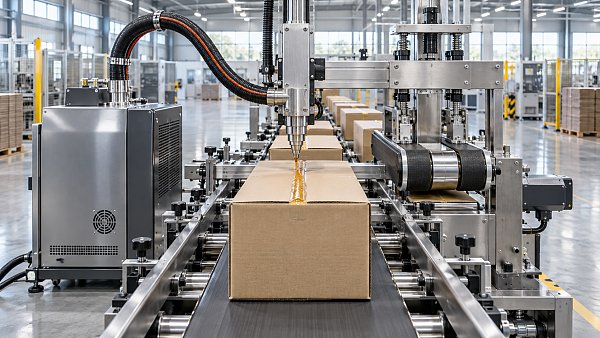
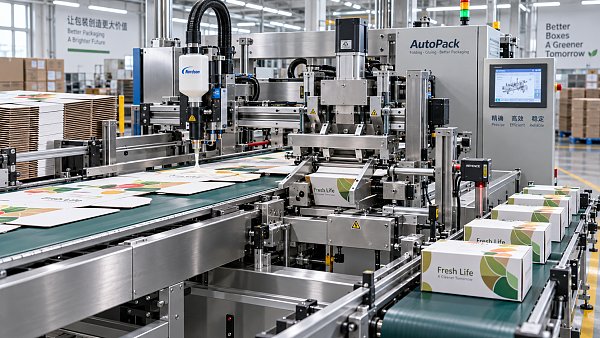
For a roll-to-roll flexographic or gravure application, an inline plasma station is normally positioned after web cleaning and before the print, coating, or lamination nip. In a sheet-fed carton process, treatment can sit between feeding and the coating, printing, or glue application station, provided the transport path does not introduce abrasive contact or dust. For window patching or specialty gluing, localized treatment may be more useful than treating the entire sheet, particularly when only a defined coated area causes bond loss.
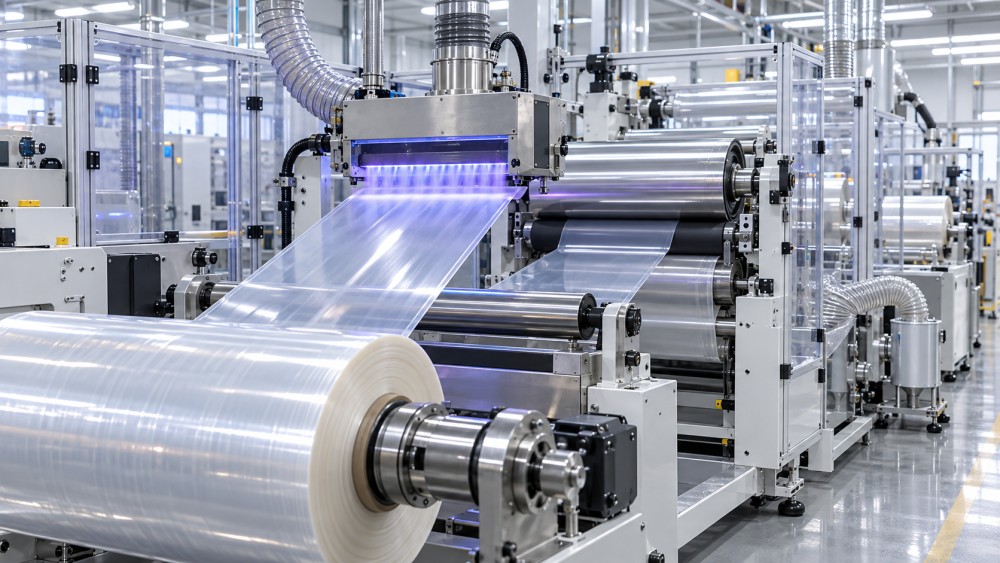
Integration needs to account for the web or sheet path, not just the machine footprint. A treatment station requires stable material presentation. Wrinkles, flutter, poor tension control, bounce at a transfer point, or inconsistent sheet registration can create uneven exposure across the surface. On corrugated or heavy paperboard structures, variation in flatness can change the treatment gap. If the treatment head is set for the highest point, recessed areas may receive less energy; if it is set too close, board warp or sheet lift can create collision risk.
Dust extraction deserves equal attention. Plasma can activate a clean surface very effectively, but it does not make loose fiber, starch dust, trimming debris, or dried ink particles disappear from a downstream bonding interface. Web cleaning, vacuum extraction, antistatic control, and clean transport surfaces should be assessed as part of the same process window.
Parameters that need to be evaluated together
Surface-energy readings are useful, but a single number does not prove that the final bond will be reliable. Dyne solutions, test inks, and contact-angle measurements indicate how a liquid interacts with the surface. They do not fully describe contamination distribution, coating chemistry, treatment uniformity, adhesive cure, or bond durability. A high reading can coexist with a weak laminate if the adhesive has poor compatibility or if a low-molecular-weight contaminant migrates back to the interface.
The required treatment level should be established with the actual ink, varnish, adhesive, and curing route. A water-based flexographic ink, UV ink, solvent-based laminating adhesive, hot-melt glue, and dispersion coating do not respond identically to the same activated surface. Their viscosity, solvent balance, surface tension, cure mechanism, and film formation behavior influence the result. The right process window is the one that delivers repeatable finished-product performance, not the highest possible surface-energy value.
Films and coated boards present different failure patterns
Polyolefin films often need activation because their native surface energy is low. Yet additive migration can complicate the result. Slip, antiblock, and processing additives may move toward the surface over time. A treatment setting that works on a newly produced film roll may be inadequate on material stored under different conditions, or it may need revalidation after a film supplier changes formulation. Incoming material records should therefore retain film grade, treatment status, production date where available, storage history, and the side intended for printing or lamination.
Metallized films require additional care because the metal layer, topcoat, and reverse side can have very different adhesion behavior. A bond failure may occur between the adhesive and a fragile topcoat rather than at the plasma-treated interface. Peel testing should identify which layer has separated. When metal transfer, coating lift, or substrate tear is visible, the appearance of the failure provides more useful direction than a pass/fail bond value alone.
Coated boards create another set of ambiguities. Clay coatings, aqueous varnishes, UV varnishes, polyethylene extrusion coatings, and barrier coatings can all change how a liquid spreads and anchors. A carton blank may print well but resist glue on a varnished flap. Treating the flap zone can improve adhesion, but the treatment width and sheet orientation must be controlled so that it does not affect an adjacent decorative or functional surface unnecessarily. Where a glue flap is creased, surface cracking, coating fracture, and fold geometry should also be examined; plasma cannot restore a coating that breaks away during folding.
Build validation around the finished conversion
Lab trials often begin with dyne testing and simple tape checks because they are fast. They should not be the final release criterion for a packaging process. Validation needs samples made at representative speed, with production-grade inks or adhesives, normal drying or curing conditions, expected rewinding tension, die-cutting, creasing, folding, and any relevant handling before inspection.
For printing, assess ink anchorage after the full cure cycle and after realistic abrasion or rub exposure. For lamination, examine bond development over the normal cure period and inspect the failure interface during peel testing. For gluing, test the assembled carton geometry rather than flat samples alone. Compression from folding, spring-back in coated board, glue open time, and local varnish coverage can all alter the result.
- Run untreated and treated control samples in the same trial so that material or adhesive variation is not mistaken for a treatment effect.
- Take samples across the web width and through the run. A center sample can conceal weak treatment near an electrode edge or at a section affected by web flutter.
- Include a realistic delay between treatment and the next process when material is staged, rewound, or transported before conversion.
- Record treatment settings with line speed, substrate identification, coating or ink batch, ambient observations, and test method. These records are needed when an otherwise similar job behaves differently later.
Mechanical integration and production control
A plasma installation changes more than the surface chemistry. It introduces utilities, safety controls, machine interlocks, extraction requirements, maintenance access, and recipe management. The treatment station must synchronize with line start, stop, speed changes, splices, sheet gaps, and fault states. Treating a stationary web or an empty sheet path wastes energy and can overexpose localized material. Conversely, a speed ramp without corresponding treatment adjustment can leave the first production length below the validated dose.
Recipe control should link substrate family, treatment side, material width, line speed range, and downstream process. A single universal setting is rarely robust across matte and glossy films, different board coatings, or substantially different production speeds. The control logic does not need unnecessary complexity, but it should prevent a recipe intended for one material from being silently carried into another job.
Maintenance quality directly affects consistency. Electrode surfaces, nozzles, dielectric components, cable connections, grounding points, filters, and extraction paths need inspection according to the equipment design and process environment. Accumulated dust or residue can reduce treatment uniformity. An output indicator may show that the unit is energized while the surface receives an uneven dose, so periodic verification across the usable width remains necessary.
When plasma is the wrong corrective action
Plasma treatment should not become the default response to every adhesion complaint. If an adhesive is under-cured, a hot-melt is applied outside its working temperature range, an aqueous coating is dried too aggressively to form a weak layer, or a varnish has poor internal adhesion to the board, surface activation will not resolve the underlying problem. It can even obscure diagnosis by improving initial results just enough to delay a later failure.
Likewise, excessive treatment is not automatically beneficial. Sensitive films and functional coatings can be affected by an unsuitable dose. Over-treatment may alter surface behavior in ways that reduce print appearance, create uneven response, or damage a delicate coating layer. The appropriate setting is established through a controlled process window, then monitored through finished-part tests and surface verification rather than assumed from equipment capacity.
When correctly applied, plasma treatment becomes a controlled interface step between substrate preparation and conversion. Its strongest contribution is consistency: cleaner wetting, more dependable anchorage, fewer unexplained differences between material batches, and a process that can be traced when a bond changes. That outcome comes from treating plasma as part of the complete material-and-process system, with the downstream bond performance as the final measure.
Related News
 How to Evaluate a Cold Glue System Manufacturer for Reliable BondingChoose a cold glue system manufacturer with proven application control, uptime-focused design, seamless integration, and responsive service for reliable bonding.Spatial Folding Strategist
 How to Stop Stringing and Poor Bonds with an Industrial Hot Melt Glue GunIndustrial hot melt glue gun troubleshooting guide: reduce stringing, improve bond strength, optimize temperature, nozzle condition, timing, and carton compression.Spatial Folding Strategist
 How Non Contact Glue Detection Systems Prevent Carton FailuresNon contact glue detection systems prevent carton failures by spotting missing or misplaced adhesive early, reducing rejects, rework, and packing-line disruptions.Spatial Folding Strategist
 What Engraved Glue Rollers Cost and Which Specs Matter MostEngraved glue rollers: compare cost drivers, cell volume, coatings, tolerances, and supplier specs to improve adhesive control, reduce waste, and protect corrugator uptime.Spatial Folding Strategist
 How Hot Melt Glue Systems Improve Bond Strength and UptimeHot Melt Glue Systems improve bond strength and uptime with precise temperature control, clean flow, accurate bead placement, and reliable compression.Spatial Folding Strategist
 How to Evaluate Glue Machine Manufacturers for Long-Term Operating CostGlue machine manufacturer evaluation guide: compare lifecycle costs, adhesive control, uptime, maintenance, changeovers, and supplier support for smarter investments.Spatial Folding Strategist