How to Stop Stringing and Poor Bonds with an Industrial Hot Melt Glue Gun
Stringing and weak bonds are often treated as separate defects, but they frequently come from the same control problem: the adhesive is not arriving at the substrate in a stable, usable state. On a carton converting line, an industrial hot melt glue gun must melt, transport, meter, and place adhesive within a narrow operating window. If any part of that chain is unstable, operators may see fine adhesive filaments at nozzle exit, open seams, delayed bond failure, excessive glue use, or a mixture of all four.
The fastest way to restore reliable performance is not to increase temperature or add more adhesive immediately. Those actions can conceal the root cause and sometimes make it worse. A better diagnosis starts by separating three questions: Is the adhesive suitable for the materials and production conditions? Is the melter, hose, and gun holding the correct temperature? Is the adhesive being applied cleanly and consistently at the point of contact?
Start with the defect pattern, not the temperature dial
Stringing is the formation of thin adhesive threads between the nozzle and the workpiece, or between two points after application. Poor bonding appears as lifting flaps, open carton seams, low peel strength, adhesive transfer to only one substrate, or bonds that fail after cooling. The visible defect gives useful clues, particularly when it is tied to a specific order, substrate, speed, or glue station.
Fine strings appearing at every nozzle after a recent temperature adjustment often point to excessive adhesive temperature, degraded material, or a gun shutoff problem. Strings isolated to one applicator are more likely related to a contaminated nozzle, worn module, incorrect stroke, or mechanical misalignment. If bonds fail only on coated, varnished, cold, dusty, or recycled-board jobs, the issue is more likely to be substrate compatibility or insufficient open time rather than a fault in the glue gun itself.
Bond failures should also be examined before the adhesive is fully cooled. If the adhesive remains on one surface after the carton is pulled apart, it may indicate poor wetting or an unsuitable surface. If adhesive splits through its own thickness and remains on both surfaces, the adhesive may have adhered properly but lacks cohesive strength, has been overheated, or has been stressed before setting. If there is little adhesive on either surface, the application pattern, gun triggering, or substrate contact may be inadequate.
Temperature must be controlled across the whole adhesive path
A hot melt system does not have one operating temperature. The tank, heated hose, gun body, and nozzle each influence the condition of the adhesive. A controller may display the correct setpoint while the adhesive at the nozzle is too cold because of heat loss, a damaged heater, a failing temperature sensor, poor hose insulation, or a flow restriction. The opposite can occur when a local heater runs above its intended temperature even though the tank appears normal.
Adhesive suppliers specify a recommended processing range, not a universal “best” temperature. That range should be treated as the starting point, then verified against application quality, line speed, ambient conditions, substrate temperature, and compression time. Raising the setpoint may reduce viscosity temporarily and improve flow, but it can also increase stringing, reduce bead definition, promote charring, and accelerate chemical degradation. Lowering the temperature can reduce stringing in some cases, but if it reduces wetting or shortens the practical open-time window, bond strength will suffer.
Check actual temperatures rather than relying only on displayed values. The method should follow equipment and site safety procedures; molten adhesive can cause serious burns. A qualified check of sensor accuracy, heater response, and temperature uniformity is more useful than repeated setpoint changes. Particular attention is needed after a hose replacement, gun rebuild, controller repair, or prolonged shutdown.
Temperature-related symptoms often develop gradually. Char particles in filters, darkened adhesive, a burnt odor, unstable viscosity, or increasing nozzle blockage suggest that adhesive has been exposed to excessive heat or held molten for too long. Repeatedly topping up an old tank can compound the problem because degraded residue remains in circulation. Where the adhesive manufacturer permits it, a controlled drain and cleaning procedure may be necessary before a fresh charge can be evaluated properly.
Do not use heat to compensate for incompatible adhesive
Hot melt performance depends on the relationship between the adhesive chemistry and the substrate surface. Folding cartons, corrugated cases, laminated board, aqueous-coated sheets, UV varnished surfaces, metallized films, and recycled fiberboard do not present the same bonding conditions. A grade that performs well on porous uncoated board may show poor wetting or weak fiber tear on a coated stock. Likewise, an adhesive selected for a slow packing operation may set too quickly for a folder gluer running at higher speed or with a longer compression path.
Three adhesive characteristics matter especially when diagnosing weak bonds:
- Viscosity at application temperature: adhesive that is too viscous may sit on the surface rather than flow into the board structure; adhesive that is too fluid can spread excessively and create strings or squeeze-out.
- Open time: the period in which applied adhesive can still form a bond. If the flap reaches compression after this period, the adhesive may have skinned or set before contact.
- Set speed and heat resistance: a bond may look acceptable at discharge but open later if the adhesive has not developed sufficient strength, or if downstream handling and storage expose it to unsuitable temperatures.
Incorrect adhesive handling can imitate a compatibility problem. Materials should be protected from contamination and used according to supplier storage guidance. Mixing different formulations in the same melter without a verified compatibility assessment can create unstable viscosity, gel particles, poor adhesion, or blockage. Even two adhesives with similar application temperatures should not be assumed interchangeable.
When a defect starts with a new board grade, coating, print finish, or adhesive batch, retain samples and compare them under controlled conditions. A simple production-floor comparison is valuable: use the same gun settings and compression conditions on the previous approved substrate and the current material. If the approved material bonds consistently while the new substrate does not, the maintenance response should shift from gun adjustment toward adhesive-substrate validation.
Nozzle condition determines whether a stable adhesive bead is possible
A clean nozzle is not merely a housekeeping issue. Partially blocked or carbonized nozzle orifices disrupt adhesive flow, causing uneven bead diameter, deflection, spitting, tailing, and intermittent application. These defects can create both stringing and poor bonds on the same line: too much adhesive in one location, too little in another.
Inspect the nozzle face and surrounding gun area when the system is cool and isolated according to the equipment’s service procedure. Look for accumulated char, adhesive buildup, damaged threads, distorted nozzle geometry, or adhesive leakage around the nozzle seat. A leak at the connection can reduce pressure at the orifice and create a false impression that the gun needs a higher temperature or larger nozzle.
Cleaning methods matter. Hard metal tools, drills, or improvised wire can alter the orifice diameter and damage the nozzle seat. A slightly enlarged opening changes bead volume and shutoff behavior, while scratches can retain adhesive and promote recurring buildup. Use the cleaning method, approved solvents or purge materials, and replacement parts specified for the adhesive system. If blockage returns quickly after cleaning, inspect tank condition, filters, and adhesive degradation rather than repeatedly servicing the nozzle alone.
Gun modules and valves also wear. A nozzle may be clean, yet adhesive can continue to draw a tail after trigger release because the valve does not close sharply. Worn seals, contaminated valve seats, weak closing springs, incorrect air pressure, or timing faults in the actuator can all affect cutoff. On pneumatic systems, verify that the air supply is clean, dry, and within the machine manufacturer’s required range. A delay caused by sticky solenoids or unstable air pressure is often mistaken for a glue setting problem.
Match application geometry to the carton and machine motion
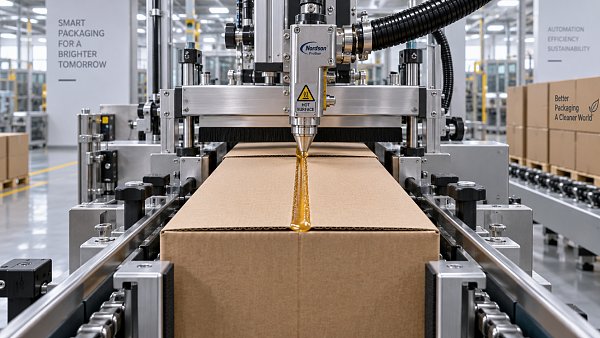
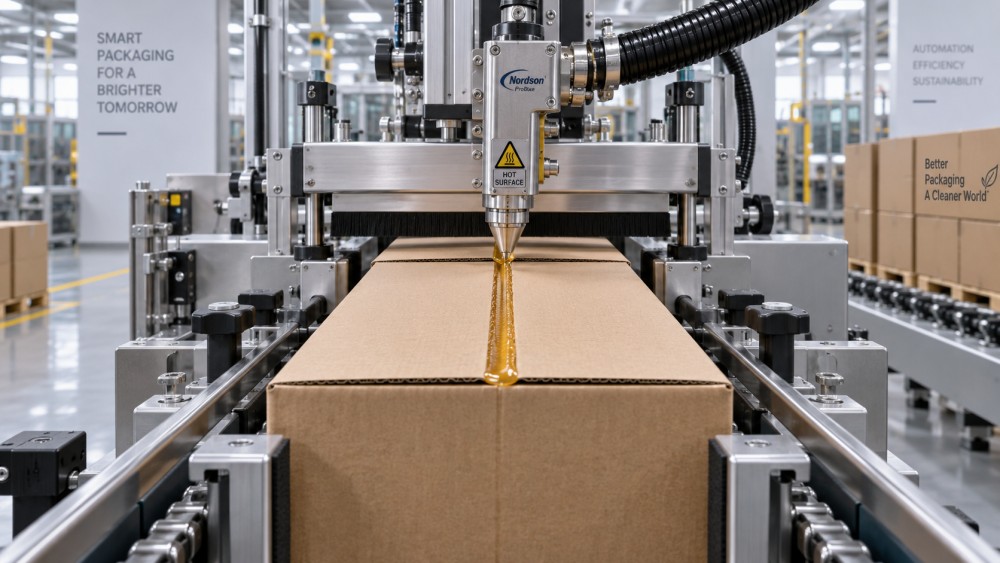
A good adhesive formulation cannot compensate for an incorrect bead position or poor substrate contact. On folder gluers and case-sealing stations, the bead must be placed where folding pressure can spread it sufficiently without forcing it beyond the glue flap. A bead applied too close to an edge is more likely to string onto guides or rollers and can leave an incomplete bond area. A bead placed too far inward may not reach the intended overlap after folding variation.
Check nozzle-to-substrate distance. Excessive stand-off increases the time the adhesive travels through air, encourages string formation, and may allow partial cooling before contact. A nozzle positioned too close can drag against uneven board, collect fibers, or produce inconsistent transfer. The correct distance depends on the gun, nozzle pattern, adhesive, and product geometry, so it should be set to the equipment specification and confirmed through actual bead observation.
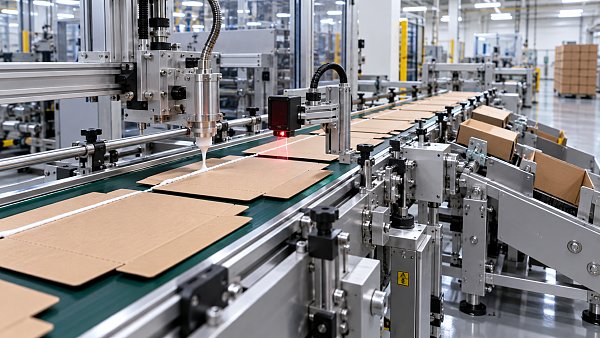
Line speed affects more than bead length. As speed changes, the relationship between gun trigger time, adhesive pressure, flap arrival, and compression timing changes as well. A program that gives a continuous, well-placed bead at one speed can leave gaps or excessive tails after a speed increase. Verify trigger timing against actual carton position, not only encoder or HMI settings. Slippage in belts, variation in blank length, loose sensors, and delayed photo-eye response can all shift the glue pattern.
Compression is the final part of application, not a separate issue. Hot melt needs adequate contact pressure and dwell time to develop a stable bond. Misaligned rails, worn belts, warped blanks, inadequate nip pressure, or cartons springing open before set can produce weak seams even when the bead is correct. If adhesive is present and properly wetted but the seam opens at discharge, inspect the folding and compression path before changing glue settings.
A practical fault-isolation sequence reduces unnecessary adjustments
When stringing and poor bonds occur together, changing several variables at once makes the result difficult to interpret. Stabilize the process by recording the adhesive grade, setpoints, line speed, board type, ambient condition, affected station, and defect appearance. Then isolate the cause in a controlled order.
- Confirm that the correct adhesive is loaded and that no unapproved material has been mixed into the system.
- Check the tank level, adhesive condition, filters, and evidence of char or contamination.
- Verify actual temperature performance from melter through hose to gun, including sensor and heater function.
- Inspect the affected nozzle, gun module, air supply, valve response, and leakage points.
- Observe bead placement at operating speed, including nozzle distance, trigger timing, and pattern consistency.
- Inspect fold alignment, compression pressure, and dwell time using representative cartons from the affected job.
- Compare results on a known acceptable substrate if adhesive or material compatibility remains uncertain.
This sequence prevents a common mistake: treating every poor bond as an adhesive-temperature issue. In many cases, temperature is within range, but the actual failure is a dirty nozzle, a late trigger, a cold substrate, inadequate compression, or an adhesive grade selected for a different surface condition.
Prevent recurrence through service discipline
Reliable performance from an industrial hot melt glue gun depends on repeatable maintenance intervals rather than corrective cleaning after defects become visible. The service plan should cover tank inspection, filter replacement, hose and cable condition, nozzle checks, gun seal inspection, air preparation, temperature verification, and controller alarms. Intervals should reflect adhesive type, daily operating hours, contamination risk, and the equipment manufacturer’s requirements.
Shutdown practices deserve equal attention. Leaving adhesive at full operating temperature during long idle periods increases the risk of thermal degradation. If the system includes standby or programmed temperature reduction functions, use them only within the adhesive supplier’s handling limits and the equipment manufacturer’s operating guidance. Restart quality should be checked before production resumes, especially after extended downtime, maintenance work, or a change of adhesive.
The most useful maintenance records are specific enough to reveal patterns: which gun was affected, what nozzle was fitted, whether strings appeared at startup or during long runs, the substrate and coating involved, temperature readings, air pressure, filter condition, and the corrective action taken. Over time, these records distinguish recurring equipment faults from order-dependent material issues. They also make it easier to avoid replacing components that were not responsible for the defect.
Stringing and poor bonds stop being unpredictable when the adhesive path is treated as one controlled process. Stable temperature, clean flow passages, correct adhesive selection, precise application timing, and adequate compression must all be present at the same time. Correcting the first visible symptom may restore output briefly; verifying the full chain is what restores dependable carton quality.
Related News
 How to Evaluate a Cold Glue System Manufacturer for Reliable BondingChoose a cold glue system manufacturer with proven application control, uptime-focused design, seamless integration, and responsive service for reliable bonding.Spatial Folding Strategist
 How to Stop Stringing and Poor Bonds with an Industrial Hot Melt Glue GunIndustrial hot melt glue gun troubleshooting guide: reduce stringing, improve bond strength, optimize temperature, nozzle condition, timing, and carton compression.Spatial Folding Strategist
 How Non Contact Glue Detection Systems Prevent Carton FailuresNon contact glue detection systems prevent carton failures by spotting missing or misplaced adhesive early, reducing rejects, rework, and packing-line disruptions.Spatial Folding Strategist
 What Engraved Glue Rollers Cost and Which Specs Matter MostEngraved glue rollers: compare cost drivers, cell volume, coatings, tolerances, and supplier specs to improve adhesive control, reduce waste, and protect corrugator uptime.Spatial Folding Strategist
 How Hot Melt Glue Systems Improve Bond Strength and UptimeHot Melt Glue Systems improve bond strength and uptime with precise temperature control, clean flow, accurate bead placement, and reliable compression.Spatial Folding Strategist
 How to Evaluate Glue Machine Manufacturers for Long-Term Operating CostGlue machine manufacturer evaluation guide: compare lifecycle costs, adhesive control, uptime, maintenance, changeovers, and supplier support for smarter investments.Spatial Folding Strategist