How to Evaluate a Cold Glue System Manufacturer for Reliable Bonding
A cold glue system should be evaluated as part of the full converting process, not as a stand-alone dispensing unit. A low purchase price has little value if the system creates open seams, excess adhesive, frequent cleaning stops, or rejects when production speed changes. For procurement teams, the right cold glue system manufacturer is one that can demonstrate stable application across the actual substrates, carton designs, line speeds, and working conditions of the plant.
Reliable bonding depends on the combined performance of adhesive supply, metering, application heads, controls, mechanical installation, and service support. Buyers should therefore compare manufacturers by their ability to manage this complete process rather than by nozzle count, pump type, or headline machine speed alone.
Start with the bonding task, not the supplier catalogue
Before requesting quotations, define what the system must bond and where it will run. “Cold glue” can describe a broad range of water-based adhesive applications, including straight-line carton seams, lock-bottom cartons, envelopes, paper bags, labels, corrugated packaging, window patching, and special paperboard assemblies. These jobs do not place the same demands on application equipment.
A folder gluer handling repeat carton work may need highly repeatable bead placement and quick job recall. A line producing short runs with frequent format changes may place more value on fast adjustment and simple cleaning. Corrugated applications can require the system to cope with uneven board surfaces, dust, absorbency differences, and changing environmental conditions. A supplier that performs well on one application is not automatically the best fit for another.
A useful procurement brief should include:
- Substrate types, coatings, print finishes, and expected variation between jobs.
- Carton or packaging geometry, glue pattern, flap arrangement, and critical bond locations.
- Normal and peak line speeds, including acceleration, deceleration, and stop-start operation.
- Current adhesive grade or the adhesive families under consideration.
- Required integration point: a new machine, an existing folder gluer, a print finishing line, or a custom conveyor system.
- Acceptance criteria, such as bead position, glue coverage, bond appearance, open-carton tolerance, and traceability needs.
This information makes supplier discussions more productive. It also exposes whether a manufacturer is asking the right technical questions or simply proposing a standard configuration.
Assess application control under real production conditions
The central question is not whether a system can apply glue during a demonstration. It is whether it can apply the intended amount in the intended location for an extended production run, despite changes in speed, board consistency, adhesive condition, and operator shift.
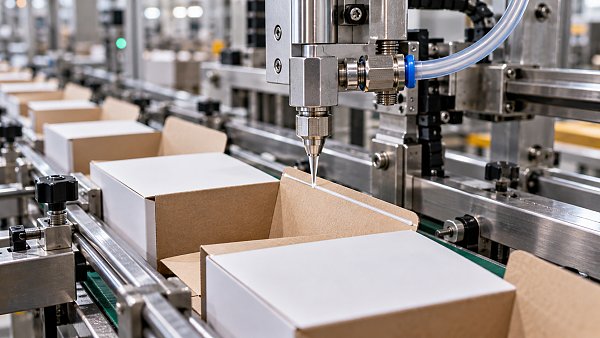
Ask how the manufacturer controls adhesive flow. Depending on the application, this may involve pressure regulation, positive-displacement pumping, timed valve control, speed-linked output, or closed-loop monitoring. The preferred approach depends on the job, but the supplier should be able to explain what happens when line speed changes and how the system prevents a bead from becoming too thin, too wide, intermittent, or excessive.
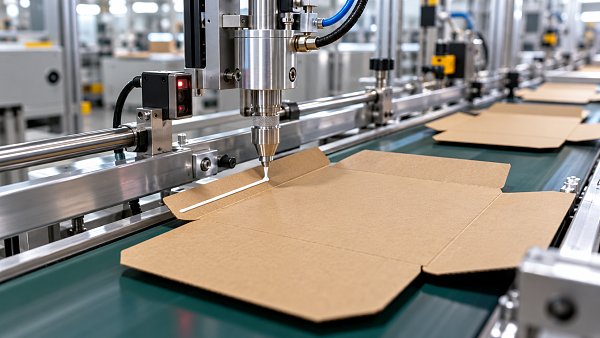
Application accuracy should also be discussed in practical terms. A well-positioned bead that is too heavy may squeeze out, soil the product, cause parts to stick where they should not, or raise adhesive consumption. A very narrow bead may look efficient but fail after folding, compression, or handling. The best setting is the lowest consistent adhesive application that still produces the required bond under the plant’s actual process conditions.
Request samples that reflect your difficult work, not only a clean standard carton. Include coated board, highly absorbent stock, difficult folds, small glue areas, and jobs that run near normal production speed. Where possible, ask to see evidence of continuous operation rather than isolated sample pieces.
Substrate and adhesive compatibility deserve equal attention
Bonding failures are often assigned to the glue system when the issue is really an interaction between adhesive, substrate, and process. Paperboard can vary in porosity, surface energy, moisture content, coating, varnish, print coverage, and fiber quality. These variables affect how quickly water-based adhesive wets the surface, penetrates the board, and develops bond strength.
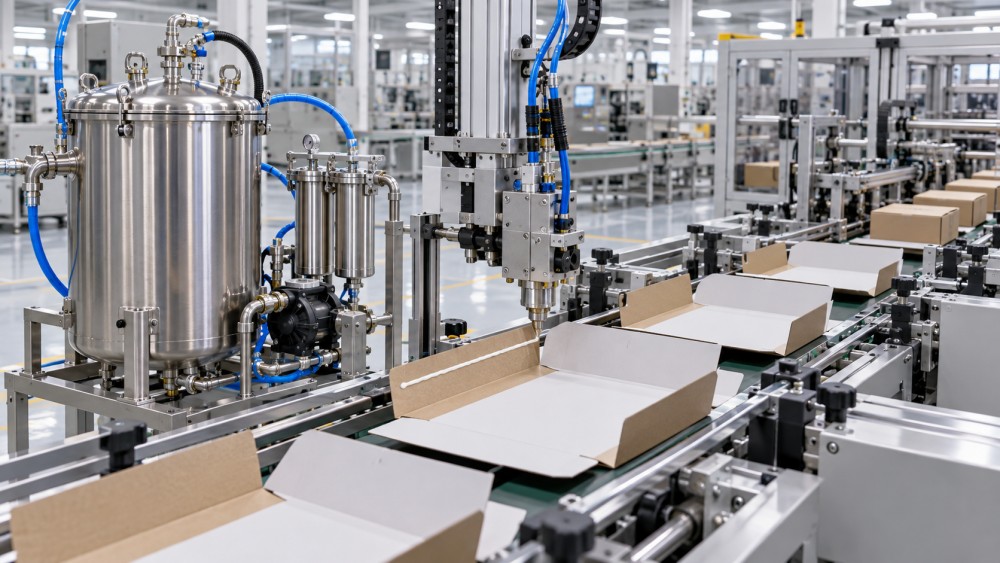
A capable manufacturer does not need to sell the adhesive itself, but it should understand how its equipment handles the adhesive chemistry selected for the job. Ask whether the pump, seals, hoses, valves, filters, and applicators are suitable for the viscosity range and cleaning method involved. Some adhesives are more sensitive to temperature changes, settling, contamination, or long idle periods. Equipment that is easy to run with one adhesive may need different settings or components for another.
Compatibility matters especially when purchasing equipment for coated folding cartons, recycled-content board, printed surfaces, windowed cartons, or mixed-product production. In these cases, a supplier should be prepared to help define trials that include both the target material and the intended operating sequence: application, folding, compression, curing time, packing, and distribution handling.
Compare system design by its impact on uptime
For a procurement decision, uptime is usually more important than a minor difference in theoretical output. Cold glue systems stop producing value when nozzles clog, filters block, hoses leak, tanks are difficult to clean, or operators cannot quickly locate the cause of an application fault.
Do not treat automatic cleaning as an automatic advantage. It can be valuable for systems with demanding hygiene, frequent adhesive changes, or long operating hours, but its benefit depends on how well it fits the adhesive and the plant’s maintenance routine. A simpler system that operators clean correctly every shift may be preferable to a more complex design that is rarely maintained as intended.
Integration quality is part of the manufacturer evaluation
Cold glue equipment must follow the rhythm of the converting line. Poor coordination with machine speed, product detection, carton position, or folding timing can produce missed applications and misplaced beads even when the glue unit itself is functioning correctly.
Ask the manufacturer how the system receives production signals and how it handles speed variation, emergency stops, product gaps, and restart conditions. Confirm which party is responsible for mechanical brackets, electrical interfaces, guarding, control connections, commissioning, and final performance testing. Ambiguity at this stage often turns into delays during installation.
Integration requirements are more demanding when glue application is combined with inspection, coding, robotics, or automated downstream packing. A carton plant investing in connected equipment may also need production data such as glue faults, alarm history, job settings, and maintenance status. The value of this data is not the dashboard itself; it is the ability to find recurring causes of waste and restore a known-good setup after a changeover.
CPCS covers these connections across printing, converting, inspection, and packaging automation because equipment decisions are increasingly made at process level. A glue system should be judged by how it supports finished-carton yield and line stability, not only by its individual specification sheet.
Test the manufacturer’s service model before placing the order
Service quality is difficult to judge from a sales presentation, yet it strongly affects lifecycle cost. Ask specific operational questions: Who commissions the equipment? Who trains operators and maintenance staff? What documentation is supplied? How are remote diagnostics handled? Which parts should be held on site? How does the supplier support a line that has an urgent production issue?
The answers should match the plant’s internal capability. A large converter with experienced maintenance technicians may accept a system that requires more technical ownership if it offers flexibility and lower running cost. A smaller operation may be better served by a robust, simpler design with straightforward setup and responsive local support.
It is also worth separating routine support from major problem solving. Routine support includes cleaning procedures, nozzle replacement, calibration checks, and setting changes. Major support includes control faults, pump problems, integration errors, and recurring bond failures that require process analysis. A credible supplier can explain how both are addressed.
A practical supplier comparison process
Price comparison becomes meaningful only after each supplier is working from the same operating requirement. Use a structured evaluation that combines technical fit and commercial risk.
- Issue one application brief. Give every shortlisted manufacturer the same materials, line details, target output, and quality requirements.
- Review the proposed configuration. Check why each pump, head, control method, and accessory has been selected. Generic proposals should be challenged.
- Run a relevant trial. Evaluate glue placement, bond consistency, startup behavior, changes in speed, and cleanup requirements using representative samples.
- Map installation responsibilities. Define interfaces, utility needs, safety provisions, site work, commissioning steps, and acceptance testing before the purchase order.
- Calculate operating exposure. Include adhesive waste, planned maintenance, cleaning labor, spare parts, training, and expected disruption from changeovers, not just capital cost.
- Check support readiness. Confirm the service route, documentation quality, response process, and critical spares plan for the location where the line will operate.
Common purchasing mistakes
The most common mistake is selecting a cold glue system manufacturer solely on quoted equipment cost. Cheap hardware can become expensive when it consumes excess adhesive, needs repeated adjustments, or causes intermittent defects that are discovered after packing.
Another mistake is accepting a trial that is too easy. A supplier may show clean glue lines on standard board at a modest speed, while the plant’s commercial risk lies in coated substrates, narrow flaps, short runs, or frequent speed changes. The trial should challenge the conditions that create current waste or customer complaints.
Buyers also sometimes specify precision without specifying the manufacturing process around it. Glue placement cannot be considered separately from feeder stability, carton registration, folding accuracy, compression, and product handling. If these upstream or downstream conditions are unstable, a more sophisticated applicator will not solve the underlying problem.
Reliable bonding comes from a supplier that understands the application, provides a serviceable configuration, and accepts measurable responsibility for the system’s performance within the defined process. Procurement teams that establish those conditions before comparing prices are far more likely to select equipment that remains dependable after commissioning.
Related News
 How to Prevent Clogs in a High Temperature Hot Melt Glue GunPrevent high temperature hot melt glue gun clogs with practical tips on adhesive selection, safe cleaning, and maintenance to keep work flowing.Spatial Folding Strategist
 What Factors Affect the Price of a Corona Treater?Discover what affects corona treater price, from treatment width and power to installation costs. Compare quotes and choose the right system for your production line.Spatial Folding Strategist
 What to Ask a Plasma Treater Manufacturer About Surface AdhesionChoosing a plasma treater manufacturer? Ask these essential questions about adhesion testing, line integration, maintenance, and production reliability before you buy.Spatial Folding Strategist
 How to Prevent Clogging in a Precision Glue Nozzle During ProductionPrevent precision glue nozzle clogs with proven filtration, cleaning, and shutdown practices. Discover practical steps to reduce downtime and keep packaging bonds strong.Spatial Folding Strategist
 How to Adjust Compression Sections to Prevent Carton Seams OpeningAdjust Compression Sections to prevent carton seams from opening. Learn how to balance pressure, dwell time, and alignment for stronger bonds, less board damage, and fewer rejects.Spatial Folding Strategist
 How a Precision Adhesive Application System Reduces Glue WasteDiscover how a precision adhesive application system can reduce glue waste, protect bond strength, and lower packaging costs. Explore practical controls and ROI checks before you invest.Spatial Folding Strategist