How to Evaluate Glue Machine Manufacturers for Long-Term Operating Cost
The lowest quotation for a glue machine can produce the highest cost per finished carton if it brings unstable output, excessive adhesive use, frequent stoppages, or expensive dependence on the supplier’s service team. For a long-lived production asset, the relevant comparison is not machine price alone but the cost of converting sheets into saleable products over the expected operating life.
This is particularly important in carton converting, where gluing is often a final-value process. A missed glue line, weak bond, excess application, poor fold alignment, or unplanned stop can turn otherwise acceptable printed and die-cut blanks into waste. The right glue machine manufacturer is therefore one that can demonstrate repeatable operating performance under the plant’s real board grades, job mix, adhesive system, shift pattern, and maintenance capability—not simply one that offers the highest stated speed.
Start with the cost model, not the equipment specification
A useful approval model separates total cost of ownership into the items that actually move operating cost:
- Capital expenditure, including machine price, freight, installation, commissioning, guarding, electrical work, and ancillary glue supply equipment;
- Adhesive consumption, including losses from over-application, line purging, tank cleaning, start-up, and rejected work;
- Labor required for feeding, setup, quality checks, cleaning, manual recovery, and routine maintenance;
- Energy and utilities, such as electrical consumption, compressed air, hot-melt heating, chilled water where applicable, and ventilation requirements;
- Waste and rework caused by glue defects, inconsistent application, registration problems, or equipment instability;
- Maintenance, spare parts, service travel, software support, and the cost of downtime while waiting for a repair;
- Capacity losses during changeover, job setup, adhesive change, cleaning, and fault recovery.
The manufacturer should be assessed against each cost category. A machine quotation may describe servo drives, automatic setup, vision inspection, cold-glue systems, or hot-melt capability, but each feature needs to be translated into a financial mechanism. Automatic adjustment matters when it shortens setup or reduces operator-dependent variation. A closed-loop glue control system matters when it prevents excess adhesive application or catches missing glue before cartons are packed. A higher-cost drive system may be justified if it reduces wear, stabilizes folding at production speed, and limits unscheduled stoppages.
Without that translation, financial review can become a comparison of list price and nominal speed—two figures that rarely explain the real cost of production.
Rated speed is not productive speed
Glue machine manufacturers commonly state a maximum mechanical speed. That number has limited value unless it is connected to the actual products being run. Carton dimensions, substrate stiffness, crease quality, warp, print coverage, varnish, window patches, special structures, and required glue pattern all affect stable output. A machine can be mechanically capable of a high speed while achieving a much lower sustained speed on the jobs that generate most of the plant’s revenue.
The more useful measure is good-output rate: saleable cartons produced per scheduled hour after allowing for setup, stoppages, quality holds, speed reductions, and rejected output. The manufacturer should be asked to explain the operating window for representative products, not merely to confirm that a maximum speed is technically possible.
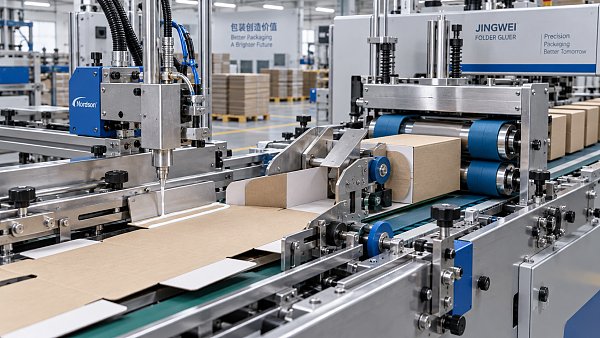
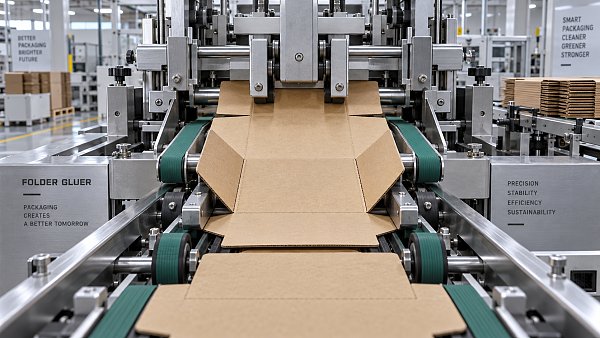
For a folder gluer or dedicated glue application system, review the causes of lost time in detail. These can include feeder inconsistency, belt tracking issues, difficulty holding glue position through the folding section, nozzle blockage, adhesive temperature instability, sensor faults, and unreliable delivery or counting. A supplier able to identify these failure modes and show how the machine design addresses them is generally offering more useful evidence than one relying on broad claims of “high efficiency.”
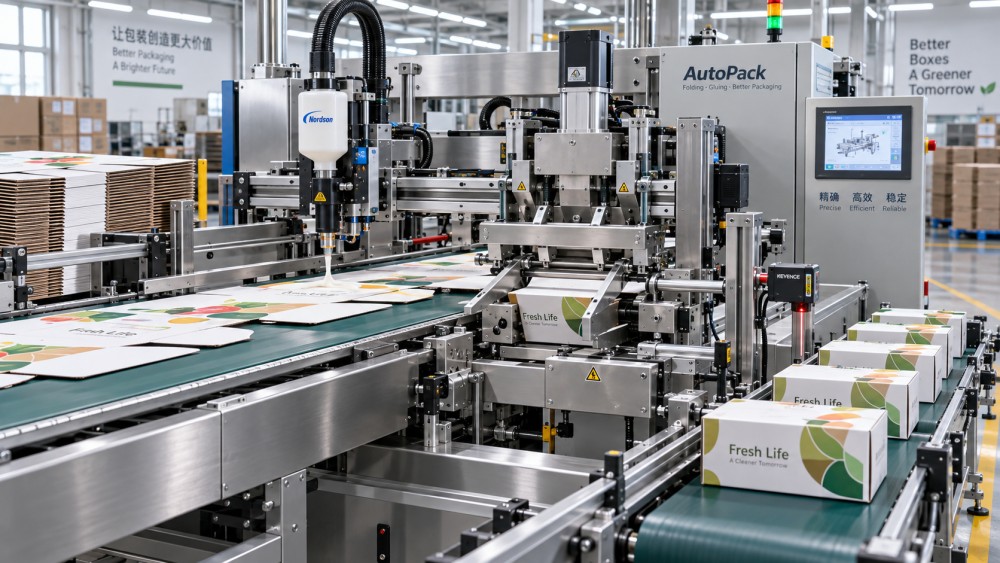
It is also important to distinguish between a brief demonstration run and a normal production shift. Demonstration conditions may use clean, flat blanks, a narrow product range, trained technicians, and readily available spare parts. Commercial operation includes variable incoming blanks, production interruptions, shift handovers, operator differences, and repeated job changes. The long-term cost case should reflect the latter.
Adhesive consumption is a controllable production cost
Adhesive expenditure is often evaluated as a purchasing item, yet the machine and process design can have a larger influence on total use than the nominal price of the adhesive itself. Excess glue can create stringing, squeeze-out, staining, poor presentation, longer drying requirements, and difficulty in downstream packing. Insufficient glue creates bond failures that may not become visible until cartons are filled, transported, or exposed to environmental changes.
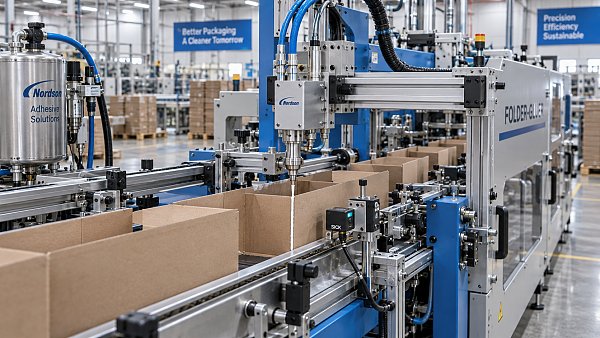
A glue machine manufacturer should be able to define how application quantity is controlled. The relevant questions differ by system. With cold glue, assess pump consistency, hose design, valve response, nozzle or disc condition, filtration, recirculation arrangements, and the ease of cleaning dried adhesive from the system. With hot-melt equipment, assess melt rate, temperature control, hose and gun management, char prevention, warm-up time, standby operation, and protection against adhesive degradation during long idle periods.
Application accuracy is not just a quality issue. If the system requires operators to apply a generous safety margin because glue placement is unreliable, material consumption rises continuously. Conversely, a stable system can support narrower and more controlled glue patterns where the carton design and bonding requirement permit it. The potential saving should not be assumed from a brochure claim; it should be validated through sample production using the intended substrate, adhesive grade, and bond specification.
Cleaning is another frequently underestimated cost. Systems that require lengthy flushing, manual dismantling, or repeated scraping between adhesive types can consume labor and reduce available production time. Ask the supplier to document routine cleaning tasks, the required consumables, the time required for adhesive changeover, and which tasks can safely be performed by plant personnel.
Maintenance economics depend on design transparency and service access
Every glue machine requires maintenance. The financial difference lies in whether maintenance is predictable, quick, and manageable—or reactive, specialist-dependent, and disruptive. A manufacturer should provide a maintenance schedule that distinguishes daily operator checks, weekly cleaning and inspection, periodic replacement items, and work requiring trained technicians.
Critical wear parts deserve close scrutiny. Belts, bearings, rollers, side guides, folding components, pumps, valves, glue guns, filters, sensors, encoder systems, and drive components may have very different replacement costs and lead times. The question is not whether a part will eventually wear; it is whether the plant can identify deterioration early, stock sensible spares, and replace the component without extended loss of production.
Ask for an itemized recommended spare-parts package rather than accepting a single allowance. The list should classify parts by operational criticality: parts that can stop the machine, parts that affect quality but allow temporary operation, and parts that can be ordered as needed. This makes it possible to calculate the initial spare-parts investment separately from the cost of emergency supply later.
Proprietary dependence requires careful attention. Some proprietary components are justified because they are integrated into machine control or safety architecture. The concern arises when ordinary consumables, standard mechanical parts, or basic service diagnostics can only be obtained from one source at uncertain lead times. A strong glue machine manufacturer can explain which components are proprietary, why they are used, what alternatives are approved, and how support will be maintained over the machine’s working life.
Changeover performance should be measured against the order mix
A low-volume, repeat-order operation and a plant handling many carton sizes, board grades, and glue patterns will value different machine characteristics. Where job changes are frequent, setup time is a recurring cost rather than an occasional inconvenience. The financial impact includes idle machine time, operator time, setup waste, and delayed dispatch risk.
Evaluate the changeover sequence rather than relying on a stated setup duration. Which adjustments are motorized? Which remain manual? Does the operator need to adjust feeder width, side guides, folding carriers, glue position, compression settings, delivery, counting, or glue program parameters? Can job settings be stored and recalled reliably? Are prior settings useful when a repeat job returns, or will the machine still require substantial trial-and-error adjustment?
Automation is economically sound only when it matches the operating pattern. A highly automated configuration can reduce changeover losses in a varied job environment, but it also adds controls, actuators, sensors, and software that must be maintained. For long runs of a limited carton range, a simpler and robust configuration may offer a better cost position. The manufacturer’s proposal should therefore be tested against historical job data: number of changeovers, typical run length, size variation, substrate range, and tolerance for setup waste.
Labor cost is linked to recoverability, not only staffing level
It is easy to compare the number of operators specified for normal operation. It is harder, and more valuable, to examine what happens when production departs from normal conditions. A machine that nominally needs one operator may require additional skilled intervention whenever a glue nozzle blocks, a carton drifts, an electronic fault occurs, or a new format is introduced. The labor cost then appears as overtime, lost output, elevated reject rates, and dependence on a small number of experienced people.
Machine design affects recoverability. Clear human-machine interface messages, accessible glue components, consistent mechanical references, guided setup procedures, and usable fault history can reduce the time required to return to stable production. A manufacturer should be asked to demonstrate fault diagnosis, job recall, manual override controls, and recovery after a controlled stop. The objective is not to eliminate operator involvement; it is to avoid making routine production dependent on specialist intervention.
Training should be costed as part of commissioning. Clarify the number of training days, the distinction between operator and maintenance training, the language of manuals and interface screens, and whether refresher or remote training is available. Poorly transferred operating knowledge is often reflected later in avoidable adhesive waste and unnecessary service calls.
Energy claims need an operating context
Energy use can be material for equipment that includes heated adhesive systems, multiple servo axes, vacuum transport, compressors, or extended standby periods. But a quoted connected load is not the same as actual energy consumption. It describes potential electrical demand, not the energy used per thousand cartons or per production hour.
Request the basis of any energy claim. Does it cover warm-up? Does it include glue melting and holding temperature? What is the standby consumption during breaks or overnight periods? Can selected sections enter an energy-saving mode without causing long restart delays or adhesive quality problems? Are compressed-air requirements included? These details determine whether a lower nominal energy figure translates into meaningful operating savings.
Energy should also be considered alongside throughput. A machine using more power while producing stable saleable output at a higher rate may have a lower energy cost per carton than a lower-powered machine suffering repeated stops and restart waste. The relevant denominator is conforming output, not machine running time.
Supplier support is an operating-cost variable
For imported equipment, service capability can be as consequential as machine design. A low purchase price loses relevance when a control fault, glue-system failure, or unavailable wear component stops a production line for an extended period. Evaluate the supplier’s support structure before approval: local or regional technical coverage, remote diagnostic capability, spare-parts stocking arrangements, response commitments, documentation quality, and escalation procedures for complex faults.
Service terms should be specific enough to model risk. “Remote support available” is not equivalent to defined remote access capability, named communication channels, availability outside standard office hours, or a clear process for obtaining replacement parts. If remote diagnosis requires machine connectivity, determine who owns the data connection, whether cybersecurity requirements can be met, and whether the plant retains control over production data access.
Acceptance criteria should also be written into the purchase agreement. They should cover the agreed product range, substrate conditions, glue type, output quality, safety functions, documentation, training, and commissioning responsibilities. Where output claims are material to the investment case, define the test conditions carefully. A vague performance guarantee is difficult to enforce and offers little protection against lifetime operating cost.
Compare manufacturers through a realistic lifecycle scenario
The most defensible approval comparison uses the same production scenario for every shortlisted supplier. Build it from the plant’s own expected conditions: annual operating hours, product mix, expected job changes, adhesive price, labor cost, power tariff, planned maintenance allowance, expected reject cost, and a realistic value for lost production time. Then apply each manufacturer’s confirmed operating assumptions rather than their marketing assumptions.
A practical model does not need false precision. Its purpose is to reveal which variables dominate the decision. If adhesive use and changeover time create more cost exposure than the difference in purchase price, negotiation effort should focus there. If downtime risk is the largest uncertainty, spare-parts availability, service response, machine accessibility, and proven component selection deserve a higher weighting than cosmetic automation features.
The strongest manufacturer is not necessarily the supplier offering the cheapest machine or the most extensive option list. It is the one whose equipment, service model, and contractual commitments make long-term output costs visible, testable, and controllable. When a proposal can withstand that level of scrutiny, the investment decision rests on operating economics rather than on an attractive initial quotation.
Related News
 How to Choose a Glue Dispensing System Manufacturer for Your LineChoose a glue dispensing system manufacturer with confidence. Compare adhesive compatibility, line integration, testing, and lifecycle costs to find the right fit for your production line.Spatial Folding Strategist
 How to Fix Weak Glue Bonds on Carton Folder Gluers at High SpeedsCarton Folder Gluers losing bond strength at high speeds? Learn how to optimize glue placement, adhesive selection, and compression to reduce rejects and keep production running reliably.Spatial Folding Strategist
 How Window Patching Machines Apply Film to Folding Carton WindowsDiscover how Window Patching Machines apply film to folding cartons. Learn key controls for precise placement, strong bonds, and fewer rejects before choosing your equipment.Spatial Folding Strategist
 How Does a Crash Lock Pre Breaking Unit Improve Carton Folding?Discover how a crash lock pre breaking unit reduces crease resistance, improves carton folding consistency, and supports reliable opening—with practical setup tips to avoid board damage.Spatial Folding Strategist
 How a Folder Gluer Pre-Breaking Unit Improves Carton Fold QualityDiscover how a folder gluer pre breaking unit improves carton fold quality and reduces spring-back. Get practical setup tips for consistent seam alignment and smoother production.Spatial Folding Strategist
 How to Evaluate a Cold Glue System Manufacturer for Reliable BondingChoose a cold glue system manufacturer with proven application control, uptime-focused design, seamless integration, and responsive service for reliable bonding.Spatial Folding Strategist