How to Compare Glue Machine Manufacturers on Cost and Uptime
A glue machine manufacturer should be compared on the cost of reliable production, not simply the quoted machine price. In carton converting, corrugated packaging, and commercial print finishing, a lower purchase price can lose its advantage quickly if the machine causes frequent stops, inconsistent glue application, long changeovers, or expensive service delays. The better choice is the supplier whose equipment can maintain stable output under your actual materials, job mix, staffing level, and maintenance capability.
The practical question is straightforward: how much usable production will the machine deliver over its working life, and what will it cost to keep that output stable? That is where purchase price, uptime, waste, labor, spare parts, adhesive consumption, and technical support need to be evaluated together.
Start With Total Cost, Not the Initial Quote
Machine quotations are easy to compare because they fit into a spreadsheet. Operating losses are harder to see because they appear across production, maintenance, quality, and customer service. Yet those losses usually determine whether a glue system is a good investment.
When comparing a glue machine manufacturer, separate the commercial offer into four cost layers:
- Acquisition cost: machine price, shipping, installation, commissioning, operator training, guarding, and required utilities.
- Operating cost: adhesive use, electricity, compressed air, cleaning materials, labor, and routine wear parts.
- Quality cost: rejected cartons, weak bonds, glue squeeze-out, customer claims, rework, and lost board or paper.
- Downtime cost: breakdowns, setup losses, waiting for service, unavailable spares, and production backlog.
A manufacturer with a higher quotation may still offer a lower total cost if its glue control is repeatable, its wear parts are readily available, and its technicians can diagnose faults without long delays. The reverse is also true. A low-cost machine that needs frequent manual adjustment can become expensive in a plant handling short runs, many carton formats, or tight delivery windows.
Do not accept broad claims such as “low glue consumption” or “easy maintenance” without asking how those claims are measured. Request a clear list of consumables, recommended preventive maintenance intervals, common replacement parts, and the expected service tasks that operators can perform themselves.
Compare a Glue Machine Manufacturer on Uptime Evidence
Uptime is often discussed loosely. A supplier may describe a machine as “stable,” while the buyer assumes that means it will run continuously at the advertised speed. These are not the same thing.
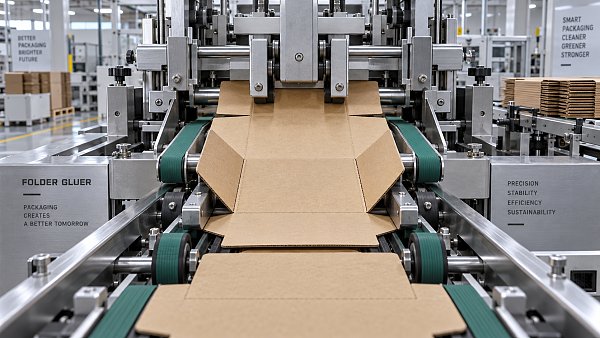
Useful uptime evaluation looks at the entire production cycle: feeding, alignment, glue application, folding or bonding, compression time where relevant, delivery, cleaning, and changeover. A glue unit may work correctly in isolation but still create stoppages because it does not integrate well with the feeder, folder gluer, conveyor, inspection system, or downstream packing process.
Ask each supplier to explain the conditions behind its stated performance. Which substrates were used? What board thickness, flute profile, coating, varnish, dust level, and production speed applied? Was the sample run a simple straight-line carton, or a difficult multi-point carton with variable glue patterns? A demonstration built around ideal material is useful, but it is not proof of performance on your everyday work.
A strong comparison request should include representative production samples. Supply the materials you actually convert, including the most demanding jobs rather than only the easiest ones. If possible, include recycled corrugated grades, coated folding carton, uneven blanks, heavy ink coverage, or substrates with known dust and warp issues. These conditions reveal whether glue placement, compression, and machine handling remain controlled when production is less forgiving.
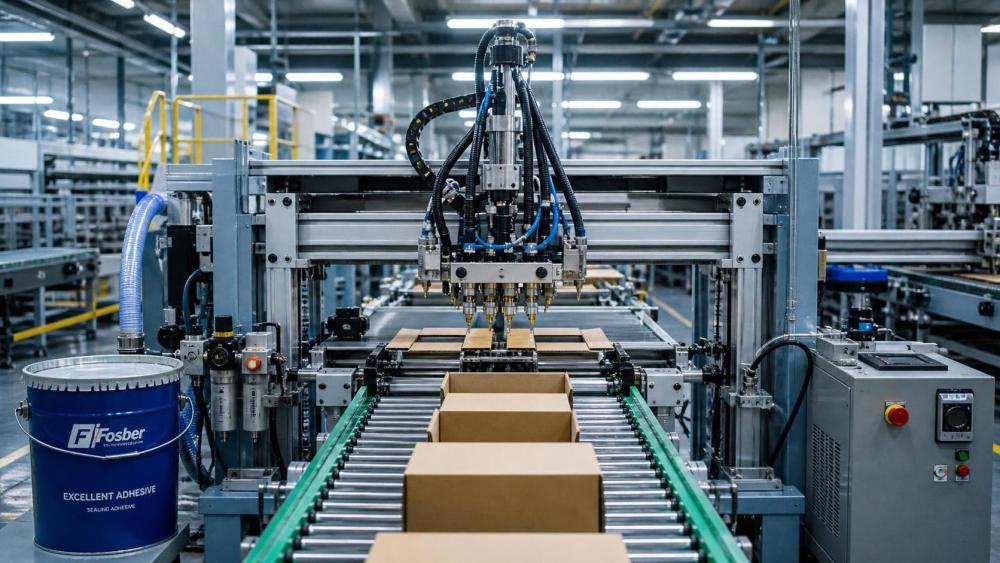
During a factory acceptance test or live demonstration, record more than top speed. Observe startup time, rejected sheets during setup, time to switch between jobs, glue stringing, nozzle blockage, cleaning requirements, and how quickly an operator can recover from a normal fault. These details are far more valuable than a short high-speed run.
What Actually Drives Glue-System Downtime
In packaging plants, glue-related stoppages rarely come from one dramatic failure. More often, they build from small issues: adhesive temperature drifting, a clogged applicator, incorrect glue viscosity, poor carton alignment, dried residue, worn hoses, contaminated filters, or settings that only one experienced operator understands.
The right manufacturer does not merely sell an applicator. It should show how the system manages those routine realities.
Adhesive compatibility needs a direct answer
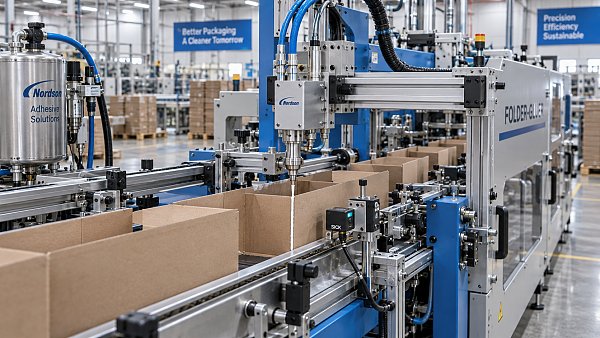
Ask which adhesive families the system is designed to handle: cold glue, hot-melt adhesive, water-based adhesive, starch-based systems, or specialty formulations. Compatibility is not just a question of whether adhesive can pass through the equipment. It affects pump selection, hose design, heating control, nozzle configuration, cleaning procedures, and the risk of char, skinning, or blockage.
If your plant uses more than one adhesive type, confirm the changeover process. A system that is economical for a single high-volume product may be a poor fit for frequent adhesive changes. In that case, cleaning time and contamination risk may outweigh the benefit of a lower initial price.
Glue accuracy affects both waste and customer risk
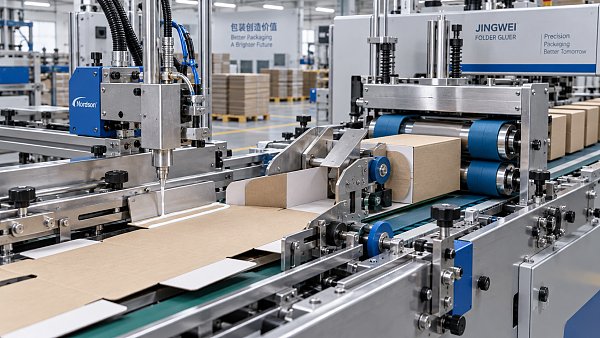
Excess glue is not a harmless quality issue. It can cause carton sticking, staining, warped panels, poor appearance, unnecessary adhesive use, and trouble in automatic packing. Too little glue creates weak seams and potential failures after filling, shipment, or use. For food, pharmaceutical, and branded retail packaging, the cost of a quality escape can be much greater than the cost of the adhesive itself.
Look for evidence that the manufacturer can control placement and volume at the production speeds you need. The relevant question is not whether the machine can apply glue neatly on a sample. It is whether it keeps the same pattern after hours of production, during normal temperature changes, and after operators change jobs.
Access for cleaning is a real design feature
Many purchasing teams inspect controls, frames, and speed ratings but do not look closely at cleaning access. This is a mistake. A glue system that takes too long to clean will eventually be cleaned less thoroughly. That increases failure risk and makes production quality dependent on individual operator discipline.
During evaluation, ask an operator or technician to demonstrate daily cleaning and a more complete maintenance procedure. Check access to filters, tanks, pumps, nozzles, hoses, sensors, and adjustment points. If the explanation requires extensive disassembly, allow for that labor in the cost model.
Speed Ratings Need Context
Published machine speed is a capacity ceiling, not a production promise. A system may be mechanically capable of running quickly, but actual output depends on blank quality, carton design, glue open time, fold geometry, feeding consistency, operator experience, and downstream handling.
For a stable, high-volume run of one or two standard carton styles, maximum speed may matter greatly. For a converter processing many short jobs per day, fast setup, saved-job recall, repeatable settings, and simple cleanup can have more commercial value than a higher nameplate speed.
This is where procurement teams often compare the wrong numbers. A machine running at a moderate speed with few interruptions can produce more saleable cartons over a shift than a faster machine that needs repeated corrections. Ask suppliers to discuss average operating conditions, not just maximum technical capability.
Build a Cost Model Around Your Own Production
There is no universal “best” glue machine because job profiles differ. A plant producing large volumes of standard corrugated shipping cases has different needs from a folding-carton operation handling frequent artwork changes, premium finishes, and complex folding patterns.
A simple evaluation model can make this visible. Use a typical month of production data and compare each proposed machine against the same workload. Include the number of jobs, average run length, material types, planned operating hours, current reject rate, average changeover time, and expected staffing.
The model does not need false precision. It is better to use reasonable ranges and challenge assumptions openly. If a supplier claims lower adhesive consumption, test that statement over a representative run. If a supplier promises rapid service, ask where the nearest qualified technician and stocked parts are located. A cost model is only as reliable as the assumptions behind it.
Service Capacity Is Part of the Machine
For imported equipment, the service arrangement can be more important than a minor difference in hardware specification. When a line is down, a responsive technician, clear documentation, and a locally available spare part can protect an entire production schedule.
Ask who will commission the machine, who will train operators, and who owns the problem after warranty. Some manufacturers provide direct support; others rely on distributors or independent service partners. Neither approach is automatically better, but responsibilities must be clear.
Examine the supplier’s documentation as carefully as the machine itself. Operators need practical fault guides, maintenance staff need electrical and pneumatic drawings, and management needs a transparent spare-parts list. A sophisticated glue control system becomes a liability if the plant cannot troubleshoot routine faults without waiting for remote assistance.
It is also sensible to ask about software access, remote diagnostics, and data ownership where the machine uses connected controls. Plants that rely on digital production management should know whether operating data can be exported, how alarms are recorded, and whether integration with existing reporting systems is realistic.
When the Cheapest Supplier May Be the Right Choice
A premium supplier is not always justified. A simpler, lower-cost machine can be suitable when production volumes are modest, formats are stable, adhesive requirements are straightforward, and the plant has capable maintenance staff. It can also make sense for a non-critical backup process where a short interruption will not disrupt customer deliveries.
The problem begins when a basic machine is purchased for a demanding application: high-speed work, frequent job changes, difficult substrates, strict appearance requirements, or limited technical support on site. In those conditions, the buying decision should favor repeatability and recoverability over the lowest capital cost.
Be cautious with a common mistake: buying excess automation for a process that does not need it. Additional automation can reduce labor and variation, but only when job volume and operational discipline justify it. A highly automated system that is rarely used at its intended capacity may have a poor return, even if its technical design is impressive.
A Practical Shortlist Process
Start by removing suppliers that cannot meet essential requirements: adhesive compatibility, required output, local electrical standards, safety requirements, and support coverage. Then compare the remaining options through a structured technical and commercial review.
Give each supplier the same production brief, the same sample materials, and the same questions. Ask for deviations in writing. This avoids a situation where one quotation includes installation, training, and spare parts while another appears cheaper only because those items are excluded.
Before signing, speak with existing users whose production profile resembles yours. Ask practical questions: How long do normal changeovers take? Which parts are replaced most often? How does the supplier handle urgent faults? What did the plant discover after installation that was not obvious during the sales process? Reference calls are most useful when the questions are specific.
Industry information platforms such as CPCS can also help procurement teams place a glue system within the wider converting line. Glue performance is connected to feeder quality, die-cut accuracy, folding control, inspection, material handling, and production data. Reviewing the full process prevents a narrow equipment choice from creating a new bottleneck elsewhere.
Frequently Asked Questions
Should adhesive consumption be a major buying criterion?
Yes, but it should not be viewed alone. Lower adhesive use only creates value when bond strength, appearance, and production stability remain acceptable. Ask to verify consumption on your own carton design and substrate.
How should uptime be written into a supplier comparison?
Do not rely only on a percentage claim. Compare preventive maintenance requirements, normal fault recovery, parts availability, support response procedures, and performance during a representative production test.
Is remote support enough for a glue machine?
Remote diagnostics can resolve control and settings issues quickly, but it cannot replace local capability for mechanical failures, adhesive-system cleaning problems, or urgent parts replacement. Check both remote and on-site support.
What should be included in the first spare-parts order?
Include routine wear items, filters, seals, critical sensors, and parts with long replenishment lead times. The exact list should come from the manufacturer’s maintenance schedule and the plant’s planned production intensity.
Make the Final Choice on Recoverable Output
The best glue machine manufacturer is not automatically the one with the highest speed, the lowest quote, or the most elaborate brochure. It is the supplier that can demonstrate dependable glue quality, realistic changeover performance, maintainable equipment, accessible service, and a cost structure that works for your production mix.
Put equal weight on what happens after installation. A machine earns its return through stable shifts, controlled adhesive use, fewer rejected cartons, and predictable recovery when something goes wrong. That is the comparison that protects both capital expenditure and customer delivery performance.
Related News
 How to Choose a Glue Dispensing System Manufacturer for Your LineChoose a glue dispensing system manufacturer with confidence. Compare adhesive compatibility, line integration, testing, and lifecycle costs to find the right fit for your production line.Spatial Folding Strategist
 How to Fix Weak Glue Bonds on Carton Folder Gluers at High SpeedsCarton Folder Gluers losing bond strength at high speeds? Learn how to optimize glue placement, adhesive selection, and compression to reduce rejects and keep production running reliably.Spatial Folding Strategist
 How Window Patching Machines Apply Film to Folding Carton WindowsDiscover how Window Patching Machines apply film to folding cartons. Learn key controls for precise placement, strong bonds, and fewer rejects before choosing your equipment.Spatial Folding Strategist
 How Does a Crash Lock Pre Breaking Unit Improve Carton Folding?Discover how a crash lock pre breaking unit reduces crease resistance, improves carton folding consistency, and supports reliable opening—with practical setup tips to avoid board damage.Spatial Folding Strategist
 How a Folder Gluer Pre-Breaking Unit Improves Carton Fold QualityDiscover how a folder gluer pre breaking unit improves carton fold quality and reduces spring-back. Get practical setup tips for consistent seam alignment and smoother production.Spatial Folding Strategist
 How to Evaluate a Cold Glue System Manufacturer for Reliable BondingChoose a cold glue system manufacturer with proven application control, uptime-focused design, seamless integration, and responsive service for reliable bonding.Spatial Folding Strategist