How to Choose an Industrial Glue Dispensing System for Reliable Bonding
Start With the Bonding Failure You Need to Prevent
An industrial glue dispensing system should be selected from the required bond outcome backward, not from pump type, nozzle count, or quoted line speed forward. In packaging and converting, a system that applies adhesive cleanly at a demonstration speed can still create weak seams, warped board, glue stringing, excess consumption, or difficult changeovers once material grades and production conditions vary.
For technical evaluators, the first decision is whether the process needs controlled placement, controlled volume, controlled temperature, or all three. A corrugated case sealer, a high-speed folder gluer, a tray former, and a specialty display-packaging line may all use adhesive, but they do not impose the same demands on pattern accuracy, open time, substrate wet-out, compression, and maintenance access.
A useful starting question is: what failure would be most expensive if it escaped the line? For some operations, it is an open manufacturer's joint that causes a shipping case to fail in distribution. For others, it is excessive adhesive that contaminates print surfaces, creates visible squeeze-out, interferes with downstream inspection, or adds unnecessary material cost. In short-run carton work, the larger concern may be setup repeatability across frequent job changes. The chosen dispensing system needs to address the dominant production risk, rather than perform acceptably in a generic sense.
Match the Adhesive Process to the Production Window
Dispensing equipment cannot compensate for an adhesive that is poorly matched to the application. The system and adhesive should be evaluated as one operating process. Water-based cold glues, starch adhesives, hot melts, reactive hot melts, and other specialty chemistries behave differently in storage, transfer, application, and cure. Their viscosity, solids content, temperature sensitivity, open time, set speed, and cleaning requirements directly affect the design of tanks, hoses, pumps, valves, nozzles, and controls.
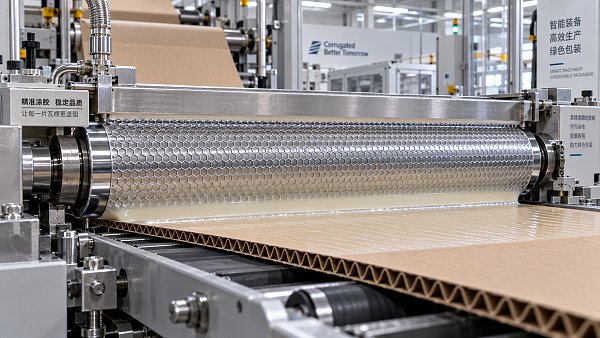
For corrugated board production, adhesive control is closely linked to board quality. The amount applied must support a stable bond without creating excessive moisture or waste. Changes in paper grade, flute profile, starch condition, machine speed, heat transfer, and web tension can alter the process window. A dispensing or application system should therefore be judged by how consistently it supports the required glue film under those changing conditions, not simply by its maximum rated throughput.
In folding carton and case converting, the timing relationship between glue application, folding, compression, and release is often more important than a highly precise volume number in isolation. If the adhesive has a short effective open time, a line layout with a long folding path may require a different application position, adhesive chemistry, or process speed. If a system delivers a bead with irregular start-stop behavior, glue can be absent at seam ends even when average consumption appears correct.
- Substrate condition: Evaluate coated, uncoated, recycled, high-absorbency, laminated, or varnished surfaces separately. Adhesion on one board grade does not establish performance on another.
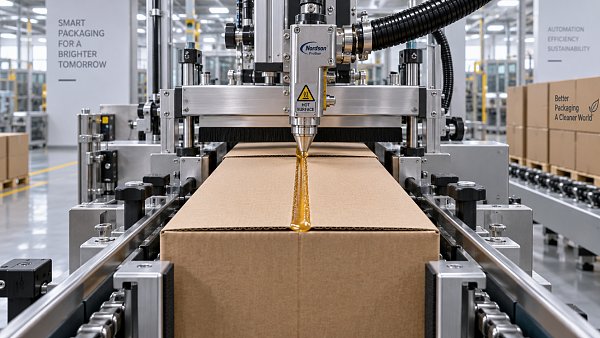
- Application geometry: A continuous bead, intermittent bead, dot pattern, spray pattern, or broad film each requires different control of flow, cut-off, and placement.
- Open and set time: Confirm that the adhesive remains workable until the components are brought together, then develops sufficient handling strength for the downstream process.
- Compression conditions: Bond performance depends on contact pressure and dwell time as well as adhesive delivery. A dispensing upgrade cannot solve an inadequate compression section.
- Environmental variation: Temperature, humidity, board moisture, and dust can narrow the acceptable process range, especially for paper-based substrates.
Suppliers should be asked to demonstrate the proposed configuration with representative substrates, joint geometry, and line conditions. A sample bond made slowly by hand is not a substitute for observing application, closure, compression, and handling at production speed.
Accuracy Matters, but Repeatability Matters More
Specifications often emphasize dispensing accuracy. That is relevant, particularly where adhesive is expensive, joints are narrow, or an excess bead creates a functional or cosmetic defect. Yet technical teams should distinguish between nominal accuracy and repeatability over a normal production shift. A system may dispense the intended amount at startup but drift as adhesive temperature changes, viscosity shifts, filters load, pressure fluctuates, or operators adjust settings.
For many packaging applications, the practical requirement is a stable adhesive pattern within an agreed process window. The system should start and stop cleanly, maintain bead placement at line speed, and return to the same result after pauses, changeovers, and cleaning. It also needs sufficient response time when production speed changes. On equipment that accelerates and decelerates frequently, an application unit that only performs well at one fixed speed can create intermittent defects that are hard to trace later.
The control architecture deserves as much attention as the mechanical dispensing head. A basic system may operate from a simple trigger and pressure setting. That may be appropriate for a stable, single-product line. A more variable operation may need encoder-based control, recipe management, speed compensation, automatic purge functions, temperature monitoring, pressure alarms, and communication with the machine PLC. These functions are not automatically valuable merely because they are available. They are valuable when they reduce the causes of variation that the plant actually experiences.
For example, a folder gluer handling frequent carton sizes benefits from stored application recipes only if the line has a disciplined method for associating a job with the correct recipe and verifying the output. Without that control, recipe capability can make wrong-job errors faster rather than prevent them. Similarly, closed-loop pressure or flow monitoring is useful only when alarms are meaningful, operators know the response procedure, and maintenance teams can act before a quality issue becomes a batch-level problem.
During evaluation, ask to see what the system records and what it merely displays. A live screen showing pressure or temperature is helpful for troubleshooting. Production traceability may require logged values, alarm history, recipe identification, and an interface that links the application condition to a job or batch. The appropriate level depends on the product risk and the factory's quality system, but the difference should be explicit before purchase.
Choose the Delivery Method for the Material and the Duty Cycle
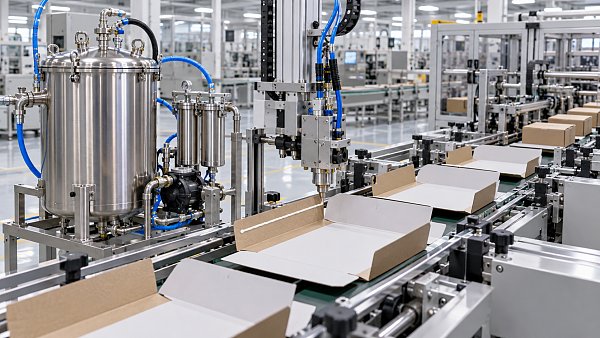
An industrial glue dispensing system includes more than the applicator. Material preparation, transfer, conditioning, filtration, hose routing, dispensing valves, sensors, controls, and cleaning provisions all determine reliability. A compact unit with an excellent valve can become a weak choice if the adhesive feed arrangement introduces air, temperature loss, contamination, or inconsistent pressure.
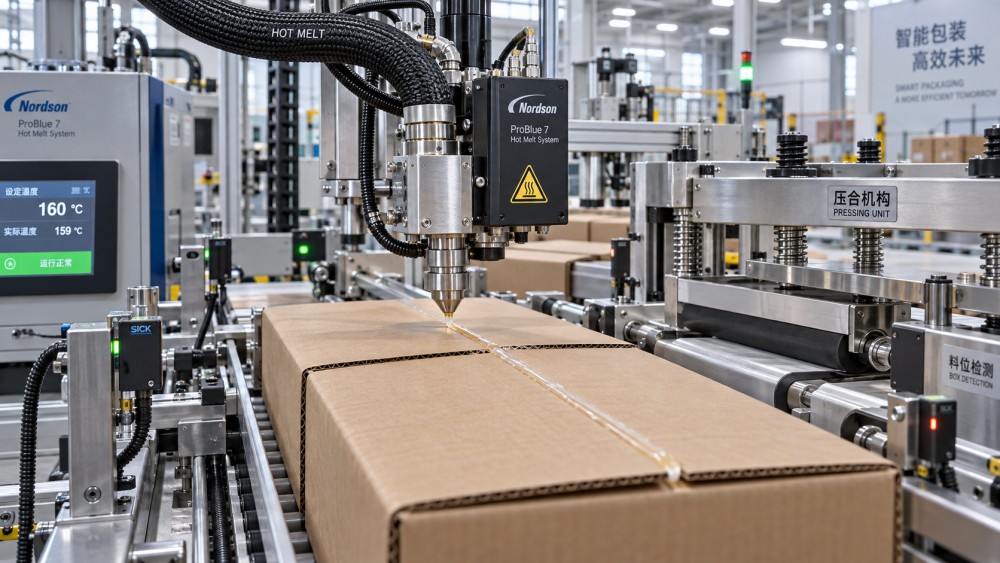
For hot melt processes, thermal control must be assessed across the full material path. Tank temperature alone says little about adhesive condition at the nozzle. Hose length, insulation, heated component zones, standby operation, and recovery after line stoppages can influence viscosity and char formation. The evaluation should also include how the system handles low material levels, whether the adhesive is protected from prolonged overheating, and how safely an operator can refill, purge, and service the unit.
Cold glue and starch-based systems create a different set of concerns. Viscosity management, agitation where applicable, filtration, hose cleaning, and prevention of drying at application points may determine uptime. When a system is selected solely for a favorable purchase price, plants can later find that cleaning takes too long, nozzles foul too easily, or adhesive waste during startup and flushing outweighs the original saving.
Capacity should be sized for normal and foreseeable peak demand, but excessive oversizing can introduce its own problems. An oversized heated reservoir may keep material at elevated temperature longer than necessary. An oversized pump operating at a small fraction of its range may reduce controllability. The better approach is to calculate expected adhesive demand by pattern, cycle rate, number of heads, and production mix, then account for realistic operating margin and planned expansion.
Integration With the Line Is Often the Deciding Factor
A dispensing system that works well as a standalone unit may perform poorly after installation because its physical and control integration was treated as a late-stage detail. The layout determines hose lengths, access to application points, cable routing, refill access, cleaning space, and whether operators can see a developing fault. On high-speed converting equipment, millimeters of applicator position and milliseconds of trigger timing can affect glue placement.
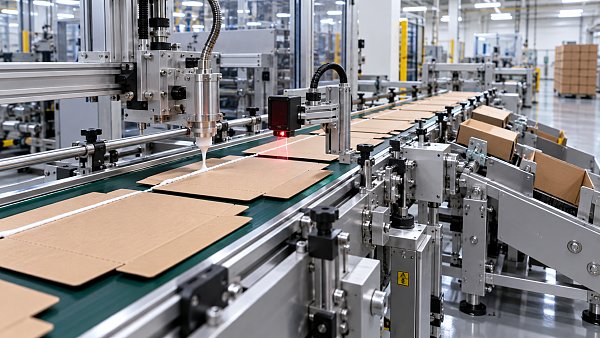
Technical review should include the actual line sequence: where the substrate is detected, when adhesive is applied, where the component is folded or joined, how long it is compressed, and where bond failure could be detected. This is particularly important when products vary in length, blank registration, flap geometry, or print position. A sensor arrangement that works for one carton format may lose reliable triggering when a different product has openings, reflective surfaces, heavy graphics, or inconsistent board edges.
Integration also includes fault handling. A practical system should provide clear states for ready, low material, temperature not ready, pressure abnormality, valve fault, and communication loss. More important, the line response to each state must be defined. Some faults should inhibit production. Others may allow controlled completion of a product cycle. Treating every alarm as a full line stop can reduce productivity; allowing every alarm to be bypassed undermines quality control.
Vision inspection can be justified where missed adhesive application creates a high-cost downstream failure or where manual verification is unreliable at speed. But inspection should be specified against the defect to be detected. A camera may confirm the presence and approximate position of a bead, while detection of bead volume or bond strength may require different methods. The objective is not to add inspection equipment by default, but to establish a credible control point for the failures that matter.
Do Not Evaluate Maintenance as an Afterthought
Adhesive systems are exposed to material build-up, wear, heat cycles, pressure cycles, contamination, and operator intervention. The most reliable design for a factory is usually the one that makes routine tasks straightforward and makes abnormal conditions visible early. Access to filters, valves, nozzles, tanks, and sensors should be reviewed with the people who will clean and maintain the equipment, not only with the project team.
Ask suppliers for a maintenance schedule that separates operator actions from technician actions. It should identify consumable parts, cleaning intervals, calibration needs, recommended spares, and the conditions that trigger replacement. Generic promises of low maintenance do not provide a useful basis for evaluating total operating cost. A system with a higher initial price may be preferable when it reduces cleaning time, stabilizes startup, and avoids recurring shutdowns on a bottleneck line.
Spare-parts strategy deserves a specific decision. Critical items may include dispensing valves, seals, heaters, sensors, filters, hose assemblies, control components, and pump wear parts. The appropriate stock level depends on lead time, line criticality, local technical support, and whether compatible parts are standardized across multiple lines. A factory should avoid both extremes: carrying no protection against a predictable failure and accumulating expensive parts without a defined replacement rationale.
Build the Selection Around a Measurable Acceptance Plan
The strongest procurement documents describe required outcomes, operating conditions, interfaces, and acceptance criteria rather than relying on broad statements such as “high precision” or “high efficiency.” Before committing to a system, define representative substrates, adhesive grade or viscosity range, product formats, line speeds, application patterns, ambient conditions, changeover expectations, and the allowable defect modes.
Acceptance should observe more than the first successful run. It should include startup, stable production, speed changes, planned pauses, recipe changes where relevant, and recovery after a routine cleaning or material refill. Evaluate adhesive consumption alongside bond performance. A system that creates strong joints by substantially overapplying adhesive may pass a basic quality check while creating a long-term material-cost problem and avoidable mess.
The final choice should be the configuration that maintains the required bond through normal production variation with a manageable operating burden. For packaging and converting plants, that usually points to a system selected around the real adhesive process, line controls, maintenance capability, and quality risk. The dispensing head is visible on the machine; the dependable result comes from the whole system working within a defined process window.
Related News
 How to Evaluate a Cold Glue System Manufacturer for Reliable BondingChoose a cold glue system manufacturer with proven application control, uptime-focused design, seamless integration, and responsive service for reliable bonding.Spatial Folding Strategist
 How to Stop Stringing and Poor Bonds with an Industrial Hot Melt Glue GunIndustrial hot melt glue gun troubleshooting guide: reduce stringing, improve bond strength, optimize temperature, nozzle condition, timing, and carton compression.Spatial Folding Strategist
 How Non Contact Glue Detection Systems Prevent Carton FailuresNon contact glue detection systems prevent carton failures by spotting missing or misplaced adhesive early, reducing rejects, rework, and packing-line disruptions.Spatial Folding Strategist
 What Engraved Glue Rollers Cost and Which Specs Matter MostEngraved glue rollers: compare cost drivers, cell volume, coatings, tolerances, and supplier specs to improve adhesive control, reduce waste, and protect corrugator uptime.Spatial Folding Strategist
 How Hot Melt Glue Systems Improve Bond Strength and UptimeHot Melt Glue Systems improve bond strength and uptime with precise temperature control, clean flow, accurate bead placement, and reliable compression.Spatial Folding Strategist
 How to Evaluate Glue Machine Manufacturers for Long-Term Operating CostGlue machine manufacturer evaluation guide: compare lifecycle costs, adhesive control, uptime, maintenance, changeovers, and supplier support for smarter investments.Spatial Folding Strategist