How to Choose a Hot Melt Glue Gun Manufacturer for Automation
For an automated packaging line, choosing a hot melt glue gun manufacturer is a production decision rather than a simple tool purchase. The supplier’s equipment has to deliver the correct adhesive volume, at the required speed, for the actual carton or corrugated substrate, while remaining stable through long shifts and frequent product changes.
A low purchase price can be attractive when a plant is adding a small station or replacing manual equipment. It becomes less meaningful when a failed hose, unstable temperature zone, inconsistent trigger response, or difficult cleaning procedure stops a folder gluer, case sealer, tray former, or end-of-line packing cell. Procurement teams should therefore assess the manufacturer against the operating conditions of the line, not against a catalogue specification alone.
Start With the Application, Not the Glue Gun
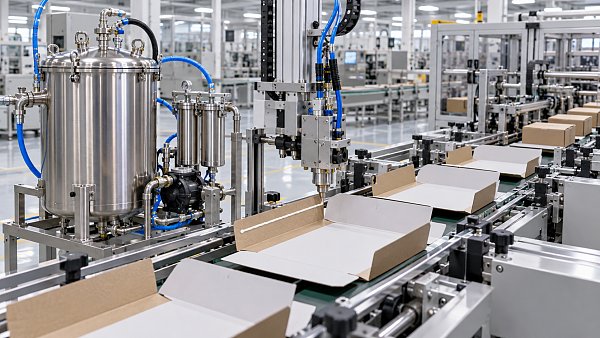
The first question is what the adhesive system must accomplish in the packaging process. “Hot melt glue gun” can describe a handheld applicator, a semi-automatic dispensing unit, or a gun installed as part of a tank, hose, pump, and controller system. Those equipment categories have very different limits in output, repeatability, integration, and maintenance.
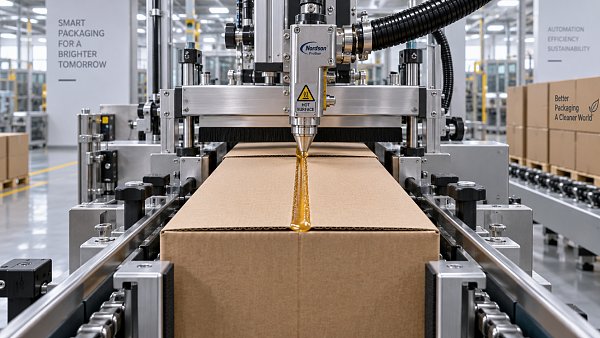
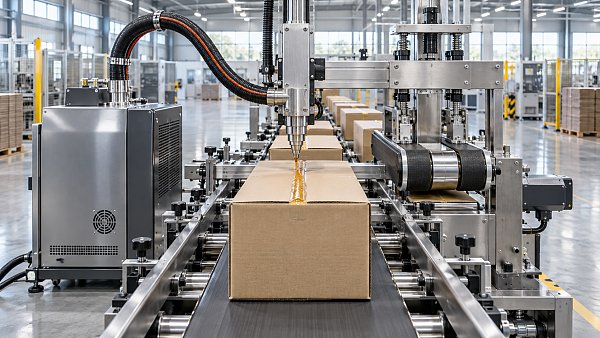
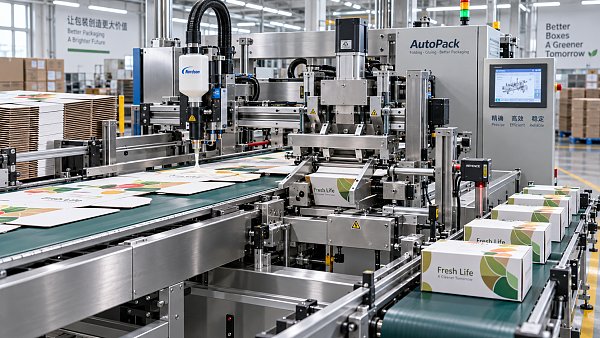
For carton assembly, a compact applicator may be sufficient where operators work on short runs, promotional packs, or low-volume finishing tasks. For corrugated case sealing or automated tray erection, the more relevant requirement is often a fixed applicator that can apply beads, dots, or spray patterns at a controlled location while cartons move continuously through the machine.
Before comparing manufacturers, procurement should define the process in practical terms:
- What material is being bonded: coated board, recycled corrugated, kraft paper, laminated carton, film, or mixed packaging material?
- Is the adhesive applied as a continuous bead, intermittent pattern, dot, swirl, or spray?
- What is the line speed, and how much variation occurs during start-up, stoppage, and changeover?
- How many glue points are applied per unit, and what bond strength is required after compression?
- How long can the carton remain open before it must be closed and compressed?
- Will the equipment run one adhesive grade or change between formulations?
- Does the operation require operator-controlled manual work, sensor-triggered dispensing, or direct communication with a PLC?
These questions may appear basic, but they prevent a common procurement error: selecting a technically capable glue gun whose dispensing method does not suit the production sequence. A system designed for manual repair or light assembly work will not necessarily maintain bead placement at the speed required by a case-packing line. Conversely, a fully automated multi-gun system may add cost and service complexity to a process where controlled manual application is still the most workable option.
Adhesive Compatibility Is a System Issue
A hot melt applicator is only one part of the bonding process. The adhesive grade, melting temperature, viscosity, open time, substrate condition, compression stage, and ambient conditions all influence bond quality. A manufacturer should be able to discuss these interactions clearly, including where its equipment has limitations.
In packaging operations, adhesive behaviour often changes with the board itself. Recycled corrugated can have an uneven or dusty surface. Coated cartons may resist wetting. Cold warehouse conditions can shorten the effective open time or reduce initial tack. High-speed production may demand fast set performance, while a complex folding path may require a longer open time before compression. The gun and heating system must keep the adhesive within a controlled working range while delivering enough material for the substrate and closure geometry.
Do not accept a general statement that an applicator “works with all hot melt adhesives” as a complete answer. The more useful discussion concerns the adhesive’s recommended temperature range, viscosity at application temperature, sensitivity to overheating, and expected dwell time in the tank and hose. Some formulations can degrade when held at high temperature for extended periods, creating char, stringing, nozzle blockage, odour, or inconsistent output. Equipment with suitable temperature control, insulation, and standby settings can reduce those risks, but it does not eliminate the need to match the adhesive and production schedule.
Procurement should ask the supplier to specify the operating envelope for the proposed configuration: tank capacity, heating zones, maximum and minimum temperatures, hose length, compatible nozzle types, and recommended cleaning procedure. This is more valuable than asking only for nominal melting capacity.
Evaluate Dispensing Accuracy Under Real Line Conditions
In automation, bond quality depends on repeatability. A bead that looks acceptable during a static demonstration may become inconsistent when cartons arrive at varying intervals, conveyors accelerate, product sensors see dusty surfaces, or a line restarts after a short stop.
The relevant measure is not simply whether adhesive exits the gun. Procurement should understand how the system controls timing, volume, and placement. A well-matched solution should maintain a repeatable pattern when operating at expected line speeds and should recover predictably after routine interruptions.
Several elements deserve close attention:
Triggering and signal response
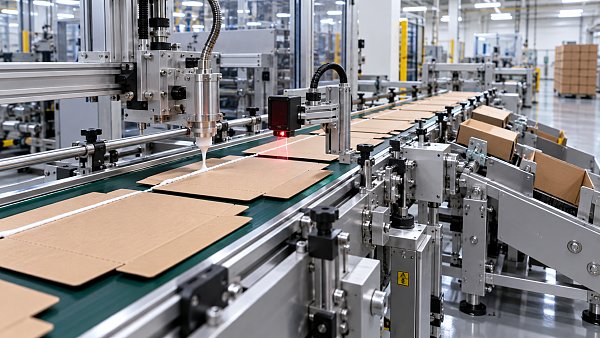
For automated equipment, the gun may be triggered by a photoelectric sensor, encoder, machine controller, or a dedicated adhesive controller. The supplier should explain how the system handles trigger delay, conveyor speed variation, missed products, and restart conditions. On a fast-moving corrugated or carton line, a small timing mismatch can place adhesive outside the compression area, producing weak closure or visible squeeze-out.
Pattern control
Some applications need a straight bead, while others require a controlled dot or intermittent pattern to reduce adhesive consumption without compromising bond strength. The chosen manufacturer should offer the nozzle and control options required by the job. A broad choice of patterns is not automatically an advantage; the important point is whether the supplied configuration can produce the required pattern consistently and can be adjusted without creating excessive setup time.
Temperature stability at the gun
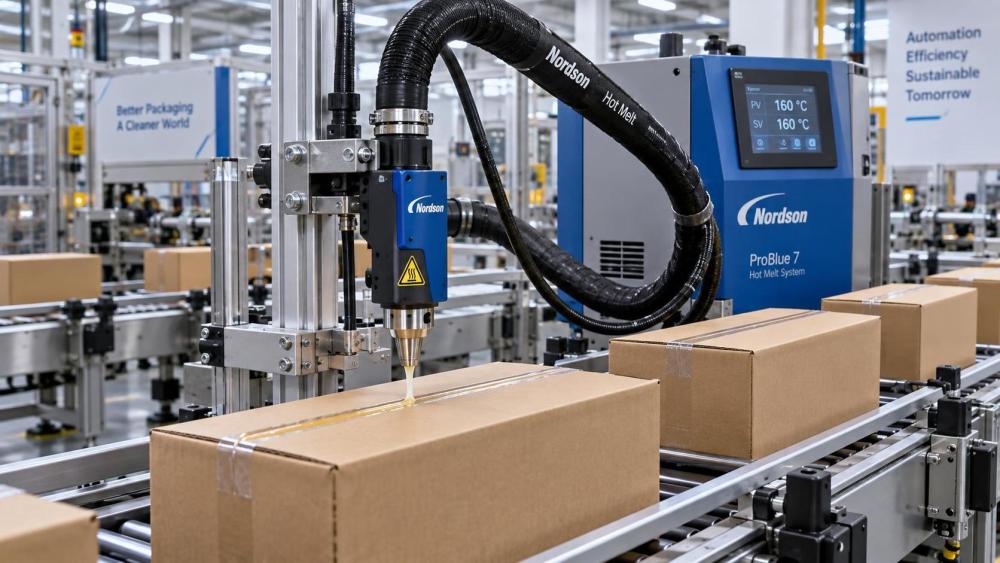
Tank temperature alone does not confirm application stability. Adhesive can cool between the melter and the nozzle, especially with long hoses, extended pauses, or an unheated downstream component. Ask how the manufacturer controls temperature across the tank, hose, and gun, and whether each zone can be monitored or adjusted independently. A stable melt tank combined with an unstable applicator head can still lead to poor bead formation.
Mechanical installation
Mounting position matters. The gun needs enough clearance for cleaning and nozzle replacement, but it must also remain rigid enough to hold bead placement at speed. In a converting or end-of-line machine, access can be more valuable than a compact footprint if maintenance otherwise requires dismantling guards or moving adjacent components. Review the proposed mounting arrangement before issuing a purchase order.
Integration Capability Separates a Tool Supplier From an Automation Partner
For an automated packaging cell, the glue system should fit the line’s control architecture and safeguarding requirements. This does not always mean that the adhesive manufacturer must supply the entire automation package. It does mean that its equipment needs clear interfaces, reliable documentation, and a workable approach to fault handling.
Procurement teams should clarify who owns the integration work. If the glue gun manufacturer supplies only the applicator, the machine builder or system integrator may be responsible for PLC logic, sensors, guarding, conveyor interlocks, and product tracking. If responsibilities are not defined, commissioning delays often emerge around apparently minor points: wiring standards, input and output signals, communication protocols, emergency-stop behaviour, or the sequence used after a line pause.
A supplier proposal should make the system boundary visible. It should identify the included controller, heated hose, pump or melter, filters, guns, nozzles, mounting hardware, sensors where applicable, electrical requirements, and the signals needed from the host machine. Ambiguous quotations create problems later because a “complete system” can mean very different things to different parties.
For plants pursuing more connected operations, consider whether the system can provide usable status information to the line controller or maintenance platform. This may include temperature alarms, operating status, adhesive level, or fault codes. There is little value in buying connectivity for its own sake, but maintenance staff benefit when a fault can be identified before operators compensate by changing temperatures or adding excess adhesive.
Compare Maintenance Burden and Service Capability
Hot melt systems operate with heated material under pressure, so maintenance is not optional. Filters require inspection, nozzles can foul, hoses age, seals wear, and adhesive residue accumulates if cleaning is delayed. The right manufacturer is one whose equipment can be maintained realistically within the plant’s staffing model.
Ask for the recommended preventive maintenance schedule and distinguish between routine operator tasks and work requiring trained maintenance personnel. A supplier should be able to explain cleaning intervals, filter replacement, nozzle handling, consumable parts, calibration needs, and safe shutdown procedures. Instructions that depend on specialist knowledge or hard-to-reach components can become a recurring source of downtime.
Spare-parts availability deserves the same attention as the original purchase price. A packaging line may have its own mechanical spares strategy, but adhesive equipment is sometimes overlooked because it occupies a small physical area. This is risky when one hose, heater, control board, or gun seal can interrupt finished-goods flow. Review local or regional service coverage, parts lead times, standard warranty terms, remote diagnostic support, and the supplier’s ability to support older installed models.
It is also sensible to inspect how the manufacturer documents its equipment. Clear wiring diagrams, parts lists, recommended consumables, troubleshooting guides, and installation drawings reduce dependence on a single technician or vendor contact. Documentation quality is a practical signal of whether the supplier has experience supporting industrial users after commissioning.
Use Total Operating Cost, Not Sticker Price, as the Final Comparison
The cheapest quotation can become the most expensive choice when it creates adhesive waste, repeated cleaning, delayed changeovers, poor access, or line stoppages. A higher-priced system may be justified when it improves application control, reduces product rejects, simplifies service, or supports a planned increase in automation. The business case depends on the process, not on the equipment category alone.
A useful comparison includes more than the initial equipment package:
- Adhesive consumption caused by bead size, pattern consistency, and over-application.
- Expected setup and cleaning time during product changes or adhesive grade changes.
- Energy use associated with warm-up, standby operation, and heat loss through the system.
- Routine wear parts, filters, nozzles, hoses, seals, and their availability.
- Installation and integration labour, including electrical and mechanical modifications.
- Downtime exposure when a component fails or when technical support is required.
- Training requirements for operators, maintenance staff, and external service personnel.
Do not assume that higher capacity is automatically safer. An oversized melter may hold adhesive for longer than the production schedule requires, increasing the risk of thermal degradation for some formulations. A very small system, on the other hand, may force frequent refilling or struggle to maintain stable output during peak production. Select tank capacity and heating performance around actual consumption, shift patterns, and line stops.
Build the Supplier Evaluation Around a Demonstration Plan
When the application has a meaningful effect on packaging quality or line uptime, a demonstration should use representative materials and operating conditions. A supplier demonstration that runs only on a clean sample board at moderate speed may confirm basic functionality, but it does not fully validate production suitability.
Provide the manufacturer with the carton or corrugated samples, adhesive formulation where possible, expected line speed, required glue pattern, closure sequence, and temperature conditions that affect the process. Ask the supplier to show warm-up, normal operation, a controlled stop and restart, pattern adjustment, nozzle cleaning, and replacement of routine wear items. The purpose is not to turn procurement into a laboratory exercise; it is to expose the operational details that a brochure cannot show.
For larger installations, the evaluation should end with an agreed acceptance basis. This can define the intended configuration, installation scope, target operating conditions, training responsibility, documentation package, and the process for resolving commissioning issues. Such clarity protects both the buyer and the manufacturer because the system is being assessed against a defined application rather than a vague promise of performance.
The strongest hot melt glue gun manufacturer for automation is therefore not simply the one with the largest product range or lowest quotation. It is the supplier that can match adhesive, substrate, dispensing method, controls, service needs, and line constraints into a configuration the plant can run and maintain without creating a new source of production risk.
Related News
 How to Evaluate a Cold Glue System Manufacturer for Reliable BondingChoose a cold glue system manufacturer with proven application control, uptime-focused design, seamless integration, and responsive service for reliable bonding.Spatial Folding Strategist
 How to Stop Stringing and Poor Bonds with an Industrial Hot Melt Glue GunIndustrial hot melt glue gun troubleshooting guide: reduce stringing, improve bond strength, optimize temperature, nozzle condition, timing, and carton compression.Spatial Folding Strategist
 How Non Contact Glue Detection Systems Prevent Carton FailuresNon contact glue detection systems prevent carton failures by spotting missing or misplaced adhesive early, reducing rejects, rework, and packing-line disruptions.Spatial Folding Strategist
 What Engraved Glue Rollers Cost and Which Specs Matter MostEngraved glue rollers: compare cost drivers, cell volume, coatings, tolerances, and supplier specs to improve adhesive control, reduce waste, and protect corrugator uptime.Spatial Folding Strategist
 How Hot Melt Glue Systems Improve Bond Strength and UptimeHot Melt Glue Systems improve bond strength and uptime with precise temperature control, clean flow, accurate bead placement, and reliable compression.Spatial Folding Strategist
 How to Evaluate Glue Machine Manufacturers for Long-Term Operating CostGlue machine manufacturer evaluation guide: compare lifecycle costs, adhesive control, uptime, maintenance, changeovers, and supplier support for smarter investments.Spatial Folding Strategist