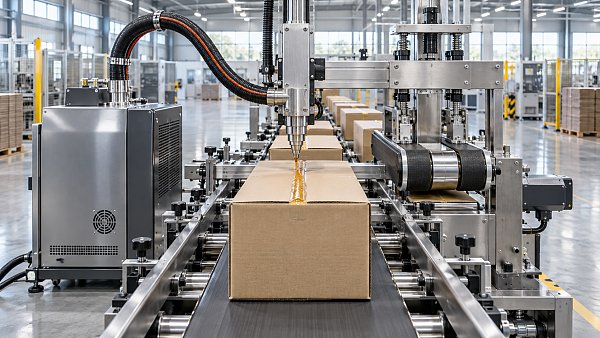
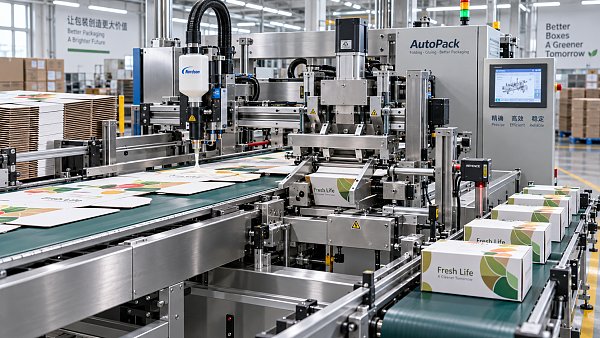
How the Right Glue Nozzle for Folder Gluer Reduces Waste
In folder gluer production, glue waste is rarely caused by adhesive cost alone. It usually comes from an application system that is poorly matched to the carton design, adhesive, running speed, or machine condition. A nozzle that delivers too much glue can leave squeeze-out, contaminate belts, slow cleaning, and create rejected cartons. A nozzle that delivers too little, or places the bead inconsistently, can cause open seams, weak bonding, rework, and lost production time.
The right glue nozzle for folder gluer equipment helps control both types of loss. It improves the position, width, and continuity of the adhesive bead so that the machine uses only the amount required for a reliable bond. That benefit is most visible on high-speed lines and short-run work, where small application errors are repeated across thousands of cartons or amplified during frequent job changes.
Where Folder Gluer Waste Actually Comes From
Operators often notice waste as excess glue on the carton, but the underlying problem may occur earlier in the process. Adhesive can be wasted through over-application, leakage while the machine is waiting, unstable pressure, incorrect nozzle positioning, or a bead that is too wide for the glue flap. Waste also appears indirectly when poor bonding forces a production team to run additional inspections, remove defective cartons, or repeat an order.
Several conditions make this more likely:
- The nozzle opening is too large for the required bead size.
- The nozzle is worn, partially blocked, or damaged during cleaning.
- The nozzle distance from the substrate changes as sheets pass through.
- The adhesive viscosity does not match the metering and delivery system.
- The glue line is positioned too close to a cut edge or fold score.
- Machine speed changes without a corresponding adjustment to glue flow.
- Different carton styles are run without checking the application layout.
A folder gluer does not need the largest possible glue flow to run reliably. It needs a stable and repeatable deposit at the correct location. A nozzle should therefore be evaluated as part of the complete adhesive application system, including the pump, hose, valve, control settings, folding geometry, substrate, and adhesive formulation.
How the Nozzle Reduces Excess Application
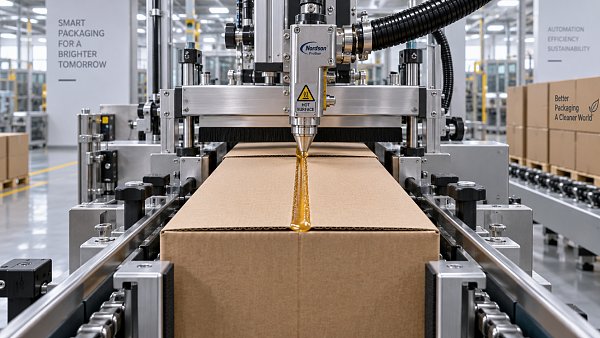
The most direct saving comes from controlling the volume of glue released during each application cycle. Nozzle geometry affects the shape and width of the bead. When the opening is appropriate for the carton design, the operator can achieve sufficient coverage without flooding the glue flap.
Excess glue creates more than a material cost. It can spread into areas that must remain clean, transfer onto belts or compression sections, and increase cleaning frequency. On printed cartons, visible squeeze-out can also affect appearance. In some applications, wet glue may cause sheets to stick together before the bond has stabilized, creating additional handling problems.
A correctly sized nozzle allows the adhesive line to remain narrow and controlled. This is particularly useful for small cartons, narrow glue flaps, lightweight folding boxes, and designs with limited clearance around windows, scores, or printed areas. The goal is not the thinnest possible line under every condition. The practical target is the minimum consistent application that survives the required compression time and handling process.
Operators should avoid selecting a nozzle based only on the machine’s maximum speed. A high-speed folder gluer may process several carton styles, board weights, and adhesive types. A nozzle that works well for a broad glue flap may be unsuitable for a narrow one. The correct choice depends on the smallest reliable application required across the actual production mix.
Placement Matters as Much as Glue Volume
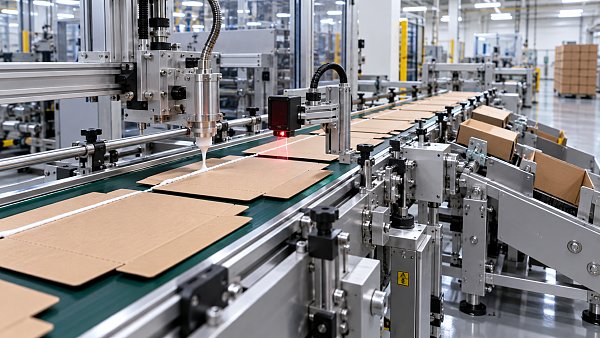
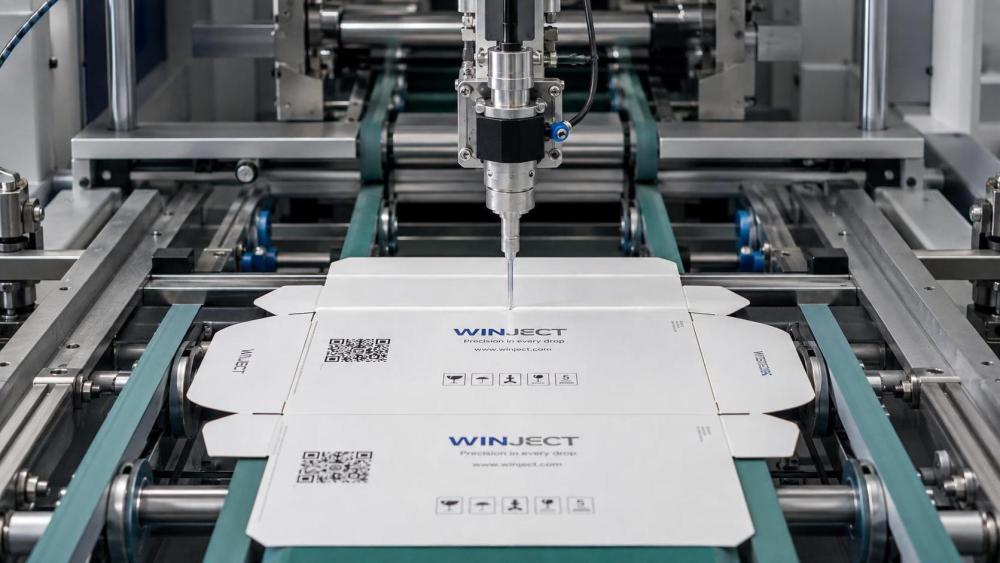
Reducing glue flow will not solve waste if the bead is in the wrong position. A line placed too close to the edge can squeeze out during folding. A line placed too far inward may not contact the mating panel fully. Both situations can create rejected cartons, even when the total amount of glue appears reasonable.
Nozzle alignment should be checked against the finished carton structure rather than against a machine scale alone. The relevant reference points include the glue flap, fold scores, panel edges, cutouts, windows, and any areas where compression rollers or belts contact the carton. Small positional errors become more serious when the carton runs at high speed or when the board has inconsistent dimensions.
The nozzle should also remain stable during production. Vibration, loose brackets, adhesive buildup, or an incorrectly adjusted guide can change the bead location from one sheet to the next. If the line appears correct during a static check but moves under production conditions, the issue is mechanical stability rather than nozzle size alone.
For operators, a useful inspection is to examine a short run at the intended speed and inspect both the open carton and the compressed seam. The adhesive should be continuous where bonding is required, contained within the intended area, and free from large breaks or pools. A setting that looks acceptable at low speed may not provide the same result once sheet acceleration and folding pressure increase.
Compatibility With Adhesive and Substrate
A nozzle cannot compensate for an adhesive that is unsuitable for the job. Water-based cold glue, hot-melt adhesive, and other formulations have different flow behavior and operating requirements. Viscosity, temperature, solids content, drying rate, and sensitivity to contamination all influence how the adhesive passes through the nozzle.
When the adhesive is too viscous for the selected opening, the flow may become intermittent or require excessive pressure. When it is too fluid, the bead can spread beyond the intended area. Temperature changes can also alter viscosity, especially in systems that use heated adhesive or operate in environments with significant seasonal variation.
Substrate condition matters just as much. Coated board, laminated surfaces, recycled fiber, porous paperboard, and heavily printed areas can require different application behavior. A small, controlled bead may work well on an absorbent surface but fail to provide enough open time or contact on a less receptive coating. Conversely, adding more glue to overcome a surface problem may increase waste without producing a stronger bond.
Before changing the nozzle, the production team should confirm that the adhesive is within the supplier’s operating range and that the substrate is clean, flat, and suitable for the bonding method. If the same nozzle performs differently between shifts, check adhesive condition, temperature, storage, and line cleanliness before assuming that the nozzle is the only cause.
Why Nozzle Condition Affects Yield
Even a well-selected nozzle becomes a source of waste when it is not maintained. Partial blockage can narrow or redirect the bead. Wear can enlarge the opening or make the flow less uniform. Dried adhesive around the tip may cause a delayed release at startup, followed by an excessive deposit when pressure builds.
These faults are easy to overlook because the machine may continue running. The result is often a gradual increase in rejects rather than an immediate stoppage. Operators may respond by raising glue pressure or slowing the machine, which can temporarily hide the symptom while increasing adhesive consumption or reducing output.
A practical maintenance routine should include:
- Inspecting the nozzle tip at startup and after long stoppages.
- Removing adhesive buildup with cleaning methods approved for the nozzle material and adhesive type.
- Checking for damage caused by wire tools, blades, or aggressive scraping.
- Confirming that the nozzle is firmly mounted and correctly aligned.
- Comparing the bead from each glue station when the machine uses multiple nozzles.
- Recording recurring blockage, leakage, or pressure problems by job and adhesive type.
Cleaning tools deserve attention. A metal tool can deform a small opening, turning a maintenance task into a permanent metering problem. If the nozzle is a precision component, its condition should be judged by bead behavior and dimensional inspection where appropriate, not simply by whether the tip looks clean.
Changeovers Are a Major Waste Point
Many folder gluer operations lose adhesive during setup rather than during steady production. A new carton may require a different glue line, nozzle position, flow rate, or compression arrangement. If the previous settings are adjusted by guesswork, the first cartons may contain too much glue or may need to be discarded because the bond is incomplete.
The nozzle should be included in the changeover standard. The operator needs a clear method for identifying the required application point, positioning the nozzle, checking the opening, and verifying the first sample. Saved machine recipes can help, but they should not replace a physical check because board thickness, print finish, die-cut accuracy, and adhesive condition may vary between jobs.
Short runs make this especially important. When setup waste represents a large share of the order, reducing the number of trial sheets can produce more value than making a small adjustment to nominal glue consumption. A repeatable nozzle position and a defined first-off inspection give the operator a faster way to reach stable production.
What Operators Should Check Before Changing the Nozzle
When a carton shows excess glue or open seams, replacing the nozzle immediately may not be the best first action. The symptom can originate in several parts of the system. Use the following sequence to isolate the cause:
- Inspect the actual bead position on the carton and compare it with the designed glue area.
- Check whether the bead is continuous, uniform, and appropriate for the running speed.
- Examine the nozzle for blockage, wear, leakage, or physical damage.
- Confirm adhesive viscosity, temperature, and cleanliness.
- Check pump, valve, hose, and pressure settings for unstable delivery.
- Verify sheet guidance, fold alignment, compression, and belt condition.
- Run a controlled sample before increasing glue volume or reducing machine speed.
This sequence prevents a common mistake: using more adhesive to compensate for poor contact or inaccurate folding. If the panels do not meet correctly, additional glue may increase visible waste while leaving the bond unreliable.
How to Judge Whether a Nozzle Change Is Worthwhile
The business case should be based on total production effect, not only the purchase price of the nozzle. A lower-cost component that causes frequent cleaning, inconsistent bonding, or long changeovers can create more expense than a better-matched component with a higher initial price.
Track a small set of operating indicators before and after a change:
- Adhesive consumption per batch or per production quantity.
- Number of cartons rejected for glue-related defects.
- Cleaning frequency and time spent removing adhesive from the machine.
- Startup and changeover waste.
- Frequency of nozzle replacement or blockage.
- Speed reductions caused by unstable glue application.
These observations should be separated by carton style and adhesive type. A nozzle may reduce waste on one product while offering little benefit on another. The most useful comparison is made under similar conditions, with the same board, adhesive, machine speed, and compression settings.
The right glue nozzle for folder gluer production is therefore a process-control decision. Its value comes from matching adhesive flow to carton geometry and maintaining that application consistently through setup, production, and changeover. Operators who treat the nozzle as a replaceable detail may respond to defects after waste has already accumulated. Teams that monitor bead position, nozzle condition, adhesive behavior, and first-off quality can use the component as a practical tool for controlling material use and protecting finished-carton yield.
Related News
 How to Evaluate a Cold Glue System Manufacturer for Reliable BondingChoose a cold glue system manufacturer with proven application control, uptime-focused design, seamless integration, and responsive service for reliable bonding.Spatial Folding Strategist
 How to Stop Stringing and Poor Bonds with an Industrial Hot Melt Glue GunIndustrial hot melt glue gun troubleshooting guide: reduce stringing, improve bond strength, optimize temperature, nozzle condition, timing, and carton compression.Spatial Folding Strategist
 How Non Contact Glue Detection Systems Prevent Carton FailuresNon contact glue detection systems prevent carton failures by spotting missing or misplaced adhesive early, reducing rejects, rework, and packing-line disruptions.Spatial Folding Strategist
 What Engraved Glue Rollers Cost and Which Specs Matter MostEngraved glue rollers: compare cost drivers, cell volume, coatings, tolerances, and supplier specs to improve adhesive control, reduce waste, and protect corrugator uptime.Spatial Folding Strategist
 How Hot Melt Glue Systems Improve Bond Strength and UptimeHot Melt Glue Systems improve bond strength and uptime with precise temperature control, clean flow, accurate bead placement, and reliable compression.Spatial Folding Strategist
 How to Evaluate Glue Machine Manufacturers for Long-Term Operating CostGlue machine manufacturer evaluation guide: compare lifecycle costs, adhesive control, uptime, maintenance, changeovers, and supplier support for smarter investments.Spatial Folding Strategist