How a Precision Glue Nozzle Cuts Adhesive Waste in High-Speed Lines
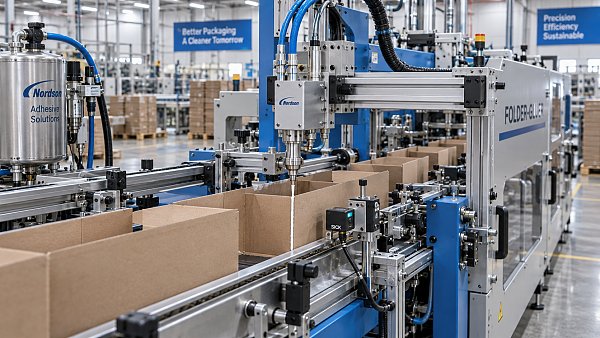
Adhesive waste on a high-speed corrugated or carton-converting line rarely appears as one large, obvious loss. It accumulates through a glue pattern that is slightly too wide, a bead that remains too heavy after acceleration, nozzle tips that drip during pauses, and cleanup required after adhesive reaches rollers, guides, belts, or carton surfaces. A precision glue nozzle addresses these losses at the application point: it deposits a controlled amount of adhesive in a defined location, with less reliance on excess volume as a safeguard against bonding failure.
The purchasing case should therefore be assessed as a process-control question rather than a nozzle-price comparison. The relevant cost is the adhesive that reaches the intended bonding area plus the adhesive that creates contamination, rejects, downtime, and rework. A low-cost applicator can become expensive when it requires a wide operating margin to maintain bond security. Conversely, a more accurate nozzle assembly has limited value if adhesive preparation, pressure stability, board moisture, or machine timing remain uncontrolled.
Where excess adhesive is actually created
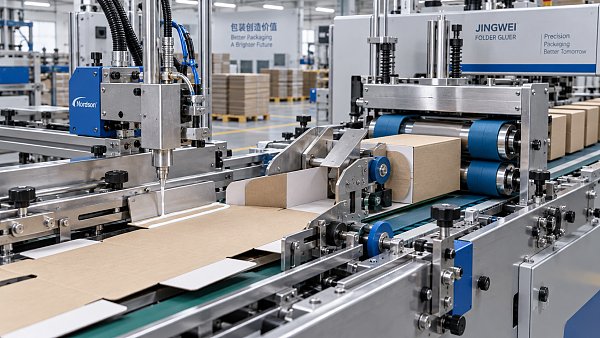
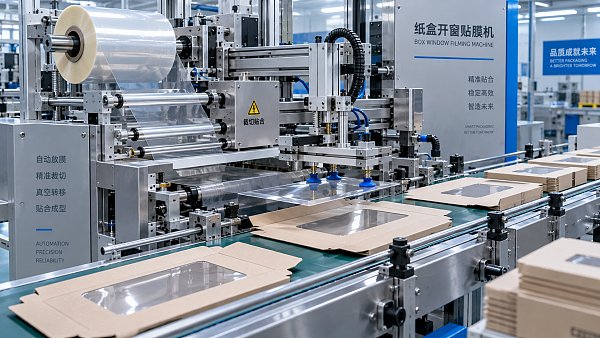
On corrugated board lines, excess starch adhesive is often associated with the single facer or double facer bonding zone. In folding carton and corrugated converting, the same issue appears at side seams, crash-lock bases, multi-point folds, partitions, window patching, and other glue joints. Although the adhesive chemistry and delivery hardware differ, the waste mechanism is similar: the application system lays down more material than the substrate and joint geometry need.
A nozzle does not determine adhesive consumption by orifice size alone. Deposit volume is affected by opening time, line speed, adhesive pressure, viscosity, temperature, nozzle-to-substrate distance, and the response time of the valve. If line speed rises while the valve command remains unchanged, the bead can become discontinuous. If pressure rises to compensate, the bead may spread outward or form tails at the start and end of each application. A setting that works on a stable long run can produce inconsistent deposits during short batches with frequent acceleration, deceleration, and gaps between sheets.
The familiar response is to increase pressure or extend the opening signal until bond failures disappear. That can remove an immediate quality concern while creating a hidden material-loss problem. The better objective is to establish the smallest repeatable adhesive pattern that wets the intended surfaces, develops the required bond under the actual compression and cure conditions, and remains stable through normal speed changes.
Accuracy has three separate dimensions
When evaluating a precision glue nozzle, “accurate” should be broken into placement, volume, and cutoff behavior. A system may place a bead in the correct path but deliver a variable mass. It may meter a repeatable volume yet leave a filament or droplet at shutoff. It may perform well at nominal speed but lose alignment when the substrate shifts or the carrier changes position. Treating these as separate requirements avoids buying a component that solves only part of the problem.
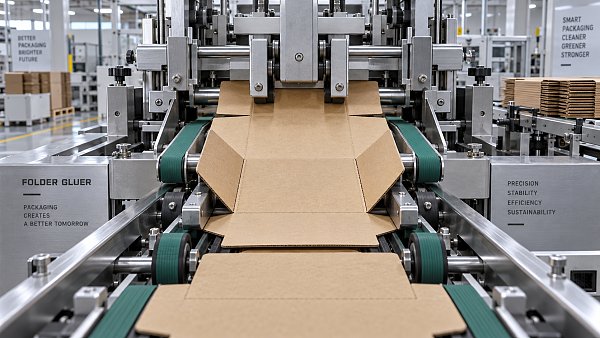
Placement depends on the mechanical relationship between nozzle, substrate, and reference edge. On folder gluers, sheet registration and folding-path variation can matter as much as nozzle precision. On corrugated applications, flute profile, board warp, and changing sheet flatness alter the stand-off distance. A nozzle mounted rigidly in a position that is correct for one board grade may apply too close to a heavier board or too far from a warped sheet. The result can look like a fluid problem even when the main cause is mechanical geometry.
Why controlled application reduces more than adhesive use
A narrower, correctly placed adhesive pattern reduces direct consumable use, but the larger operational benefit often comes from keeping adhesive out of places where it causes secondary losses. Glue on exposed carton panels can create appearance rejects, interfere with downstream printing or coding, and collect paper dust. Glue migration onto belts, folding rails, compression devices, or transport components increases cleaning frequency. Buildup gradually changes friction and sheet handling, so a contamination issue can later appear as skewing, scuffing, or intermittent jams.
Overapplication also complicates quality diagnosis. When a joint is heavy with adhesive, poor compression, unsuitable open time, or uneven substrate absorption can be masked temporarily. The line appears to bond reliably until a paper grade, ambient condition, or production speed changes. Using a controlled deposit makes the process more transparent: failures are easier to trace to board condition, adhesive formulation, compression dwell, or timing instead of being concealed by surplus adhesive.
This distinction matters especially with porous and variable paper-based substrates. Absorption changes with liner properties, recycled-content variation, coating, surface sizing, and moisture condition. A nozzle setting that produces a stable bond on one grade is not automatically transferable to another. The answer is not necessarily a larger bead. The application pattern, viscosity range, compression setting, and timing window need to be considered together.
Specify the application window before selecting hardware
A useful specification begins with the joint, not with a preferred nozzle type. Define the required adhesive tracks, their position relative to the fold or bonding edge, the expected width of the bonding land, and whether the pattern is continuous, intermittent, dot-based, or triggered by individual sheet position. Then map the operating window: minimum and maximum line speed, product formats, substrate thickness, likely board warp, adhesive type, and the frequency of stops or job changes.
For a continuous line, the nozzle system must maintain a stable flow over the full speed range. For indexed or intermittent work, fast and repeatable opening and closing may carry more value than high continuous-flow capacity. Short glue segments, small tabs, and narrow seam patterns expose cutoff defects quickly. In those jobs, a valve with poor response can create a leading excess and a trailing string even though average adhesive consumption appears acceptable.
Adhesive feed architecture also changes the result. A nozzle cannot compensate for pressure pulses from a pump, entrained air, poor filtration, or inconsistent adhesive conditioning. With starch systems, solids content, temperature, gel behavior, and recirculation conditions affect application stability. With hot-melt systems, temperature control at the melter, hose, manifold, and nozzle influences viscosity and cutoff. With cold glue, contamination and dried material near the tip can progressively distort the flow path. The nozzle should be specified alongside the feed system, not as an isolated replacement part.
Details that need to be agreed during engineering
- Define the reference used for glue placement. A fixed frame reference, a sheet edge, a print mark, and an encoder position can produce different results when material registration shifts.
- Record the permitted stand-off range. The planned gap must account for board thickness, curl, vibration, and access needed for cleaning without disturbing alignment.
- Match wetted materials and seals to the adhesive, wash-down method, and operating temperature. Chemical compatibility is also a maintenance issue because swollen seals or degraded internal parts can change metering behavior before a leak becomes visible.
- Set acceptance criteria around the finished bond and pattern boundaries, not only around nozzle flow. A bead that looks neat is insufficient if it fails after compression or opens during downstream handling.
Installation errors that undermine a good nozzle
Mounting position is frequently underestimated. A nozzle aligned by eye can appear acceptable until high-speed operation introduces vibration, substrate flutter, or lateral movement. The support bracket needs enough stiffness to hold position under operating loads, while still allowing repeatable adjustment. Long unsupported mounting arms are particularly vulnerable because a small movement at the bracket becomes a larger placement error at the nozzle tip.
The nozzle axis should match the intended application direction. An angled tip can be useful where clearance is restricted, but it changes how the bead lands and spreads. A strong trailing angle may pull adhesive across the surface; a geometry that directs flow straight down may be less tolerant of changing stand-off distance. Neither arrangement is universally superior. The joint design, adhesive rheology, and available machine space determine the practical choice.
Timing integration deserves the same attention. Encoder resolution, trigger position, sheet detection delay, controller scan time, valve response, and adhesive travel time all contribute to where the glue begins and ends. Adjusting only one delay value can make the pattern correct at a single speed while moving it out of position at another. A speed-compensated timing strategy is preferable when production routinely operates across a broad speed range.
Commissioning should separate application defects from bond defects
During startup, inspect the deposited pattern before judging only the final joint. Use representative substrates and run at the lower and upper ends of normal speed. Observe bead width, continuity, start and stop shape, and position relative to the bonding area. Then check the bond after the relevant compression and cure interval. This sequence prevents unnecessary changes to adhesive volume when the actual defect is poor folding alignment, insufficient nip pressure, or a substrate condition outside the validated range.
Several symptoms can look alike but point to different causes. A narrow intermittent bead may result from low pressure, partial tip blockage, air in the feed, or a valve that closes too early. A broad bead can come from excess flow, low viscosity, excessive stand-off distance, or a substrate surface that allows the adhesive to spread. Repeated tails at the end of each segment point toward cutoff behavior or adhesive stringing; random droplets are more consistent with contamination, pressure instability, or nozzle damage. Treating every pattern defect as a volume setting issue often increases waste.
Document the validated combination of adhesive condition, nozzle configuration, pressure or metering setting, timing values, line speed, substrate grade, and compression settings. That record is useful during changeovers because it distinguishes a known product recipe from a temporary correction made under abnormal conditions. It also provides a baseline when consumption rises gradually without an obvious quality failure.
Maintenance is part of material control
Precision at the tip is lost slowly when dried adhesive, paper dust, charred hot melt, or damaged sealing surfaces alter the flow path. Cleaning intervals should be based on adhesive behavior and run conditions, not simply on calendar time. A high-dust corrugated environment or a glue with rapid skin formation requires different attention from a clean, enclosed application zone.
Cleaning methods must protect the orifice. Hard probes, improvised wire, and aggressive scraping can enlarge or deform a small outlet, creating a permanent change in the deposit pattern. Follow the equipment supplier's approved cleaning method and use compatible flushing media. Where nozzles are removed for cleaning, a controlled identification and reinstallation process prevents similar-looking tips with different flow characteristics from being mixed across stations.
Wear parts should be evaluated against actual application symptoms: rising consumption, increased pressure required to maintain the pattern, delayed cutoff, erratic segment ends, or more frequent cleanup. Replacing components only after visible leakage can be too late, because adhesive waste and unstable bonding often begin before the assembly appears damaged.
Assessing the cost case without unsupported assumptions
The economic comparison should include direct adhesive usage, rejected or downgraded product, cleanup time, lost production during intervention, spare parts, and the effort required to maintain stable recipes. A trial should compare equivalent production conditions rather than contrasting a carefully tuned new setup with an uncontrolled historical baseline. Material grade, line speed, adhesive batch condition, product geometry, and acceptance criteria need to remain visible in the record.
Consumption per finished unit is more meaningful than adhesive issued from storage, because issued material may include startup loss, purge material, leftovers, and material discarded during cleaning. At the same time, a lower application volume is not a valid improvement if bond integrity declines after converting, packing, transport, or normal handling. The target is controlled minimum application within the required bond-performance window.
A properly engineered nozzle arrangement turns adhesive from a broad process allowance into a measurable application variable. When placement, volume, cutoff, feed stability, and mechanical alignment are controlled together, less adhesive reaches waste streams and less production time is spent correcting the consequences of excess glue.
Related News
 How to Choose a Glue Dispensing System Manufacturer for Your LineChoose a glue dispensing system manufacturer with confidence. Compare adhesive compatibility, line integration, testing, and lifecycle costs to find the right fit for your production line.Spatial Folding Strategist
 How to Fix Weak Glue Bonds on Carton Folder Gluers at High SpeedsCarton Folder Gluers losing bond strength at high speeds? Learn how to optimize glue placement, adhesive selection, and compression to reduce rejects and keep production running reliably.Spatial Folding Strategist
 How Window Patching Machines Apply Film to Folding Carton WindowsDiscover how Window Patching Machines apply film to folding cartons. Learn key controls for precise placement, strong bonds, and fewer rejects before choosing your equipment.Spatial Folding Strategist
 How Does a Crash Lock Pre Breaking Unit Improve Carton Folding?Discover how a crash lock pre breaking unit reduces crease resistance, improves carton folding consistency, and supports reliable opening—with practical setup tips to avoid board damage.Spatial Folding Strategist
 How a Folder Gluer Pre-Breaking Unit Improves Carton Fold QualityDiscover how a folder gluer pre breaking unit improves carton fold quality and reduces spring-back. Get practical setup tips for consistent seam alignment and smoother production.Spatial Folding Strategist
 How to Evaluate a Cold Glue System Manufacturer for Reliable BondingChoose a cold glue system manufacturer with proven application control, uptime-focused design, seamless integration, and responsive service for reliable bonding.Spatial Folding Strategist