Glue waste in packaging production is rarely just an adhesive cost: it can also mean rejected cartons, longer cleanup cycles, and unplanned downtime.
For project managers evaluating a precision adhesive application system, the key question is how controlled dispensing delivers measurable savings without compromising bond strength.
By matching adhesive volume, placement, and timing to production requirements, these systems can reduce overapplication and inconsistent glue patterns across suitable packaging applications.
The strongest investment case combines lower adhesive consumption per accepted package with reliable bonding, manageable maintenance, and demonstrated performance under actual production conditions.
Where Does Glue Waste Occur, and What Can Precision Control Change?
Start by separating excess glue on otherwise acceptable products from adhesive lost through rejects, leakage, purging, cleaning, and material left in supply equipment.
These losses need different remedies. Reducing bead size addresses overapplication, while preventing startup rejects may require better triggering, substrate control, or adhesive conditioning.
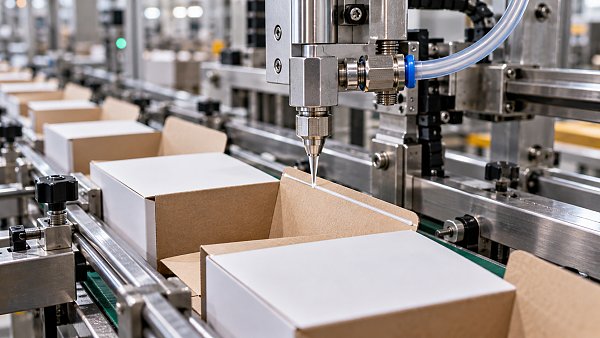
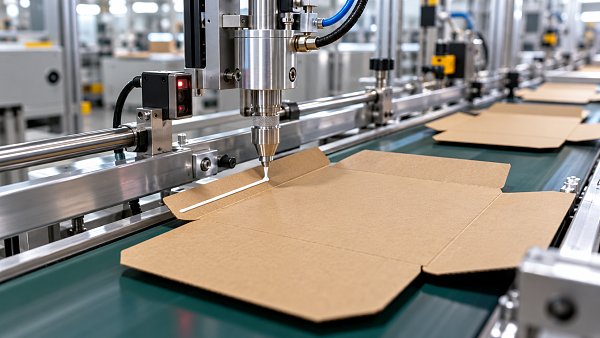
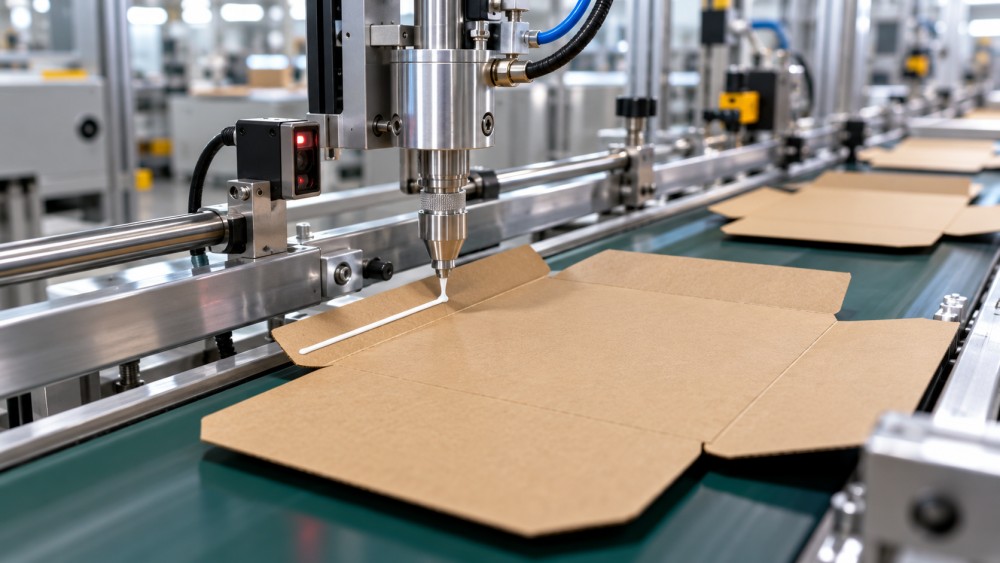
A precision adhesive application system typically combines a controlled supply, dispensing valves or heads, product detection, and a controller that coordinates application with machine movement.
Its value comes from making the required deposit repeatable. Operators can then work toward a validated minimum instead of adding glue to compensate for uncertainty.
Accurate placement keeps adhesive inside the intended bonding area. This reduces squeeze-out onto belts, guides, printed surfaces, and compression sections, where contamination can cause stops.
Clean valve shutoff can limit dripping and unwanted deposits between products. However, nozzle condition, adhesive properties, and operating pressure still influence actual results.
Programmable patterns can remove adhesive from unnecessary areas. Replacing a continuous bead with intermittent deposits requires testing because some joints need continuous coverage or sealing.
Precision cannot correct poor folding geometry, contaminated substrates, or inadequate compression. Establish which losses dispensing actually causes before assigning savings to the proposed equipment.
Will Adhesive Delivery Stay Consistent as Line Speed Changes?
A system that performs well at steady speed may waste glue during acceleration, deceleration, and restarts. These transitions deserve explicit attention during supplier evaluation.
An encoder can link dispensing commands to machine travel, helping the controller position glue patterns relative to each blank as operating speed changes.
Product sensors provide the trigger, but their location and reliability matter. Skewed blanks, variable spacing, or unreliable detection can shift deposits outside the bonding zone.
Timing control alone does not guarantee constant adhesive volume per carton. Delivery must also account for flow, pressure, viscosity, and valve response across the operating range.
For example, constant flow during a slowdown can increase adhesive deposited per unit length unless the system compensates appropriately or adjusts the dispensing pattern.
Ask suppliers how their controls maintain deposit weight and position at minimum, normal, and maximum speeds, including the transitions between these operating points.
Include no-product, no-glue logic where applicable. Missing blanks should not trigger adhesive discharge onto machine components, provided detection and control conditions are satisfied.
Specify acceptable placement and deposit variation against the actual joint geometry. A narrow folding-carton flap may demand tighter control than a wider corrugated joint.
Is the System Matched to Your Adhesive and Packaging Process?
Packaging plants use different adhesive processes, and their control requirements differ. A folder-gluer dispensing upgrade should not be evaluated like a corrugator glue-station project.
For hot-melt applications, temperature affects viscosity, flow, and bonding behavior. Excessive thermal exposure can degrade some adhesives and contribute to deposits or blocked passages.
For water-based adhesives, solids content, viscosity, filtration, and drying at exposed outlets can influence repeatability. Handling and cleaning procedures must suit the adhesive formulation.
Corrugator starch application depends on factors including adhesive condition, roll configuration, metering gap, paper properties, and heat transfer. Bead-dispensing assumptions do not transfer directly.
Require written confirmation of compatibility with the adhesive grades you intend to use. Include the recommended operating window and any restrictions affecting warranties or maintenance.
Substrate variability also matters. Recycled board, coatings, varnishes, moisture changes, and surface treatments can alter wetting and absorption, changing the adhesive quantity needed.
Trial representative materials and difficult combinations, including seasonal or supplier variations. Savings demonstrated on one easy-to-bond board grade may not represent the production mix.
How Do You Reduce Glue Without Weakening the Bond?
The objective is the lowest validated adhesive quantity that consistently meets package requirements. The smallest visible bead is not automatically the most economical setting.
Begin with a stable reference condition using approved materials, established folding settings, and controlled compression. Record bond performance alongside adhesive consumption before changing application parameters.
Reduce the deposit in controlled steps while holding other important variables steady. Test each condition against agreed acceptance criteria rather than relying on appearance alone.
Suitable checks may include joint peel testing, fiber tear assessment where relevant, and package compression or distribution testing when the application requires those evaluations.
Define when testing occurs. Immediate handling strength, strength after full setting, and performance following storage can reveal different weaknesses in the same adhesive joint.
Check application-to-contact time, adhesive open time, compression pressure, and compression duration together. A precisely placed bead can still fail if bonding occurs outside its process window.
Vision inspection can verify presence and position, depending on the equipment. It should not automatically be treated as proof of deposited mass or bond strength.
Lock approved recipes by product family and control access to critical settings. Document exceptions so operators can address material changes without permanently increasing every job’s deposit.
What Savings Should Go Into the Business Case?
Use adhesive consumed per thousand accepted packages as a primary metric. Consumption per production hour can mislead when throughput, product mix, or rejection rates change.
Build the baseline over representative jobs and shifts. Record adhesive withdrawals, usable inventory changes, accepted output, rejects, purge losses, and cleaning-related consumption consistently.
Compare equivalent products or normalize by product family. A shift toward larger cartons or longer glue patterns can hide an improvement in application efficiency.
The following example illustrates a calculation method only. Its figures are hypothetical and should not be interpreted as expected performance or an industry benchmark.
In this example, annual adhesive savings equal $24,000. A $60,000 installed project would have a 2.5-year simple payback from adhesive savings alone, before incremental costs.
Add verified reductions in rejected board, cleaning consumables, and overtime where relevant. Value recovered capacity only when demand and downstream capacity support additional saleable output.
Subtract added maintenance, spare parts, energy, software fees, and other recurring expenses. Include installation downtime, training, integration work, and commissioning materials in project investment.
Avoid counting the same benefit twice. Reduced cleanup time and increased throughput may describe one improvement, while fewer rejects can already affect the adhesive-consumption metric.
What Integration and Maintenance Risks Can Erase the Savings?
Confirm compatibility with the existing line’s controls, encoder signals, product sensors, communications, and operating modes. Define responsibility for each interface before placing the order.
Inspect mounting space and access around dispensing heads. Poor access can turn routine nozzle cleaning into extended downtime or encourage operators to postpone maintenance.
Assess whether hoses, supply equipment, and filters support the required flow across all active heads. Restrictions or unstable supply can undermine otherwise accurate dispensing commands.
Request a preventive maintenance schedule covering valves, seals, filters, nozzles, and adhesive conditioning equipment. Compare the workload with available maintenance skills and staffing.
Automatic cleaning or purge functions may improve availability, but they also consume adhesive or cleaning materials. Include their frequency and consumption in the operating model.
Clarify fault behavior, including low adhesive level, temperature deviation, pressure loss, and missed triggers. The line should respond predictably and make affected production identifiable.
For retrofit projects, agree on commissioning support, critical spare availability, and recovery arrangements. Extended troubleshooting during startup can outweigh several months of anticipated adhesive savings.
What Should Project Teams Require During Acceptance Testing?
Translate supplier claims into measurable acceptance criteria before purchase. Define the production conditions, measurement methods, sampling approach, and responsibility for resolving any performance shortfall.
Test representative carton sizes, adhesive grades, substrates, and production speeds. Include difficult jobs that account for meaningful waste rather than selecting only convenient demonstration products.
Measure adhesive consumption through calibrated weighing or another validated method. Account for material remaining in tanks and hoses when comparing the start and finish.
Run long enough to reach stable conditions and reveal recurring contamination or nozzle problems. A brief demonstration may miss issues that appear over a shift.
Include stops, restarts, missing blanks, and recipe changes. These events test whether the system reduces waste under the conditions that operators encounter each day.
Evaluate bond quality and accepted output alongside consumption. A lower glue figure has little value if additional rejects or customer failures offset the material savings.
Separate factory acceptance testing from site acceptance where appropriate. Final verification should reflect the installed line, actual operators, site utilities, and production materials in use.
Assign ownership of recipe approval, operator training, maintenance standards, and performance reporting. Review results after handover to confirm that savings persist beyond the commissioning period.
When Does a Precision Adhesive Application System Make Financial Sense?
The strongest candidates combine significant adhesive consumption with evidence of overapplication, unstable patterns, frequent cleanup, or repeatable glue-related rejects that better dispensing can address.
Existing equipment may first benefit from repaired valves, corrected pressure settings, suitable nozzles, or improved recipes. Compare these options against replacement using the same performance measures.
For a new investment, prioritize repeatable bonding across the real production mix, accessible maintenance, and documented integration capability. Maximum advertised dispensing speed alone offers limited guidance.
A precision adhesive application system reduces waste when accurate delivery supports a validated process. Hardware, adhesive selection, substrate behavior, and operating discipline must work together.
Approve the project when trials demonstrate lower total cost per accepted package with dependable bond quality. That gives project managers a defensible basis for investment.