How Non Contact Glue Detection Systems Prevent Carton Failures
A carton can look properly folded and still fail when it is filled, stacked, or opened by the end customer. Missing adhesive, a broken glue bead, glue applied in the wrong position, or insufficient bonding length may not be visible during a quick visual check. At folder gluer speed, relying on periodic manual inspection leaves too much room for defective cartons to move downstream.
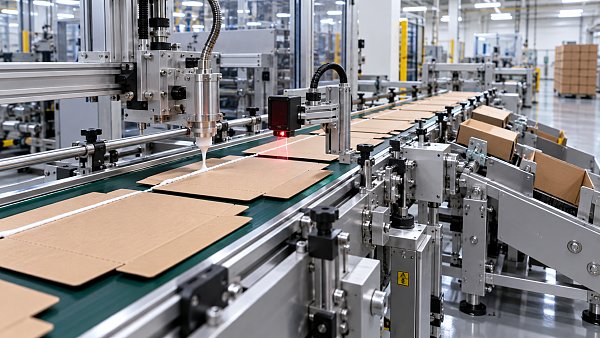
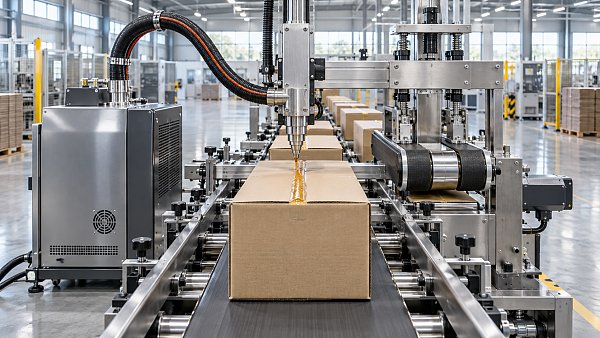
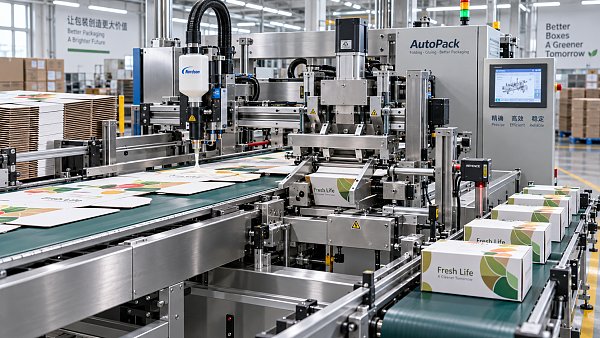
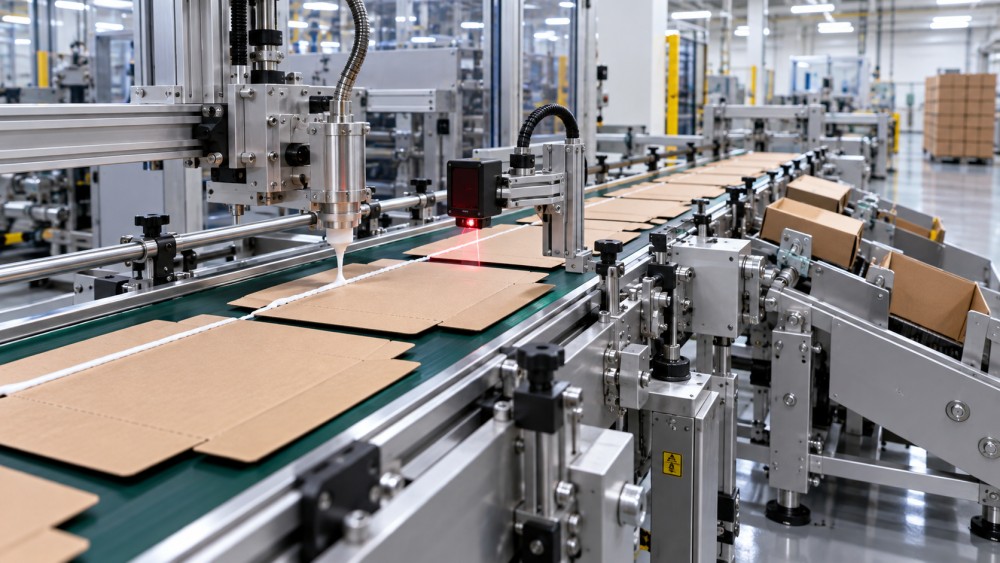
Non contact glue detection systems help prevent this problem by checking adhesive application without touching the carton or interrupting production. Installed near the glue application and folding path, they verify whether glue is present where it should be, whether the pattern is continuous, and whether the application remains within the expected position. When the system finds a defect, it can trigger an alarm, mark the carton, or send it to a rejection device before it reaches packing.
The practical value is not simply “detecting glue.” It is finding the specific cartons that are likely to open, leak, lose structural strength, or cause a packing-line stoppage before those cartons become a larger quality issue.
Why glue-related carton failures are difficult to catch
Adhesive defects are often intermittent. A nozzle may begin to clog, a glue wheel may pick up debris, a hose may lose pressure, or an applicator setting may shift after a job change. The line can continue running, and most cartons may still appear acceptable. The risk comes from the occasional failure: one unglued side seam, one skipped tab, or one bead that is too short to create a reliable bond.
Manual checks remain necessary, but they cannot inspect every carton at production speed. Operators may take samples at the delivery section and perform bond checks, yet that inspection happens after a quantity of cartons has already passed through the machine. A defect that begins between sampling intervals can create a full bundle of suspect product.
Carton construction also makes the problem harder to see. Glue may sit inside a folded seam, beneath a flap, or on a narrow tab. In coated board, printed surfaces, varnished areas, and cartons with complex die-cut shapes, the glue area may be visually difficult to inspect even when the carton is stationary. A system that checks the application point directly gives a more immediate indication of whether the process is operating as intended.
What a non-contact detection system actually checks
Non-contact inspection usually relies on optical, ultrasonic, thermal, or other sensor technologies selected for the adhesive type, carton material, and machine arrangement. The sensor does not need to press on the board. Instead, it detects a characteristic difference between the target glue area and the surrounding substrate, then compares that signal with the expected application condition.
The exact capability depends on the system and setup. Some installations are intended mainly to confirm glue presence. Others can monitor glue bead position, coverage width, continuity, or the presence of multiple glue lines. For cartons with several glue points, the system may inspect each critical location independently.
That distinction matters. A basic presence check can identify a completely missing bead, but it may not reliably determine whether the bead has enough volume to form a durable bond. Likewise, a system that confirms the glue is in the expected zone does not prove that the board surfaces will bond correctly. Adhesive temperature, open time, compression, board warp, crease quality, and substrate coating still affect the final seam.
Detection should therefore be treated as a process-control layer, not as a replacement for bond-strength checks or routine folder gluer maintenance.
How early detection prevents downstream carton failures
The most effective installations create a short response path: apply glue, inspect the glue pattern, identify a defect, then remove or contain the affected carton before packing. This sequence prevents an isolated application problem from becoming a shipment problem.
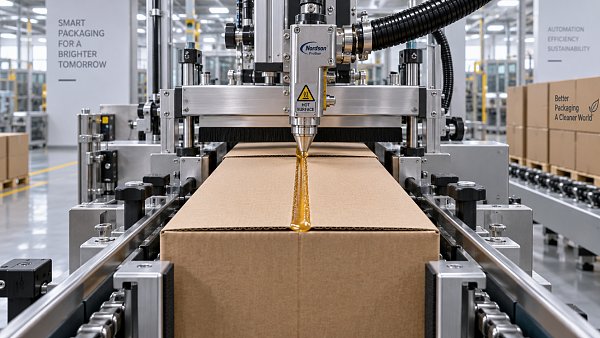
Consider a side-seam carton where a hot-melt nozzle produces a continuous bead under normal conditions. If the nozzle partially blocks, the bead may develop a gap. The carton can still be folded and compressed, so it may leave the machine looking closed. Later, during automatic filling or pallet handling, the weak section can open under load. A glue detection system identifies the gap while the carton is still moving through the gluer, allowing the defective piece to be rejected.
The same principle applies to cold glue on folding cartons. A missing glue spot on a lock-bottom carton may not be noticed until the carton is erected. At that point, the failure can stop a cartoning machine or require manual intervention. Finding the missing application during converting is far less disruptive than discovering it at the brand owner’s packing line.
Early detection also improves troubleshooting. An alarm tied to a defined glue channel or inspection zone gives the operator a starting point: check the relevant nozzle, adhesive feed, pressure condition, sensor window, carton registration, or glue-program setting. Without in-line feedback, the first sign may be a complaint from delivery or an unexplained group of failed cartons at final inspection.
Detection is only reliable when the inspection point is correctly defined
A frequent mistake is to select a sensor based only on line speed or machine compatibility. The inspection window must match the real function of the glue pattern. This requires looking at the carton blank, folding sequence, and final load on the seam.
For a straight-side seam, the critical condition may be continuous glue over a defined length. For a multi-point carton, each glue spot may have to be present in a specific position. For a crash-lock bottom, the required pattern can be more complicated because several panels interact during erection. A system that merely detects “some adhesive somewhere” may not provide useful protection if glue appears on the wrong flap or outside the bonding area.
Before setting inspection criteria, identify:
- Which glue lines or spots are structurally critical to the finished carton.
- Whether the system needs to detect missing adhesive, misplaced adhesive, interrupted application, or several conditions at once.
- The normal variation caused by board shade, print coverage, coating, embossing, and die-cut tolerances.
- Where the carton is most stable and consistently positioned for inspection.
- What action should follow a failed inspection: alarm, reject, stop, or batch containment.
This exercise prevents over-sensitive settings that create constant false alarms and under-sensitive settings that pass real defects. A detection system is useful only when its pass/fail decision reflects a meaningful production risk.
Where the system should sit on a folder gluer line
Placement affects both detection quality and response time. The sensor should inspect the glue after application but before the glue area becomes hidden by folding. In many cases, this means placing the detector immediately downstream of the applicator, where the board is flat and the glue pattern is accessible.
Inspection too close to the nozzle can be affected by adhesive stringing, splashing, or unstable board movement. Inspection too far downstream may occur after the glue has been covered or after there is no practical opportunity to reject the carton cleanly. The best position is usually one where the carton path is controlled, the sensor has a clear view of the target zone, and the reject mechanism can remove a failed carton without disrupting good production.
Registration is equally important. If the blank position varies as it passes the sensor, an accurately applied bead may appear misplaced. The inspection system may need an encoder signal, a carton trigger, printed mark reference, or machine timing input to know where to evaluate the glue. This is especially important on short runs, variable carton sizes, and jobs with frequent changeovers.
Choosing the right level of inspection
Not every glue application needs the same level of control. The appropriate solution depends on the cost of a carton failure, the complexity of the glue pattern, the operating speed, and how easily an operator can verify quality manually.
A more advanced system is not automatically the better choice. A highly detailed inspection method can add setup complexity when the actual need is only to catch a completely missing glue line. On the other hand, a simple presence sensor may be inadequate where narrow positioning tolerances determine whether the carton will bond.
Set up the system around real production variation
Inspection settings should be developed using acceptable cartons from normal production conditions, not only ideal samples made during a clean startup. Board stock can change between deliveries. Print coverage can vary between jobs. Adhesive behavior can change with temperature, viscosity, and machine speed. These conditions influence the signal seen by the detector.
During setup, run good samples through the complete operating range expected for the job. Then introduce known defect conditions where it is safe to do so, such as a deliberately interrupted glue line or a shifted pattern, and confirm that the system identifies them. This verifies not only sensor sensitivity but also the alarm and reject response.
The reject device deserves the same attention as the detector. A system that detects a failed carton but does not consistently separate it from good production does not fully control the risk. Check that rejected cartons are clearly contained, that the machine does not mix them back into finished bundles, and that the operator can distinguish a one-off reject from a repeating process failure.
Common operating mistakes that reduce inspection value
Treating alarms as a sensor problem by default
Repeated alarms can result from a dirty lens, incorrect timing, vibration, or an unsuitable inspection setting. They can also reveal a real glue application issue. Disabling the alarm or widening the tolerance without checking the glue pattern removes the warning instead of solving the cause. Inspect the rejected carton and the relevant applicator channel before changing the acceptance window.
Ignoring sensor cleanliness
Paper dust, adhesive mist, and airborne contamination can affect non-contact sensing. A simple cleaning routine, matched to the machine environment and sensor design, is usually more valuable than waiting for unstable readings to appear. Cleaning should be done carefully so the sensor position and alignment are not disturbed.
Using one recipe for visually similar cartons
Two cartons may appear nearly identical but have different glue positions, flap geometry, or print areas. Reusing a recipe without confirming the inspection zones can produce either nuisance rejects or undetected errors. Each job recipe should identify the carton format, glue channels, expected pattern, timing reference, and reject logic.
Assuming glue detection confirms bond quality
Presence detection confirms that adhesive was applied within the configured criteria. It cannot independently confirm that a seam received sufficient compression or that the materials formed a durable bond. Continue to monitor folding alignment, carrier-belt pressure, adhesive condition, board moisture, and finished-carton bond performance.
Build the detector into a practical quality routine
The system works best when it becomes part of normal line control rather than a device checked only after a fault. At job startup, confirm the correct recipe, inspect the first approved cartons, and verify that the detector sees the intended pattern. During production, review repeat alarms by glue channel or carton zone. A repeated pattern points to a process condition that needs correction, while occasional isolated rejects may indicate contamination, board variation, or a temporary application disturbance.
For plants using production data or traceability tools, glue inspection events can also support clearer quality records. The useful question is not simply how many rejects occurred, but whether failures cluster around a particular job, applicator, adhesive condition, shift, or changeover event. That information helps maintenance and production teams address the cause instead of relying on broader inspection at the end of the line.
CPCS covers folder gluers, inline inspection, coding and traceability, and packaging factory automation as connected production decisions. In a converting line, glue detection is most effective when it is evaluated with the adhesive application system, carton transport stability, reject handling, and the factory’s wider quality-control process.
What to confirm before adding a system
Start with the defect that causes the most operational risk. Is the concern a missing hot-melt bead, incorrect cold-glue placement, skipped glue spots after changeover, or cartons escaping into packed bundles? Then map the carton path from glue application to delivery and identify the last point where the glue pattern remains visible and a defective carton can still be removed.
Bring representative carton blanks, print finishes, and adhesive samples into the evaluation. The proposed system should be assessed on the actual material combinations that run on the folder gluer, including the difficult jobs rather than only plain unprinted board. Confirm how recipes are changed, how failed cartons are rejected, what the operator sees when a fault occurs, and how the sensor is cleaned and checked during a shift.
When these details are defined, non-contact glue inspection becomes a practical safeguard against carton failures. It does not eliminate the need for stable gluing, correct folding, or finished-carton testing. It does give the production team a much earlier and more controllable way to stop adhesive defects from becoming rejected shipments, packing-line disruptions, and avoidable rework.
Related News
 How to Evaluate a Cold Glue System Manufacturer for Reliable BondingChoose a cold glue system manufacturer with proven application control, uptime-focused design, seamless integration, and responsive service for reliable bonding.Spatial Folding Strategist
 How to Stop Stringing and Poor Bonds with an Industrial Hot Melt Glue GunIndustrial hot melt glue gun troubleshooting guide: reduce stringing, improve bond strength, optimize temperature, nozzle condition, timing, and carton compression.Spatial Folding Strategist
 How Non Contact Glue Detection Systems Prevent Carton FailuresNon contact glue detection systems prevent carton failures by spotting missing or misplaced adhesive early, reducing rejects, rework, and packing-line disruptions.Spatial Folding Strategist
 What Engraved Glue Rollers Cost and Which Specs Matter MostEngraved glue rollers: compare cost drivers, cell volume, coatings, tolerances, and supplier specs to improve adhesive control, reduce waste, and protect corrugator uptime.Spatial Folding Strategist
 How Hot Melt Glue Systems Improve Bond Strength and UptimeHot Melt Glue Systems improve bond strength and uptime with precise temperature control, clean flow, accurate bead placement, and reliable compression.Spatial Folding Strategist
 How to Evaluate Glue Machine Manufacturers for Long-Term Operating CostGlue machine manufacturer evaluation guide: compare lifecycle costs, adhesive control, uptime, maintenance, changeovers, and supplier support for smarter investments.Spatial Folding Strategist