How Hot Melt Glue Systems Improve Bond Strength and Uptime
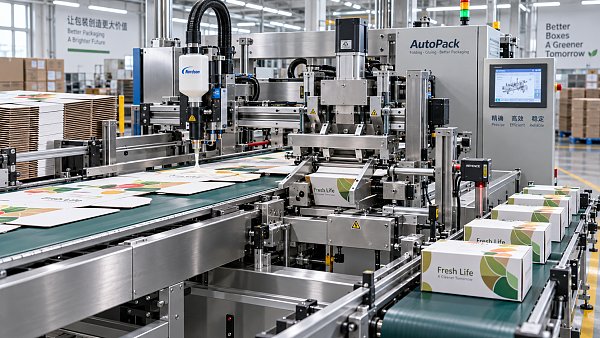
A glue joint can look acceptable at the delivery end and still fail later during folding, packing, transport, or pallet handling. On a high-speed folder gluer, case sealer, tray former, or corrugated converting line, the first signs are often small: a lifted manufacturer’s joint, glue strings near the compression section, intermittent open flaps, or a growing need to slow the machine. These problems affect more than appearance. They create rejects, rework, unplanned cleaning, and stops that interrupt the flow of the entire line.
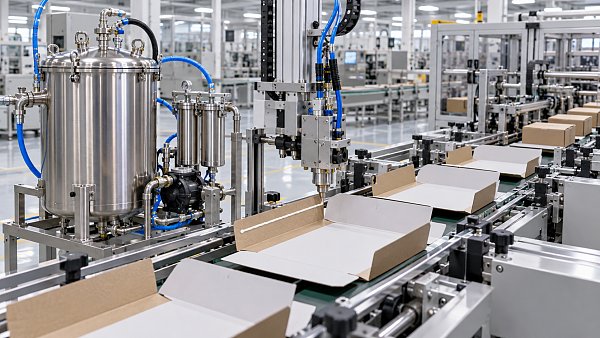
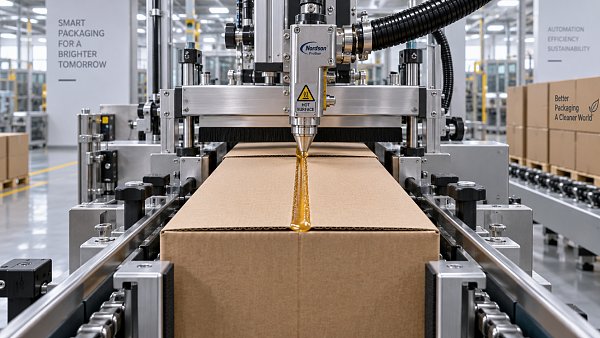
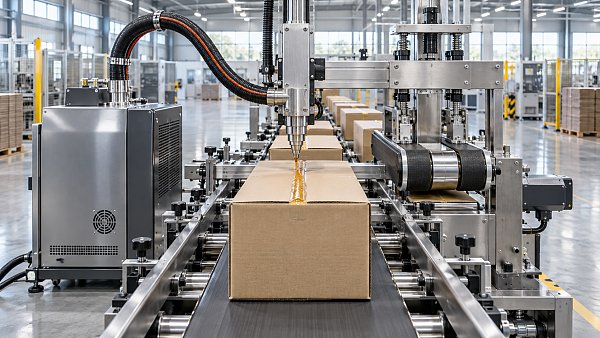
Hot Melt Glue Systems improve bond strength and uptime when they deliver the correct adhesive condition and bead pattern consistently from the melter to the substrate. The adhesive must be heated within its working range, moved through clean hoses and applicators, placed on a suitable surface, and compressed for enough time to form a reliable bond. A stronger adhesive alone will not correct poor surface preparation, incorrect open time, damaged nozzles, or unstable line conditions. The most useful approach is to treat bond quality and uptime as one operating problem rather than two separate issues.
Why a stable glue process produces stronger cartons and fewer stops
Hot melt adhesive changes from a solid material into a pumpable liquid in the melter, then cools quickly after application to develop handling strength. That rapid set is valuable in packaging production because it supports high machine speeds, but it also leaves little tolerance for variation. A small change in temperature, application position, or compression can turn a reliable joint into an inconsistent one.
The glue system sits between several moving variables: adhesive formulation, substrate condition, ambient temperature, machine speed, applicator performance, and compression timing. When one variable drifts, operators may compensate by raising temperature, increasing add-on, or reducing speed. Those actions can sometimes hide the symptom temporarily, but they may also create charring, stringing, squeeze-out, warped board, or higher adhesive consumption. A stable process is preferable because it removes the need for repeated manual correction.
Bond strength depends on the adhesive wetting the receiving surface before it cools. Uptime depends on that same adhesive moving through the system without blockage, degradation, leakage, or erratic triggering. The connection is direct: cleaner flow paths, controlled heating, repeatable gun operation, and predictable maintenance reduce both open bonds and unscheduled interventions.
Start with the failure pattern, not the temperature dial
When glue joints begin to fail, the visible defect provides useful clues. An open joint immediately after compression is different from a joint that opens only after the carton cools. A failure limited to one side of the machine is different from one appearing across every lane. Before changing settings, observe where the defect starts, whether it follows a specific product, and whether it occurs continuously or intermittently.
A useful first distinction is whether the adhesive has transferred to both surfaces. If the glue bead remains mostly on one flap and the mating surface is clean, the surfaces may not have met in time or the adhesive may have cooled too soon. If adhesive transfers but the fibre tears poorly or the bond separates cleanly, suspect surface contamination, incompatible adhesive, insufficient add-on, or inadequate compression. This observation is more informative than simply increasing the setpoint.
Temperature control is about adhesive condition, not maximum heat
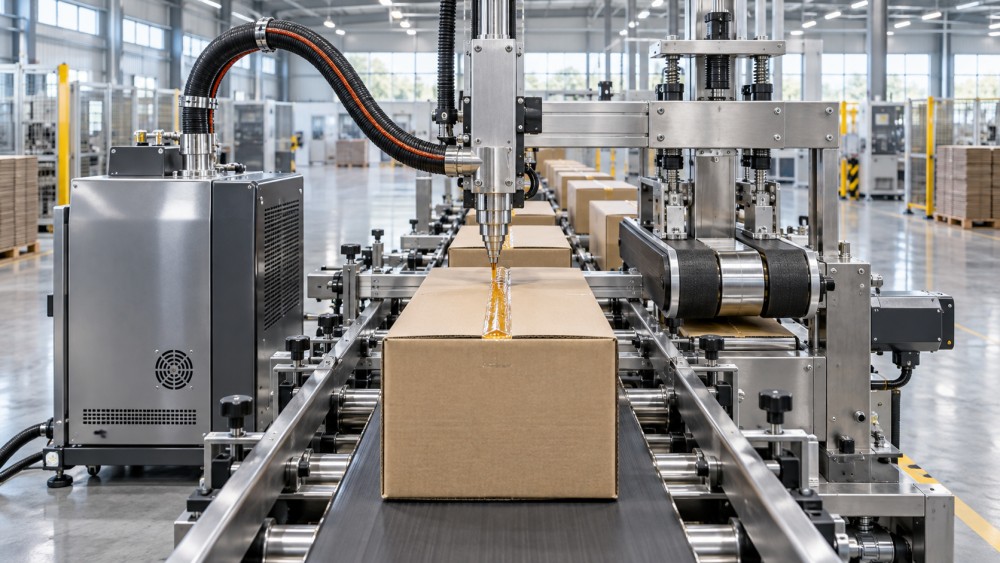
Every hot melt has a recommended processing range established by its supplier. The tank, hose, and applicator temperatures should support stable flow while avoiding unnecessary thermal exposure. Raising temperature may reduce apparent viscosity and make the adhesive easier to pump, but excessive heat can darken the material, create odour, increase stringing, and form char or gel particles. Those particles may later block filters, restrict nozzles, and cause intermittent bead loss.
Temperature should be checked at each heated zone rather than assumed from the tank display. A melter can show a stable setpoint while a hose or applicator has a heating fault, poor insulation, or a sensor issue. Adhesive that is too cool at the gun may produce a short, poorly wetting bead even when the tank is within range. Adhesive that is overheated in one zone can degrade locally and contaminate the downstream flow path.
When investigating a temperature-related issue, confirm the following in sequence:
- Verify the adhesive grade currently loaded and its specified processing range.
- Compare actual and set temperatures for the tank, hoses, manifolds, and guns.
- Check whether the fault begins after warm-up, after a long idle period, or only later in a production run.
- Inspect adhesive colour and consistency for signs of overheating or contamination.
- Make one controlled adjustment at a time, then inspect the bead and bond result before changing another variable.
Do not use temperature as the default correction for every bond failure. If the real cause is a dusty board surface or a late folding action, additional heat may only increase buildup and create a second problem.
The bead must match the folding and compression sequence
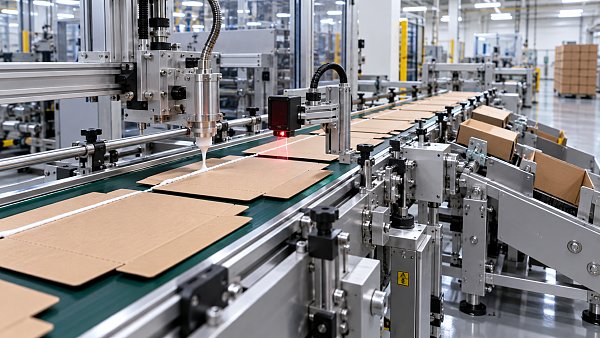
Correct adhesive placement is not simply a matter of putting glue on the flap. The bead needs to land where the mating panel can contact it fully during the available open time. A bead placed too close to an edge can squeeze out, contaminate guides, or leave too little bonded area. A bead placed too far from the fold can miss the contact zone when board alignment varies. On narrow seams, a small positioning error becomes a large percentage of the available bond area.
Hot Melt Glue Systems with reliable triggering and repeatable applicator response help maintain placement as speed changes. Still, mechanical alignment must support the system. Check the gun mount, nozzle angle, product guides, fold rails, and timing signal. A gun may be functioning correctly but apply the bead late because the encoder reference, sensor position, or machine timing has shifted.
Bead size also requires judgment. Too little adhesive can leave gaps, especially on rough corrugated surfaces or warped blanks. Too much adhesive does not automatically create a stronger bond. Heavy application can cause squeeze-out, increase cooling time, soften lightweight board, and deposit adhesive on belts or compression wheels. The aim is a continuous bead with enough volume to wet the intended area without escaping beyond the joint.
Open time and compression are often the hidden limits
Open time is the period between application and bringing the two surfaces together. It must suit the distance from the glue station to the folding point, the machine speed, the substrate temperature, and the adhesive’s set characteristics. A line may run well on a moderate-length carton but fail on a longer blank because the flap takes longer to reach compression. The adhesive has then begun to set before contact occurs.
Compression must provide consistent contact without crushing the board or shifting the product. Uneven belt pressure, worn wheels, misaligned rails, or a short compression section can cause one edge of the joint to open. Inspect the joint immediately after compression and again after it has cooled. Early opening points toward poor contact or insufficient hold time; delayed opening may indicate weak wetting, substrate issues, or stress introduced later in handling.
Substrate condition can override a well-tuned system
Paperboard and corrugated materials vary in porosity, coating, moisture, surface energy, dust level, and flatness. Recycled content, heavy coatings, varnishes, cold warehouse storage, and powdery converting debris can all change how adhesive wets the surface. A glue system that performs consistently on one board grade may require a different application pattern or adhesive formulation on another.
Before blaming the melter, examine the actual bonding surface. Dust and loose fibres prevent intimate contact. A curled flap can reduce compression at the edge. Coated or varnished surfaces may need an adhesive designed for that substrate. Very cold blanks can shorten the workable open time because they pull heat from the adhesive faster. In these conditions, increasing glue quantity may not solve the underlying compatibility issue.
Keep bonding surfaces as clean as the process allows. Remove paper dust from guides, rails, compression belts, and areas where flakes can fall into fresh adhesive. Review whether a recent print, coating, or board supplier change coincided with the failure. Product changes are often treated as machine problems because the visible defect appears at the gluing station, but the root cause may have entered upstream.
Maintenance that protects production rather than interrupting it
Preventive care is most effective when it follows the adhesive path. The tank should be kept covered to reduce contamination, and adhesive should be replenished in a way that avoids prolonged exposure of a small volume to high heat. Leaving a tank hot for long periods without production can accelerate degradation, particularly when the adhesive remains in contact with heated surfaces.
Filters, nozzles, and gun components should be inspected according to actual operating conditions, not only after a failure. A partially restricted filter may still allow production, but it can cause unstable flow during speed changes or when several guns fire together. Likewise, a nozzle that has begun to build up residue can distort the bead before it blocks completely.
- Look for leaks at hose fittings, manifolds, and gun connections before they become a pressure or safety issue.
- Inspect nozzles for carbonized material, mechanical damage, and changes in bead shape.
- Monitor adhesive level and replenish using clean, dry material intended for the system.
- Record recurring faults by lane, gun, product type, and shift condition so that intermittent patterns become visible.
- Follow the equipment procedure for depressurizing and cooling before service; molten adhesive and pressurized components can cause serious injury.
Cleaning should be purposeful. Frequent, unnecessary flushing can introduce mistakes or incompatible materials, while delayed cleaning allows deposits to harden and spread through the system. When changing adhesive grades, confirm that the new material is compatible with the existing residue or follow the prescribed purge procedure. Mixing materials without verification can alter viscosity, set behaviour, and bond performance.
Use controlled trials when changing speed, board, or adhesive
A production adjustment is easier to evaluate when only one condition changes. Start with a known acceptable machine setting, then alter speed, board grade, adhesive grade, bead pattern, or compression setting individually. Inspect both the applied bead and the finished joint. Where practical, separate the bonded panels after the adhesive has set and examine whether fibre is pulled from the board or whether the adhesive releases cleanly from a surface.
Record the product, substrate, line speed, temperature zones, glue pattern, and observed failure mode. The record does not need to be complicated; its purpose is to prevent repeated guesswork. Over time, it can show that a particular carton design needs a different bead location, that a cold-start condition needs more warm-up verification, or that a certain board finish requires a compatibility review.
The best operating result is not the hottest adhesive, the largest bead, or the highest momentary line speed. It is a repeatable balance: adhesive that remains stable in the equipment, a bead that reaches the intended contact area, surfaces that accept wetting, and compression that holds the joint until it is secure. When those conditions are controlled together, bond strength becomes more predictable and glue-related downtime becomes easier to prevent rather than repeatedly repair.
Related News
 How to Evaluate a Cold Glue System Manufacturer for Reliable BondingChoose a cold glue system manufacturer with proven application control, uptime-focused design, seamless integration, and responsive service for reliable bonding.Spatial Folding Strategist
 How to Stop Stringing and Poor Bonds with an Industrial Hot Melt Glue GunIndustrial hot melt glue gun troubleshooting guide: reduce stringing, improve bond strength, optimize temperature, nozzle condition, timing, and carton compression.Spatial Folding Strategist
 How Non Contact Glue Detection Systems Prevent Carton FailuresNon contact glue detection systems prevent carton failures by spotting missing or misplaced adhesive early, reducing rejects, rework, and packing-line disruptions.Spatial Folding Strategist
 What Engraved Glue Rollers Cost and Which Specs Matter MostEngraved glue rollers: compare cost drivers, cell volume, coatings, tolerances, and supplier specs to improve adhesive control, reduce waste, and protect corrugator uptime.Spatial Folding Strategist
 How Hot Melt Glue Systems Improve Bond Strength and UptimeHot Melt Glue Systems improve bond strength and uptime with precise temperature control, clean flow, accurate bead placement, and reliable compression.Spatial Folding Strategist
 How to Evaluate Glue Machine Manufacturers for Long-Term Operating CostGlue machine manufacturer evaluation guide: compare lifecycle costs, adhesive control, uptime, maintenance, changeovers, and supplier support for smarter investments.Spatial Folding Strategist