How Glue Detection Systems Reduce Carton Sealing Failures
Carton sealing failures are often discovered too late: during pallet handling, at a brand owner’s packing line, or after a shipment reaches a distributor. By that point, the defect is no longer a simple converting issue. It may become a product-damage claim, a rejected delivery, a traceability investigation, or a safety concern where packaging is expected to retain product protection through transport and use.
For folding cartons, the critical failure is usually an open or weak side seam caused by missing, misplaced, insufficient, contaminated, or poorly compressed adhesive. In corrugated shipping cases, the risk may involve manufacturer’s-joint glue, case-sealing adhesive, or an incorrectly applied hot-melt pattern. These are different processes, but the quality-control problem is similar: an adhesive defect can remain visually hidden until the carton is stressed.
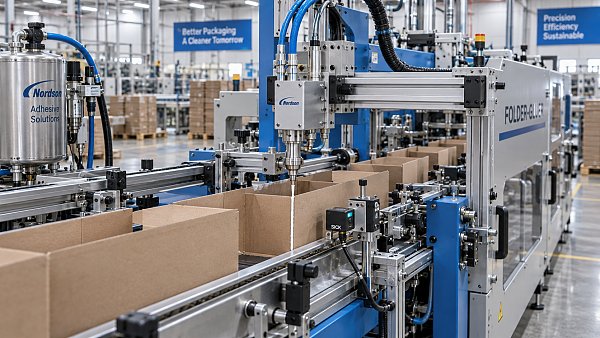
Glue Detection Systems address this gap by checking whether adhesive has been applied in the intended location and pattern while the carton is still moving through the production line. Their practical value is not simply that they “find glue.” They create an opportunity to stop, reject, quarantine, and investigate defects before defective cartons are packed, palletized, or shipped.
Why sealing defects remain difficult to control
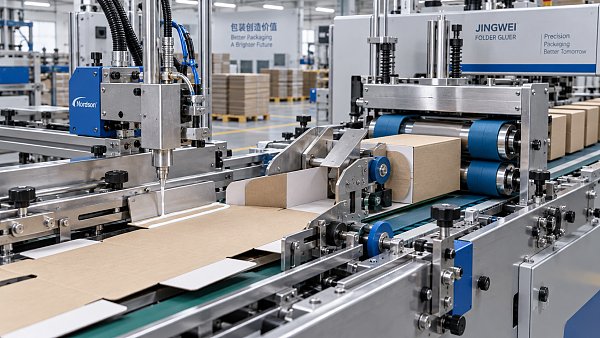
Adhesive application is a fast, narrow-window process. On a folder gluer, a carton blank may pass through the gluing section at high speed, with only a short interval between application, folding, and compression. A missing bead may result from a partially blocked nozzle, an empty adhesive supply, unstable pump pressure, a damaged disc, incorrect glue-wheel setting, or dried adhesive buildup. A bead can also be present but wrongly positioned because of carton skew, registration drift, vibration, or an incorrectly set guide.
Traditional process checks remain necessary, but they have clear limits. Operators may inspect sample cartons at planned intervals, perform manual tear tests, and visually check the glue station. Those checks can confirm that a process appeared acceptable at one moment. They do not necessarily reveal a brief interruption occurring between samples, particularly during high-speed production, a splice, restart, order changeover, or adhesive-system alarm.
This is why carton plants sometimes face a frustrating pattern: the gluer setting sheet looks correct, the operator’s sample passes, yet a customer later finds intermittent open seams in only part of a delivery. The defect may have occurred for a few minutes, then disappeared as a nozzle cleared or adhesive flow returned. Without event-level detection and production traceability, identifying the affected quantity becomes difficult.
For safety-sensitive applications, including pharmaceutical cartons, food-related secondary packaging, consumer goods with tamper-evident packaging features, and heavy product packs, that uncertainty can be unacceptable. A glue-detection system does not replace a full packaging validation program, but it makes a major blind spot visible.
What a glue detection system actually verifies
The term covers several inspection approaches. The appropriate technology depends on the adhesive, carton substrate, machine design, speed, and defect risk. The key distinction is between verifying adhesive presence and verifying final bond performance.
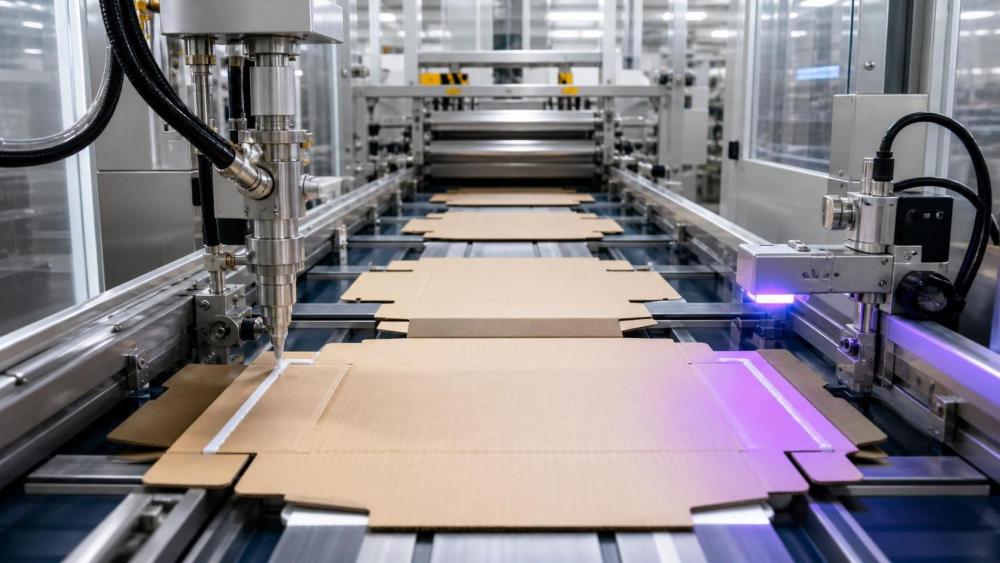
Many systems inspect adhesive presence or placement before the carton is folded. Depending on the configuration, they may use optical sensors, camera-based vision, ultraviolet-responsive adhesive markers, pattern-recognition software, or other non-contact sensing methods. The system compares the observed glue area, line, dot, or bead against a programmed acceptable condition. If glue is absent, discontinuous, outside a permitted zone, or below a defined coverage threshold, the machine can trigger an alarm, mark the event, or activate a reject mechanism downstream.
Some applications use adhesive with a fluorescent tracer that is visible under ultraviolet illumination. This can make detection more reliable where ordinary visual contrast between glue and board is poor. Other systems inspect naturally visible glue patterns through cameras or dedicated sensors. Neither method is universally superior. A fluorescent approach may offer strong contrast but requires compatible adhesive supply and controlled handling. Vision-based inspection can offer more detailed pattern analysis, but performance may be affected by board color, printed graphics, varnish, dust, reflectivity, and changing ambient light if the inspection enclosure is not well controlled.
What these systems generally do not prove on their own is that the final adhesive bond has reached required strength. A glue line can be present but still fail because the adhesive was too cold, improperly mixed, contaminated, applied to an unsuitable coated surface, or insufficiently compressed during the folding stage. Conversely, a carton may appear to have a small application deviation while still forming an adequate bond. This is why inspection criteria must be tied to a validated process rather than set only by what looks visually complete.
The most effective point of control is before the defect becomes irreversible
Detection location matters. Inspection immediately after glue application allows the system to identify a missing or misplaced pattern before folding. This is usually the clearest point for determining whether the gluing unit performed as intended. It also gives the machine the most time to reject the associated carton or sequence of cartons.
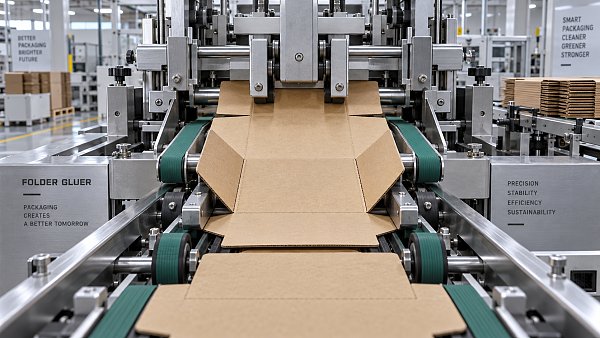
Inspection after folding can add a different layer of protection. It may identify open seams, poor flap closure, or structural misalignment that adhesive-presence inspection alone cannot detect. In some lines, both checks are justified: one confirms that the glue pattern was applied; the other confirms that the folded carton appears properly closed.
The right arrangement depends on the failure mode. A plant with recurring clogged-nozzle incidents may prioritize immediate glue-presence detection. A producer handling cartons with demanding geometry, difficult coatings, or highly variable board stiffness may need seam inspection as well. Where cartons carry expensive products or are used in regulated supply chains, the decision should be based on the consequences of an escaped defect, not simply on whether an inspection device can be installed.
Reducing failures requires more than adding a sensor
A common mistake is treating glue detection as a stand-alone quality device. It is better understood as part of a controlled process that includes adhesive preparation, application hardware, folding alignment, compression, inspection logic, rejection, and batch documentation.
Consider a line that detects a missing bead. If the machine only sounds an alarm while production continues, defective cartons can still travel into bundling or packing. If a reject signal is sent but the reject mechanism is not synchronized with carton position, good cartons may be removed while defective ones remain. If the event is recorded but there is no defined rule for segregating the cartons produced just before and after the alarm, traceability is incomplete.
Plants obtain more reliable results when they define what happens after each inspection event. This normally includes:
- the defect condition that triggers warning, reject, slowdown, or machine stop;
- the maximum number of consecutive failures permitted before escalation;
- how cartons between the detected failure and line stabilization are identified or quarantined;
- who can restart production after corrective action;
- which records are retained by job, shift, machine, adhesive batch, and operator intervention;
- how rejected cartons are physically separated from accepted output.
These controls are particularly important when products are exported across multiple markets. Customers may not require a specific inspection technology, but they increasingly expect suppliers to demonstrate that packaging defects can be contained, investigated, and linked to production records.
Setting inspection thresholds without creating a false sense of security
Inspection sensitivity is one of the most important implementation decisions. If the acceptable glue area is set too broadly, a materially incomplete pattern may pass. If the threshold is too tight, normal process variation can generate excessive false rejects. Both outcomes damage confidence in the system: the first allows defects to escape; the second encourages operators to bypass alarms or reduce sensitivity.
The correct acceptance window should come from trials that connect observed glue patterns with actual carton performance. The process team should test cartons at the lower and upper ends of normal operating conditions, including realistic variation in speed, substrate, adhesive temperature, line pressure, and carton design. Bond-strength testing, compression checks, handling trials, and where relevant customer packing-line trials should inform the inspection specification.
It is also important to account for the difference between a visible glue footprint and adhesive quantity. A wide but thin application may look acceptable to an area-based system while containing too little adhesive for a robust bond. A narrow but consistent bead may provide adequate strength for one carton design but not another. The inspection recipe must therefore reflect the approved adhesive pattern for each job, rather than applying one generic setting across all cartons.
Where false alarms usually originate
False alarms are not always evidence that the detection technology is unsuitable. In many cases, they reveal a poorly controlled inspection environment or inconsistent machine condition. Dust accumulation on lenses and sensors, board debris, unstable carton transport, light entering an open inspection zone, fluctuating adhesive fluorescence, and poor timing synchronization can all affect results.
Carton variation is another frequent source of difficulty. Unprinted kraft board, dark solid print, metallized surfaces, heavy varnish, windows, foil decoration, and highly reflective coatings can each change how a system sees glue. A recipe that works well on one substrate may require adjustment for another. This is particularly relevant for contract packagers and carton converters with frequent job changes.
Routine verification should therefore include inspection-system cleaning, lighting checks, sensor alignment, test samples with known defects, reject-device confirmation, and review of alarm trends. A system that has not been challenged with controlled “bad” samples may appear operational while failing to detect the defects it was installed to control.
Glue detection supports safety through packaging integrity, not by replacing product controls
For safety management, the most relevant benefit is better control of packaging integrity. An open carton can expose contents to crushing, contamination, loss of components, incorrect handling, or reduced tamper resistance. In warehouse and logistics environments, weak cartons can contribute to load instability when the packaging is designed to support stacking or retain contents during distribution.
However, it is important not to overstate the role of the technology. Glue inspection cannot confirm that the correct product was packed, that a code is readable, that printed information is accurate, or that a carton meets all transport-performance requirements. It should be integrated with other controls such as code verification, print inspection, dimensional checks, weight control where applicable, and finished-pack sampling.
The strongest quality systems connect these controls through a common production record. If an adhesive alarm occurs, the plant should be able to identify the order, time window, machine state, rejection count, corrective action, and disposition of potentially affected output. This turns a sensor event into usable evidence during internal investigations, customer complaints, and supplier-quality reviews.
How to decide whether the investment is justified
Not every folder-gluer line needs the same level of inspection. The strongest business case usually exists where one or more of the following conditions apply: high production speed, intermittent gluing faults that are difficult to catch manually, expensive contents, customer complaints related to open seams, regulated or traceable packaging programs, high labor dependence for manual checks, or frequent product and substrate changes.
Evaluation should begin with the plant’s actual defect history. Review open-seam complaints, rework records, rejected bundles, adhesive-related downtime, customer returns, and the cost of sorting suspect production. The cost of a single escaped defect is not limited to the carton itself. It can include product loss, repacking, freight disruption, customer line stoppage, investigation time, and damage to supplier approval status.
At the same time, the system must fit the existing line. Questions worth asking include whether the inspection point is accessible, whether the conveyor provides stable carton position, whether a reliable reject location exists, how recipes will be managed, whether current adhesives are detectable, and whether machine controls can exchange timing and fault signals with the inspection unit. Integration quality often determines whether the system becomes a trusted process control or merely another alarm on the operator panel.
From defect detection to process learning
The longer-term value of Glue Detection Systems lies in the production data they generate. Repeated alarms may reveal patterns that manual inspection misses: a glue head becoming unstable after a certain runtime, an adhesive viscosity issue during colder shifts, a specific carton format that drifts at higher speed, or an increase in failures after a particular maintenance activity.
Used in this way, detection data supports preventive action rather than only downstream sorting. Maintenance teams can intervene before a nozzle fails completely. Production teams can refine startup checks. Quality teams can compare defect events across substrates, jobs, shifts, and adhesive batches. Management can distinguish isolated operator issues from recurring equipment or material problems.
Carton sealing quality is often treated as a small detail because the adhesive line itself is small. In reality, it is a final point of structural assurance between a well-produced carton and a failed shipment. Effective detection does not eliminate the need for adhesive control, mechanical maintenance, or bond testing. It makes those controls more responsive, more traceable, and far less dependent on discovering a failure after the carton has left the plant.
Related News
 How to Choose a Glue Dispensing System Manufacturer for Your LineChoose a glue dispensing system manufacturer with confidence. Compare adhesive compatibility, line integration, testing, and lifecycle costs to find the right fit for your production line.Spatial Folding Strategist
 How to Fix Weak Glue Bonds on Carton Folder Gluers at High SpeedsCarton Folder Gluers losing bond strength at high speeds? Learn how to optimize glue placement, adhesive selection, and compression to reduce rejects and keep production running reliably.Spatial Folding Strategist
 How Window Patching Machines Apply Film to Folding Carton WindowsDiscover how Window Patching Machines apply film to folding cartons. Learn key controls for precise placement, strong bonds, and fewer rejects before choosing your equipment.Spatial Folding Strategist
 How Does a Crash Lock Pre Breaking Unit Improve Carton Folding?Discover how a crash lock pre breaking unit reduces crease resistance, improves carton folding consistency, and supports reliable opening—with practical setup tips to avoid board damage.Spatial Folding Strategist
 How a Folder Gluer Pre-Breaking Unit Improves Carton Fold QualityDiscover how a folder gluer pre breaking unit improves carton fold quality and reduces spring-back. Get practical setup tips for consistent seam alignment and smoother production.Spatial Folding Strategist
 How to Evaluate a Cold Glue System Manufacturer for Reliable BondingChoose a cold glue system manufacturer with proven application control, uptime-focused design, seamless integration, and responsive service for reliable bonding.Spatial Folding Strategist