How Does a Crash Lock Pre Breaking Unit Improve Carton Folding?
A crash lock pre breaking unit improves carton folding by flexing selected creases before the bottom flaps reach the final folding and gluing stages. This reduces their resistance to bending and helps the flaps follow the intended folding sequence. When cartons leave a folder gluer with uneven bottoms, spring back after folding, or resist opening during packing, crease preparation is one of the first conditions worth checking.
The improvement depends on controlled bending, not maximum force. Properly adjusted pre-breaking can make folding more repeatable without damaging the board. It cannot repair a misplaced score, incorrect flap geometry, or a poorly positioned glue line, so operators need to distinguish crease resistance from other faults before changing the settings.
Where pre-breaking fits into crash-lock carton production
A crash-lock carton, also called an automatic-bottom carton, has bottom panels arranged and glued so that the base forms as the flattened carton is opened. During manufacture, those panels must fold in a specific relationship. A flap that bends late, springs back strongly, or enters the next guide at the wrong angle can disturb the bottom assembly.
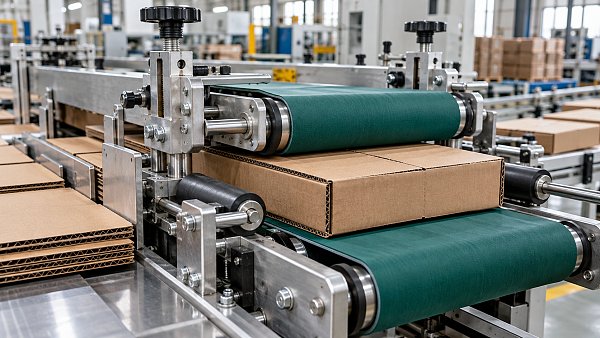
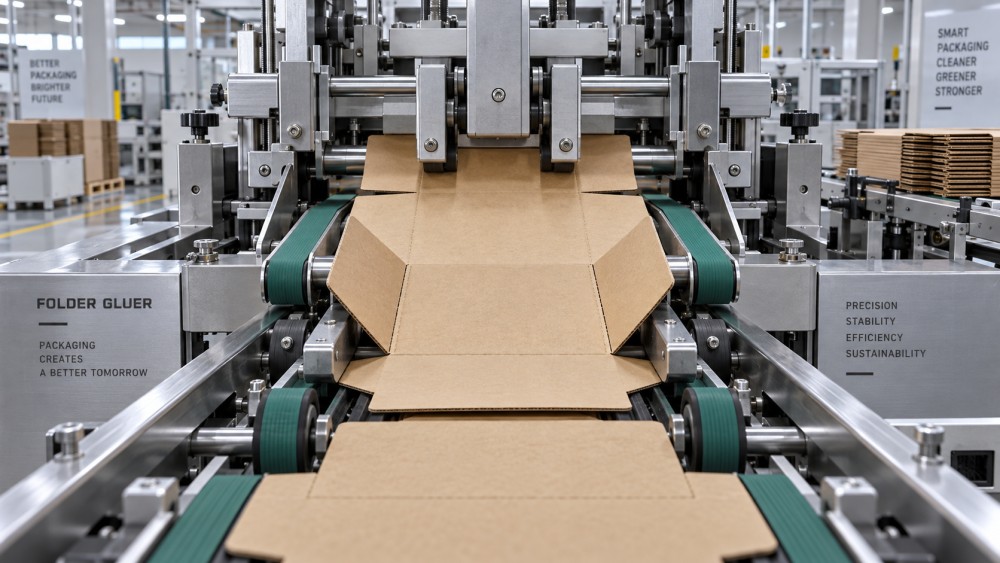
Pre-breaking prepares selected score lines for this movement. Depending on the folder-gluer design, belts, hooks, guides, or other folding elements progressively bend the relevant panels and then guide them toward the following section. The tooling, folding angle, and location within the machine vary; some machines combine functions that others place in separate sections.
Do not assume that a general longitudinal pre-fold section performs the same job as the crash-lock preparation section. Longitudinal pre-folding commonly prepares carton body creases, while crash-lock tooling addresses the folds needed for the automatic bottom. Confirm the function of each section against the machine documentation and the carton drawing.
The mechanism: reducing resistance without weakening the carton
A crease creates a controlled bending zone in the board. Its behavior depends on board construction, grain direction, moisture condition, and the relationship between the creasing rule and channel during die-cutting. Even a correctly formed crease can resist its first fold and tend to return toward the flat position.
Pre-breaking deliberately flexes this zone before the final folding operation. That initial movement can reduce the effort required for later bending and make the panel’s response more predictable. The downstream folding elements then have less resistance to overcome while controlling flap position.
This matters because folding is a moving process. A stiff flap may eventually reach the correct position at low speed but lag behind the intended path as speed increases. It can catch a guide, push against another panel, or disturb the blank’s alignment. Consistent crease preparation helps reduce these variations.
More bending is not automatically better. Excessive deflection or concentrated pressure can crack the printed surface, split fibers, distort a flap, or crush corrugated material. The aim is enough preparation for reliable downstream folding while preserving the carton’s appearance and structural performance.
Read the folding symptom before adjusting the unit
The most useful observation is where the blank first departs from its intended path. A defect visible at delivery may have started at feeding, in the pre-breaking section, during bottom folding, or after adhesive application. Looking only at the finished carton can lead to unnecessary pressure adjustments.
A repeating defect on the same panel points toward a specific crease, tool, or design feature. Random variation between blanks more often calls for checking feed consistency, blank flatness, material variation, or slipping transport belts before increasing pre-breaking intensity.
Establish a sound blank before changing machine settings
Take an unglued blank and compare it with the approved drawing or reference sample. Check the bottom-panel shapes, score positions, cut edges, and glue-flap dimensions. A pre-breaker works on the creases supplied to it; it cannot relocate a score that places the flap outside the intended folding geometry.
Gently fold the relevant creases by hand. Compare their resistance and inspect both surfaces for cracking, separation, or an unintended fold beside the score. This is a diagnostic check rather than a replacement for production testing. It helps identify whether the difficulty exists before the blank enters the machine.
Board changes deserve particular attention. The same nominal thickness does not guarantee the same folding behavior. Different grades, grain directions, coatings, or moisture conditions may require different settings. For corrugated blanks, inspect for local flute crushing and confirm that the machine and tooling are suitable for the board construction.
When several blanks show the same poor crease behavior before processing, investigate die-cutting or material condition first. Trying to compensate with stronger pre-breaking can conceal the underlying issue while introducing surface damage.
Adjust the folding path in a controlled sequence
Use the manufacturer’s setup and safety procedures for the specific machine. Stop and isolate the equipment as required before repositioning tooling or accessing hazardous areas. Observe running blanks only from approved viewing positions with guards in place; never reach into moving belts or folding mechanisms.
- Confirm blank presentation. Check that blanks enter squarely and remain consistently positioned. Variable entry makes it difficult to judge whether a folding tool is correctly set.
- Align the tooling with the intended crease. Confirm that the tool engages the correct panel and produces bending at the score rather than beside it. Avoid unintended contact with neighboring flaps.
- Check support through the bend. The blank should remain controlled while the panel moves. Poor support can allow twisting, lifting, or sliding instead of clean folding.
- Set the preparation progressively. Begin from the recommended configuration for that carton style. Adjust the relevant angle, clearance, or pressure in small increments rather than forcing the deepest available fold.
- Inspect the transfer downstream. A correctly prepared flap must still enter the next folding element cleanly. Check for edges catching, premature overlap, or loss of alignment.
- Reassess at production speed. After confirming acceptable samples at setup speed, increase speed gradually and inspect again. Stop increasing when defects or unstable transport appear.
Change one relevant setting at a time and retain samples from each meaningful adjustment. Otherwise, a simultaneous change to belt pressure, guide position, and bending angle makes it difficult to identify what improved the result—or what caused new damage.
Use pressure to control movement, not to force a faulty fold
Belt pressure must provide enough grip to carry the blank through the folding path. Insufficient grip can allow slipping; excessive pressure can mark printed surfaces or compress the material. Guide clearance also matters: a restrictive guide may drag on a flap even when its crease has been adequately prepared.
A carton that runs well slowly but becomes unstable at higher speed does not necessarily need stronger pre-breaking. First look for loss of grip, abrupt guide transitions, blank skew, or a panel that is insufficiently supported during transfer. Increasing bending intensity will not correct every transport problem.
Check the finished carton, not just the moving blank
Smooth passage through the folder gluer is only part of the acceptance test. The finished carton must open correctly and form the intended bottom without manual rearrangement of its panels. Assess samples after the adhesive has reached the handling condition specified for the process.
- Open the carton in its intended manner and observe whether the bottom panels move into place without catching or abnormal force.
- Check that the bottom sits in its designed shape, without an unexpected gap, twisted overlap, or protruding flap.
- Inspect the prepared creases for cracking, tearing, surface marking, or corrugated-board crushing.
- Confirm that glue is confined to the intended bonding areas and has not joined surfaces that must move freely.
- Check bond integrity and carton squareness against the established quality requirements.
Separate opening behavior from load performance. A carton that erects smoothly has passed a folding-function check, not a complete bottom-strength assessment. Strength also depends on board specification, adhesive bonding, panel design, and the intended contents, and should be evaluated under the applicable packaging test procedure.
When pre-breaking is the right correction—and when it is not
Pre-breaking is a useful adjustment when a correctly made blank shows excessive crease resistance and its flap responds more consistently after controlled preparation. The strongest indication is a visible improvement in the folding path without new damage, followed by reliable opening of finished samples.
By contrast, repeated folding beside the score suggests a crease or alignment problem. A flap that collides with another panel despite bending freely suggests incorrect geometry, folding order, or guide positioning. Cartons bonded shut in unintended areas require an adhesive-placement investigation, not simply more crease preparation.
Some jobs also exceed the practical range of the installed tooling. Very stiff materials, unusual bottom layouts, or limited support around narrow flaps may require a different tooling arrangement. Before improvising contact points or removing guides, confirm the supported configuration with the machine supplier or a qualified setup technician.
Make the successful setup repeatable
Once a job runs correctly, record more than the machine speed. Keep the board specification and grain direction, blank revision, tooling positions, relevant clearances, pre-breaking settings, and accepted sample references. Note any material change that required a different adjustment.
On a repeat order, use those records as a starting point rather than proof that the previous settings must still work. Check the new blanks and verify folding at the intended operating speed. Changes in crease quality or board condition can alter the response even when the carton dimensions remain unchanged.
During longer runs, monitor for paper dust buildup, belt wear, loose tooling, and gradual changes in blank presentation. If folding quality drifts after an initially stable setup, restore transport and tooling condition before adding more bending force. This preserves the distinction between a crease that needs preparation and a machine that has stopped applying that preparation consistently.
Related News
 How to Prevent Clogs in a High Temperature Hot Melt Glue GunPrevent high temperature hot melt glue gun clogs with practical tips on adhesive selection, safe cleaning, and maintenance to keep work flowing.Spatial Folding Strategist
 What Factors Affect the Price of a Corona Treater?Discover what affects corona treater price, from treatment width and power to installation costs. Compare quotes and choose the right system for your production line.Spatial Folding Strategist
 What to Ask a Plasma Treater Manufacturer About Surface AdhesionChoosing a plasma treater manufacturer? Ask these essential questions about adhesion testing, line integration, maintenance, and production reliability before you buy.Spatial Folding Strategist
 How to Prevent Clogging in a Precision Glue Nozzle During ProductionPrevent precision glue nozzle clogs with proven filtration, cleaning, and shutdown practices. Discover practical steps to reduce downtime and keep packaging bonds strong.Spatial Folding Strategist
 How to Adjust Compression Sections to Prevent Carton Seams OpeningAdjust Compression Sections to prevent carton seams from opening. Learn how to balance pressure, dwell time, and alignment for stronger bonds, less board damage, and fewer rejects.Spatial Folding Strategist
 How a Precision Adhesive Application System Reduces Glue WasteDiscover how a precision adhesive application system can reduce glue waste, protect bond strength, and lower packaging costs. Explore practical controls and ROI checks before you invest.Spatial Folding Strategist