How Cold Glue Guns Improve Bonding Consistency on Packaging Lines
On a packaging line, bonding failures rarely begin as obvious open flaps or collapsed cases. They often start as small changes: a glue bead shifts toward a score line, the adhesive pattern becomes intermittent during a speed increase, or one carton blank receives less coverage than the next. By the time the issue reaches packing, palletizing, or shipment, operators may be dealing with popped seams, manual rework, rejected bundles, and stops to clean adhesive from guides or compression belts.
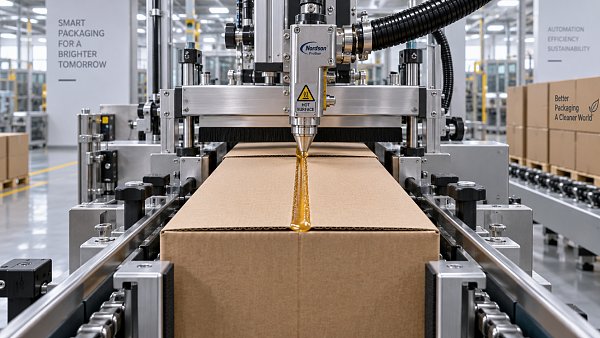
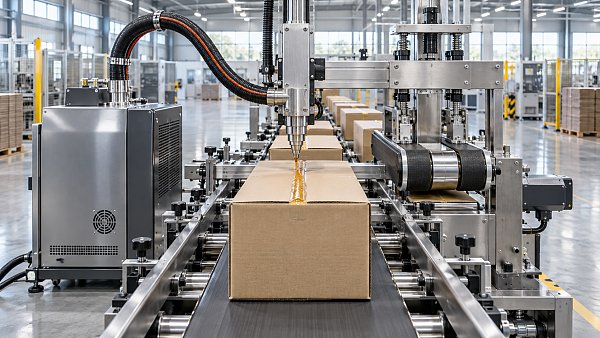
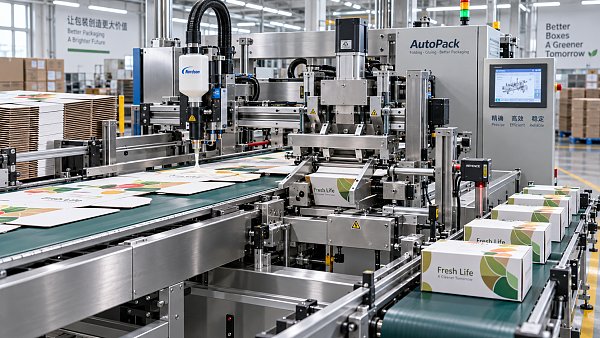
Cold Glue Guns improve bonding consistency by controlling where, when, and how much adhesive is applied. Rather than relying on a broad, poorly defined glue pattern, a properly selected and maintained gun system can deliver repeatable beads, dots, lines, or intermittent patterns matched to the carton design and machine timing. The result depends on more than the gun itself, however. Adhesive condition, nozzle choice, product positioning, trigger timing, pressure, and compression after application must work together.
Why inconsistent cold-glue bonding appears at line speed
Cold adhesive systems are commonly used on corrugated cases, folding cartons, paperboard sleeves, display packs, and other paper-based packaging where a water-based or dispersion adhesive is suitable. The adhesive is normally applied while the material is moving, then the glued area is brought into contact under pressure. This seems straightforward until line conditions change.
A packaging line may run acceptably during setup but lose bond consistency after speed increases. At higher throughput, the interval between adhesive application and compression can become too short or too long. A carton may reach the compression section before the adhesive has spread adequately, or the adhesive surface may begin to dry before the mating panel closes. Neither condition necessarily looks like a major fault at the gun, yet both can weaken the finished bond.
Material variation also matters. Corrugated board can differ in surface absorbency, warp, dust level, liner composition, and flatness. Coated cartonboard may resist wetting more than an uncoated substrate. A pattern that works on a broad, smooth glue flap may be insufficient on a narrow flap with a deep score or uneven surface. The right response is not automatically to apply more glue. Excess adhesive can soak into paper, squeeze out at the seam, contaminate transport belts, or increase drying time.
Cold Glue Guns help stabilize this process because they make the application event more controllable. When a gun opens and closes consistently, the adhesive is placed in a repeatable location and at a repeatable length. This gives an operator a clearer basis for adjustment than a manually improvised application method or a system with worn nozzles, unstable triggering, and poorly managed adhesive supply.
Start with the bond requirement, not the dispenser setting
Before changing pressure or increasing the bead size, examine what the finished package must withstand. A light sleeve that is held closed during retail handling does not require the same bond geometry as a heavy corrugated shipper exposed to conveying, compression, stacking, and distribution handling. The glue pattern should support the actual load path of the package.
For a side seam, adhesive should generally be placed where the flap can transfer load across the bonded area without concentrating stress at an edge. For a corrugated case manufacturer’s joint, the pattern needs to account for board profile and the available overlap. For a folding carton, the location must avoid contamination of visible panels, windows, product-contact areas where applicable, and creases that interfere with clean folding.
Operators can use a simple physical inspection before making system changes:
- Open a bonded sample and observe where fibre tear occurs, if it occurs at all.
- Check whether adhesive has transferred across both surfaces rather than remaining mainly on one side.
- Look for dry sections, stringing, skips, squeezed-out adhesive, or a bead placed too close to an edge.
- Confirm that the flap actually contacts the intended glue path during folding and compression.
- Compare samples from startup, normal running speed, and after a long production period.
A weak seam with little adhesive transfer may point to insufficient wetting, contamination, excessive open time, or poor compression. A seam with heavy squeeze-out may indicate that volume is excessive, the bead is too close to the edge, or the compression geometry is forcing adhesive out rather than spreading it through the bond area. These are different problems and should not be corrected with the same adjustment.
Match the application pattern to the package and line motion
A continuous bead is useful when the package needs a sealed edge, broad bonding support, or protection from product leakage through the seam. It is not always the best choice. Intermittent beads or dot patterns can reduce adhesive use and limit squeeze-out where the package only needs localized holding strength. The pattern must still provide enough contact points to resist opening forces and handling stress.
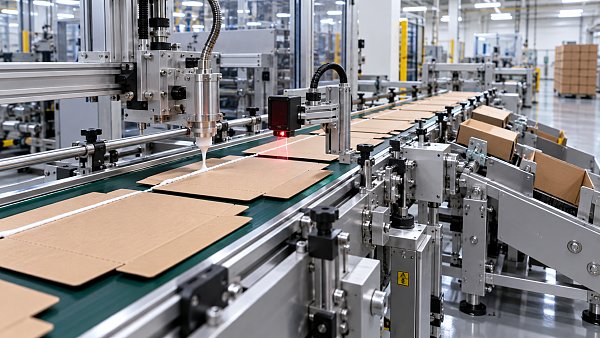
Pattern length and gun timing are especially important on intermittent-motion equipment and high-speed continuous-motion lines. The gun must start at the same product reference point each cycle and stop before the edge of the glue flap. If the pattern drifts from one blank to the next, inspect the trigger signal before assuming the adhesive is at fault. A delayed photoeye, unstable encoder input, loose mounting bracket, or changing gap between product and sensor can shift a glue line even when the gun is mechanically sound.
Where cartons are registered by lugs, belts, or side guides, confirm that the product position remains stable when machine speed changes. A well-timed gun cannot compensate for a blank that enters the application zone skewed or bouncing. Conversely, an alignment issue can be mistaken for a glue-gun problem because the bead appears off-center only on the finished carton.
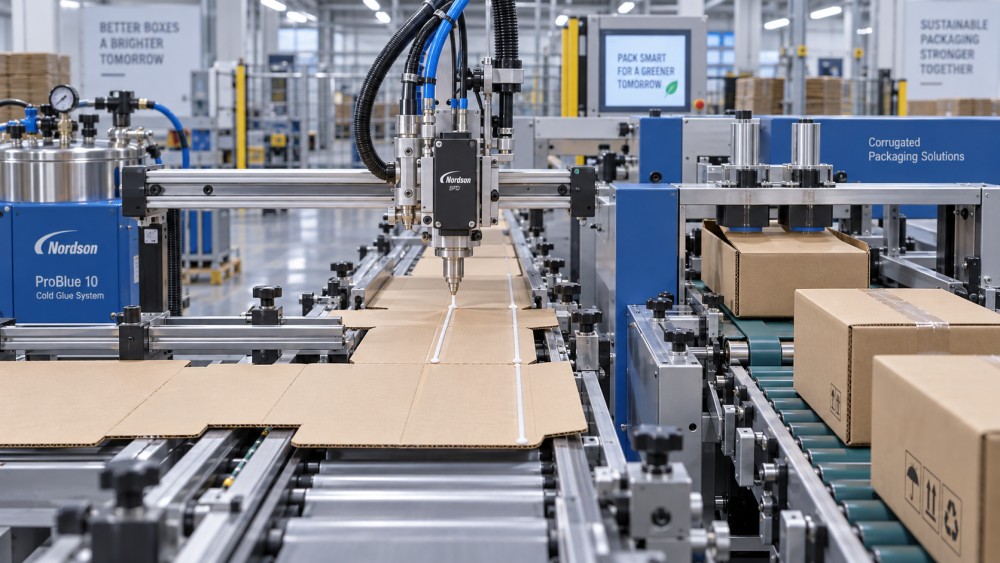
When assessing a pattern, observe it on actual production material rather than on a stationary test surface alone. A static test can show whether the gun opens and closes, but it does not reveal how acceleration, substrate movement, folding action, and compression affect the final seam. Samples should be taken without interrupting the normal product flow whenever this can be done safely.
Keep adhesive delivery stable from supply point to nozzle
Cold adhesive can change behavior when temperature, viscosity, contamination, or supply pressure varies. A gun may be correctly adjusted at the nozzle while the real cause of inconsistent output lies upstream. An adhesive that is too cold may flow poorly and produce uneven bead formation. An adhesive that has dried at the outlet, been contaminated with fibres, or contains partially cured material can restrict passages and cause sporadic skips.
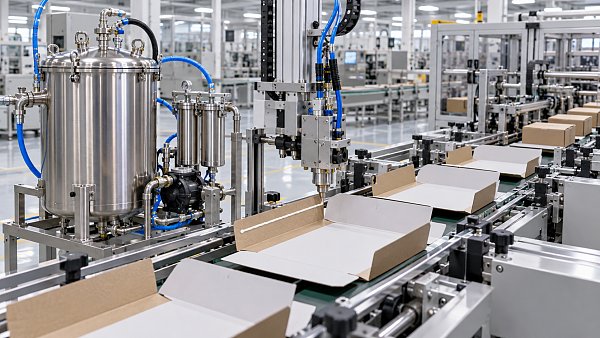
The adhesive supply path should be treated as part of the dispensing system. This includes the container or feed unit, filter, hoses, fittings, manifolds, gun inlet, and nozzle. Small restrictions can create a pattern that looks normal for several cycles and then becomes thin or incomplete. This is particularly disruptive on lines where a single missed glue application can create a finished-pack failure downstream.
Symptoms and likely areas to inspect
Pressure should be adjusted with restraint. Increasing it may raise output volume, but it may also create splashing, bead distortion, or excessive adhesive at the seam. The goal is a stable pattern that meets the bond requirement, not the highest possible flow rate. Changes should be made one variable at a time so the source of improvement or deterioration remains visible.
Gun position and nozzle condition affect more than appearance
The distance and angle between nozzle and substrate influence placement accuracy. A nozzle mounted too far from the moving blank can allow the bead to wander, stretch, or land inconsistently. A gun that is too close may be exposed to contact from warped board, dust accumulation, or interference during a product jam. The most reliable setting is usually one that maintains a repeatable gap while protecting the nozzle from normal variation in the product path.
Alignment should be checked against the actual glue flap, not only against machine frames or a previous mounting mark. After a format change, guides, folding rails, and product reference positions may shift enough to make an old gun location unsuitable. This is why a pattern can look centered during a dry run but land near the flap edge when the line is producing at speed.
Nozzles deserve routine attention because dried adhesive at the outlet changes the flow path. Operators may notice a split bead, a curved stream, buildup on the nozzle face, or a tail at the end of application. Wiping external residue may help temporarily, but persistent defects require cleaning according to the adhesive and equipment instructions. Using hard tools that damage the orifice can create a permanent pattern problem.
Bonding consistency depends on what happens after application
Cold glue application is only one stage of the bond. Once adhesive is deposited, the package must be folded accurately and held with sufficient contact pressure for the required time. A folding rail that catches the flap too late, a worn belt that slips, or a compression section that no longer closes evenly can produce weak seams even with excellent glue placement.
Watch the package through the sequence: application, flap pickup, folding, initial contact, compression, and discharge. This often reveals whether the adhesive is being asked to bridge a gap instead of bonding two surfaces in contact. Warped corrugated material can be particularly difficult because one edge may touch while another remains open. In that situation, a larger glue bead may create mess without solving the underlying mechanical contact issue.
Speed changes deserve special attention. A line can maintain good bond quality at one production rate and fail at another because the distance between gun, folding station, and compression section stays fixed while the time between those points changes. When production speed is adjusted, confirm that glue timing, adhesive pattern length, folding timing, and compression dwell still match the new operating condition.
A practical adjustment sequence during a quality issue
When seams begin to fail, avoid changing several settings at once. An orderly sequence reduces waste and makes it easier to restore a known-good condition.
- Separate placement from adhesion. First determine whether adhesive is landing in the intended location and with an unbroken pattern. If not, inspect timing, alignment, product registration, nozzle condition, and supply stability.
- Check the package path. Verify that the mating flap reaches the adhesive, folds squarely, and enters compression without springing open or being displaced by guides.
- Assess transfer. Open representative samples to see whether adhesive contacts both surfaces across the intended bond area. Poor transfer can identify open-time, substrate, or compression issues.
- Review adhesive condition. Confirm that the correct adhesive is being used for the substrate and that handling conditions have not caused thickening, contamination, or restricted flow.
- Make one controlled change. Adjust timing, pattern position, volume, or compression as indicated by the evidence, then inspect new samples before making another change.
- Record the stable setup. Note the nozzle type, gun position, pattern setting, line speed range, and material format. This makes future changeovers less dependent on memory.
This process is useful because it prevents a frequent mistake: using extra adhesive to mask a mechanical timing or compression problem. More glue can temporarily hold a marginal seam, but it may increase cleanup, material consumption, and variation later in the run.
Routine care prevents repeat faults
Consistent bonding is easier to maintain when inspection is built into normal line routines. Before startup, check for adhesive buildup around the nozzle, secure mounting, undamaged hoses, correct pattern position, and clean product guides. During production, observe a small number of samples at intervals that make sense for the job length, speed, and quality risk. Look at the glue pattern before the flap closes as well as the finished seam afterward.
After a stop, restart, material change, or extended idle period, inspect the first acceptable packages rather than assuming the prior setting remains valid. Adhesive at the nozzle can dry during a pause, and a new board batch can behave differently from the previous one. These checks take less time than tracing a seam failure after packs have moved further down the line.
Cold Glue Guns provide their best consistency when they are treated as part of a controlled bonding process. Accurate dispensing gives operators a dependable starting point; stable adhesive supply, correct package handling, and effective compression turn that pattern into a reliable finished bond.
Related News
 How to Evaluate a Cold Glue System Manufacturer for Reliable BondingChoose a cold glue system manufacturer with proven application control, uptime-focused design, seamless integration, and responsive service for reliable bonding.Spatial Folding Strategist
 How to Stop Stringing and Poor Bonds with an Industrial Hot Melt Glue GunIndustrial hot melt glue gun troubleshooting guide: reduce stringing, improve bond strength, optimize temperature, nozzle condition, timing, and carton compression.Spatial Folding Strategist
 How Non Contact Glue Detection Systems Prevent Carton FailuresNon contact glue detection systems prevent carton failures by spotting missing or misplaced adhesive early, reducing rejects, rework, and packing-line disruptions.Spatial Folding Strategist
 What Engraved Glue Rollers Cost and Which Specs Matter MostEngraved glue rollers: compare cost drivers, cell volume, coatings, tolerances, and supplier specs to improve adhesive control, reduce waste, and protect corrugator uptime.Spatial Folding Strategist
 How Hot Melt Glue Systems Improve Bond Strength and UptimeHot Melt Glue Systems improve bond strength and uptime with precise temperature control, clean flow, accurate bead placement, and reliable compression.Spatial Folding Strategist
 How to Evaluate Glue Machine Manufacturers for Long-Term Operating CostGlue machine manufacturer evaluation guide: compare lifecycle costs, adhesive control, uptime, maintenance, changeovers, and supplier support for smarter investments.Spatial Folding Strategist