How Cold Glue Adhesives Improve Bond Strength and Reduce Waste
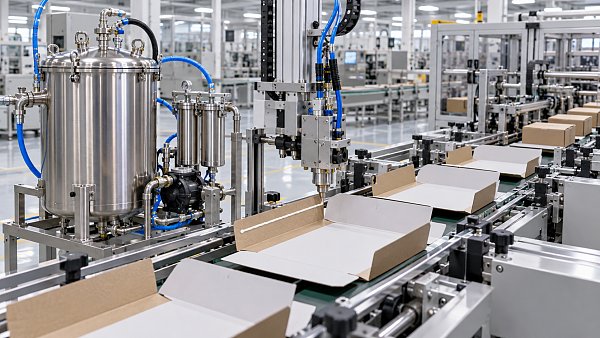
In high-speed printing and packaging lines, cold glue is rarely judged on chemistry alone. Operators care about something more immediate: whether the bond holds through folding, compression, transport, storage, and filling, and whether the line can keep running without turning adhesive into a hidden source of waste. That is why interest in cold glue adhesives has grown alongside faster folder gluers, tighter quality requirements, and rising pressure to reduce fiber loss across paper-based packaging operations.
For most plants, the real question is not whether cold glue works in principle. It is whether the adhesive system, application method, and board conditions are aligned well enough to improve bond strength without creating a second problem elsewhere on the line. In practice, good results come less from chasing a “stronger glue” claim and more from controlling the full bonding window: substrate, machine speed, glue pattern, compression time, and environmental stability.
Why cold glue matters more than it used to
Cold glue has long been a standard choice in carton converting and corrugated finishing, but its operational importance has increased for three reasons. First, packaging lines are being pushed harder. E-commerce, shorter lead times, and SKU fragmentation mean more changeovers and less tolerance for unstable settings. Second, sustainability targets have moved waste from a background cost to a board-level metric. Third, regulatory pressure around packaging design and recyclability, including the broader direction of rules such as the EU PPWR, is forcing converters and brand owners to think more carefully about total material efficiency, not only final pack appearance.
In that context, cold glue is no longer just a consumable. It affects box integrity, rejects, machine cleanliness, downtime, and the amount of paperboard lost to misapplication or weak seams. A small mismatch in adhesive behavior can ripple across OEE: missed glue lines lead to open cartons, over-application causes squeeze-out and contamination, and unstable viscosity can turn a nominally efficient run into a stop-start correction cycle.
Bond strength is not just about adhesive strength
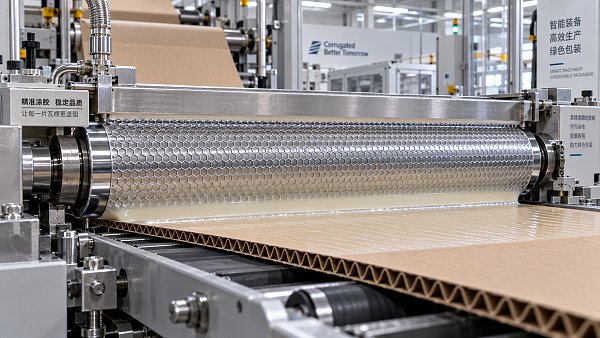
A common misunderstanding in packaging operations is that stronger bonding comes mainly from choosing a more aggressive adhesive. On a running line, bond strength is usually a system outcome. Cold glue performs best when it wets the substrate consistently, penetrates enough to anchor, and sets fast enough to match the compression and transfer sequence of the machine.
That matters especially on folder gluers and high-speed carton lines, where the adhesive has only a brief moment to form a reliable joint before the blank moves downstream. If the glue sets too slowly, the seam may look acceptable at discharge and still fail later during bundling or filling. If it sets too fast for the process window, operators may see poor wetting, inconsistent transfer, or nozzle-related issues. Neither problem is solved by simply increasing glue volume.
For operators, the better question is: what is limiting bond performance right now?
- Insufficient adhesive transfer to the flap
- Board surface variation, including coatings or dust
- Compression dwell that is too short for the selected glue
- Machine speed beyond the stable application window
- Temperature or humidity swings affecting viscosity and set behavior
- Nozzle, wheel, or hose contamination altering pattern accuracy
If those variables are not understood, plants often consume more adhesive while getting less reliable bonding.
Where waste actually comes from
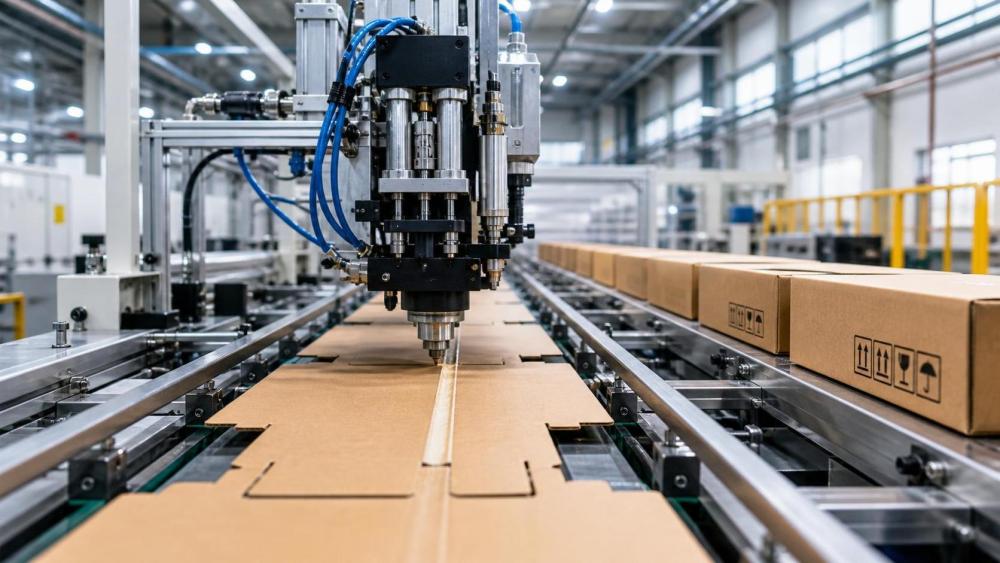
When people talk about adhesive waste, they often mean glue that was physically over-applied. That is only one part of the cost. The larger waste picture includes scrap cartons, line stoppages, cleanup time, and downstream defects that were triggered by poor adhesive control.
In corrugated and folding carton operations, waste linked to adhesive use usually appears in four forms.
1. Over-application
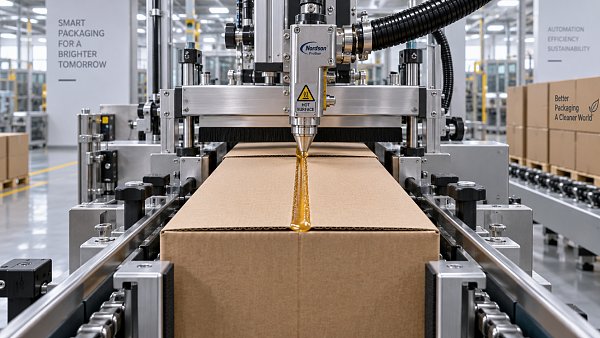
Too much glue is often used as an insurance policy. It can mask weak setup for a short time, but it raises consumption, increases squeeze-out, and may contaminate belts, compression sections, or packed product surfaces. On coated stocks, over-application can also slow setting rather than improve bonding.
2. Under-application or poor placement
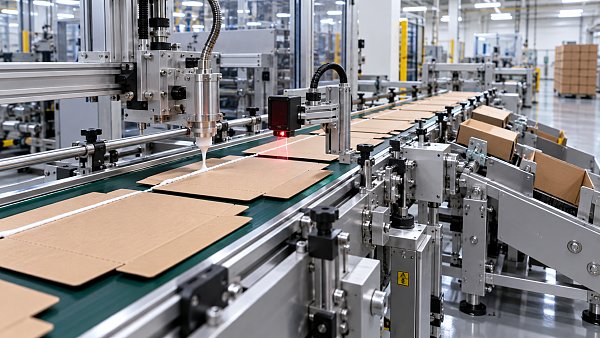
This is the more expensive failure mode because it creates open seams, pop-open cartons, and rejects that may only be discovered after packing or shipment. The material loss here is usually much greater than the cost of the adhesive itself.
3. Startup and changeover instability
Shorter runs and frequent job changes can make glue systems a recurring source of setup spoilage. Operators may spend the first portion of a run adjusting pattern width, bead position, pressure, or viscosity response. In plants running many SKUs, those startup losses can accumulate faster than teams expect.
4. Maintenance-related waste
Cold glue systems are often chosen for operational simplicity, but neglected maintenance erodes that advantage. Dried residue, inconsistent feed pressure, and worn application components can create subtle placement drift that only becomes visible after a pile of defective cartons has already been produced.
When cold glue delivers the clearest operational gains
Cold glue adhesives tend to create the most value in applications where the packaging line needs repeatable bonding at speed without excessive thermal complexity. That includes many straight-line cartons, crash-lock styles, and corrugated secondary packaging formats where rapid forming and dependable seam integrity are more important than exotic substrate compatibility.
In those settings, the gains are usually practical rather than dramatic. A well-matched cold glue setup can:
- Reduce carton rejects caused by weak side seams
- Lower adhesive consumption through tighter pattern control
- Cut cleanup and unplanned intervention on gluing sections
- Support higher line stability during long production runs
- Improve consistency across shifts, operators, and SKU changes
That said, “cold glue” should not be treated as one uniform answer. Performance varies by formulation, application equipment, substrate type, and the production objective. A glue that behaves well on uncoated folding boxboard may not perform the same way on heavily treated or recycled corrugated surfaces with variable absorbency.
Application fit matters more than broad claims
For users and operators, selection should start with the packaging task, not with generic marketing language around speed or strength. The key is to judge whether the adhesive is suitable for the actual converting environment.
Several conditions deserve close attention before standardizing on any cold glue approach:
This is where some buyers and production teams misjudge the issue. They may validate bonding on a short controlled test, then assume the result will hold under full-shift conditions. In reality, adhesive performance is often exposed by production variation: board lot changes, room climate shifts, longer runs, or higher actual machine speeds.
What operators should watch during live production
On a running line, bond quality problems rarely announce themselves as “adhesive chemistry problems.” They show up as symptoms. Operators who catch those symptoms early usually prevent more waste than teams that focus only on final inspection.
Useful warning signs include wandering glue patterns, visible squeeze-out, flap lift after compression, intermittent open seams, increased stringing, unusual nozzle fouling, or cartons that pass initial handling but fail under stacking pressure. None of these should be dismissed as cosmetic. They often indicate that the process window is narrowing.
It is also worth separating adhesive-related issues from board-related ones. Recycled-content material, while increasingly important for sustainability goals, can introduce more variation in surface quality and moisture response. That does not make it incompatible with cold glue, but it does mean settings proven on one board specification may not translate directly to another.
Reducing waste without weakening the bond
The best waste reduction programs in gluing are usually disciplined rather than complex. They aim to minimize adhesive use per pack while keeping a stable safety margin on bond integrity. That balance is achievable, but only with process control.
A few practices tend to produce reliable returns:
- Set glue volume from verified bond performance, not operator habit
- Standardize pattern position and width by carton style
- Track rejects by defect mode, especially open seam versus cosmetic glue excess
- Control board dust and housekeeping around the gluing section
- Review adhesive behavior at startup, mid-run, and end-of-shift rather than only at make-ready
- Align glue settings with seasonal temperature and humidity shifts
Plants that do this well often discover that waste reduction comes from repeatability, not from pushing adhesive usage to the lowest theoretical level. An ultra-lean glue target that causes intermittent failures is not efficient. It simply moves cost from consumables to scrap and rework.
Technology is helping, but it does not remove process discipline
There is growing interest in automated glue monitoring, vision inspection, and tighter integration between folder gluers and quality systems. In advanced packaging environments, these tools can help detect missed patterns, verify flap closure, and reduce the chance that defective cartons move downstream. For high-volume pharmaceutical, food, and e-commerce packaging, that kind of visibility is becoming more relevant.
Still, automation does not replace application discipline. A camera can flag a missing glue line; it cannot correct a poorly matched adhesive-substrate combination by itself. The strongest operations use monitoring to reinforce stable process windows, not as a substitute for them.
What to ask before changing adhesive or equipment settings
If a plant is evaluating a new cold glue adhesive or trying to solve bond and waste problems, the most useful conversations are specific. Vague targets like “better adhesion” or “less waste” tend to produce vague trials.
More productive questions are:
- Which defect is costing the most: open seams, cleanup, scrap, or downtime?
- Is the current issue constant or only visible on certain substrates, shifts, or speeds?
- What is the minimum acceptable bond under real downstream handling conditions?
- Can the current applicator place a consistent pattern at required throughput?
- How much setup spoilage is generated during each job change?
- Are quality failures being measured at the point of gluing or only after packing?
Those questions usually reveal whether the real need is a new adhesive, a different application pattern, better maintenance, tighter substrate control, or inspection support.
The next shift in decision-making
Cold glue adhesives are likely to remain central in paper-based packaging lines because they sit at the intersection of performance, waste control, and practical manufacturability. What is changing is the standard by which they are judged. It is no longer enough for the bond to “usually hold.” Converters are being pushed toward more measurable outcomes: lower setup spoilage, more stable OEE, cleaner operation, and fewer hidden quality escapes.
For operators and production teams, that means adhesive decisions should be treated as line-performance decisions. The plants that get the best results are usually not the ones chasing the broadest claim about bond strength. They are the ones that understand how cold glue behaves in their exact machine, board, speed, and quality environment, then manage it like a process variable that deserves the same attention as print register, die-cut accuracy, or compression settings.
That is where bond strength improves and waste actually starts to fall.
Related News
 How to Evaluate a Cold Glue System Manufacturer for Reliable BondingChoose a cold glue system manufacturer with proven application control, uptime-focused design, seamless integration, and responsive service for reliable bonding.Spatial Folding Strategist
 How to Stop Stringing and Poor Bonds with an Industrial Hot Melt Glue GunIndustrial hot melt glue gun troubleshooting guide: reduce stringing, improve bond strength, optimize temperature, nozzle condition, timing, and carton compression.Spatial Folding Strategist
 How Non Contact Glue Detection Systems Prevent Carton FailuresNon contact glue detection systems prevent carton failures by spotting missing or misplaced adhesive early, reducing rejects, rework, and packing-line disruptions.Spatial Folding Strategist
 What Engraved Glue Rollers Cost and Which Specs Matter MostEngraved glue rollers: compare cost drivers, cell volume, coatings, tolerances, and supplier specs to improve adhesive control, reduce waste, and protect corrugator uptime.Spatial Folding Strategist
 How Hot Melt Glue Systems Improve Bond Strength and UptimeHot Melt Glue Systems improve bond strength and uptime with precise temperature control, clean flow, accurate bead placement, and reliable compression.Spatial Folding Strategist
 How to Evaluate Glue Machine Manufacturers for Long-Term Operating CostGlue machine manufacturer evaluation guide: compare lifecycle costs, adhesive control, uptime, maintenance, changeovers, and supplier support for smarter investments.Spatial Folding Strategist