Why Automatic Shrink Wrapping Machines Reduce Packaging Damage
Project managers searching this topic are usually not asking whether shrink film exists or how it works in principle. They are trying to decide whether an automatic shrink wrapping machine will actually reduce damage in their own operation, or simply shift cost from claims into film, energy, and line complexity. That is the right question. Packaging damage rarely comes from one dramatic failure; it more often comes from small, repeated instability across conveying, stacking, warehousing, and transport. When a load or product unit keeps moving, rubbing, tilting, or opening under routine handling, damage accumulates quietly until it shows up as rejects, customer complaints, or freight deductions.
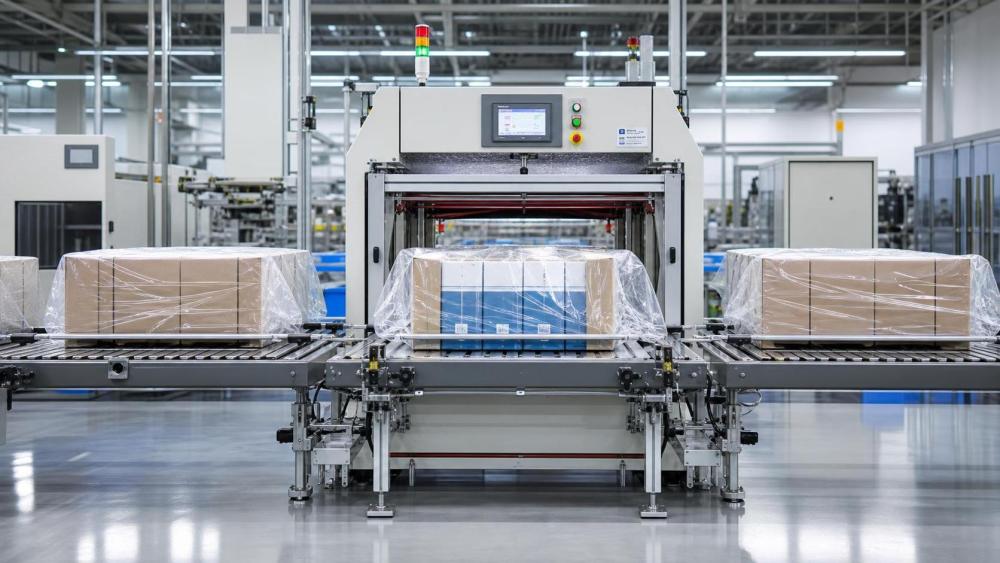
In that context, automatic shrink wrapping machines matter because they are not just “wrapping equipment.” They are load-stabilization and surface-protection systems at the end of the packaging chain. If specified well, they create a consistent, controlled film tension around the product or bundle, helping reduce scuffing, contamination, carton opening, moisture exposure, and movement in transit. For high-throughput operations, that consistency is often more important than the film itself. Manual or semi-automatic wrapping can look acceptable on the line and still fail under real logistics conditions because film placement, overlap, and shrink quality vary too much from shift to shift.
Why damage drops when wrapping becomes consistent
The simplest reason is mechanical stability. Products that travel through warehouses, parcel hubs, and export channels are exposed to vibration, compression, impact, and repeated touchpoints. A properly shrunk film layer holds items closer to their intended geometry. Multipacks stay aligned, carton flaps are less likely to lift, labels are better protected, and edges are less exposed to abrasion. That is especially relevant where products are handled at speed, palletized automatically, or moved through mixed distribution networks rather than direct, controlled delivery.
For project leaders, the practical point is that shrink wrapping reduces damage by controlling variation. In most plants, the hidden enemy is not average packaging performance but performance drift. Film may be too loose on one SKU, too aggressive on another, or poorly centered after a changeover. Automatic systems reduce these inconsistencies through repeatable sealing, controlled tunnel conditions, and synchronized product infeed. When damage events are intermittent and hard to trace, this repeatability often becomes the difference between a manageable quality issue and a chronic one.
That is also why automatic equipment tends to support broader OEE goals. If unstable packaging causes jams downstream, leaning stacks on pallets, or increased rework before shipping, the cost is not limited to damaged goods. It appears as micro-stoppages, labor intervention, inspection time, and material loss. In packaging-heavy sectors, those losses can outweigh the obvious freight claim cost.
Where the business case is strongest
Not every operation gains equally. The strongest fit is usually found where product units are moving fast enough, often enough, and far enough that packaging variation has become a measurable business problem.
- High-volume consumer goods with repetitive bundle formats and frequent case handling
- Corrugated-packed products exposed to humidity, rubbing, or edge crush during internal transport
- E-commerce and omnichannel fulfillment environments where parcels face more touchpoints and route uncertainty
- Export operations where longer transit times and repalletization increase the chance of package disturbance
- Plants trying to reduce manual end-of-line labor without accepting weaker load containment
In these scenarios, an automatic shrink wrapping machine can act as a buffer between a precise production line and an imprecise logistics world. That matters more today than it did a few years ago. Distribution networks have become faster, more fragmented, and less forgiving. At the same time, retailers and major buyers are tougher on packaging damage, presentation inconsistency, and waste. Even when the product itself survives, visibly compromised outer packaging can still trigger rejection or markdown.
Where expectations often become unrealistic
One of the most common misunderstandings is the belief that tighter wrap always means better protection. It does not. Excessive shrink force can deform lightweight cartons, distort labels, bow trays, or stress fragile product assemblies. This is particularly relevant in paper-based packaging formats that are being adopted under plastic-reduction pressure. As companies redesign packs to use less material or shift toward fiber-based structures, packaging may become more sensitive to heat and tension, not less.
Another overstatement is that automation alone solves damage. In reality, shrink quality is only one part of the chain. If the primary carton is poorly designed, the corrugated case lacks stacking strength, or pallet patterns are unstable, wrapping can only compensate so far. Project managers should resist buying end-of-line equipment to solve upstream packaging design failures. The better approach is to evaluate the full system: pack geometry, board grade, sealing integrity, conveyor transitions, stacking logic, and transport conditions.
There is also a sustainability misconception worth addressing. Shrink film can reduce damage and therefore reduce waste, but that does not automatically make every application environmentally better. Under tightening packaging rules and retailer pressure, the decision must consider film gauge, recyclability pathways, pack design optimization, and whether the wrap replaces heavier or more wasteful secondary protection. In Europe, packaging decisions are increasingly shaped by PPWR-related direction, though specific obligations by product category and market should be treated carefully and checked case by case【待核实】.
What project managers should evaluate before specifying a machine
The right question is not “Which machine is best?” but “What damage mode are we trying to prevent, under what operating constraints?” That framing changes the procurement discussion immediately.
Start with the damage pattern. Are you seeing scuffed printed surfaces, burst bundles, opened carton flaps, crushed corners, moisture exposure, or unstable pallet layers? Each points to a different combination of film type, shrink force, sealing method, and machine configuration. A machine selected only on speed may hit throughput targets while missing the actual protection requirement.
Then look at product and pack behavior under heat. Some products tolerate a broad process window. Others do not. Lightweight corrugated, printed retail packs, and packs with glue-sensitive labels may respond differently across tunnel temperature ranges and line speeds. If your operation handles multiple SKUs, format variation matters as much as nominal machine capacity. The machine must sustain acceptable wrap quality across changeovers, not only on the easiest format during a supplier demo.
Integration is another decisive factor. Automatic shrink wrapping machines sit at a point where any mismatch in upstream spacing or downstream accumulation quickly turns into stoppages. For project teams, line synchronization, buffer design, and controls integration deserve as much attention as the wrapping head or shrink tunnel. A machine that performs well standalone can underperform once connected to case packers, conveyors, robotic palletizers, or inspection systems.
Key evaluation conditions
- SKU range: product dimensions, weight variation, and bundle geometry
- Material sensitivity: heat response of carton, film, label, adhesive, and product surface
- Target throughput: actual sustained line speed, not just nameplate speed
- Damage profile: internal handling damage versus transport damage versus shelf-presentation damage
- Labor model: manual intervention points, changeover time, and operator skill dependency
- Utilities and footprint: power, ventilation, tunnel heat load, and layout constraints
- Inspection capability: ability to detect bad seals, film breaks, or misfeeds before shipping
Selection should focus on process window, not brochure claims
From a project standpoint, the most valuable machine is usually the one with the widest stable operating window. In other words, it continues to wrap acceptably when real plant conditions are less than perfect: film lot variation, minor spacing inconsistency, ambient changes, mixed operators, and rushed changeovers. This is where mature controls, robust sealing systems, and practical access for maintenance matter more than abstract feature lists.
A useful supplier conversation should include evidence on repeatability, scrap behavior during start-up, and recovery after interruptions. Ask what happens after a brief jam, film splice, or product gap. Ask how much off-spec material is produced during restart. Ask what operators actually need to adjust per SKU. These are not minor details. In many plants, start-up waste and instability during changeovers create more cumulative loss than steady-state performance problems.
For lines connected to printed cartons or corrugated secondary packaging, this issue becomes sharper. Once upstream converting assets are optimized for higher OEE and lower paper waste, end-of-line inconsistency stands out financially. A project manager who has already invested in better print, die-cut, folding, or inspection performance should expect the same discipline at wrapping. Otherwise, the line simply moves damage from production to dispatch.
Automatic wrapping is increasingly tied to compliance and retailer expectations
Damage reduction used to be discussed mainly as a cost issue. It is now also tied to compliance, sustainability, and customer acceptance. Retailers and brand owners are more sensitive to over-packaging, but they are equally intolerant of damaged deliveries, packaging debris, and inconsistent presentation. That creates a narrow operating lane: enough protection to survive distribution, with no unnecessary material.
This is one reason project teams should avoid evaluating film consumption in isolation. Lower film usage looks attractive until damage rates rise, unit loads destabilize, or warehouse handling requires more manual correction. The better metric is total delivered-pack performance: film cost, energy use, labor touchpoints, rejects, transport claims, and customer-facing packaging quality. Depending on the application, a slightly higher wrapping cost may still be the lower total system cost.
Where regulated products are involved, packaging integrity can also affect traceability and readability. In sectors using serialized labels, barcodes, or printed compliance marks, wrap quality should preserve scan performance rather than distort or obscure it. If packaging lines already use coding and vision systems, the wrapping stage should be considered part of that control chain rather than a separate finishing step.
A practical way to judge ROI
Many capital requests fail because the ROI case is framed too narrowly. A realistic model should include both direct and indirect effects. Direct effects include lower product damage, fewer returns, reduced rework, and lower labor dependence. Indirect effects include better pallet stability, fewer line stoppages, improved outbound consistency, and reduced quality disputes with logistics partners or customers.
If this analysis shows that damage is concentrated in only a few SKUs or routes, a full automatic solution may still be right, but only if the line architecture supports it. In some operations, a selective deployment on the most failure-prone products will outperform a site-wide rollout driven by general assumptions.
The next few years will make specification discipline more important
The market environment is moving in a direction that favors better end-of-line control. E-commerce handling intensity remains high. Paper-based packaging continues to expand under sustainability pressure. Regulatory scrutiny around packaging materials is rising, even where exact implementation timelines vary【待核实】. All of that means more operations will be asked to use less material while delivering equal or better protection.
That is precisely the environment where automatic shrink wrapping machines can create value, but only when treated as part of a packaging system rather than a standalone purchase. The companies that benefit most will be the ones that define the real failure mode, test across actual SKU variation, and judge performance by delivered condition instead of demo-line appearance. For project managers, that is the difference between buying a machine and solving a damage problem.
Related News
 What to Check Before Ordering Pallet Wrappers Direct From a FactoryBuying from a pallet wrappers factory? Check load compatibility, output, film costs, safety, and support before ordering. Use this checklist to avoid costly mistakes and buy with confidence.Spatial Folding Strategist
 How an Automatic Folder Gluer System Reduces Carton Setup ErrorsAutomatic folder gluer system solutions reduce carton setup errors with precise feeding, folding, glue control, and compression. Discover how to improve quality and changeovers.Spatial Folding Strategist
 How to Choose a Folder Gluer Machine for Folding CartonsChoose the right folder gluer machine for folding cartons with proven guidance on speed, carton styles, glue quality, automation, testing, and lifecycle costs.Spatial Folding Strategist
 When Chain Pallet Conveyors Improve Warehouse Flow and ThroughputChain pallet conveyors improve warehouse flow by reducing forklift delays, adding controlled accumulation, and protecting packaging throughput. Discover when they deliver the strongest ROI.Spatial Folding Strategist
 How to Compare Automatic Strapping Machine Price and Total CostAutomatic strapping machine price comparison made simple: evaluate installation, throughput, consumables, labor, downtime, and total cost for a smarter investment.Spatial Folding Strategist
 What to Compare When Choosing a Pallet Wrappers SupplierCompare a pallet wrappers supplier by load stability, film efficiency, automation integration, service support, and total cost to choose the right solution.Spatial Folding Strategist