When Does an Automatic Bundle Handling System Deliver ROI
When Does an Automatic Bundle Handling System Deliver ROI
An automatic bundle handling system can improve throughput, reduce labor dependency, and protect product quality across corrugated and commercial printing operations—but only when operating conditions justify the investment.
For business decision-makers, the central question is not whether automation can replace manual handling. It is whether the system removes measurable production constraints and creates durable financial value.
In most packaging plants, ROI comes from a combination of labor reduction, lower product damage, better line balance, fewer safety incidents, and more reliable end-of-line output.
The strongest investment cases occur where bundle movement has become a production bottleneck rather than a minor manual activity performed between otherwise stable processes.
Start With the Business Case, Not the Equipment Specification
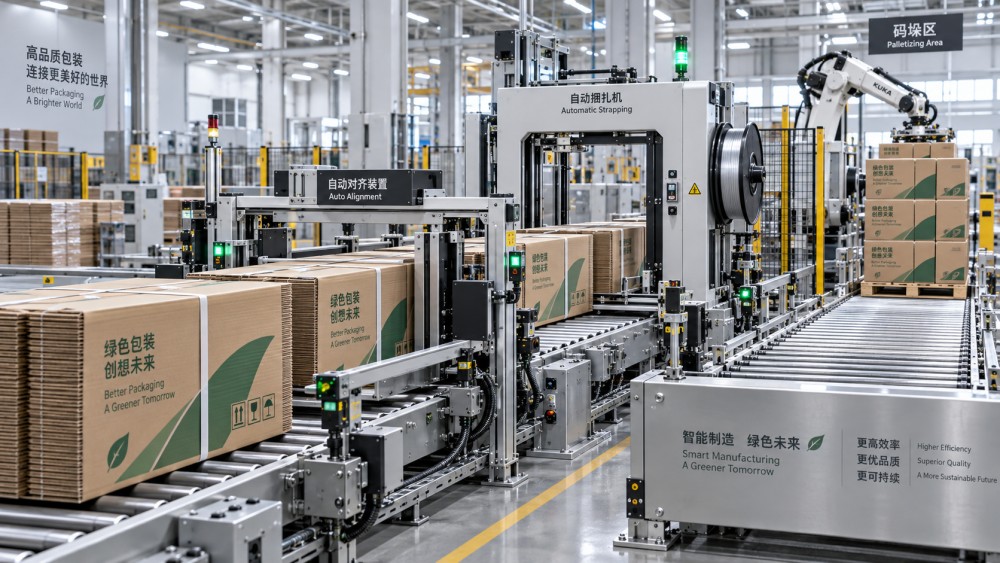
An automatic bundle handling system delivers ROI when it solves a clearly defined operational problem that already has a measurable cost in labor, capacity, quality, or delivery performance.
Many factories begin with technical discussions about conveyors, stackers, transfer units, robots, and controls. Decision-makers should begin by identifying where value is currently being lost.
Typical losses include operators waiting for bundles, unstable feeding into downstream equipment, damaged edges, misplaced stacks, inconsistent pallet loads, and frequent manual intervention during busy shifts.
These losses are often dispersed across departments, making them easy to underestimate. A line may appear productive while hidden handling delays reduce usable output and increase total conversion cost.
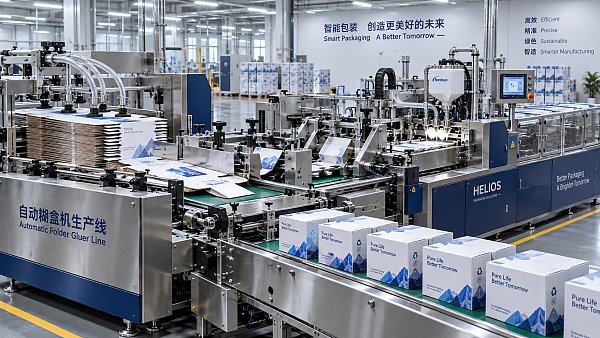
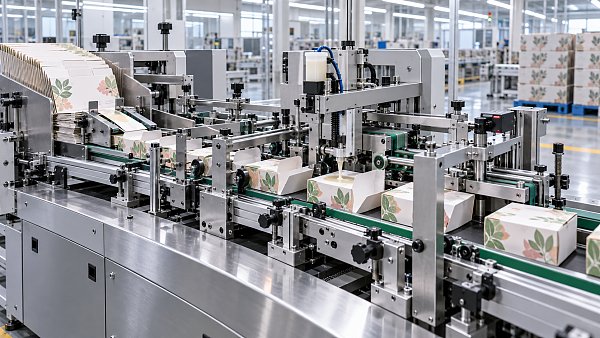
The investment case becomes stronger when manual bundle movement limits the speed of a folder gluer, die-cutter, printing press, strapping station, palletizer, or warehouse transfer process.
It also becomes stronger when operators must repeatedly lift, turn, align, inspect, or transfer heavy bundles under time pressure, especially across multiple shifts or peak production periods.
A practical assessment should establish the current baseline: bundles per hour, labor hours per shift, damage rate, stoppage duration, rework volume, safety events, and downstream waiting time.
Without this baseline, suppliers may present impressive performance figures, but management will struggle to determine whether the proposed system improves the factory’s actual financial position.
The goal is not to automate every movement. The goal is to automate the movements that constrain profitable production, create avoidable risk, or prevent the factory from scaling efficiently.
When Labor Savings Become a Credible ROI Driver
Labor savings are usually the first benefit considered, but they should be calculated carefully. Reducing headcount is not the only way an automatic bundle handling system creates value.
In many plants, workers are reassigned from repetitive material movement to quality checks, machine support, order preparation, maintenance assistance, and tasks that require more judgment.
This matters in regions where recruiting and retaining physically demanding production roles has become difficult. Labor availability can be a more urgent issue than labor wage rates.
Automation is especially valuable when bundle handling requires several operators at different points along the same line, creating handoffs that increase delay and responsibility gaps.
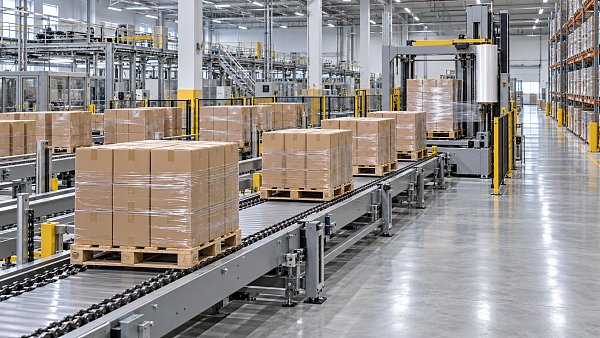
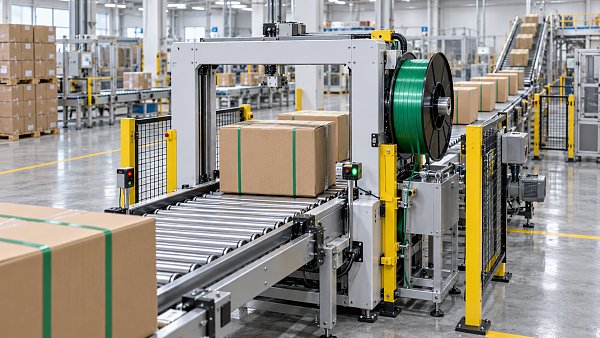
For example, a corrugated converting line may need operators to receive bundles, square stacks, transport loads, feed strapping equipment, and position finished units for palletizing.
If each step requires manual attention, the total labor requirement may be significant even when no individual task appears complicated or time-consuming in isolation.
Decision-makers should calculate fully loaded labor cost, including wages, overtime, training, absenteeism coverage, turnover, safety administration, and the productivity impact of vacant positions.
A system that removes two operators from each shift can have substantially different value in a single-shift operation than in a plant running continuously across three shifts.
However, labor savings alone may not justify automation in lower-volume facilities. The more convincing case usually combines workforce benefits with throughput, quality, and delivery improvements.
Throughput Gains Matter More Than Nameplate Speed
Higher throughput is often the largest source of return, particularly when upstream equipment has unused capacity but downstream bundle handling prevents production from running at sustainable speed.
A high-speed flexographic press or flatbed die-cutter cannot generate value from its nominal speed if operators regularly stop the machine to clear, align, or transfer bundles.
Automatic handling systems can create smoother flow between production stages by receiving, accumulating, orienting, conveying, turning, counting, strapping, and delivering bundles at controlled intervals.
The result is not always a dramatic increase in maximum machine speed. More often, it is a reduction in small stops, waiting periods, and unstable handoffs.
These small interruptions can have a major cumulative effect. A few minutes lost during every order, shift, or pallet change may remove substantial annual production capacity.
Management should evaluate throughput using good production time, not theoretical equipment speed. The relevant question is how many saleable bundles leave the line each operating hour.
Where order volumes are high and delivery schedules are tight, recovered capacity may avoid the need for overtime, subcontracting, extra shifts, or earlier investment in another converting line.
In that situation, an automatic bundle handling system becomes a capacity-enabling asset rather than simply a labor-saving accessory at the end of production.
The best projects identify a measurable constraint and model how its removal affects the entire process, from printed sheet or corrugated blank through finished pallet and dispatch.
Product Protection and Quality Can Change the Financial Equation
Bundle handling affects quality more directly than many investment teams expect. Manual transfers can cause crushed edges, scuffing, skewed stacks, damaged print surfaces, and inconsistent bundle presentation.
These defects may not always result in immediate rejection. They can still reduce customer confidence, complicate downstream converting, create packing issues, and increase internal sorting work.
For branded cartons, retail-ready displays, pharmaceutical packaging, or high-quality commercial print, surface damage can be commercially serious even when structural integrity remains acceptable.
Automatic systems improve consistency by controlling acceleration, deceleration, transfer height, stack orientation, pressure, gap spacing, and alignment during movement between process stations.
The quality benefit is especially relevant for short runs and frequent changeovers. Operators under pressure may handle unusual formats or delicate substrates less consistently than a programmed system.
Corrugated plants should assess whether manual handling contributes to edge crush, board deformation, bundle collapse, strap-related damage, or poor stack geometry before palletizing.
Commercial printers should consider scuffing, offsetting, registration-sensitive stacks, coated-sheet marking, and bundle condition at delivery equipment, especially for premium printed products.
Quality-related ROI should include direct scrap cost, rework labor, customer claims, expedited replacement shipments, and the lost production time needed to remake damaged orders.
When a system reduces recurring quality losses, its value may be more durable than a narrow labor calculation because it protects both margin and customer relationships.
Line Stability Is Often the Most Underestimated Benefit
Production lines are connected systems. A disruption in bundle handling can quickly affect printing, converting, inspection, coding, strapping, palletizing, and warehouse transfer activities.
Manual processes are vulnerable to variation in operator pace, fatigue, experience, shift staffing, and communication. This variation often produces inconsistent flow rather than visible breakdowns.
An automatic bundle handling system can provide controlled buffering between machines with different speeds, helping the line absorb minor interruptions without forcing unnecessary upstream stops.
Buffering is valuable when a downstream operation occasionally pauses for strap changes, pallet exchange, quality checks, label printing, or short maintenance interventions.
Without adequate accumulation and transfer control, a small downstream pause can force a high-value printing or converting machine to stop before the issue is resolved.
For capital-intensive equipment, protecting uptime can be more valuable than reducing labor. The hourly cost of lost production may exceed the direct cost of several handling operators.
Decision-makers should review stoppage data by cause. If bundle congestion, manual transfer delays, or end-of-line blockage repeatedly appear, automation deserves detailed evaluation.
The system should be designed around realistic operating variation, not ideal conditions. It must handle peak rates, product changes, imperfect stacks, and planned operational interruptions.
Reliable automation improves predictability as well as speed. Better predictability supports scheduling, maintenance planning, labor allocation, and more accurate customer delivery commitments.
Which Operating Conditions Support Faster Payback?
Payback is generally faster in plants with high bundle volumes, multiple shifts, frequent overtime, labor shortages, recurring end-of-line bottlenecks, or expensive damage and rework issues.
Facilities producing stable, repeatable formats often achieve value sooner because the handling system can run with fewer adjustments and a simpler control strategy.
High-volume corrugated shipping cases, standardized folding cartons, repetitive commercial print bundles, and established pallet patterns are usually strong candidates for automation.
However, product variety does not automatically eliminate the opportunity. Modern systems can manage different bundle sizes, orientations, stack heights, and routing requirements when properly specified.
The key issue is whether format variability is understood and controllable. A plant with frequent changes needs flexible mechanics, recipe management, and practical changeover procedures.
Payback can also be attractive in factories expanding capacity. Installing automation during a new line project may cost less than retrofitting equipment after manual processes become established.
Retrofit projects still make sense when existing machinery is technically sound but end-of-line labor, congestion, or safety risk prevents the plant from reaching desired output.
Seasonal operations require a different model. Decision-makers should test whether peak-season benefits, temporary labor avoidance, and service-level protection justify year-round capital cost.
Low-volume, highly irregular operations may need a phased approach, beginning with conveyors, accumulation, and ergonomic transfer points before adding more complex robotic automation.
Calculate ROI Using Total Operating Impact
A disciplined ROI model should combine several benefit categories rather than relying on a single labor-reduction estimate. This gives management a more realistic basis for approval.
Start with annual labor impact, including reduced handling hours, overtime avoidance, redeployment opportunities, lower recruitment pressure, and fewer production disruptions caused by staffing gaps.
Then quantify recovered capacity. Use expected additional saleable output, contribution margin, avoided subcontracting cost, or reduced overtime rather than simply assigning value to faster machinery.
Add quality savings from reduced scrap, fewer damaged bundles, less rework, lower customer claim exposure, and improved consistency at packing, palletizing, and dispatch.
Include safety-related savings where relevant. Repetitive lifting, turning, stacking, and transporting bundles can cause injuries that create direct costs and operational disruption.
Costs should include equipment purchase, controls integration, guarding, floor preparation, utilities, installation, commissioning, training, maintenance, spare parts, and software support.
Do not ignore downtime during installation. A retrofit project should include a realistic implementation plan that protects customer commitments and defines responsibilities between suppliers and plant teams.
Management should also test conservative assumptions. A project remains credible when the ROI still works under lower volume, slower ramp-up, or less aggressive labor redeployment assumptions.
A useful decision model presents base, conservative, and upside cases. This makes uncertainty visible and prevents the approval process from depending on one optimistic forecast.
Questions to Ask Before Selecting a System
Before comparing suppliers, define the operational requirements in measurable terms. The system must fit actual product flow, not an idealized drawing of the production line.
Ask what bundle dimensions, weights, substrates, stack heights, and production rates must be handled. Include current products, expected growth, and difficult formats that create manual problems.
Clarify where the system begins and ends. A handling project may cover discharge, accumulation, turning, inspection interface, strapping, labeling, palletizing, warehouse transfer, or several connected stages.
Review how the system integrates with existing presses, die-cutters, folder gluers, quality inspection equipment, production management software, and safety control architecture.
Integration quality is critical. A fast conveyor system has limited value if it cannot exchange status signals reliably with the machines that feed and receive bundles.
Ask suppliers for performance assumptions, guaranteed rates, changeover times, uptime expectations, maintenance requirements, spare-parts availability, and operator intervention scenarios.
Site acceptance testing should include representative materials and production conditions. Demonstrations using only ideal samples may not reveal problems with warped, mixed, or sensitive bundles.
Service capability matters after commissioning. Buyers should understand local technical support, remote diagnostics, response times, training depth, and ownership of control-system documentation.
The strongest supplier evaluation balances mechanical capability with application knowledge. Packaging lines need systems designed for real factory conditions, not generic automation adapted without process understanding.
Conclusion: ROI Arrives When Automation Removes a Constraint
An automatic bundle handling system delivers ROI when it removes a costly and persistent constraint in labor, capacity, quality, safety, or end-of-line stability.
The most successful projects do not begin with a desire to automate. They begin with evidence that manual bundle movement is limiting profitable, reliable production.
For corrugated packaging and commercial printing businesses, the investment should be judged by total operating impact: better flow, protected uptime, consistent bundle quality, lower risk, and scalable output.
Decision-makers should measure current losses, model realistic benefits, test conservative assumptions, and select a system that fits actual product variation and production requirements.
When those conditions are present, bundle automation becomes more than an equipment purchase. It becomes a practical tool for improving plant competitiveness and long-term operating resilience.
Related News
 How an Automatic Folder Gluer System Reduces Carton Setup ErrorsAutomatic folder gluer system solutions reduce carton setup errors with precise feeding, folding, glue control, and compression. Discover how to improve quality and changeovers.Spatial Folding Strategist
 How to Choose a Folder Gluer Machine for Folding CartonsChoose the right folder gluer machine for folding cartons with proven guidance on speed, carton styles, glue quality, automation, testing, and lifecycle costs.Spatial Folding Strategist
 When Chain Pallet Conveyors Improve Warehouse Flow and ThroughputChain pallet conveyors improve warehouse flow by reducing forklift delays, adding controlled accumulation, and protecting packaging throughput. Discover when they deliver the strongest ROI.Spatial Folding Strategist
 How to Compare Automatic Strapping Machine Price and Total CostAutomatic strapping machine price comparison made simple: evaluate installation, throughput, consumables, labor, downtime, and total cost for a smarter investment.Spatial Folding Strategist
 What to Compare When Choosing a Pallet Wrappers SupplierCompare a pallet wrappers supplier by load stability, film efficiency, automation integration, service support, and total cost to choose the right solution.Spatial Folding Strategist
 How an Automatic Case Erecting Machine Reduces Packing DelaysAutomatic case erecting machine solutions reduce packing delays by delivering consistent, sealed cases, improving line flow, uptime, and end-of-line efficiency.Spatial Folding Strategist