When Chain Pallet Conveyors Improve Warehouse Flow and Throughput
For project managers planning packaging plant upgrades, chain pallet conveyors can improve flow when pallet movement has become a constraint between production, storage, and dispatch.
The strongest business case appears where loads are heavy, accumulation is necessary, forklift activity disrupts operations, and output timing must remain predictable across connected processes.
When a Chain Pallet Conveyor Is the Right Operational Choice
Chain pallet conveyors are not universal replacements for forklifts, roller conveyors, or automated guided vehicles. Their value depends on the pallet type, load condition, route, and required control.
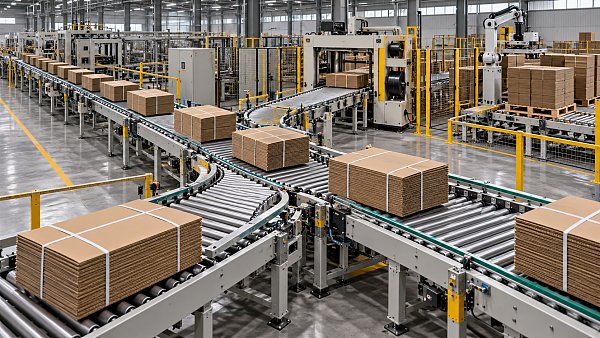
They are particularly effective in corrugated packaging and printing plants where palletized bundles, finished cartons, paper materials, or unit loads move repeatedly along fixed routes.
In these environments, material handling delays often occur after finishing equipment rather than at the machine itself. Palletizing may be automated, but downstream transfer remains inconsistent.
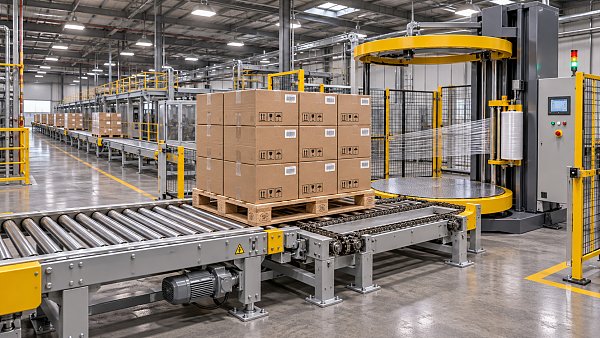
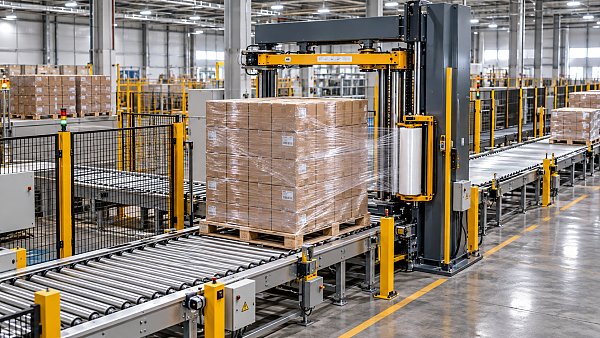
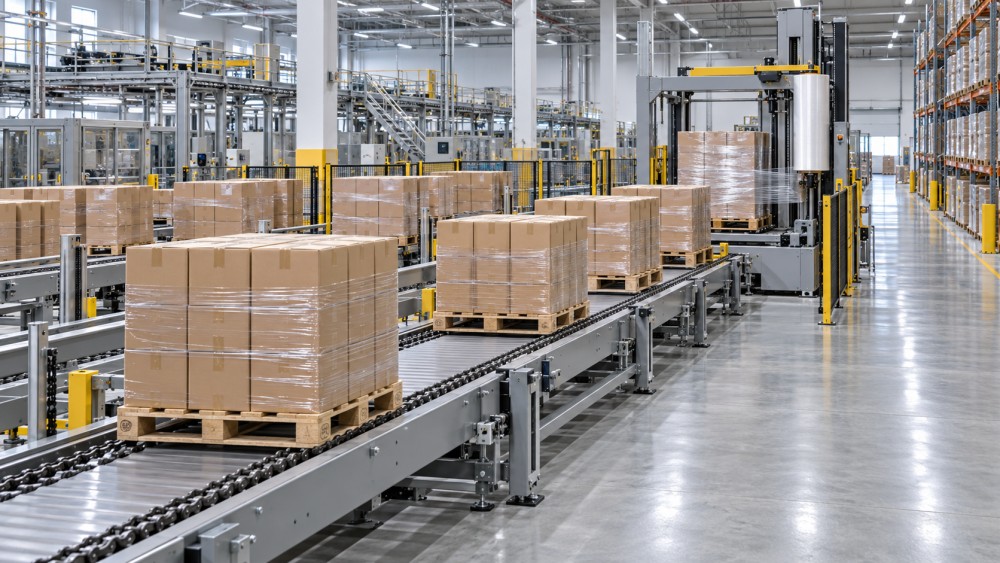
A chain conveyor creates a defined route from palletizer to buffer area, stretch wrapper, warehouse lane, shipping zone, or another automated handling stage.
The system is most suitable when pallets have stable bottom surfaces and can bridge the chain strands safely. Standard wooden pallets, plastic pallets, and heavy-duty skids require separate evaluation.
Unlike powered roller conveyors, chain systems generally provide stronger support for heavy loads and better traction for pallets with uneven, damaged, or noncontinuous bottom boards.
They can also handle loads that must remain stationary while adjacent pallets accumulate. This is important when downstream equipment has variable cycle times or shipping lanes become temporarily blocked.
For project leaders, the question is not whether a conveyor looks automated. The question is whether it removes a repeated material-flow constraint without creating new operational dependencies.
Identify the Flow Problems Before Selecting Equipment
A chain pallet conveyor should be considered after the project team maps actual pallet movement, not only the planned production route shown on a layout drawing.
Start by measuring where completed loads wait, where forklift drivers queue, and where operators intervene because pallets cannot move at the required time.
Many plants find that a high-speed folder gluer, die-cutter, corrugator, or palletizer produces faster than the warehouse interface can absorb finished pallets.
This imbalance creates short stops upstream. Even brief interruptions can reduce effective equipment utilization, increase operator workload, and disturb production schedules across multiple orders.
Forklift traffic is a common hidden source of lost throughput. Drivers may be occupied with loading trucks, handling paper rolls, replenishing materials, or moving waste bales.
When a palletizer depends on a forklift pickup, its output becomes linked to vehicle availability rather than the actual capacity of the packaging line.
Manual pallet movement can also increase product risk. Corrugated cases may shift, printed cartons can be damaged, and stacks may lose alignment before wrapping or storage.
Project teams should distinguish between isolated congestion and systematic congestion. A conveyor investment is easier to justify when delays occur every shift or affect several connected production assets.
Useful baseline measures include pallets per hour, average waiting time, forklift travel distance, blocked-machine minutes, rejected loads, labor hours, and loading-area safety incidents.
These figures allow engineering and finance teams to assess whether the proposed system addresses a real bottleneck or merely automates an already acceptable activity.
Use Accumulation to Protect Production Rhythm
One of the main advantages of chain pallet conveyors is controlled accumulation. Pallets can queue in sequence while the line continues producing finished goods.
This buffer function matters in packaging factories where production output is relatively continuous but warehouse, wrapping, labeling, or shipping activities operate in batches.
For example, a palletizer may complete a load every several minutes, while a stretch wrapper requires a longer cycle or occasionally pauses for film replacement.
Without accumulation capacity, the palletizer must stop whenever the wrapper is unavailable. With properly designed buffering, the production line can continue temporarily.
The required buffer length should be calculated from realistic interruptions, not ideal equipment cycles. Consider changeovers, consumable replacement, quality holds, and delayed collection by warehouse staff.
Accumulation also supports order segregation. Packaging plants frequently run short orders, mixed customer requirements, and frequent job changes that require pallets to remain identifiable and separate.
Zone-controlled conveyors can release pallets one by one, maintain spacing, and prevent contact between loads. This improves reliability at wrappers, labelers, transfer cars, and shipping interfaces.
However, accumulation is not automatically beneficial. Excessive buffering can conceal downstream capacity shortages, increase work in progress, and consume valuable floor space near production equipment.
The design objective is enough buffer to absorb normal variation, while keeping material visible, traceable, and moving toward the next controlled process.
Match Conveyor Design to Pallets, Loads, and Plant Layout
Engineering selection begins with the load profile. Project teams need verified information on pallet dimensions, maximum weight, center of gravity, load height, and bottom-deck configuration.
Load data should include future product formats rather than only current production. Packaging plants often add larger display units, heavier board grades, or new pallet standards.
Chain spacing is a fundamental design variable. The chains must support the pallet adequately without damaging deck boards, creating instability, or allowing narrow pallets to tilt.
Conveyor width should accommodate normal pallet variation and provide safe clearance. Tight clearances may save floor area but can increase jams and alignment problems.
Layout decisions should account for turns, merges, transfers, elevation changes, inspection stations, wrapping equipment, and warehouse lanes. Each transition adds mechanical and control complexity.
Long straight routes are generally simpler to maintain than layouts with numerous transfers. Where direction changes are unavoidable, transfer design must suit the pallet and load stability.
Project managers should review whether pallets enter the conveyor consistently. Misaligned loads from manual staging or palletizing systems can cause stoppages at narrow transfer points.
Floor conditions also matter. Existing slabs may require verification for equipment anchoring, point loads, vibration, drainage, and the installation of electrical or pneumatic services.
In brownfield projects, access for installation can be as important as conveyor performance. Equipment may need to fit through limited doors, around live machinery, or within short shutdown windows.
A supplier proposal should therefore include a layout drawing, load assumptions, transfer details, utility requirements, safety zones, and clear responsibility for interface conditions.
Connect Material Handling to Packaging Automation Controls
Chain pallet conveyors deliver more value when they are integrated with upstream and downstream automation rather than operated as isolated transport equipment.
A palletizer should communicate load-complete status, conveyor availability, fault conditions, and release permissions. This prevents unnecessary stops and avoids pushing pallets into occupied zones.
Downstream systems may include stretch wrappers, corner-board applicators, print-and-apply labelers, barcode scanners, pallet inspection stations, and automated storage interfaces.
For traceability-sensitive packaging operations, each pallet movement can be linked to a production order, job number, customer destination, batch record, or quality status.
Barcode or RFID identification can prevent incorrect routing and support shipping accuracy. It also helps teams locate quarantined, reworked, or delayed loads without manual searching.
Control logic should define what happens during faults. A stopped wrapper, scanner error, blocked shipping lane, or emergency stop must not create unsafe pallet contact.
Good system design provides local visibility. Operators should be able to see conveyor status, blocked zones, fault locations, and manual recovery instructions without relying on engineering support.
Integration requirements should be agreed before procurement. Late changes to communication protocols, sensor placement, or handshaking logic can delay commissioning and increase project cost.
For larger packaging plants, conveyor data can also contribute to production management systems. Waiting time, stop causes, pallet counts, and equipment utilization reveal improvement opportunities.
Calculate Throughput Gains Beyond Conveyor Speed
Conveyor speed alone does not define warehouse throughput. A fast conveyor with poor transfer logic can create congestion faster than downstream equipment can process it.
Project managers should calculate capacity across the entire flow path, from pallet discharge through wrapping, labeling, staging, warehouse transfer, and truck-loading preparation.
The critical measure is usually completed pallets processed per hour without forcing upstream production to stop. This differs from the theoretical speed listed in equipment brochures.
Estimate the current loss caused by blocked output. Include production interruptions, forklift response time, manual repositioning, quality checks, and delays caused by damaged or misplaced pallets.
Then estimate the expected improvement under realistic operating conditions. Avoid using maximum machine output unless that rate is routinely achieved across normal order mixes.
Labor savings may be significant, but they should be assessed carefully. A conveyor may reduce repetitive transport tasks while increasing the need for monitoring, maintenance, and controls support.
The strongest return often comes from recovered production time. Protecting a high-value converting line from repeated short stops can justify investment more effectively than reducing a single forklift route.
Safety benefits should also be included. Separating pedestrians and powered industrial trucks can reduce exposure in busy end-of-line areas where product, people, and vehicles compete for space.
Consider lifecycle costs, including chain wear, lubrication, drive maintenance, controls support, spare parts, energy use, guarding inspection, and future layout changes.
A sound business case compares these costs against measurable operational improvements over several years, not merely against the purchase price of the conveyor equipment.
Manage the Risks That Commonly Undermine Conveyor Projects
Most chain pallet conveyor projects fail to meet expectations because of incomplete assumptions, weak interface planning, or insufficient attention to daily operating conditions.
Pallet quality is a frequent risk. Broken deck boards, inconsistent dimensions, protruding nails, and weak plastic pallets can cause tracking problems or mechanical damage.
Plants should define an acceptable pallet specification before commissioning. If incoming or internally reused pallets vary widely, the conveyor design must tolerate that variation.
Another risk is undersized accumulation. A short queue may appear adequate in a simulation, yet fail during shift changes, quality holds, wrapper maintenance, or truck-loading peaks.
Overlooking manual recovery is equally problematic. Operators need safe procedures for clearing a skewed pallet, removing a rejected load, and restarting equipment after a controlled stop.
Safety design should include guarding, emergency stops, controlled access points, warning devices, and procedures consistent with local regulations and plant safety standards.
Maintenance access deserves early review. Drives, chains, sensors, gearboxes, and control panels must remain reachable without requiring major disassembly or unsafe work positions.
Commissioning plans should use actual pallet types and representative product loads. Empty pallets or simplified test loads may not reveal stability problems found during production.
Acceptance testing should verify throughput, accumulation behavior, interface handshakes, emergency-stop recovery, tracking accuracy, fault reporting, and performance during expected operating variation.
Build an Investment Plan That Supports Future Expansion
Packaging plant projects should treat chain pallet conveyors as part of a scalable material-handling architecture, especially when future palletizers, wrappers, or warehouse automation are anticipated.
Expansion does not always require installing every section immediately. It may mean reserving floor space, electrical capacity, control provisions, and connection points for later phases.
Modular conveyor zones can make phased investment easier. A plant may first automate palletizer discharge, then add wrapping integration, additional accumulation, or shipping-lane routing later.
Supplier selection should consider more than mechanical design. Evaluate controls capability, packaging-industry references, service response, spare-parts availability, documentation quality, and commissioning experience.
Project governance should assign ownership for layout approval, utility preparation, safety review, software integration, pallet standards, operator training, and final performance acceptance.
Before purchase approval, ask whether the system will improve flow under the plant's busiest and least predictable conditions. That answer is more valuable than a favorable demonstration cycle.
Conclusion: Focus on Flow Reliability, Not Automation for Its Own Sake
Chain pallet conveyors improve warehouse flow when they remove a verified bottleneck between production, accumulation, finishing, storage, and dispatch within a packaging operation.
They are most valuable when pallet movement is repetitive, loads are substantial, forklift dependency creates delays, and controlled buffering protects high-output production equipment from downstream variation.
For project managers, successful selection depends on accurate load data, realistic throughput modeling, careful interface design, measurable return assumptions, and disciplined commissioning with actual production conditions.
When those requirements are addressed, chain pallet conveyors can become a practical foundation for safer handling, steadier throughput, better traceability, and scalable packaging plant automation.
Related News
 How to Choose Carton Counting Systems for Accurate ProductionChoose Carton Counting Systems with confidence. Compare sensors, accuracy, line integration, and testing methods to improve production reliability.Spatial Folding Strategist
 How to Troubleshoot an Automatic Case Erecting MachineTroubleshoot your automatic case erecting machine with practical steps for diagnosing jams, vacuum loss, sensor faults, and sealing issues—and restore reliable operation.Spatial Folding Strategist
 How to Choose Pallet Conveyors for a Packaging LineChoosing pallet conveyors for packaging line operations? Compare load requirements, throughput, layouts and safety to find the right solution.Spatial Folding Strategist
 How to Choose Case Packers for an Automated Palletizing LineChoose Case Packers that keep your palletizing line moving. Compare loading methods, capacity, changeovers, and integration to make a confident investment.Spatial Folding Strategist
 How Inline Pallet Wrappers Fit Into Automated Packaging LinesDiscover how inline pallet wrappers integrate with automated packaging lines, improve load stability, and help prevent costly bottlenecks.Spatial Folding Strategist
 What Affects Bundle Handling System Cost in a Sheet Plant?Bundle handling system cost depends on capacity, layout, automation, and integration. Learn how to compare total costs and choose the right system for your sheet plant.Spatial Folding Strategist