What to Compare When Choosing a Pallet Wrappers Supplier
What to Compare When Choosing a Pallet Wrappers Supplier
Choosing the right pallet wrappers supplier is a strategic decision for packaging plants, logistics operators, and print businesses seeking reliable end-of-line performance. Beyond machine price, buyers should assess wrapping speed, load stability, film efficiency, automation compatibility, service response, and long-term operating costs. A structured supplier comparison helps business evaluators identify solutions that support throughput, reduce labor dependence, and protect products throughout storage and distribution.
This matters especially in corrugated packaging, commercial printing, and converting operations. A pallet may carry flat-packed cartons, bundled corrugated sheets, printed displays, finished folding boxes, or mixed outbound orders. These loads can vary greatly in height, weight distribution, edge strength, and sensitivity to compression. A wrapper that performs well with uniform, dense loads may be less suitable for lightweight printed cartons or unstable mixed-SKU pallets.
The purchase decision should therefore begin with the real shipping load, not with a machine brochure. A pallet wrapping system is part of a wider material-handling chain that may include automatic strapping, labeling, coding, inspection, palletizing, conveyors, warehouse management, and dispatch scanning. The supplier’s ability to understand that chain is often more valuable than an attractive initial quotation.
Start With the Load, the Flow, and the Failure Risk
Before comparing suppliers, define the operating conditions in practical terms. Procurement teams often ask for pallet dimensions and daily volume, which are necessary, but they are only a starting point. The better questions concern what can go wrong after a pallet leaves the line: Can cartons shift during forklift handling? Does the load need protection from dust or moisture? Is the pallet stored outdoors? Are customer complaints linked to crushed corners, loose stretch film, or unstable layers?
For a carton factory, pallet stability may depend on whether bundles are evenly stacked after die-cutting and folder gluing. For a commercial printer, the concern may be protecting printed surfaces and maintaining label visibility. In distribution environments, mixed loads can require a wrapping pattern that provides restraint without over-tightening the lower layers. A capable pallet wrappers supplier should be willing to discuss these distinctions rather than offering one standard machine for every application.
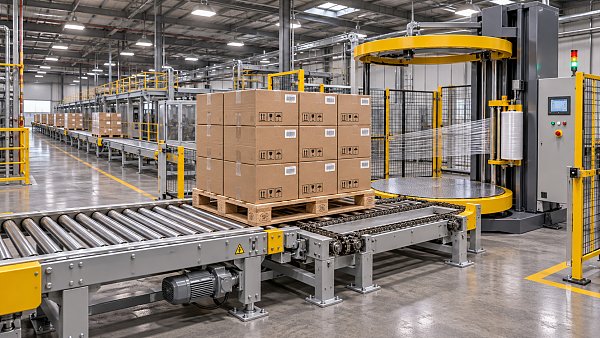
It is also useful to map the flow around the wrapper. Is wrapping performed by an operator using a semi-automatic turntable machine? Does the pallet arrive continuously from a robotic palletizer? Must the system accommodate forklift loading, pallet jacks, or a recessed turntable? Will a single operator need to manage film replacement, exception loads, and finished-pallet transfer? These answers affect equipment type, guarding, control logic, conveyor layout, and the real labor requirement.
Compare the Right Machine Configuration, Not Just the Rated Speed
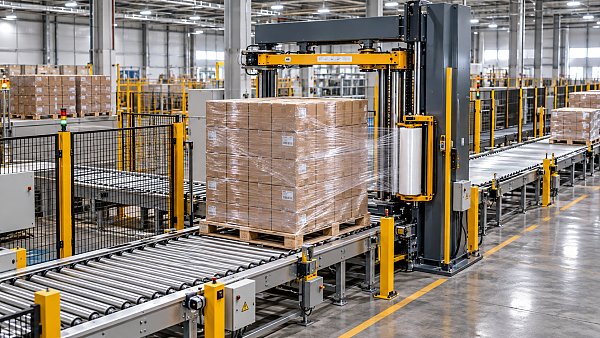
Suppliers may offer turntable wrappers, rotary-arm systems, ring wrappers, robotic wrapping units, and fully automated conveyor-based lines. Each configuration has a different operating logic. A turntable system rotates the load and can be practical for stable pallets. A rotary-arm wrapper keeps the load stationary while the film carriage moves around it, which can be more appropriate where pallets are heavy, tall, or inherently unstable. Ring systems are commonly considered where high-throughput automation is required, although the final choice still depends on load geometry and line design.
Rated cycles per hour should be treated carefully. The headline figure may be based on a defined pallet size, a particular film program, limited top or bottom reinforcement, and ideal infeed conditions. Actual output is affected by pallet arrival spacing, film changes, operator intervention, conveyor handshakes, load-height detection, and stoppages upstream or downstream. Ask each supplier to explain the assumptions behind the quoted throughput and identify the parts of the cycle that are included.
The wrapping pattern deserves the same scrutiny. Buyers should understand how many bottom and top wraps are applied, whether the machine can reinforce selected sections of the load, how overlap is controlled, and whether wrapping recipes can be stored for different products. More film does not automatically mean more secure transport. The objective is consistent containment force and protection suited to the product, pallet, handling route, and storage conditions.
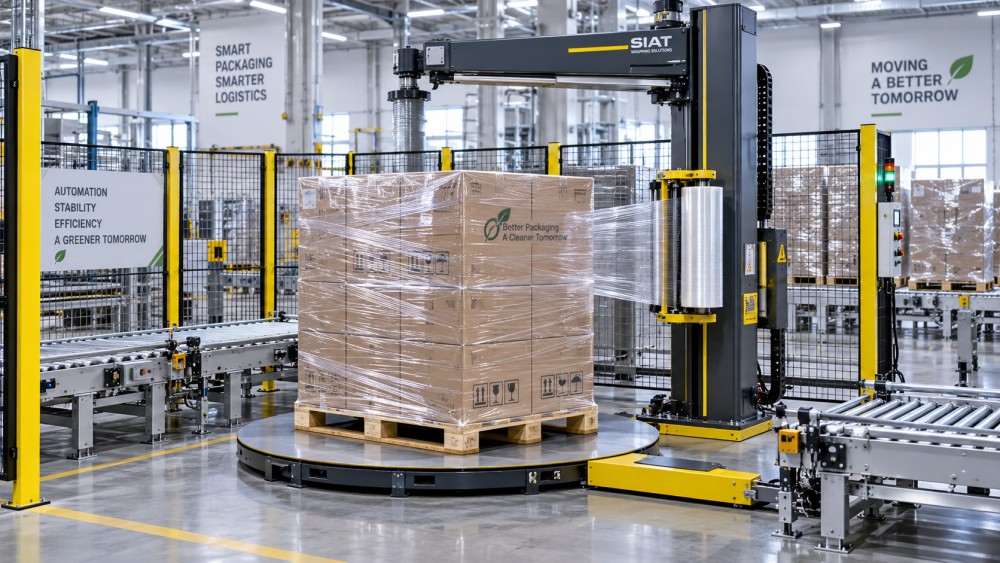
When reviewing demonstrations, do not limit the test to a neat, uniform pallet. If possible, include representative loads with light corrugated cases, variable heights, overhang, or the product combinations that normally create dispatch problems. A supplier’s response to difficult loads often reveals more than a smooth demonstration with a standard pallet.
Film Efficiency Is a Cost-Control Question, Not a Feature List
Stretch-film consumption is one of the most visible ongoing costs in pallet wrapping. Yet comparing film efficiency can become misleading when suppliers use different film grades, pre-stretch settings, wrap patterns, or load assumptions. A lower film weight per pallet is not necessarily a saving if loads become less stable or damage claims rise. Equally, a heavily wrapped pallet can conceal poor film control rather than provide meaningful protection.
The technical issue is how the film delivery system applies tension and how reliably that setting is maintained. Buyers should ask what type of pre-stretch carriage is supplied, whether film tension can be adjusted by recipe, how the system manages changing roll diameter, and whether film break detection or automatic film attachment is available where required. The answers should be related to the intended film specification rather than presented as isolated machine features.
A useful comparison is to request an application-specific estimate that states the assumed load dimensions, film width and gauge, wrapping pattern, cycle requirement, and expected operating conditions. This does not guarantee final consumption, because film performance depends on load characteristics and operator settings, but it makes quotations more comparable. It also helps prevent a procurement decision based on an unrealistic film-use claim.
Look Beyond the Wrapper: Integration Determines the Real Output
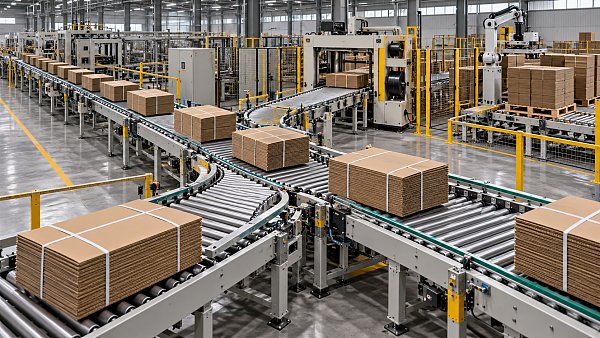
In an automated plant, pallet wrapping is rarely a stand-alone operation. A corrugated packaging line may feed finished bundles through palletizing, corner-board application, top-sheet placement, wrapping, labeling, and outbound conveying. A mismatch between these stations can create frequent stops, manual recovery work, or pallets waiting in queues. The wrapper may be technically sound while the overall end-of-line system underperforms.
Ask suppliers how they manage communication with adjacent equipment. The discussion should include pallet-present signals, emergency-stop logic, infeed and outfeed accumulation, rejected-pallet routing, labeling sequence, and the handling of pallets that do not meet normal dimensions. If the operation uses production data systems, clarify what machine data can be accessed and how alarms, recipes, and maintenance information are presented. Integration requirements should be documented early, not left for the installation stage.
For facilities managing frequent order changes, recipe control is particularly relevant. A packaging plant may ship several pallet formats across one shift. The practical question is not simply whether recipes exist, but who can select them, how errors are prevented, whether settings can be linked to production orders, and how quickly an operator can recover from an exception. Complex automation is not beneficial if routine changes remain dependent on a specialist technician.
Assess Supplier Capability Through Service Detail
A pallet wrappers supplier is being evaluated not only for the machine delivered on day one, but for the quality of support during its operating life. This is where vague promises should be replaced by specific questions. Who performs commissioning? What training is included for operators and maintenance staff? Which components are recommended as site spares? How are urgent technical issues handled outside normal working hours? Is remote diagnostic access available, and what are its limits?
Local support can be important, but “local” should be defined. It may mean a direct branch, an authorized distributor, a service partner, or a technician who travels from another region. None of these models is automatically unsuitable. What matters is whether the supplier can clearly explain response arrangements, parts logistics, responsibilities, and escalation paths for the target market.
Maintenance design should also be compared. Access to film rolls, wear parts, sensors, drives, and electrical components affects routine uptime. Ask to see the maintenance schedule, not merely a statement that maintenance is simple. Review what tasks are expected daily, weekly, or at longer intervals; which require trained personnel; and whether planned maintenance can be coordinated around production peaks.
Calculate Total Cost of Ownership With Transparent Assumptions
The lowest capital price can become the most expensive choice if the system uses excessive film, creates unplanned labor, lacks spare parts, or struggles with the actual load mix. A more disciplined comparison considers total cost of ownership over a defined internal planning period. The purpose is not to create false precision; it is to expose assumptions that would otherwise remain hidden.
At minimum, include equipment price, installation work, conveyors or guarding, electrical and civil requirements, film consumption assumptions, energy use, labor changes, training, planned maintenance, anticipated spare parts, and possible downtime exposure. If suppliers quote different scopes, normalize them before comparing. One quotation may include film carriage options, safety equipment, installation support, or control integration that another treats as optional.
It is equally important to separate savings that are plausible from savings that still need validation. Reducing manual wrapping may lower physical handling and improve consistency, but the financial outcome depends on shift patterns, redeployment options, order mix, and line availability. A supplier can provide useful input, yet the buyer should retain ownership of the final business case.
Use Factory Acceptance and Commissioning to Reduce Ambiguity
A purchase specification should set out the conditions by which the system will be reviewed before shipment and after installation. This may cover representative pallet types, operating sequence, safety functions, wrapping quality, recipe changes, film handling, interfaces, documentation, and training. The exact acceptance approach depends on the project, but clarity is valuable for both buyer and supplier.
Where an automated line is involved, interface responsibility needs particular attention. A wrapping system may be ready to operate while upstream palletizing, downstream labeling, or site conveyors are not. Define who supplies signals, who validates combined performance, and how changes are controlled. Many disputes are not caused by poor equipment; they arise because project boundaries were never made explicit.
For business evaluators, the most useful supplier comparison is therefore not a generic ranking of machine brands. It is a documented view of which supplier can meet the load requirement, fit the production flow, support the site, and present operating costs with reasonable transparency. Global Commercial Print & Corrugated Packaging Intelligence (CPCS) approaches end-of-line equipment in this broader context, connecting pallet wrapping decisions with palletizing, converting output, inspection, traceability, and packaging plant automation.
Before making a final selection, request comparable technical assumptions, review representative loads, clarify the installation scope, and involve operations and maintenance teams early. A pallet wrapper is a relatively small part of a packaging plant’s asset base, but it can become a daily source of delays, film waste, and dispatch risk if its supplier was chosen on price alone.
Related News
 How to Choose Carton Counting Systems for Accurate ProductionChoose Carton Counting Systems with confidence. Compare sensors, accuracy, line integration, and testing methods to improve production reliability.Spatial Folding Strategist
 How to Troubleshoot an Automatic Case Erecting MachineTroubleshoot your automatic case erecting machine with practical steps for diagnosing jams, vacuum loss, sensor faults, and sealing issues—and restore reliable operation.Spatial Folding Strategist
 How to Choose Pallet Conveyors for a Packaging LineChoosing pallet conveyors for packaging line operations? Compare load requirements, throughput, layouts and safety to find the right solution.Spatial Folding Strategist
 How to Choose Case Packers for an Automated Palletizing LineChoose Case Packers that keep your palletizing line moving. Compare loading methods, capacity, changeovers, and integration to make a confident investment.Spatial Folding Strategist
 How Inline Pallet Wrappers Fit Into Automated Packaging LinesDiscover how inline pallet wrappers integrate with automated packaging lines, improve load stability, and help prevent costly bottlenecks.Spatial Folding Strategist
 What Affects Bundle Handling System Cost in a Sheet Plant?Bundle handling system cost depends on capacity, layout, automation, and integration. Learn how to compare total costs and choose the right system for your sheet plant.Spatial Folding Strategist