Pallet Conveying Systems: What Buyers Should Check Before Installation
For procurement teams comparing Pallet Conveying Systems, installation success is rarely decided by conveyor speed alone. What matters is how well the system fits the pallet mix, the building layout, the controls architecture, and the realities of daily operation. A line that looks efficient on paper can become expensive if pallets arrive in inconsistent condition, maintenance access is tight, or the conveyor creates bottlenecks at the end of line.
That is why buyers should treat installation review as a commercial decision, not just a technical one. In packaging, printing, corrugated, and warehouse environments, pallet handling affects uptime, labor use, safety, and the smooth handoff between production and shipping. A good system should support flow, not force the plant to work around it.
Start with the pallet, not the conveyor
Before comparing frames, drives, or automation options, define the pallets you actually use. This sounds basic, but it is where many projects begin to drift. Pallets may vary in size, material, load height, entry direction, base design, or surface condition. Some plants handle only one standard format, while others deal with mixed pallets from different suppliers, export packaging, or seasonal product shifts.
Buyers should confirm whether the pallet conveying system can handle the full range of expected loads without scraping, tipping, or tracking errors. That includes empty pallets, loaded pallets, damaged pallets, and any special slip sheet or bottom board configurations. If the system will feed palletizers, stretch wrappers, or automated storage, compatibility has to be checked against every connected process, not just the conveyor itself.
In practical terms, this is where load capacity and dimensional tolerance matter more than brochure language. Ask how the system behaves when pallets are slightly warped, unevenly distributed, or carrying a load that is near the maximum weight. A conveyor that works only in ideal conditions can create hidden downtime later.
Layout flexibility is often the real installation test
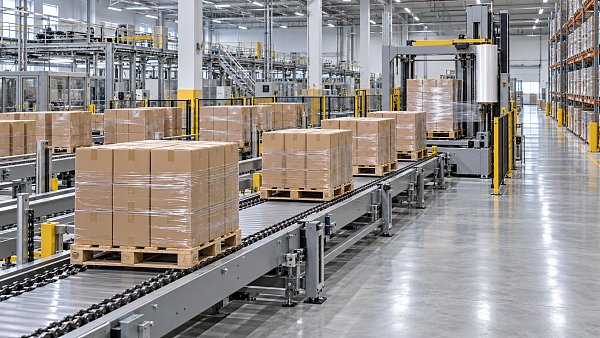
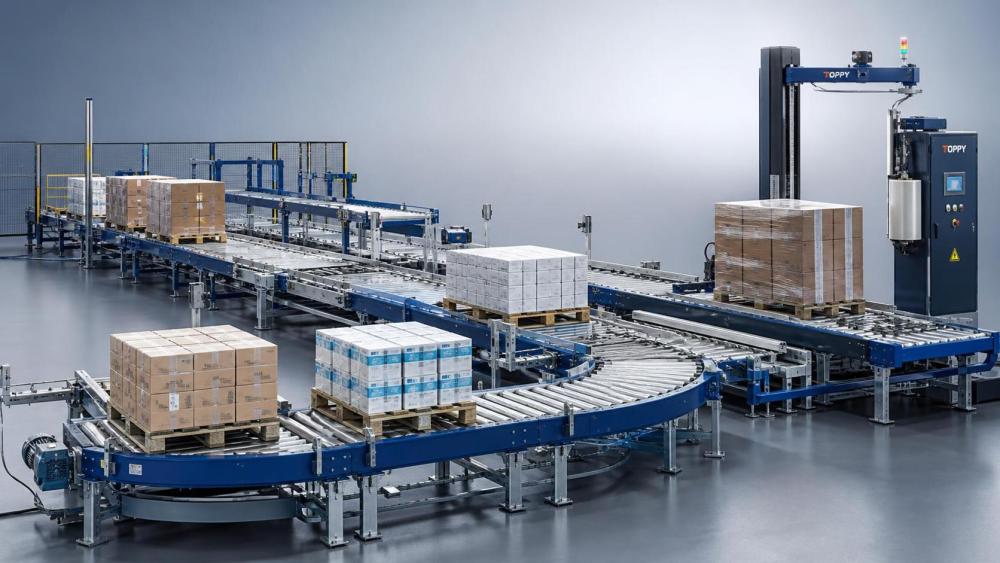
Plant teams usually focus on footprint because floor space is expensive. But a compact layout is only valuable if it still allows smooth turning, transfer, accumulation, and operator access. Pallet conveying systems often need to fit around columns, doors, safety zones, and existing utility routes. If the installation leaves no room for future expansion, service work, or line changes, the “saved” space becomes a long-term constraint.
It helps to review the full route, not just the visible conveyor run. Where do pallets enter the system? Where do they wait? Where can they be manually removed if needed? Can the layout support both straight-through movement and buffering? These questions become especially important in printing and corrugated operations, where end-of-line flow may need to match changing production schedules.
Buyers should also look at transfer points carefully. The smooth handoff between sections is often where noise, wear, and jams begin. A system that depends on frequent manual correction may be acceptable for light use, but it usually creates frustration in high-throughput environments.
Controls integration can make or break the project
Installation success is no longer just a mechanical issue. Pallet conveying systems now sit inside wider control environments that may include palletizers, wrapper stations, AGVs, warehouse management software, scanners, and safety interlocks. If the new conveyor cannot communicate cleanly with these systems, operators end up becoming the integration layer.
Procurement teams should ask what signals are supported, how fault conditions are handled, and whether the system can be expanded later without major rewiring. If the conveyor must be tied into a plant-wide PLC or MES structure, the supplier should explain the interface clearly. Buyers do not need to specify every control detail themselves, but they do need enough visibility to avoid discovering incompatibility during commissioning.
This is also where OEE enters the conversation. A well-integrated pallet conveying system reduces waiting time between processes, shortens changeover delays, and helps operators see issues before they spread downstream. If a system reports faults clearly and resets quickly, it supports production. If alarms are vague or recovery is slow, the line loses time in small but frequent increments.
Maintenance access is a cost issue, not a comfort issue
Many installation reviews underestimate how often people will need to reach the conveyor. Belts wear, sensors drift, rollers need replacement, and safety devices must be tested. If the design makes routine access awkward, maintenance will take longer and may be postponed. That creates a cost pattern that is hard to see in the purchase order but very visible over time.
Buyers should check whether guards can be opened safely, whether common wear parts are easy to reach, and whether technicians can service the system without dismantling adjacent equipment. For high-volume plants, even a small reduction in maintenance time can matter because pallet flow is tied directly to dispatch, storage, and packaging output.
It is also worth asking about spare parts strategy. Not every component needs to be stocked heavily, but critical items should be clearly identified. If replacement parts are proprietary or slow to source, the conveyor may become a fragile point in an otherwise strong operation.
Don’t ignore safety and pallet behavior under load
Pallet conveying sounds simple until a load shifts, a fork mark catches, or an operator steps into the wrong zone. Safety design should be reviewed together with pallet behavior. Emergency stops, light curtains, guarding, and lockout access need to align with the way the system is actually used, not just with a standard drawing.
Buyers should ask how the conveyor handles irregular pallet movement. Does it stop smoothly? Can it detect obstruction? What happens if a pallet is misaligned at the infeed? These details matter because they affect both worker safety and product integrity. In packaging environments, a poorly handled pallet can damage finished goods, delay shipment, or create rework that no one planned for.
For operations handling printed cartons, corrugated shippers, or mixed SKU output, the risk is not only damage but flow disruption. A single stalled pallet can block an entire lane if the layout lacks buffering or bypass logic. That is why the safest system is usually the one that also behaves predictably under pressure.
Cost should be measured beyond the purchase price
Procurement teams naturally compare capital cost, but pallet conveying systems should be evaluated on total operating impact. Installation labor, electrical work, commissioning time, spare parts, energy use, and future modification costs all shape the real economics. In some cases, a slightly higher upfront investment pays back through fewer stoppages and easier maintenance. In others, a simpler layout delivers better value because it reduces complexity.
It helps to compare suppliers on the same basis: load range, layout adaptability, integration effort, service access, and expected effect on throughput. That makes the discussion more objective and easier to defend internally. If the plant is already focused on reducing waste and improving OEE, the best choice is the one that supports stable material movement without adding hidden operational drag.
For teams in corrugated and printing operations, that can mean choosing a pallet conveying system that fits not only today’s line, but the next production change as well. End-of-line equipment often stays in service for years; the right installation decision should be resilient enough to support those years without turning into a daily exception.
In the end, installation readiness is a question of fit. If the system matches the pallet type, the floor plan, the controls environment, and the maintenance rhythm of the plant, it becomes part of the operation’s backbone. If it does not, even a technically solid conveyor can feel like a constant compromise. For buyers, the smartest move is to ask the awkward questions early, while the layout is still flexible and the cost of change is still manageable.
Related News
 What to Check Before Ordering Pallet Wrappers Direct From a FactoryBuying from a pallet wrappers factory? Check load compatibility, output, film costs, safety, and support before ordering. Use this checklist to avoid costly mistakes and buy with confidence.Spatial Folding Strategist
 How an Automatic Folder Gluer System Reduces Carton Setup ErrorsAutomatic folder gluer system solutions reduce carton setup errors with precise feeding, folding, glue control, and compression. Discover how to improve quality and changeovers.Spatial Folding Strategist
 How to Choose a Folder Gluer Machine for Folding CartonsChoose the right folder gluer machine for folding cartons with proven guidance on speed, carton styles, glue quality, automation, testing, and lifecycle costs.Spatial Folding Strategist
 When Chain Pallet Conveyors Improve Warehouse Flow and ThroughputChain pallet conveyors improve warehouse flow by reducing forklift delays, adding controlled accumulation, and protecting packaging throughput. Discover when they deliver the strongest ROI.Spatial Folding Strategist
 How to Compare Automatic Strapping Machine Price and Total CostAutomatic strapping machine price comparison made simple: evaluate installation, throughput, consumables, labor, downtime, and total cost for a smarter investment.Spatial Folding Strategist
 What to Compare When Choosing a Pallet Wrappers SupplierCompare a pallet wrappers supplier by load stability, film efficiency, automation integration, service support, and total cost to choose the right solution.Spatial Folding Strategist