How to Select a Stretch Film Pallet Wrapper for Stable Load Protection
A pallet can leave the wrapping station looking secure and still arrive with shifted cartons, crushed corners, or a loose film tail. This usually happens when the wrapper was selected around a nominal pallet size or a quoted machine speed, while the real load profile was more variable: uneven stack heights, light top layers, heavy product at the base, open-sided trays, mixed cases, or irregular pallet footprints.
The right stretch film pallet wrapper is the one that can apply repeatable containment force to the least stable loads in the normal production mix, without using excessive film or creating a bottleneck after palletizing. Start with the load, then match the machine’s wrapping method, pre-stretch system, capacity, and controls to that load. A low purchase price has limited value if operators must repeatedly adjust wraps, add top sheets by hand, or rewrap unstable pallets before dispatch.
Begin with the load that causes the most concern
Selection should not be based only on a “typical” pallet. In many operations, the typical load wraps easily; the difficult loads create damage claims, labor interruptions, and inconsistent shipping quality. Identify the unstable end of the product range before comparing equipment.
Review pallets by physical behavior rather than product name. A dense, square pallet of corrugated cases responds very differently from a tall stack of lightweight printed cartons, even if both occupy a similar floor space. A useful assessment includes:
- minimum and maximum pallet length, width, and overall height;
- load weight range and where the weight sits within the stack;
- carton stiffness, surface friction, and vulnerability to compression;
- overhang, underhang, gaps between cases, and protruding corners;
- open trays, bundled materials, bagged goods, drums, or other irregular formats;
- need for top protection, dust protection, or weather resistance during storage and transport;
- whether pallets are static, moved by forklift, conveyed, or loaded directly into vehicles.
Load instability often reveals itself before transport. The top cases may lean after the turntable stops. Film may bridge across voids instead of gripping the product. Lower layers may be pulled inward by excessive tension, while the upper load remains insufficiently supported. These are not simply film problems. They indicate that the wrapping pattern, force setting, or machine type is not suited to the pallet.
Choose the wrapping format around handling conditions
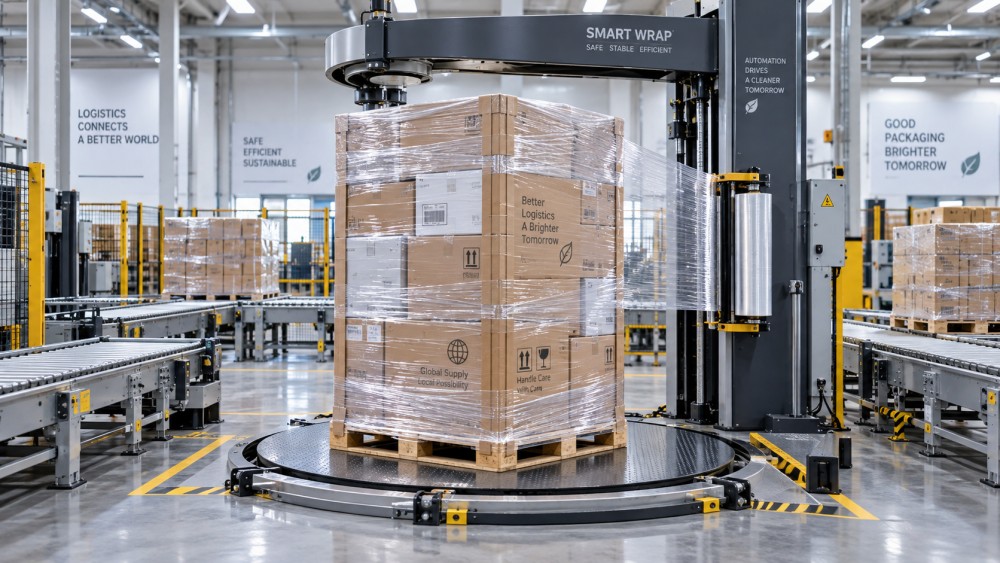
Turntable, rotary-arm, and orbital systems all create film containment, but they suit different operating conditions. The decision should be driven by pallet stability during wrapping, available space, and the role of the wrapper in the end-of-line flow.
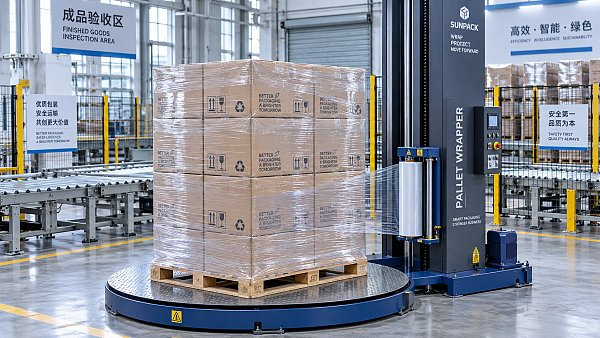
A turntable machine may be practical for a controlled packing area where forklifts present stable pallets one at a time. It becomes less suitable when loaded pallets are tall, poorly centered, or structurally weak. In that situation, keeping the load still and rotating the film carriage around it reduces the risk of load movement during wrapping. Rotary-arm equipment is also commonly considered where pallets are exceptionally heavy, because the machine does not need to accelerate and decelerate the full load mass.
Do not assume that a faster machine format automatically improves output. The usable line rate depends on pallet arrival spacing, forklift or conveyor availability, top-sheet handling, label application, film roll changes, and downstream accumulation. A wrapper that completes a cycle quickly but waits for manual intervention may not improve end-of-line performance.
Containment force matters more than the number of wraps
Procurement discussions sometimes focus on wrap count because it is visible and easy to specify. Yet the same number of revolutions can produce very different results depending on film gauge, film stretch, carriage tension, overlap, load geometry, and the force applied at each height of the pallet.
Containment force is the inward holding force created by the film around the load. It should be sufficient to prevent cases from shifting during normal handling, without crushing cartons, distorting product, or overstressing weak stack sections. The lower third of a pallet often requires strong reinforcement because it carries the mass above it and is exposed to forklift movement. The top may need additional wraps for stack retention, but not necessarily the same force setting.
Look for a machine that allows practical control of the wrapping recipe rather than only a single global tension setting. Useful adjustment points include:
- separate film force settings at the base, body, and top of the pallet;
- variable carriage speed and turntable or arm speed;
- adjustable overlap between film bands;
- reinforcement cycles at selected heights;
- top-wrap patterns for tall or unstable loads;
- controlled film tail treatment at the end of the cycle.
These functions are valuable when one line handles several packaging formats. A load of rigid corrugated shipping cases may tolerate a tighter pattern than a pallet of lightweight folding cartons or display-ready trays. The correct approach is not to use one conservative recipe for every pallet; that can lead to unnecessary film use on strong loads and inadequate protection on weaker ones.
Evaluate the pre-stretch system as an operating-cost decision
Film pre-stretch is one of the most important distinctions between basic and more capable wrapper configurations. A powered pre-stretch carriage uses driven rollers to elongate film before it reaches the pallet. This can reduce film consumption when the film and machine are properly matched, while maintaining a controlled holding force around the load.
Mechanical brake systems can work for lower-volume applications, but their actual tension may vary with roll diameter, film properties, and machine speed. They may require more operator adjustment when loads or films change. For operations where film use, load consistency, and repeatability are commercially important, a powered carriage is usually easier to evaluate because stretch and applied force can be controlled more predictably.
However, a high nominal pre-stretch capability should not be treated as proof of better economics. Film has a usable stretch range, and excessive elongation can cause neck-down, tears, weak film edges, or poor recovery around sharp corners. The relevant question is whether the machine can consistently use the selected film grade at a setting that protects the actual load. Ask suppliers to explain how carriage settings are adjusted, how film break detection works, and whether the control system distinguishes pre-stretch from force-to-load.
Film choice should be evaluated alongside the machine. Gauge, cling behavior, puncture resistance, tear propagation, and compatibility with recycled-content films may affect wrapping performance. A wrapper selected without considering film specifications can create avoidable commissioning problems, especially where packaging teams are trying to reduce material use.
Map the wrapper into the real end-of-line process
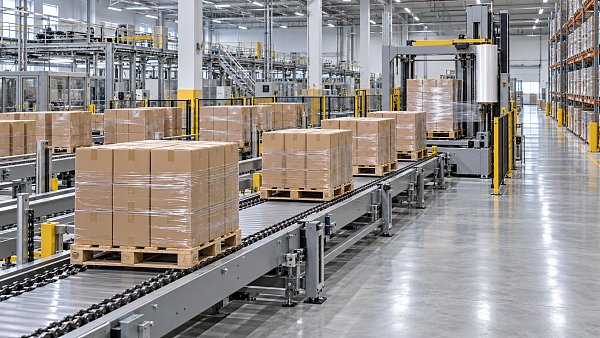
A standalone machine and an automated wrapping cell should be evaluated differently. With a standalone unit, the main questions are operator access, pallet loading method, safe removal, recipe selection, and the risk of wrapping the wrong load with the wrong settings. In an automated line, the wrapper must also accept pallets at the correct orientation, communicate with conveyors, and recover safely from stopped or blocked downstream equipment.
Trace the pallet’s route from the palletizer or manual packing point to dispatch. Note where it is weighed, labeled, scanned, protected with a top sheet, wrapped, and accumulated. The wrapper should fit that sequence rather than force extra handling around it. For example, a label may need to remain readable after wrapping, or a barcode scan may need to occur before film obscures a case-level label. If a top cover is required, determine whether it is placed manually, dispensed automatically, or replaced by a wrapping pattern designed for the actual storage risk.
Where conveyor integration is planned, confirm the pallet transfer conditions in detail:
- conveyor height, roller or chain arrangement, and maximum pallet load;
- pallet orientation and whether forks, stringers, or deck boards affect transfer;
- required clearance around overhanging product;
- pallet centering method before wrapping;
- signals for pallet present, cycle complete, fault, and release to the next station;
- accumulation strategy when the wrapper is temporarily unavailable.
These details are often more consequential than an advertised cycles-per-hour figure. Poor centering can make a sound wrapping recipe inconsistent. Insufficient accumulation can stop an upstream palletizer. A poorly positioned photoeye or a difficult film-loading area can add delay to every shift.
Compare capacity using the operating pattern, not the peak target
Capacity planning should account for variation in the wrapping cycle. The cycle includes pallet entry, positioning, wrapping, film cutting or sealing, exit, and any required top-sheet or manual intervention. Different pallet heights and reinforcement patterns will have different cycle times. A machine that meets a peak rate only with minimal wraps may not meet the same rate when handling the load that genuinely needs stronger containment.
Build a representative mix of pallet types and estimate the required recipe for each one. Include the slowest legitimate product format, not only the fastest. Then consider how often operators need to change film rolls, clear a film break, switch recipes, or deal with a pallet that is out of position. This creates a more realistic view of available capacity and labor dependence.
For low-volume or irregular dispatch patterns, a straightforward semi-automatic wrapper can be the better investment when it allows operators to load safely and apply consistent recipes. For a continuous line, automation may be justified not merely by speed but by repeatability, reduced manual handling, and fewer interruptions caused by inconsistent wrapping decisions.
Specify controls that support repeatable operation
Controls should make the correct setting easy to use and the wrong setting difficult to apply. Recipe storage is useful when different product families require different wrap patterns. Clear recipe names based on load type or packaging format are generally more practical than names based only on internal codes. Access levels can prevent unauthorized changes to force settings while still allowing operators to select approved programs.
Review the available fault information. A useful system should indicate conditions such as film break, low film, pallet not centered, safety circuit interruption, or conveyor transfer issue in a way that helps the operator act quickly. Remote diagnostics may be relevant for automated lines, but only if the site has defined responsibility for responding to alerts and maintaining the connection.
Maintenance access deserves equal attention. Film rolls should be loaded without awkward lifting or unsafe reaching. Carriage rollers, cutting components, sensors, drive elements, and guarding should be accessible for routine inspection. Ask what cleaning is required in dusty packaging environments and whether the machine design prevents corrugated dust, loose film, or pallet debris from interfering with sensors and moving parts.
Use acceptance criteria before making the final selection
A supplier demonstration is most useful when it uses representative pallets, the intended film, and the proposed wrapping recipes. Do not assess only appearance immediately after wrapping. Inspect whether the film grips lower layers, whether corners are adequately protected, whether the top remains stable, and whether the load can be moved through the expected internal handling steps without film damage.
Agree in advance on what must be demonstrated: pallet size range, load stability, film application pattern, film break response, recipe changeover, conveyor handoff if applicable, and operator actions during routine roll replacement. The goal is not to demand a universal wrapping setting. It is to confirm that the selected equipment can achieve stable, repeatable load protection across the range that drives the operation’s risk and cost.
A well-chosen wrapper should therefore be judged as part of a packaging process: pallet quality, film behavior, machine control, material flow, and operator routine all affect the final result. When those elements are assessed together, the decision moves beyond machine price toward a wrapping method that can protect loads consistently without using film or labor as a workaround for poor fit.
Related News
 What to Check Before Ordering Pallet Wrappers Direct From a FactoryBuying from a pallet wrappers factory? Check load compatibility, output, film costs, safety, and support before ordering. Use this checklist to avoid costly mistakes and buy with confidence.Spatial Folding Strategist
 How an Automatic Folder Gluer System Reduces Carton Setup ErrorsAutomatic folder gluer system solutions reduce carton setup errors with precise feeding, folding, glue control, and compression. Discover how to improve quality and changeovers.Spatial Folding Strategist
 How to Choose a Folder Gluer Machine for Folding CartonsChoose the right folder gluer machine for folding cartons with proven guidance on speed, carton styles, glue quality, automation, testing, and lifecycle costs.Spatial Folding Strategist
 When Chain Pallet Conveyors Improve Warehouse Flow and ThroughputChain pallet conveyors improve warehouse flow by reducing forklift delays, adding controlled accumulation, and protecting packaging throughput. Discover when they deliver the strongest ROI.Spatial Folding Strategist
 How to Compare Automatic Strapping Machine Price and Total CostAutomatic strapping machine price comparison made simple: evaluate installation, throughput, consumables, labor, downtime, and total cost for a smarter investment.Spatial Folding Strategist
 What to Compare When Choosing a Pallet Wrappers SupplierCompare a pallet wrappers supplier by load stability, film efficiency, automation integration, service support, and total cost to choose the right solution.Spatial Folding Strategist