How to Compare Pallet Wrapping Machine Manufacturers by Total Cost
A low purchase price can make one pallet wrapping machine manufacturer look attractive on a quotation sheet, yet it says very little about what the machine will cost once it reaches the end of a packaging line. A wrapper that uses excess film, stops frequently, needs specialist adjustment, or cannot communicate cleanly with a palletizer can become the more expensive option surprisingly quickly.
The useful comparison is not “Which machine costs less?” It is “Which supplier delivers the lowest cost per stable, saleable pallet over the expected operating life?” That question brings film consumption, labor, uptime, maintenance, safety, integration, and service response into the same decision.
This matters particularly in corrugated packaging, commercial printing, and paper-based packaging operations. Finished loads may vary by carton size, stack pattern, pallet height, weight distribution, and dispatch route. A machine that performs well on a uniform demonstration pallet may behave differently when production changes between short runs, mixed SKUs, lightweight cartons, and higher warehouse throughput.
Build the comparison around total cost, not the machine price
Total cost of ownership should include every cost that changes because the wrapping system is installed. The purchase price remains relevant, but it is only one line in the model. A practical comparison covers the following areas:
Use the same operating assumptions for every supplier. If one manufacturer calculates film use for a light, regular load and another quotes for the actual mix of tall corrugated cases, unstable displays, and compact shipments, the comparison is already distorted. Give each supplier a representative load profile and ask them to state the assumptions behind their proposal.
Film economics deserve more scrutiny than the quoted film percentage
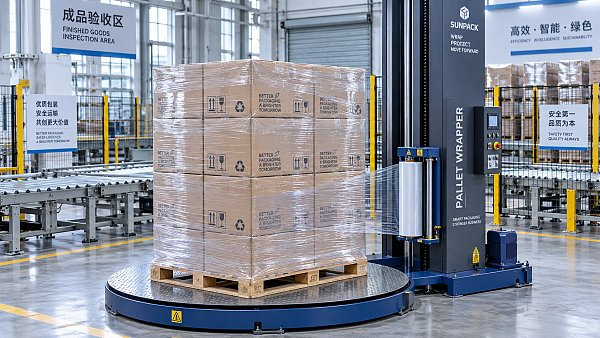
Film savings are often discussed through pre-stretch capability. Pre-stretch is important, but a headline claim does not show whether the machine will consistently secure your specific loads with less material. The cost outcome depends on the combination of film carriage control, wrap pattern, top and bottom reinforcement, corner stability, turntable or rotary-arm behavior, and how the machine responds to changing load geometry.
A pallet wrapping machine manufacturer should be able to explain how its machine controls film tension through the cycle and how an operator changes a recipe for different pallet types. Ask for trial wrapping using loads that reflect normal production, not only ideal samples. Review the finished pallets after handling conditions that resemble internal transport, warehouse movement, and dispatch.
The least film is not always the lowest cost. Under-wrapped pallets can shift, collapse, scuff printed surfaces, or require manual rework. Over-wrapping may look secure but increases consumable cost and creates unnecessary plastic use. The right target is repeatable load containment at the lowest material use that still suits the transport risk.
Film roll change frequency also belongs in the calculation. A design that needs frequent changes may create small interruptions throughout a shift. The direct cost is modest, but the operational effect becomes larger when the wrapper sits after an automated palletizer and stops the whole end-of-line sequence.
Compare real throughput, including the time around the wrap cycle
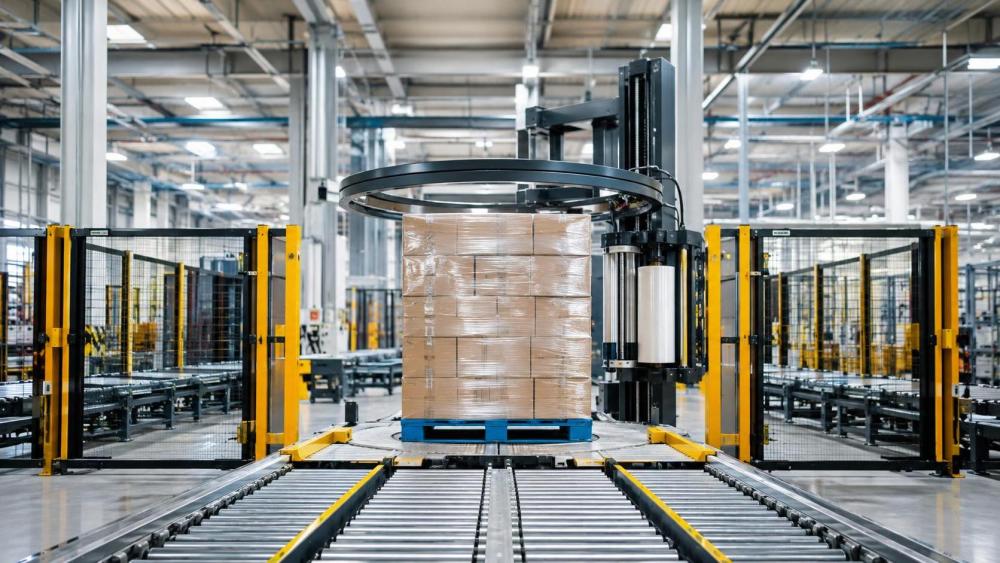
Rated pallet-per-hour figures are useful only when the operating conditions match. A wrapping cycle includes more than the rotating or wrapping motion. Pallets must arrive, be positioned, wrapped, discharged, and cleared safely. If the system uses top-sheet application, corner protection, label verification, or conveyor accumulation, those steps can determine practical line speed.
Request a cycle description rather than relying on one capacity number. It should identify the pallet dimensions, load type, wrap program, film specification, infeed and outfeed arrangement, and operator involvement. Then compare the figure with current output and expected peak demand.
There is also a cost penalty in buying excessive capacity. A highly automated system with sophisticated options may be justified when a line runs continuously or labor availability is constrained. It may be harder to justify for intermittent dispatch work, widely variable pallet sizes, or a site where manual intervention is already unavoidable. The best choice is not the fastest wrapper in isolation; it is the one that supports the required flow without adding complexity that the operation will not use.
Downtime cost is shaped by recovery, not just machine reliability
All equipment needs attention. The more revealing question is what happens when film breaks, a pallet arrives out of position, a sensor is blocked, or a load does not meet the expected dimensions. Compare how easily operators can identify the fault, make the machine safe, correct the issue, and restart without damaging product or losing the recipe.
Look for clear operator controls, accessible film threading, readable fault messages, sensible manual-mode controls, and protection against repeated nuisance stops. These details are rarely the focus of a sales demonstration, yet they strongly influence daily labor cost and uptime.
Supplier support needs the same practical test. Ask where service personnel and stocked parts are located relative to the installation site, how remote diagnostics are handled, which components are standard industrial parts, and what support is available during commissioning. Do not treat a long warranty as a substitute for responsive service. Warranty coverage may reduce the cost of a failed component, but it does not automatically restore a stopped dispatch line quickly.
Separate the machine specification from the complete installed system
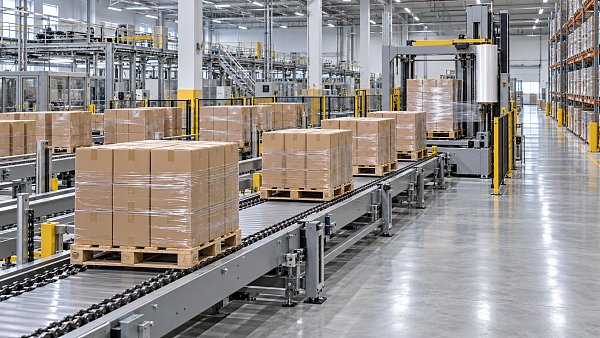
Comparisons often fail because suppliers are asked to price “a pallet wrapper” rather than a complete scope. An automatic rotary-arm wrapper, a turntable system, and a conveyor-integrated wrapper can all be appropriate, but their installation demands differ. Heavy or unstable loads may not suit a turntable arrangement. High-throughput lines may need accumulation and controls coordination. Sites with limited space or difficult forklift traffic may need a different material-flow layout.
Prepare a common scope document before requesting final offers. It should include:
- Current and expected pallet dimensions, heights, weights, and load stability.
- Typical pallet patterns, including overhang, voids, lightweight cases, and irregular stacks.
- Required production rate and the periods when demand peaks.
- Available floor space, conveyor elevations, forklift routes, and utility connections.
- Existing palletizer, conveyors, print-and-apply equipment, vision systems, warehouse controls, or manual stations that must connect to the wrapper.
- Required safety arrangement, guarding boundaries, emergency-stop interfaces, and access needs.
- Whether data such as alarms, production counts, film use, and maintenance status must be visible in plant systems.
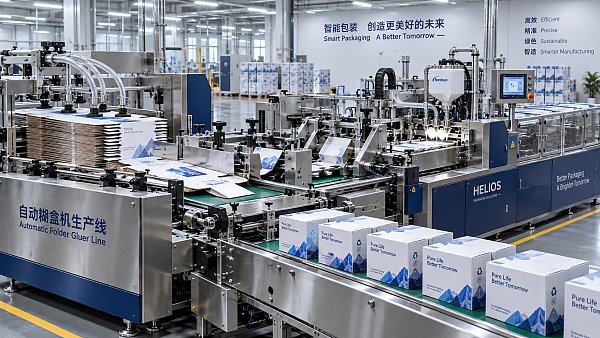
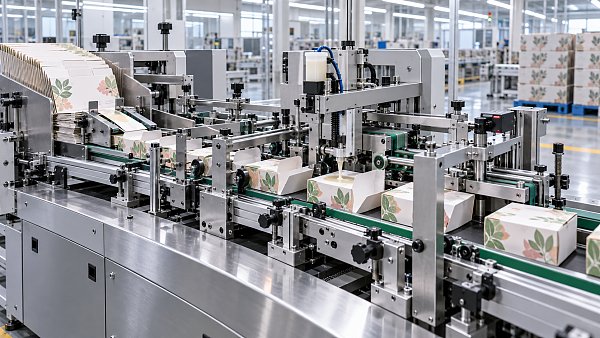
For packaging plants, the wrapper is often part of a wider automation decision. A corrugator, flexographic press, folder gluer, or die-cutter can produce output rapidly, but dispatch performance still depends on stable end-of-line handling. Information platforms such as CPCS are useful when the review must connect pallet wrapping with palletizing, conveyance, coding, inspection, and production management rather than treating each machine as an isolated purchase.
Put maintenance obligations into the commercial evaluation
Two similar-looking machines can have very different maintenance burdens. Compare the expected replacement items, recommended service intervals, access to drives and sensors, lubrication points, and the skill level needed for routine work. A compact design is not automatically easier to maintain if components are difficult to reach. Conversely, a more substantial machine may cost more initially but be simpler to inspect and repair in a demanding plant environment.
Ask each manufacturer to distinguish between routine operator tasks, in-house maintenance tasks, and work normally performed by a service technician. This helps expose hidden labor requirements. It also clarifies whether the operation has the capability to maintain the proposed system without becoming dependent on external visits for ordinary adjustments.
Spare-parts strategy should be based on consequence. Low-cost consumables and common wear parts can be held on site. Components that would stop the line but have a longer replacement lead time may also justify local stock. The supplier should provide a sensible recommended list rather than simply adding a large spare-parts package to the quotation.
Use a weighted decision sheet, but do not let it hide risk
A weighted scorecard helps prevent the purchase price from dominating the decision. Give each manufacturer the same criteria, then record the evidence behind every score. Typical categories include installed cost, verified film performance, practical throughput, ease of operation, integration fit, maintenance access, service capability, and expansion potential.
The scorecard should not turn uncertain assumptions into false precision. A supplier may score well on a feature list but still present a major operational risk, such as an unclear controls interface or unproven handling of unstable loads. Keep a separate list of conditions that must be demonstrated or contractually defined before an order is placed.
Questions that expose a weak total-cost proposal
- What is included in the installed scope, and what work remains with the buyer or another contractor?
- Which load types were used to determine the proposed wrap recipe and film use?
- How does the machine recover from a film break or mispositioned pallet?
- Which options are necessary for the stated capacity, rather than merely desirable upgrades?
- What information can the controls system exchange with upstream and downstream equipment?
- What maintenance tasks are expected during normal operation, and what parts should be held locally?
- What acceptance conditions will prove that the system handles the agreed pallet range?
Make acceptance testing part of the cost decision
Acceptance criteria are where a total-cost model becomes operational. They should cover the pallet range, wrap quality, handling of common faults, integration behavior, safety functions, and operator training. The goal is not to demand perfect performance under every imaginable condition. It is to avoid discovering after installation that the quoted output, film use, or automation level depended on conditions that do not represent the plant.
When comparing a pallet wrapping machine manufacturer, favor suppliers that discuss operating boundaries plainly. A credible proposal identifies what the system is designed to handle, what requires an option or layout change, and which loads may need a different wrapping method. That clarity is more valuable than a broad promise that every pallet can be processed at the same speed and cost.
The final choice should align with the actual cost driver. For one site, it may be film use; for another, labor availability, dispatch continuity, integration risk, or the cost of rewrapping damaged loads. Establish that driver before comparing quotations. Once the same loads, cycle conditions, scope boundaries, and service assumptions are applied to every offer, the lower total-cost option becomes much easier to identify.
Related News
 What to Check Before Ordering Pallet Wrappers Direct From a FactoryBuying from a pallet wrappers factory? Check load compatibility, output, film costs, safety, and support before ordering. Use this checklist to avoid costly mistakes and buy with confidence.Spatial Folding Strategist
 How an Automatic Folder Gluer System Reduces Carton Setup ErrorsAutomatic folder gluer system solutions reduce carton setup errors with precise feeding, folding, glue control, and compression. Discover how to improve quality and changeovers.Spatial Folding Strategist
 How to Choose a Folder Gluer Machine for Folding CartonsChoose the right folder gluer machine for folding cartons with proven guidance on speed, carton styles, glue quality, automation, testing, and lifecycle costs.Spatial Folding Strategist
 When Chain Pallet Conveyors Improve Warehouse Flow and ThroughputChain pallet conveyors improve warehouse flow by reducing forklift delays, adding controlled accumulation, and protecting packaging throughput. Discover when they deliver the strongest ROI.Spatial Folding Strategist
 How to Compare Automatic Strapping Machine Price and Total CostAutomatic strapping machine price comparison made simple: evaluate installation, throughput, consumables, labor, downtime, and total cost for a smarter investment.Spatial Folding Strategist
 What to Compare When Choosing a Pallet Wrappers SupplierCompare a pallet wrappers supplier by load stability, film efficiency, automation integration, service support, and total cost to choose the right solution.Spatial Folding Strategist