How to Choose a Pallet Wrappers Supplier for Reliable Line Uptime
Reliable pallet wrapping is not a stand-alone equipment issue. When a wrapper stops, runs inconsistently, or produces unstable loads, the disruption can extend back to palletizing and forward into warehousing, loading, and customer delivery. The right pallet wrappers supplier is therefore not simply the company offering the lowest machine price. It is the supplier that can support the required throughput, load patterns, film strategy, safety requirements, and recovery process when conditions on the line change.
A practical selection decision starts with a simple question: what must remain stable when the wrapping station is under normal production pressure? The answer is usually more specific than “the machine must wrap pallets quickly.” It may mean maintaining film tension on uneven corrugated loads, avoiding queues after an automatic palletizer, completing fast product changes without lengthy adjustments, or restoring operation quickly after a sensor, conveyor, or film carriage fault.
Suppliers should be assessed against those operating conditions before their equipment is compared by headline specifications. A machine that appears suitable in a demonstration can still become a bottleneck if it is not matched to the actual pallet flow, product mix, and support capability of the site.
Start with the line, not the wrapper model
Pallet wrappers are commonly positioned at the end of a packaging line, where problems from earlier stages often become visible. A corrugated plant may send pallets with changing stack heights, varying board grades, seasonal product mixes, or loads with imperfectly aligned cases. A commercial print operation may have lighter but higher-value stacks that need protection from movement and moisture. These conditions affect the type of wrapping system required.
Before contacting suppliers, document the operating envelope rather than providing only an expected pallets-per-hour figure. The supplier should understand:
- Typical and maximum pallet dimensions, heights, weights, and load shapes.
- Whether loads are stable, overhanging, tapered, irregular, or prone to shifting.
- The number of pallet patterns and how frequently they change.
- Whether wrapping is manual, semi-automatic, or fully integrated with palletizing and conveying.
- Required operating windows, peak periods, and the consequences of a short stoppage.
- Film type, film width, pre-stretch expectations, and whether different films are used across jobs.
- Environmental conditions such as dust, vibration, temperature variation, or limited floor space.
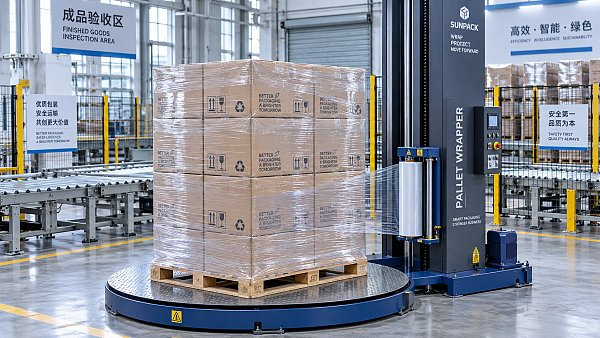
This information helps distinguish between a basic turntable wrapper, a rotary arm machine, a ring wrapper, or a more automated end-of-line system. There is no universally superior configuration. A turntable system can suit stable loads and moderate output, while a rotary arm design may be a better fit for heavy, unstable, or very tall pallets because the pallet remains stationary. High-throughput operations may need a system whose conveyor, control logic, film handling, and accumulation capacity are designed as one flow rather than separate pieces of equipment.
A supplier that asks detailed questions about load behavior and upstream flow is usually addressing the right problem. One that moves immediately to a standard model and a quoted speed may be treating the project as a catalogue sale.
Assess uptime as a system responsibility
Reliable line uptime depends on more than the wrapper’s mechanical structure. A wrapping station relies on film feed, load detection, conveyor transfers, safety devices, controls, operator interaction, and, in automated lines, communication with palletizers and upstream production equipment. A fault in any one of these areas can hold the line.
When comparing a pallet wrapping machine supplier, ask how it defines the boundaries of its responsibility. Some suppliers provide the wrapper only. Others can engineer conveyors, guarding, control interfaces, load-centering devices, label application connections, and integration with robotic palletizing. Neither approach is automatically wrong, but the ownership of interfaces must be clear.
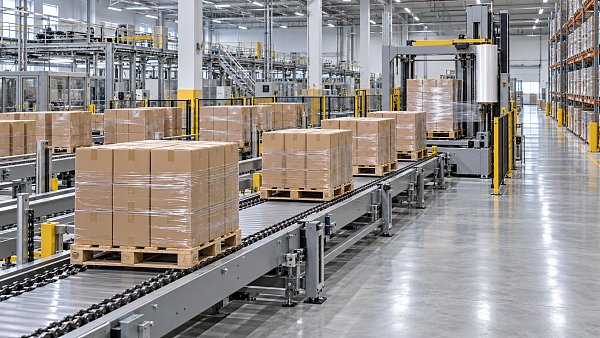
For example, a wrapper may be mechanically capable of the required rate but still experience frequent pauses because pallets arrive too close together, arrive off-center, or cannot clear the discharge conveyor quickly enough. In this situation, increasing wrapper speed does not solve the problem. The supplier needs to assess accumulation, transfer timing, photo-eye placement, conveyor control, and the logic for blocked downstream conditions.
Ask suppliers to map the operating sequence from pallet release to wrapped-pallet discharge. The map should show what happens when a pallet is missing, a load is out of position, film breaks, a downstream conveyor is blocked, or an operator needs to change a film roll. This discussion reveals whether the proposed solution has a workable recovery process or merely a normal-cycle description.
Film performance should be evaluated through load stability and operating cost
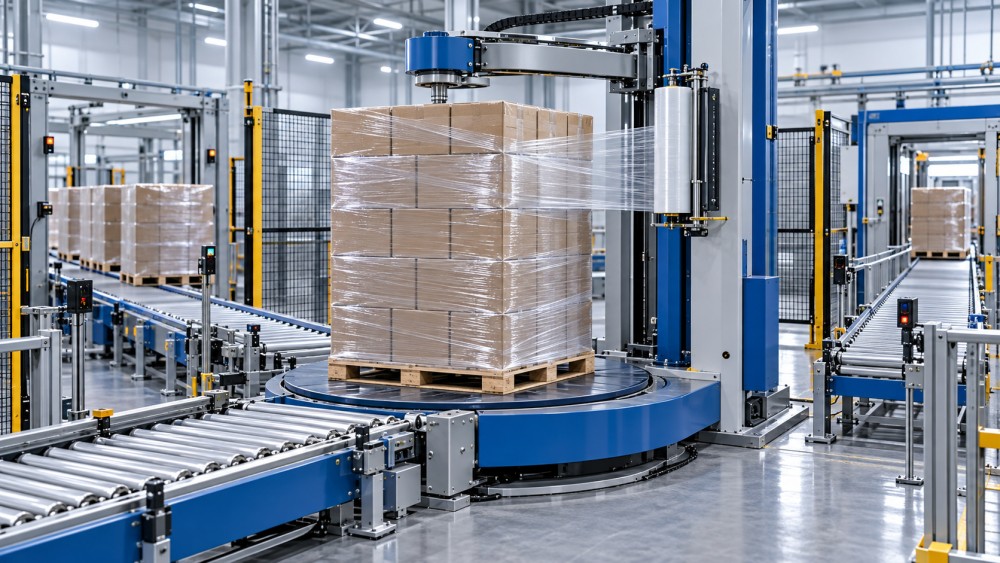
Film use is often reduced to a question of pre-stretch percentage or roll price. Those figures matter, but they do not tell the whole operating story. The purpose of stretch film is to create enough holding force to keep the pallet stable during internal movement and transport without crushing light cartons, distorting printed products, or wasting material.
A capable supplier should be able to explain how the proposed film carriage controls tension and how settings can be adjusted for different pallet types. This includes the relationship between pre-stretch, film force, wrap count, top and bottom reinforcement, and the behavior of the load itself. More film is not always a safer load, and a high pre-stretch setting is not always efficient if it causes film breaks or inconsistent containment.
In corrugated packaging operations, pallet behavior can vary significantly. A rigid, square pallet of regular shipping cases may accept a consistent wrapping recipe. A mixed pallet of lightweight displays, short runs, or high stacks may need different overlap, reinforcement, or top-sheet handling. The supplier should demonstrate that the system can store and apply repeatable recipes, while still allowing authorized operators to make controlled changes when the load changes.
Ask for a film trial using representative pallets where possible. The aim is not to stage a perfect demonstration load. It is to observe film application on the kinds of pallets that create difficulty in daily production: off-center stacks, less rigid cartons, uneven top surfaces, and varying heights. Review the wrapped pallet after handling rather than judging only its appearance at the machine exit.
Service response matters only when it is usable in your operating reality
Many selection decisions mention after-sales service but fail to turn it into a measurable requirement. “Service available” has little value if the contact route, remote diagnosis process, spare-parts availability, and escalation path are unclear.
Service should be evaluated from the perspective of a production interruption. Who receives the first call? Can the supplier’s support team access the relevant control information remotely when permitted? What fault descriptions, alarm histories, and wiring documentation will be available to site maintenance personnel? Which components are expected to be held locally, and which are supplied from the manufacturer or a regional stock point?
The most useful supplier is not necessarily the one promising that faults will never occur. Mechanical systems, sensors, film rolls, conveyors, and operator actions all create potential interruptions. Strong support is shown by how clearly the supplier designs for diagnosis, safe recovery, and rapid return to operation.
Examine the commissioning and handover scope closely. Training should cover more than starting and stopping the machine. Operators need to understand film loading, recipe selection, routine cleaning, safe response to film breaks, and what not to adjust. Maintenance personnel need practical guidance on inspections, lubrication where applicable, wear parts, sensor alignment, safety circuits, and fault tracing. A supplier that treats training as an optional extra may leave the site dependent on external support for routine issues.
Compare suppliers by evidence, not by a feature checklist
Feature lists can make several proposals look similar. Most suppliers can offer touch-screen controls, safety guarding, automatic film cut-and-clamp functions, and adjustable wrapping programs. The decision becomes clearer when each supplier is asked to explain how those features work in the proposed application.
References can also be helpful, but only when the application is comparable. A supplier may have many installations in logistics operations yet have limited experience with a packaging plant that combines frequent job changes, dust exposure, variable corrugated loads, and automated palletizing. Ask about applications that resemble your load conditions and level of automation rather than relying on the total number of installations.
Do not separate the wrapper from end-of-line integration
In packaging factories, the wrapper is often one element in a broader automation decision. It may receive pallets from a robotic palletizer, connect to print-and-apply labeling, work alongside coding and traceability equipment, and feed a warehouse transport route. Each connection introduces practical questions about footprint, guarding, controls, product identification, and recovery procedures.
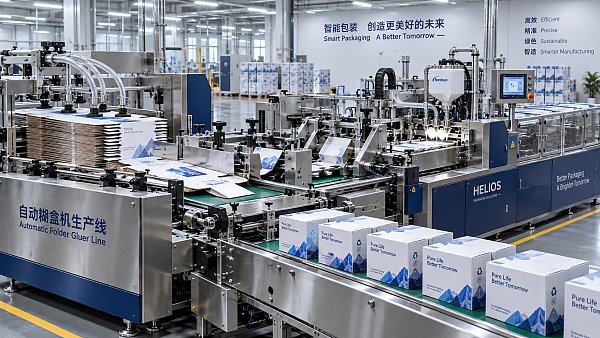
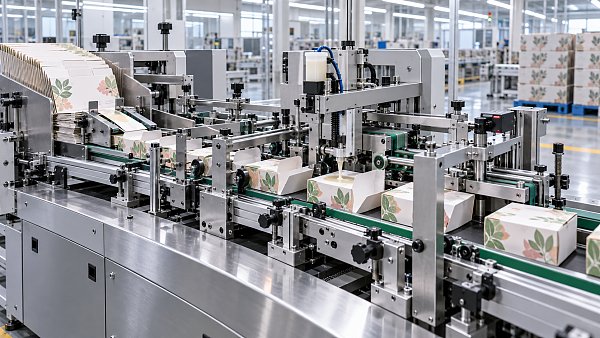
For plants investing in automated corrugated converting, folder-gluing, or printing lines, an end-of-line project should be reviewed according to total flow. A high-output converting machine does not create value if finished pallets queue at a wrapping station. Conversely, an oversized wrapper does not improve performance if upstream pallet formation remains inconsistent. The relevant measure is stable movement through the whole section of the line.
Information platforms such as CPCS can be useful during this stage because pallet wrapping can be assessed alongside palletizing, conveyors, inspection, coding, and production-management requirements. This broader view helps prevent a narrow machine purchase from creating an avoidable interface problem later.
Common buying mistakes that create avoidable downtime
Buying only against nominal speed. A quoted cycle rate can be technically valid but still exclude practical delays. Evaluate the complete operating sequence, including load arrival, film replacement, discharge clearance, and realistic product changes.
Assuming every pallet is stable enough for the same machine. A wrapper may perform well on regular loads and struggle with overhang, irregular stacking, or low-density cartons. Include difficult pallet types in the selection process.
Leaving interface ownership vague. Problems between conveyors, palletizers, and wrapper controls are harder to resolve when each vendor considers the issue outside its scope. Define responsibility before the order is placed.
Underestimating access and maintenance space. Film-roll loading, carriage access, cleaning, inspection, and safe fault recovery all require room around the machine. A compact layout that restricts access can increase the time required for routine interventions.
Treating spare parts as an afterthought. A small component can stop an otherwise robust system. The appropriate local parts package depends on operating hours, site location, internal maintenance capability, and the criticality of the line.
A practical selection sequence
Shortlist suppliers after defining the application, then use the same written requirements for each bidder. This creates a fair comparison and exposes differences in interpretation. The requirement should cover loads, throughput, layout constraints, integration scope, safety expectations, film approach, operator access, commissioning, training, documentation, service, and spare-parts support.
Next, review the proposed layout with operations, engineering, maintenance, and warehouse stakeholders. The proposed machine may fit on a drawing while creating awkward forklift routes, poor film-roll access, or difficult recovery during a conveyor blockage. These issues are easier and less costly to address before installation.
Finally, set acceptance criteria around the conditions that matter in production. The criteria should cover the agreed pallet range, normal line flow, film application, safety operation, communications with adjacent equipment, and fault recovery. A clear acceptance process protects both sides: the supplier understands the required outcome, and the buyer can assess whether the system performs as intended.
The best choice is usually the supplier that can explain trade-offs openly, identify constraints before they become site problems, and support the wrapper as part of a working end-of-line system. That approach produces a more dependable result than choosing on machine price, brochure features, or an isolated speed claim.
Related News
 What to Check Before Ordering Pallet Wrappers Direct From a FactoryBuying from a pallet wrappers factory? Check load compatibility, output, film costs, safety, and support before ordering. Use this checklist to avoid costly mistakes and buy with confidence.Spatial Folding Strategist
 How an Automatic Folder Gluer System Reduces Carton Setup ErrorsAutomatic folder gluer system solutions reduce carton setup errors with precise feeding, folding, glue control, and compression. Discover how to improve quality and changeovers.Spatial Folding Strategist
 How to Choose a Folder Gluer Machine for Folding CartonsChoose the right folder gluer machine for folding cartons with proven guidance on speed, carton styles, glue quality, automation, testing, and lifecycle costs.Spatial Folding Strategist
 When Chain Pallet Conveyors Improve Warehouse Flow and ThroughputChain pallet conveyors improve warehouse flow by reducing forklift delays, adding controlled accumulation, and protecting packaging throughput. Discover when they deliver the strongest ROI.Spatial Folding Strategist
 How to Compare Automatic Strapping Machine Price and Total CostAutomatic strapping machine price comparison made simple: evaluate installation, throughput, consumables, labor, downtime, and total cost for a smarter investment.Spatial Folding Strategist
 What to Compare When Choosing a Pallet Wrappers SupplierCompare a pallet wrappers supplier by load stability, film efficiency, automation integration, service support, and total cost to choose the right solution.Spatial Folding Strategist