How Photoelectric Carton Counting Systems Improve Shipping Accuracy
How Photoelectric Carton Counting Systems Improve Shipping Accuracy
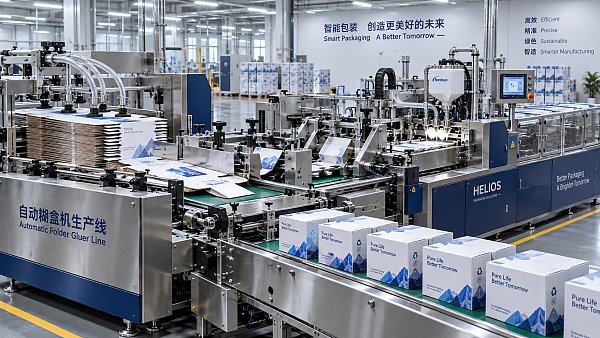
In high-volume packaging and shipping operations, even small counting errors can create expensive problems: incomplete deliveries, excess shipments, delayed invoicing, production reconciliation issues, and disputes over what left the plant. The risk is particularly visible in corrugated packaging, folding carton converting, commercial print finishing, and end-of-line packing, where products may move quickly from a folder gluer, die-cutter, stacker, or packing station to a pallet or dispatch lane.
Photoelectric carton counting systems give operators a practical way to verify quantities while cartons move through a defined point on the line. Instead of relying only on hand counts, bundle labels, or assumptions based on machine output, the system detects each passing carton or each separated batch and sends a count signal to a counter, PLC, HMI, printer, reject device, or production management system.
The technology itself is not complicated. Reliable use, however, depends on the carton, conveyor arrangement, line speed, product spacing, sensor selection, and the way count data is handled after detection. A sensor can be technically functional and still produce poor shipping accuracy if it is installed at the wrong point, exposed to unstable product flow, or disconnected from the operator’s packing workflow.
Why shipment counts fail before cartons reach the dock
Most shipping discrepancies do not begin at the loading bay. They often start earlier, when finished cartons are transferred between converting, bundling, palletizing, and dispatch. A short stop on a folder gluer may cause products to bunch together. A manual packer may restart a count after clearing a jam. Mixed order changes can leave old and new job quantities on the same conveyor. At the same time, cartons with dark print, windows, glossy coatings, cut-outs, or uneven flaps can be harder to detect consistently than plain, rigid boxes.
Manual counting remains useful for audits, short runs, and exception handling, but it becomes less dependable when operators are monitoring several tasks at once. At a busy packing station, an operator may need to inspect glue quality, check print codes, remove damaged blanks, load cases, confirm labels, and respond to downstream interruptions. Counting is then vulnerable not because people are careless, but because the process asks one person to maintain accuracy under changing line conditions.
A photoelectric system creates a repeatable measurement point. Each valid detection event is recorded according to predefined logic. That does not eliminate the need for supervision; it makes the count visible and easier to challenge when the physical flow no longer matches the expected result.
How the detection process works in a carton line
Photoelectric carton counting systems use light to detect the presence, interruption, reflection, or position of a moving object. A common arrangement places a sensor across a conveyor so that each carton interrupts a light beam. Other designs use reflected light from the carton surface or a reflector positioned opposite the sensor. The sensor output is converted into an electrical signal, which the control system interprets as one count.
In a stable single-file flow, the logic may be straightforward: one carton passes, one pulse is counted. In real production, that simple rule needs protection. If two cartons overlap, if a carton stops in the sensing zone, or if a loose flap repeatedly enters and exits the beam, the control system must avoid registering false events. This is where response time, signal filtering, pulse width, sensor placement, and PLC programming become operationally important.

For bundled cartons, the goal may not be to count every individual piece. A sensor can instead confirm that one completed bundle has passed a discharge point, while the bundle quantity is managed through the machine recipe or packing instruction. This approach is useful only when the bundle formation process is controlled. If bundle sizes vary, individual-piece verification or an additional check may be necessary before shipment release.
The sensor type should follow the application, not habit
Through-beam sensors are often chosen where a clean, decisive detection signal is needed. They use a separate emitter and receiver and can work well when cartons reliably pass between them. Retro-reflective sensors use a reflector and can simplify installation on one side of the conveyor, although carton surface properties and geometry still need review. Diffuse-reflective sensors detect light returned from the product itself and may be useful where a reflector cannot be mounted, but they can be more sensitive to colour, print variation, surface finish, dust, and background conditions.
No one sensor style is automatically best for corrugated or printed cartons. A pale unprinted shipper, a heavily varnished retail carton, and a die-cut display blank may present very different detection conditions. The right choice should be confirmed through sample testing at production speed, not only by checking whether the sensor activates on a stationary sample.
Counting accuracy depends on product separation
A photoelectric counter cannot reliably distinguish two cartons that pass as one continuous object. This is the most common misunderstanding in counting projects. The sensor only sees what reaches its sensing field. If cartons are touching edge to edge, overlapping, shingled, or moving in a compressed stream, the system may record fewer items than are physically present. If products bounce, rotate, or reopen after detection, false counts can occur as well.
Mechanical flow control is therefore part of counting accuracy. Guides, belts, rollers, spacing devices, hold-down systems, side alignment, and conveyor speed matching all influence whether the sensor receives a clean signal. On some lines, a small gap created before the counting station is more valuable than a more sophisticated sensor installed in an uncontrolled discharge stream.
The distinction matters because shipping accuracy is not simply a sensor specification. It is the combined outcome of product presentation, detection reliability, counter logic, operator response, and recordkeeping.
From a live count to a shipment-ready quantity
The useful result of carton counting is not the number displayed on a small screen. It is the decision that number supports. A line may use the count to stop a conveyor when a pack quantity is reached, trigger a bundle strapper, print a case label, divert an incomplete batch, or alert the operator that the target has been exceeded. In more connected factories, the count can also be linked to job data, pallet identification, coding and traceability records, or production reporting.
Integration should be designed around a clear definition of “good count.” For example, does the count include every carton discharged from the folder gluer, only cartons that pass visual inspection, or only accepted cartons packed into a shipping unit? If rejected or manually removed products are counted upstream but not reconciled downstream, the system may report an apparently accurate production total while the shipment is short.
This is why many packaging plants place counting after the last critical quality decision. A vision inspection system, barcode verifier, code reader, or manual inspection point may reject nonconforming products. Counting accepted cartons after that stage generally provides a more meaningful shipping quantity. Where this is not physically possible, reject signals need to be tied back into the count logic.
Recipe control prevents avoidable changeover mistakes
Short runs and frequent order changes place extra pressure on operators. A count target that is manually entered for every job can be correct in principle but still become a source of error during a rushed setup. Connecting the target quantity to a production recipe, work order, or job ticket can reduce repeated data entry. The system should still show the active order clearly and require a deliberate confirmation when an operator changes a target, resets a batch, or releases an exception.
A reset function deserves particular attention. It should not be so easy to activate that an accidental button press clears a shipment count, yet it must remain practical when a genuine job change occurs. Plants often need local rules for who can reset totals, what information must be recorded, and how incomplete packs are handled at shift changes.
Parameters operators should confirm during commissioning
Commissioning is where many future counting problems can be avoided. The key question is not merely whether the sensor detects a carton, but whether it detects every acceptable carton once and only once under normal operating variation. Testing should include the carton formats actually used on the line: smallest and largest sizes, light and dark print areas, warped board where relevant, die-cut shapes, coated surfaces, and the fastest expected running condition.
- Minimum reliable gap between consecutive cartons at the intended conveyor speed.
- Sensor response behaviour when cartons accelerate, stop, or back up near the sensing point.
- Whether the detection zone is protected from vibration, direct glare, dust accumulation, and accidental impact.
- The timing relationship between count signals, rejection signals, packing actions, and label printing.
- How the HMI indicates a count mismatch, sensor fault, blocked beam, or communication loss.
- What happens to data during a power interruption, emergency stop, or line restart.
Safety requirements should also be reviewed as part of the installation. The sensing device may be small, but its mounting, cable routing, guarding implications, electrical connections, and interaction with stopping equipment need to fit the machine and local workplace requirements. The applicable obligations depend on the plant location, machine design, and whether the counter influences an automatic stop, reject, or material-handling function.
Maintenance is mostly about protecting the signal
Photoelectric sensors are generally low-maintenance, but packaging environments can be demanding. Corrugated dust, paper fibres, adhesive residue, ink mist, vibration, and impacts from product jams can gradually affect performance. A count problem may first appear as an occasional unexplained discrepancy rather than a complete sensor failure.
Operators need a simple, repeatable check: inspect the lens or reflector, confirm secure alignment, look for damaged brackets or cables, and compare the displayed count against a controlled physical quantity at a sensible interval. Maintenance teams should also review recurring fault messages. Repeated blocked-beam alarms may point to a cleaning issue, but they can also reveal poor product control upstream.
It is wise to keep the counter separate from assumptions about total machine output. A corrugator, flexographic press, die-cutter, or folder gluer may report production quantities based on machine cycles or sheets processed. Those figures are valuable for productivity analysis, but they are not always equivalent to accepted, packed, and shipped cartons. Reconciling the two creates a clearer picture of waste, rejects, and fulfillment accuracy.
Choosing a system with the whole line in view
For carton factories and commercial print finishers, the strongest counting solution is usually not the one with the longest feature list. It is the one that fits the material flow and gives operators an unambiguous response when something goes wrong. A standalone counter may be enough for a stable packing lane. A complex line with inline inspection, robotic palletizing, coding, and digital job control may need count data integrated across several devices.
CPCS examines this type of end-of-line automation as part of a broader packaging production system. In corrugated and printing plants, equipment decisions increasingly affect not only speed but also waste control, traceability, job changeover discipline, labour requirements, and the confidence that a completed order matches what was promised to the customer.
Before selecting or upgrading photoelectric carton counting systems, map the actual route from finished product to shipment. Identify where cartons become separated, where quality acceptance is confirmed, where packs are formed, and where count information must be retained. Then test the proposed arrangement with representative products and realistic line interruptions. That process is less glamorous than adding another sensor, but it is what turns a count signal into dependable shipping accuracy.
Related News
 How an Automatic Folder Gluer System Reduces Carton Setup ErrorsAutomatic folder gluer system solutions reduce carton setup errors with precise feeding, folding, glue control, and compression. Discover how to improve quality and changeovers.Spatial Folding Strategist
 How to Choose a Folder Gluer Machine for Folding CartonsChoose the right folder gluer machine for folding cartons with proven guidance on speed, carton styles, glue quality, automation, testing, and lifecycle costs.Spatial Folding Strategist
 When Chain Pallet Conveyors Improve Warehouse Flow and ThroughputChain pallet conveyors improve warehouse flow by reducing forklift delays, adding controlled accumulation, and protecting packaging throughput. Discover when they deliver the strongest ROI.Spatial Folding Strategist
 How to Compare Automatic Strapping Machine Price and Total CostAutomatic strapping machine price comparison made simple: evaluate installation, throughput, consumables, labor, downtime, and total cost for a smarter investment.Spatial Folding Strategist
 What to Compare When Choosing a Pallet Wrappers SupplierCompare a pallet wrappers supplier by load stability, film efficiency, automation integration, service support, and total cost to choose the right solution.Spatial Folding Strategist
 How an Automatic Case Erecting Machine Reduces Packing DelaysAutomatic case erecting machine solutions reduce packing delays by delivering consistent, sealed cases, improving line flow, uptime, and end-of-line efficiency.Spatial Folding Strategist