How Much Do Case Packers Cost to Buy, Integrate, and Keep Running?
Case packers cost the quoted machine price plus the equipment, engineering, and site work needed to make them productive. The operating budget then adds labor, maintenance, utilities, consumables, and production losses. A standalone loading machine and a complete system that erects, fills, seals, and transfers cases represent different investments, even when both quotations use the term “case packer.”
There is no defensible universal purchase price without an application specification and a defined supply boundary. Product format, packing pattern, required output, case construction, and existing line conditions determine the equipment involved. The useful starting point is a comparable installed-cost budget, followed by a lifecycle model that separates cash savings from additional production capacity.
Establish what the quoted price actually includes
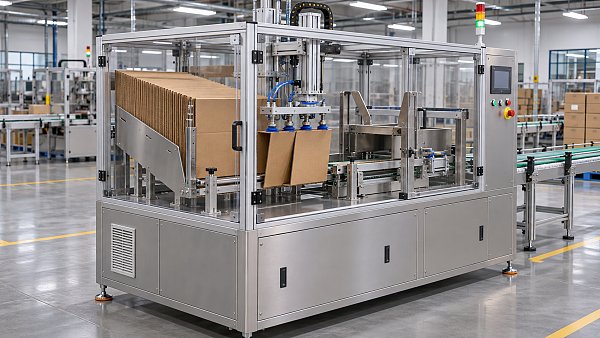
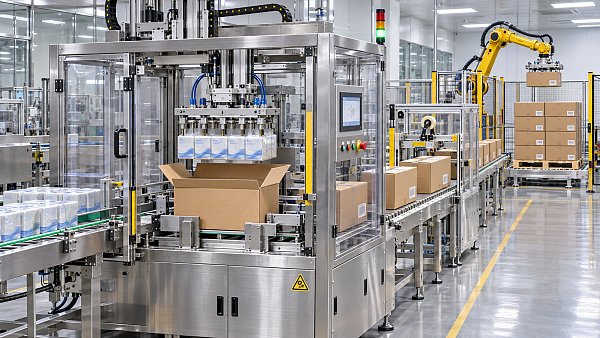
A case packer places products into corrugated shipping cases or loads them onto blanks that are subsequently wrapped around the product group. Some systems receive erected cases; others include case forming and closing. That distinction changes both the purchase price and the amount of integration work remaining after delivery.
A lower machine quotation can leave substantial equipment outside the contract. Case erecting, product accumulation, partition insertion, adhesive application, discharge conveyors, and rejection handling all need an explicit owner. Otherwise, missing functions appear as project additions after the investment has already been approved.
Used equipment introduces a different cost boundary. Relocation, refurbishment, replacement controls, missing tooling, documentation, and access to technical support require separate assessment. An attractive acquisition price loses significance if the machine cannot handle the intended case dimensions or needs extensive rebuilding before installation.
The application determines how much machine is required
Required output should be expressed in accepted cases per minute for each relevant product and packing pattern. A product rate alone is insufficient: changing the number of items per case changes the case rate, while product grouping and orientation affect the loading cycle. A headline maximum speed does not establish performance across every format.
Side-load, top-load, robotic, and wraparound arrangements solve different handling problems. A stable product group that slides cleanly into a case presents a different task from loose pouches requiring controlled gripping and placement. Robotic flexibility also requires suitable end-of-arm tooling, product presentation, programming, and adequate cycle capacity.
Fragile products, unstable bottles, slippery cartons, and easily marked packs increase handling demands. Dividers, multiple layers, mixed orientations, or identification checks introduce additional operations. These requirements belong in the initial specification because they affect mechanisms, tooling, controls, and trial work.
Format variety matters as much as maximum speed. A line running a small number of similar cases has different changeover requirements from one handling frequent changes across a broad size range. Automatic adjustment adds equipment and programming cost; manual adjustment introduces setup labor and the possibility of positioning errors. The relevant comparison is the annual production schedule, including its actual change frequency.
Corrugated case quality also affects performance. Board stiffness, score position, flap geometry, blank flatness, and dimensional consistency influence opening, loading, and sealing. Trials using unusually uniform samples provide weak evidence for operation with normal material variation. Representative products and cases should cover the agreed operating range.
Integration costs emerge at the machine boundaries
The physical layout is only part of integration. Products must arrive at the required spacing and orientation, empty cases must reach the loading position reliably, and filled cases must leave without blocking discharge. Conveyor transitions, elevation changes, and accumulation capacity determine how disturbances travel through the line.
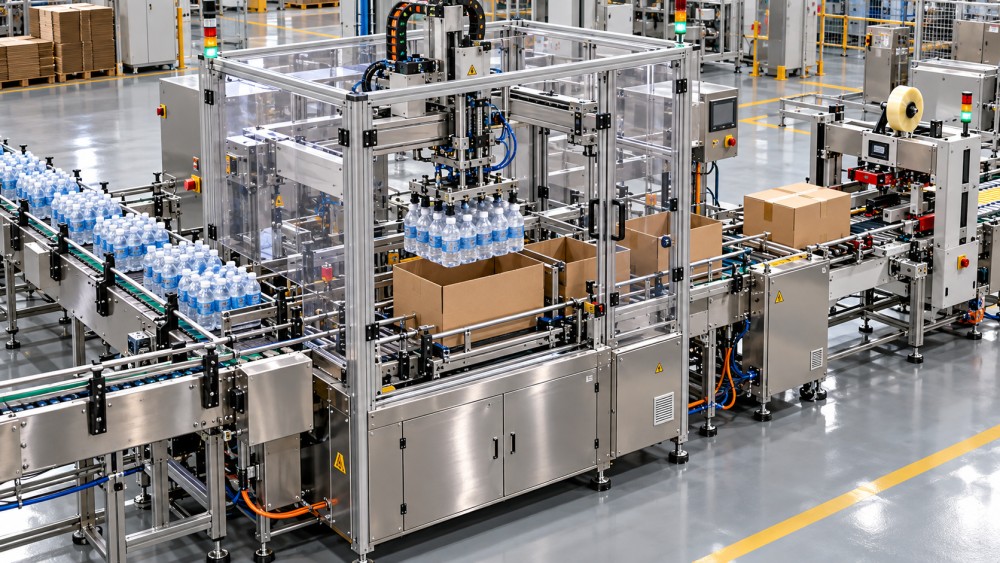
A layout showing product infeed, empty-case supply, loading, sealing, rejection, and discharge makes responsibility gaps visible. It should also show access for replenishment, maintenance, tooling changes, and jam clearance. A compact arrangement becomes expensive if routine access requires moving adjacent equipment.
Controls integration needs its own scope. Start permissions, upstream stop requests, downstream blockage signals, emergency-stop interfaces, and restart behavior must work across connected machines. An interface list should identify the signal, the responsible supplier, and the required response. Discovering incompatible assumptions during commissioning creates programming work and delays production readiness.
Site costs include freight, unloading, rigging, anchoring, electrical supply, compressed-air distribution, and any necessary building modifications. The contract should identify responsibility for each item, including travel expenses and return visits. Import duties and nonrecoverable taxes belong in the project budget where applicable; recoverable taxes require separate cash-flow treatment.
An installation shutdown can create a production cost even when no contractor invoice records it. The estimate should reflect whether output is lost, shifted to overtime, or transferred elsewhere. Scheduling installation during planned downtime reduces the incremental effect only when the available window covers connection, commissioning, and a realistic production restart.
Build the operating budget around actual workload
Labor savings require a staffing change
Automatic loading does not eliminate every task around the case packer. Blank replenishment, product supply, changeover, cleaning, inspection, and fault recovery remain part of line operation. Labor savings should reflect the staffing arrangement after installation, including work transferred to neighboring stations.
Cash savings arise when paid hours, overtime, temporary labor, or planned hiring decrease. Redeployed time has operational value, but it should be recorded separately unless it avoids an identifiable expense. Applying a full annual labor cost to every hour of machine operation overstates savings when the production schedule does not use that capacity.
Maintenance follows cycles, condition, and support needs
Maintenance estimates should identify wear items such as belts, vacuum cups, grippers, bearings, sensors, and adhesive-system components where fitted. Replacement frequency depends on duty, product contact, contamination, and maintenance practice. A percentage of purchase price provides little explanation unless supported by a relevant service history or a documented maintenance plan.
Initial spares are an upfront cash requirement; later replenishment belongs in operating costs. The same parts should not be charged twice in the lifecycle model. Critical components also need an availability assessment: a relatively inexpensive proprietary part can stop production if replacement lead time exceeds the available stock coverage.
Service agreements require clear boundaries. Remote diagnostics, on-site labor, travel, software access, and replacement parts may have different charging arrangements. Access to backups, passwords, and supported control hardware affects both recovery time and future maintenance options.
Utilities and packaging losses need measurable assumptions
Electrical demand should reflect operating states and scheduled hours rather than treating the connected load as continuous consumption. Compressed air deserves separate attention where vacuum generation or pneumatic motion is significant. Its cost comes from the plant air system, including compression and distribution losses.
Sealing method changes recurring expenditure. Hot-melt adhesive involves adhesive consumption, heating, nozzle care, and cleaning; tape sealing involves tape, cutting components, and application consistency. Case design and required seal performance determine whether either method is suitable.
Packaging waste includes damaged cases, adhesive or tape waste, and products rejected during starts, stops, and setup. Separate recoverable product from material that must be discarded. Charging the full product value to every rejected case exaggerates loss when its contents can safely return to production.
Calculate ownership cost and payback on consistent terms
Total cost of ownership = installed investment + operating expenditure over the evaluation period + major replacements and end-of-life costs − residual value.
The installed investment should include all costs necessary to reach the agreed production condition. Operating expenditure should use a consistent production schedule and price basis. For a discounted cash-flow analysis, place expenditure and benefits in the periods when they occur and apply the organization’s approved discount rate. Depreciation belongs in the relevant accounting and tax treatment; it should not duplicate the purchase cash outflow.
Simple payback = initial net investment ÷ annual net cash benefit.
Annual net cash benefit combines realizable savings and qualifying additional contribution, less incremental operating costs. Added output has financial value only when demand exists and the rest of the line can support it. Where upstream processing or downstream palletizing remains the bottleneck, a faster packer does not automatically create additional saleable production.
Use contribution from additional sales after their variable costs, rather than total sales revenue. Avoid counting the same production improvement twice as both recovered downtime and increased throughput. Likewise, a labor saving already included in a unit-cost improvement should not appear again as a separate benefit.
A base case should use the expected product mix, scheduled hours, staffing, changeover time, and demonstrated performance. A downside case can test slower ramp-up, lower utilization, or longer service delays. Change assumptions with a clear operational cause so the result shows which conditions threaten payback.
Make quote comparison and acceptance reinforce each other
Comparable quotations begin with the same product samples, case drawings, packing patterns, operating schedule, utility conditions, and layout constraints. Each quotation should distinguish included equipment, options, exclusions, installation responsibilities, and recurring charges. A single total price conceals differences that reappear during delivery.
Acceptance criteria then turn performance claims into something measurable. Useful criteria include sustained accepted output on specified formats, permitted product damage, case closure quality, changeover conditions, and recovery after agreed interruptions. The test duration, material quantities, fault treatment, and responsibility for supplying samples need agreement before testing.
Factory testing establishes performance under the agreed test conditions. Site testing adds actual utilities, neighboring equipment, material flow, and production routines. The commercial schedule should connect payment milestones to defined deliverables and document how unresolved items will be handled.
A credible case-packer budget links every major expenditure to a required production function and every projected saving to an observable operating change. Any remaining allowance should have a stated basis, an owner, and a point at which it becomes a firm cost. That makes the investment reviewable before installation and measurable after production begins.
Related News
 How to Choose Carton Counting Systems for Accurate ProductionChoose Carton Counting Systems with confidence. Compare sensors, accuracy, line integration, and testing methods to improve production reliability.Spatial Folding Strategist
 How to Troubleshoot an Automatic Case Erecting MachineTroubleshoot your automatic case erecting machine with practical steps for diagnosing jams, vacuum loss, sensor faults, and sealing issues—and restore reliable operation.Spatial Folding Strategist
 How to Choose Pallet Conveyors for a Packaging LineChoosing pallet conveyors for packaging line operations? Compare load requirements, throughput, layouts and safety to find the right solution.Spatial Folding Strategist
 How to Choose Case Packers for an Automated Palletizing LineChoose Case Packers that keep your palletizing line moving. Compare loading methods, capacity, changeovers, and integration to make a confident investment.Spatial Folding Strategist
 How Inline Pallet Wrappers Fit Into Automated Packaging LinesDiscover how inline pallet wrappers integrate with automated packaging lines, improve load stability, and help prevent costly bottlenecks.Spatial Folding Strategist
 What Affects Bundle Handling System Cost in a Sheet Plant?Bundle handling system cost depends on capacity, layout, automation, and integration. Learn how to compare total costs and choose the right system for your sheet plant.Spatial Folding Strategist