How Inline Carton Counting Systems Reduce Miscounts and Shipping Delays
Shipping delays and order disputes often begin much earlier than the loading dock. In many carton plants and packaging lines, the root cause is simple: the counted quantity at production speed does not match the quantity shipped. When that happens, the problem spreads quickly—repacking, recounting, customer complaints, blocked invoices, and avoidable pressure on dispatch teams. For project managers and engineering leaders, inline carton counting systems are not just another sensor package at the end of the line. They are a control point that helps protect shipment accuracy without slowing production down for manual verification.
This matters even more in corrugated packaging, folding carton converting, and commercial print finishing, where order structures are changing. Shorter runs, mixed SKU output, faster changeovers, and higher traceability expectations make manual counting less reliable than it used to be. A stacker operator may still catch obvious errors, but not every skip, double, overlap, or transfer gap is visible at line speed.
That is why end-of-line counting is increasingly treated as part of a broader automation investment. Platforms such as CPCS, which focus on commercial printing, corrugated packaging machinery, converting systems, inspection, coding, palletizing, and digital production management, reflect this shift clearly: buyers are no longer evaluating equipment only by purchase price. They are looking at uptime, waste, labor dependency, order control, and the downstream cost of small errors that repeat every shift.
Why miscounts are harder to control than many plants expect
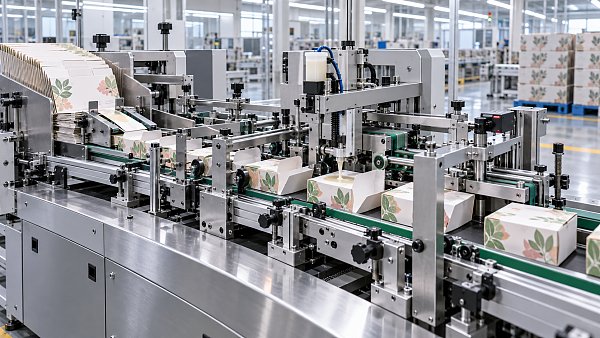
A miscount is rarely caused by one dramatic machine failure. More often, it comes from ordinary production conditions that were never fully accounted for in the counting method. Cartons may shingle on a conveyor, bounce slightly after ejection, overlap during transfer, or enter bundles with inconsistent spacing. In folder gluer and delivery sections, speed changes can alter the gap between cartons. In corrugated converting, board warp, static, dust, and stack instability can all affect detection reliability.
Manual counting becomes especially vulnerable in three situations:
- high-speed continuous flow where operators cannot visually confirm every piece,
- frequent job changes with different carton sizes or bundle counts,
- lines where counting data must feed bundling, labeling, palletizing, or ERP records.
The operational cost of a miscount is also easy to underestimate. One missing bundle may not look serious on the line, but once a shipment leaves the plant, the cost shifts from production correction to logistics disruption. A truck may depart incomplete, a customer may hold receiving confirmation, or a brand buyer may dispute the delivered quantity against the packing list. If the product is tied to coded traceability or store-ready campaigns, the administrative cost can outweigh the value of the cartons themselves.
What inline carton counting systems actually do
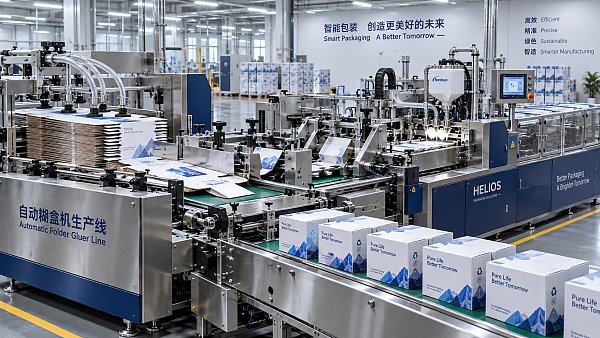
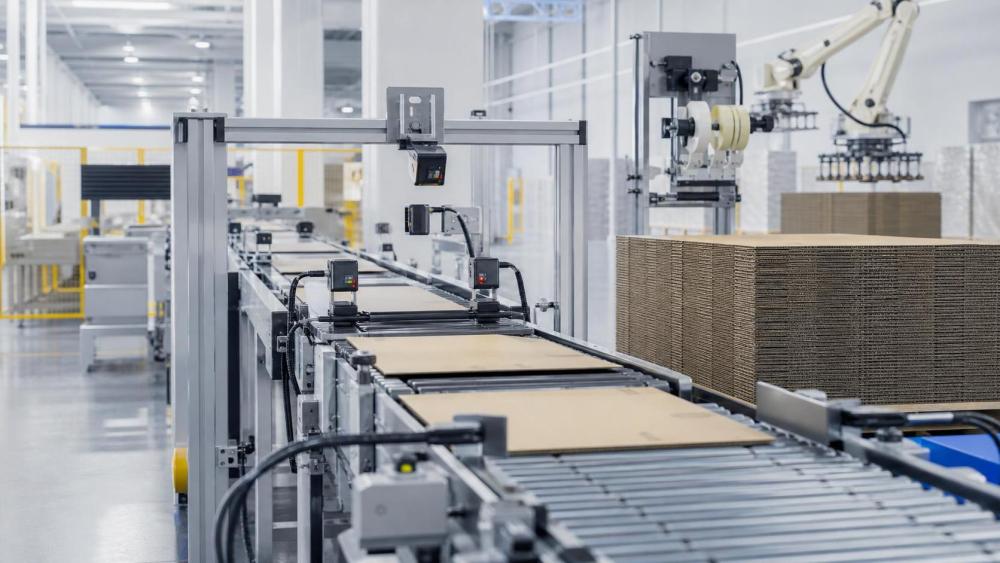
Inline carton counting systems detect and register each carton as it passes through a defined point in the production flow. Depending on the application, that point may be after die-cutting delivery, after folder gluing, before bundling, before strapping, or at transfer into palletizing. The system may use photoelectric sensors, encoder-based logic, machine vision, or a combination of these methods.
The core value is not simply “automatic counting.” It is synchronized counting. A useful system links carton detection to line speed, carton pitch, recipe settings, reject logic, and downstream actions. That is what reduces miscounts in real production rather than only in a clean test condition.
In practical terms, a well-integrated system can:
- count individual cartons or sheets in motion,
- trigger bundle separation at preset quantities,
- flag count deviation against order targets,
- exclude rejected or diverted pieces from shipment totals,
- send count data to HMI, MES, labelers, or pallet control.
That last point is where many projects either succeed or disappoint. If the counting device is accurate but isolated, operators still end up reconciling numbers manually. The real reduction in shipping delays comes when count data becomes part of the end-of-line decision chain.
How these systems reduce shipping delays in day-to-day operations
The direct benefit is obvious: fewer wrong quantities leave the factory. But for engineering and project teams, the more valuable effect is often earlier error containment. If the line detects a discrepancy before bundling or pallet build, the correction is local and fast. If the same discrepancy is found during truck loading or after customer receipt, the correction becomes a logistics issue.
There are several ways inline counting helps keep shipments on schedule.
It removes the recount bottleneck
Plants that rely on manual spot checks often end up pausing dispatch while someone verifies suspect bundles or pallet quantities. Inline counting does not eliminate all checks, but it reduces the number of cases that need intervention. That means fewer last-minute delays between production completion and warehouse release.
It keeps bundle logic consistent across shifts
A recurring issue in multi-shift plants is that counting quality depends too much on operator habit. One team counts conservatively, another relies on estimate, and a third adjusts for known machine behavior in its own way. A configured inline system creates a repeatable rule set for the order, which is especially useful where the line runs mixed formats or frequent repeat jobs.
It supports downstream automation
Robotic palletizing, automatic label print-and-apply, and shipment record generation depend on accurate count input. If that input is unstable, the rest of the automation stack becomes less reliable. This is one reason CPCS and similar industry platforms increasingly frame end-of-line equipment as a system rather than as isolated machines. Counting accuracy affects not only the output report but also physical material flow.
Where projects go wrong: common specification mistakes
Many counting projects underperform not because the technology is wrong, but because the application conditions were not defined tightly enough during planning.
One common mistake is choosing a detection method based only on carton presence, not carton behavior. A flat, well-spaced blank moving steadily is easy to count. A folded carton with variable flap geometry, occasional skew, and inconsistent gaps is not. The sensing method needs to match the real transport condition, not the ideal drawing.
Another issue is failing to define how rejects are handled. If a line includes vision inspection, code verification, glue detection, or mechanical reject stations, the count logic must decide whether the master total tracks gross production, net good output, or shipment-ready quantity. Confusion here often creates disputes between production, quality, and warehouse teams even when the sensor itself is working correctly.
Integration timing also matters. On high-speed lines, encoder referencing, PLC scan timing, and conveyor transition behavior can affect count consistency. This usually needs to be reviewed with the machine builder, controls integrator, and end user together. It is not just an electrical installation issue.
What project managers should confirm before approving a solution
When evaluating inline carton counting systems, a useful discussion starts with the line reality rather than the brochure. These are the points that usually deserve early confirmation:
It is also worth asking what happens during abnormal conditions. If cartons jam, if two pieces pass as one, if an operator removes a bundle manually, how is the count reconciled? That kind of exception handling has a larger operational impact than polished interface screens.
Counting should be part of a wider end-of-line strategy
In modern packaging plants, inline carton counting works best when it is treated as one layer of control inside a connected end-of-line architecture. In corrugated and print finishing environments, that often means alignment with inspection, coding, traceability, bundling, palletizing, and production reporting. The count that drives a bundle separator may also need to drive a pallet label, a warehouse transaction, or a customer-specific packing record.
This is one reason structured technical information has become more valuable to investment teams. CPCS, for example, focuses on the practical links between converting equipment, inspection systems, automation, and digital plant management. That systems view is useful because the business case for counting is usually not about counting alone. It is about reducing hidden friction across the order-to-shipment process.
Plants that are still evaluating the topic do not necessarily need the most advanced solution on day one. But they do need a clear specification: what must be counted, at what speed, under what product variation, and for which downstream action. Once those answers are defined, the choice between basic sensing, vision-assisted counting, or deeper software integration becomes much easier.
If shipment errors are already showing up as recurring delays, claims, or manual recount work, the next step is usually not another warehouse procedure. It is a closer look at where the count becomes trustworthy—or where it stops being trustworthy—while the cartons are still on the line.
Related News
 How an Automatic Folder Gluer System Reduces Carton Setup ErrorsAutomatic folder gluer system solutions reduce carton setup errors with precise feeding, folding, glue control, and compression. Discover how to improve quality and changeovers.Spatial Folding Strategist
 How to Choose a Folder Gluer Machine for Folding CartonsChoose the right folder gluer machine for folding cartons with proven guidance on speed, carton styles, glue quality, automation, testing, and lifecycle costs.Spatial Folding Strategist
 When Chain Pallet Conveyors Improve Warehouse Flow and ThroughputChain pallet conveyors improve warehouse flow by reducing forklift delays, adding controlled accumulation, and protecting packaging throughput. Discover when they deliver the strongest ROI.Spatial Folding Strategist
 How to Compare Automatic Strapping Machine Price and Total CostAutomatic strapping machine price comparison made simple: evaluate installation, throughput, consumables, labor, downtime, and total cost for a smarter investment.Spatial Folding Strategist
 What to Compare When Choosing a Pallet Wrappers SupplierCompare a pallet wrappers supplier by load stability, film efficiency, automation integration, service support, and total cost to choose the right solution.Spatial Folding Strategist
 How an Automatic Case Erecting Machine Reduces Packing DelaysAutomatic case erecting machine solutions reduce packing delays by delivering consistent, sealed cases, improving line flow, uptime, and end-of-line efficiency.Spatial Folding Strategist