How High Speed Strapping Machines Reduce Downtime in Busy Lines
In a busy converting, print finishing, or corrugated packaging plant, downtime rarely begins with one dramatic machine failure. More often, it starts with a small interruption at the end of the line: bundles waiting for securing, operators manually adjusting loose straps, a misfed stack, or a discharge area that cannot clear quickly enough. Within minutes, that delay can travel upstream. Finished cartons accumulate, conveyors slow down, operators leave their stations to help, and the production schedule becomes harder to recover.
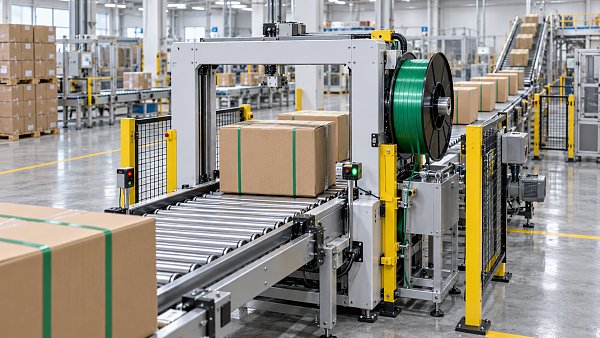
A high speed strapping machine is often introduced to solve exactly this kind of pressure. Its value is not simply that it places a strap around a bundle faster than manual work. In a well-planned line, the machine becomes a flow-control point between production and dispatch. It keeps stacks of cartons, corrugated sheets, printed materials, or folded packaging moving in a predictable rhythm, while reducing the small handling problems that cause repeated stops.
For operators, the practical question is not “How fast can the machine strap?” It is: Will it keep working when the line is already running at full pace? The answer depends on machine integration, bundle quality, strap management, maintenance habits, and the way operators respond to early warning signs.
Downtime at the end of the line is more expensive than it looks
End-of-line stoppages can appear minor because the main production equipment may still be capable of running. A flexographic press, folder gluer, die-cutter, or corrugator may be producing acceptable output, yet its effective capacity falls when finished products cannot be removed, bundled, and transferred reliably.
Consider a typical corrugated carton operation. Blanks leave a folder gluer in counted stacks, move toward bundling, and need to be secured before palletizing or loading. If strapping is slow or inconsistent, stacks may be set aside by hand. That creates temporary storage, extra touches, and a greater chance of mixed quantities or damaged edges. When the buffer fills, the folder gluer must slow down or stop. The original issue may have been one strap cycle, but the lost time affects several people and machines.
The same pattern appears in commercial print finishing. Printed sheets, booklets, folded inserts, and cartons need stable bundles for transfer to the next process or shipment. Loose bundles can shift during transport; over-tight strapping can mark sensitive surfaces; failed strap sealing can force rework. A reliable automatic strapping station reduces these avoidable interruptions and gives the line a more consistent handoff.
How a high speed strapping machine keeps material moving
High-speed strapping systems reduce downtime through a series of small, connected actions. Their effect is most visible when order volumes are high, bundles arrive continuously, and operators have limited time to intervene.
Shorter cycle times prevent the discharge zone from backing up
A machine with a fast strap feed, tensioning, sealing, and cutting cycle can process bundles at the same pace as upstream equipment. This is especially important where stacks are delivered automatically by a conveyor, turning device, or counting system. If the strapping cycle cannot match incoming production, every bundle becomes a queue.
Speed alone is not enough. The usable speed of a strapping machine is the speed it can sustain without frequent strap misfeeds, seal failures, or reset requirements. For an operator, stable repetition is far more valuable than a nominal maximum cycle rate that only works under ideal conditions.
Automatic strap feeding removes a common interruption point
Manual threading and repeated strap handling consume more time than many teams expect. In high-output packaging operations, strap coils may need frequent replacement, and poor loading can lead to twists, poor feed alignment, or strap jams inside the arch.
A well-designed high speed strapping machine guides the strap through a controlled path and detects whether the strap has been fed correctly. Some systems can automatically re-feed after a failed cycle, helping the operator avoid stopping the entire line for a minor feeding error. This does not eliminate the need for correct strap loading, but it reduces the number of disruptions caused by routine strap handling.
Consistent tension protects both bundles and machine flow
Uneven tension is a hidden source of downtime. A strap that is too loose may allow carton bundles to open or shift, creating problems at palletizing, warehousing, or transport. A strap that is too tight can crush corrugated edges, deform printed stacks, or leave visible marks on coated and finished products. Either condition can result in inspection holds, rebundling, or customer complaints.
Programmable tension settings allow operators to match strapping force to the product. Lightweight folded cartons, dense stacks of printed sheets, and thick corrugated bundles do not behave the same way. When tension is selected correctly and remains consistent, downstream handling becomes more reliable, and operators spend less time correcting bundles that should have been acceptable the first time.
Reliable sealing avoids repeated rework at the worst moment
The seal is the point where a quick cycle becomes a dependable bundle. If the sealing mechanism is contaminated, worn, poorly heated, or incorrectly adjusted, straps may separate during discharge or later during handling. Operators then have to remove failed straps, reposition the bundle, and run it again. On a busy line, that interruption can quickly become a growing pile of exceptions.
Reliable sealing comes from appropriate machine settings, compatible strap material, clean sealing components, and regular inspection. It is a simple principle, but it has a direct effect on uptime: every bundle that leaves secure is one less bundle returning to the station.
Where operators see the biggest uptime gains
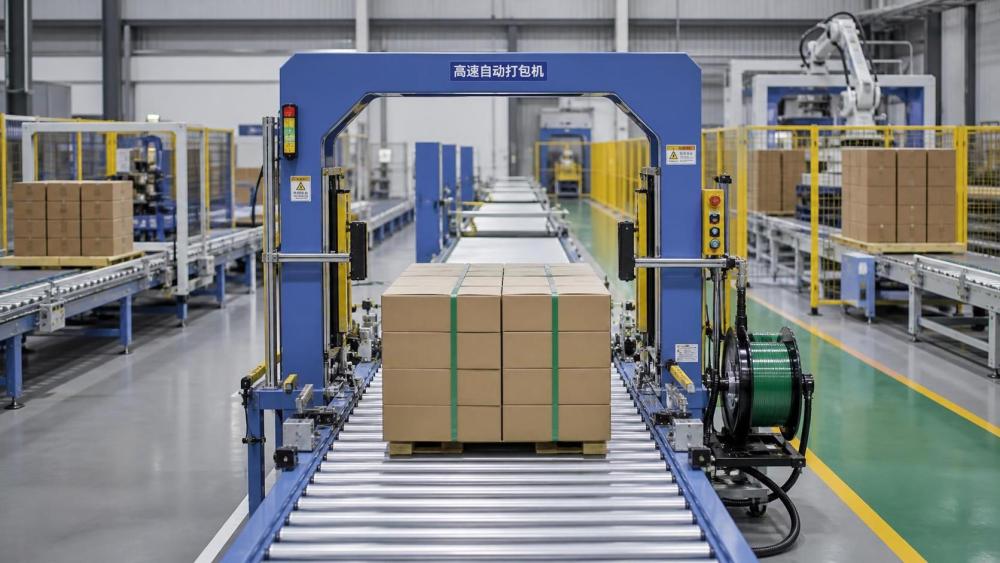
The strongest results usually come from applications where material arrives continuously and manual bundling has become a bottleneck. In corrugated packaging plants, high speed strapping machines are commonly positioned after counting, stacking, or bundle turning equipment. They can secure die-cut blanks, folded cartons, or corrugated sheets before palletizing. In these applications, good alignment matters as much as strapping speed because skewed stacks can interfere with the arch or create unstable bundles.
In print finishing, the machine may secure stacks of brochures, inserts, labels, cartons, or promotional materials. Operators should pay close attention to surface sensitivity. Gloss-coated, laminated, or freshly printed products may require adjusted tension, protective positioning, or a different bundle configuration to avoid strap marking.
Warehouse and dispatch areas also benefit when a strapping machine creates consistent bundle dimensions. Uniformly secured loads are easier to barcode, count, palletize, and move by forklift. The reduction in handling variation helps logistics teams work with fewer surprises, particularly when shipment deadlines are tight.
Machine speed will not fix an unstable bundle
It is tempting to blame the strapping unit whenever bundles jam or straps fail. Yet many problems begin before the bundle reaches the machine. Stacks with uneven edges, inconsistent counts, curled board, poor folding, or excessive product bounce can all reduce strapping reliability.
Operators can prevent many recurring stops by checking what arrives at the strapping station:
- Are bundle dimensions within the machine’s working range?
- Do stacks enter squarely, or do they drift to one side of the conveyor?
- Are carton edges crushed, curled, or too irregular for stable compression?
- Does the product count remain consistent from bundle to bundle?
- Is there enough spacing between incoming stacks for the machine to complete its cycle?
- Are guide rails, stop plates, and conveyor speeds set for the current job rather than the previous one?
These checks are especially important during order changes. Short-run packaging production creates frequent shifts in board grade, carton size, bundle height, and stack count. If settings are not reviewed at changeover, an otherwise capable system may generate unnecessary stops during the first minutes of a new job.
What to watch during a shift
Operators do not need to wait for a complete failure before taking action. Most strapping issues show early signals: a strap begins feeding less smoothly, the seal area accumulates residue, bundles stop slightly off-center, or the cycle time becomes inconsistent. A short check at the right time can prevent a longer interruption later.
Keep the strap path clean and free from fragments. Confirm that the strap coil unwinds smoothly and that the material is not damaged by poor storage conditions. Dust, paper particles, adhesive residue, and loose strap pieces are common in corrugated and print environments; they can affect sensors, rollers, and the sealing zone.
It is also useful to distinguish between a machine alarm and a process alarm. If the machine repeatedly reports a strap feed issue, inspect the strap route and feed components. If it only occurs with one product size or one job, look at bundle alignment, incoming timing, and guide settings. This approach avoids changing machine parameters when the real cause is upstream material variation.
Choosing settings for product stability, not just maximum output
For many operations, the fastest setting is not automatically the best setting. A strapping machine should be tuned to the product and the line’s actual rhythm. If conveyor speed pushes bundles into the arch before the previous cycle is complete, jams are likely. If tension is increased merely to make bundles feel “safer,” edge damage and strap breakage may rise.
When setting up a job, operators should verify strap width and quality, tension level, number of straps per bundle, arch size, conveyor timing, and bundle stop position. The correct combination depends on bundle weight, dimensions, material stiffness, and how the product will be handled afterward. A lightweight stack going directly into a carton may need a different setting from a heavy corrugated bundle that will travel through several warehouse stages.
Where product formats change often, saved recipes can reduce setup time and improve repeatability. A recipe should not replace operator judgment, but it gives the team a dependable starting point for familiar jobs. Before full production begins, run several bundles and inspect strap placement, seal quality, edge condition, and discharge behavior.
Integration is where downtime reduction becomes measurable
A standalone strapping machine can improve manual work, but integration creates the larger uptime benefit. When linked with stackers, conveyors, automatic counting, labeling, checkweighing, palletizing, or production management systems, the strapping station can become part of a controlled end-of-line sequence.
For example, sensors can confirm that a bundle is present and correctly positioned before the strapping cycle starts. Conveyor controls can manage the gap between bundles. A downstream palletizer can signal whether it is ready to receive finished packs. Rather than relying on an operator to visually manage every handoff, the line uses controlled communication to prevent collisions and accumulation.
In digitally managed packaging plants, strapping activity can also support production traceability. Job data, bundle count, shift information, and exception events may be connected to broader factory reporting. This does not make the machine maintenance-free, but it helps supervisors identify where stoppages occur and whether a recurring problem is related to specific products, shift conditions, or consumables.
A practical routine for dependable performance
The most productive lines treat the high speed strapping machine as a critical production asset rather than a final accessory. At the beginning of a shift, confirm strap supply, machine cleanliness, sensor condition, guarding, and the correct job settings. During production, watch bundle alignment and cycle consistency instead of only reacting when an alarm appears. At changeover, reset guides and timing deliberately. At the end of the shift, remove debris and report small abnormalities before they develop into the next day’s stoppage.
Downtime cannot be removed entirely from printing and packaging production. Paper quality changes, order mixes shift, and mechanical components eventually require attention. But a properly selected, correctly integrated, and carefully operated high speed strapping machine can prevent many of the routine disruptions that drain capacity from busy lines. It keeps finished products secure, reduces unnecessary handling, and gives operators a calmer, more controllable end-of-line process—exactly when the rest of the factory is asking for more output.
Related News
 What to Check Before Ordering Pallet Wrappers Direct From a FactoryBuying from a pallet wrappers factory? Check load compatibility, output, film costs, safety, and support before ordering. Use this checklist to avoid costly mistakes and buy with confidence.Spatial Folding Strategist
 How an Automatic Folder Gluer System Reduces Carton Setup ErrorsAutomatic folder gluer system solutions reduce carton setup errors with precise feeding, folding, glue control, and compression. Discover how to improve quality and changeovers.Spatial Folding Strategist
 How to Choose a Folder Gluer Machine for Folding CartonsChoose the right folder gluer machine for folding cartons with proven guidance on speed, carton styles, glue quality, automation, testing, and lifecycle costs.Spatial Folding Strategist
 When Chain Pallet Conveyors Improve Warehouse Flow and ThroughputChain pallet conveyors improve warehouse flow by reducing forklift delays, adding controlled accumulation, and protecting packaging throughput. Discover when they deliver the strongest ROI.Spatial Folding Strategist
 How to Compare Automatic Strapping Machine Price and Total CostAutomatic strapping machine price comparison made simple: evaluate installation, throughput, consumables, labor, downtime, and total cost for a smarter investment.Spatial Folding Strategist
 What to Compare When Choosing a Pallet Wrappers SupplierCompare a pallet wrappers supplier by load stability, film efficiency, automation integration, service support, and total cost to choose the right solution.Spatial Folding Strategist