How High Speed Bundle Handling Equipment Improves Palletizing Flow
A palletizer can only build stable loads as fast as it receives consistent, correctly oriented bundles. When finished carton blanks, folded cartons, corrugated cases, or bundled printed products arrive unevenly, the robot or layer-forming station spends time waiting, correcting, or stopping. High speed bundle handling equipment improves palletizing flow by turning an irregular discharge stream into a controlled sequence of bundles with known spacing, orientation, count, and release timing.
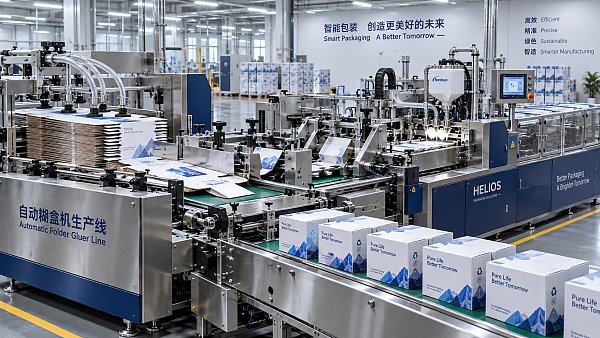
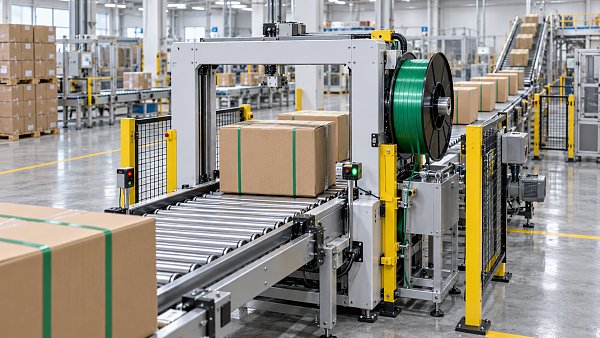
The improvement is often most visible at the point where converting equipment runs continuously while palletizing works in cycles. A folder gluer, die-cutter delivery, strapping station, or bundler may discharge product at a rate that changes with job format, machine acceleration, and bundle accumulation. A palletizer must complete pick, placement, layer change, pallet exchange, and sometimes slip-sheet handling without losing control of that incoming flow. The handling system between them absorbs those differences rather than forcing either machine to run at the other's natural rhythm.
From discharge stream to palletizing sequence
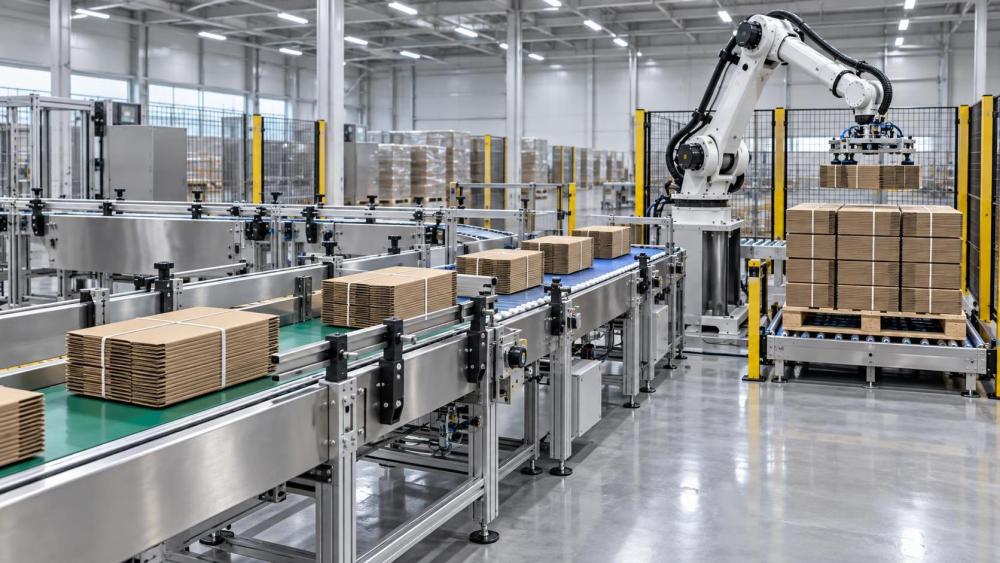
The useful function of the transfer section is not simply conveying. It establishes a repeatable handoff. Bundles first leave the upstream machine with a particular velocity and surface condition. They then pass through separation, squaring, buffering, and metered release stages before entering a robotic pick zone or conventional layer palletizer. Each stage prevents a different disturbance from reaching the final stacking process.
Separation is needed when bundles leave with little or no gap. A palletizer cannot reliably identify the leading and trailing edge of two touching bundles, particularly where dark print, open carton geometry, or film wrapping complicates sensor readings. A controlled acceleration belt, timing conveyor, or stop-and-release device creates the gap required for sensing and picking. The correct gap is linked to gripper travel, sensor response, conveyor speed, and the permitted variation in bundle length. A large gap can reduce available throughput; a marginal gap can produce double picks or late pick commands.
Alignment matters just as much. A bundle that is only slightly skewed may still pass through a basic conveyor system, yet its error becomes much larger when it is placed into an interlocked pallet pattern. Side guides, squaring belts, servo-controlled alignment sections, or gentle compression devices bring the bundle to a known reference. The method should suit the product. Rigid corrugated case bundles can tolerate firmer side contact than freshly glued folding cartons, coated print work, or bundles with vulnerable corners.
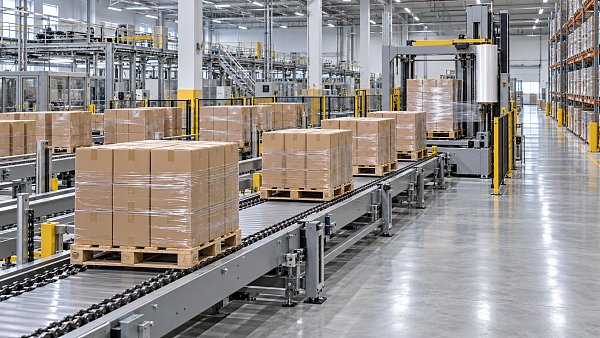
Buffering separates short upstream interruptions from palletizing cycle time. Without it, a brief delay during pallet exchange can force the converting line to slow or discharge bundles into an unmanaged accumulation area. With a properly designed buffer, incoming bundles retain their order while the palletizer completes a non-picking action. Buffer capacity should be based on the longest credible interruption, not on normal robot cycle time alone. Pallet replacement, stretch-wrapper interaction, label verification, rejected bundle removal, and downstream conveyor clearance can all create longer pauses than the nominal placement cycle.
Why nominal speed is a weak sizing basis
It is common to compare equipment using bundles per minute. That value is useful, but it does not describe the actual flow condition presented to the palletizer. A line producing small, light bundles at a stated rate behaves differently from one producing wide, heavy bundles at the same rate. Bundle length changes the conveyor pitch; thickness affects gripping and layer height; weight affects acceleration limits; surface finish affects belt traction and lateral control.
Bundle rate must therefore be translated into a physical arrival pattern. The relevant questions are: how many bundles are released during a fast production phase, how close their edges are at transfer, how much their dimensions vary within a job, and whether the pallet pattern requires one bundle, a grouped pick, or a complete preformed layer. A robot capable of a fast isolated pick may still be constrained by an infeed that releases product in clusters, with inconsistent orientation, or with insufficient spacing for vision confirmation.
Peak rate also needs to be distinguished from average output. Converting machines may deliver bursts during stable running, followed by reduced output during a splice, short stop, order transition, or quality intervention. A handling system designed around the average may appear adequate during demonstrations and then become the restriction during sustained production. Conversely, an oversized palletizing cell will not correct a poorly controlled discharge stream. The connection between the two needs enough capacity and control authority to manage transient conditions.
Bundle integrity sets the limit before the robot does
Many palletizing problems originate upstream of the palletizer. A bundle can be counted correctly and still be unsuitable for dependable handling. Loose straps, uneven compression, bowed stacks, poorly set glue seams, curled board, and inconsistent bundle height change how the bundle behaves on belts and under a gripper. These defects are sometimes mistaken for a robot programming issue because the visible failure occurs at the pick station.
Corrugated products deserve particular attention after conversion. Board moisture and flute structure influence stiffness, while score quality and die-cut geometry determine how readily corners deform under side pressure. A tall stack of lightweight die-cut blanks can shift internally when accelerated. A compact bundle of glued cartons may have enough friction to resist a vacuum or friction-based separation action but still distort under clamping force. The handling concept must be selected around the finished bundle, not only around the sheet or carton specification.
Gripper choice should follow the load condition and pallet pattern. Vacuum systems require a sufficiently stable and accessible surface; perforated, dusty, warped, or porous products can reduce holding consistency. Mechanical clamps allow positive capture but impose force on edges or faces. Fork-style tools suit some unit loads and grouped bundles but require clear entry paths. A layer tool reduces the number of robot movements when a complete pattern can be formed reliably, although it places greater demands on upstream accumulation and layer squaring.
Product protection should be assessed at transfer points, not only during the final pick. Small height differences between conveyors create leading-edge impacts. Worn belt joints, exposed fasteners, and sharp guide transitions can mark printed surfaces or catch die-cut features. When damage occurs intermittently, the first investigation should compare its timing with conveyor start-stop events, buffer discharge, and pallet change sequences. Damage that appears at a fixed machine location points toward mechanical contact; damage that appears after a pause often points toward compression from accumulated back pressure.
Control logic keeps the line stable during exceptions
A high-speed system needs more than start and stop signals between machines. It requires an agreed flow state. The upstream section needs to know whether the palletizer is ready to receive, temporarily blocked, completing a pallet change, or in a fault condition. The palletizer needs confirmation that the next bundle is present, separated, correctly positioned, and accepted by the infeed control. These signals should be defined early because they affect conveyor zoning, buffer design, safety recovery, and commissioning time.
Zones are especially useful where several bundles are moving between a bundler and a robot. Each zone holds or releases one bundle position while preserving a controlled gap. Release decisions can then consider downstream availability rather than allowing a continuous belt to push bundles into a blocked area. This reduces contact pressure between bundles and makes restart behavior more predictable.
Recipe management is equally important where jobs change frequently. Bundle dimensions, target orientation, guide positions, conveyor timing, gripper settings, pallet pattern, layer count, and reject rules must refer to the same product definition. A common failure mode is a palletizer recipe being updated while infeed guides or bundle detection settings remain set for the previous job. The first few bundles may then be skewed, miscounted, or placed with the wrong pitch. A controlled changeover sequence should prevent automatic release until the relevant positions and confirmations are complete.
Exception handling deserves direct testing. A missing bundle, double bundle, skewed bundle, failed pick, rejected print, full buffer, or unavailable empty pallet should each produce a defined response. Stopping every conveyor for every exception protects equipment but can create unnecessary production loss. Allowing every upstream section to continue can overwhelm the buffer. The appropriate response depends on where the defect is detected, whether bundle identity must be retained, and whether the remaining product can stay in sequence.
Layout decisions that affect performance after installation
The physical route between conversion and palletizing is often constrained by columns, aisle access, floor drains, existing conveyor elevations, and the need to maintain safe access for clearing jams. A compact layout is not automatically the best layout. Tight turns and short transitions can make it difficult to keep wide bundles square. They also leave little room for accumulation, inspection, or removal of a damaged bundle without stopping the line.
Elevation changes need careful treatment. An inclined conveyor can shift stacks toward a leading edge, while a decline can make light bundles slide or overrun a stopping position. Where level changes cannot be avoided, adequate belt grip, controlled acceleration, and stable bundle support become more important. The same applies to transfers between belt widths. A narrow belt may center a small bundle effectively but provide poor support for a broad, flexible stack.
Installation tolerances are frequently underestimated. Conveyor centerlines, guide positions, sensor brackets, and robot pick coordinates form one geometric system. A small offset at the start of the infeed can cause recurring skew at the pick point, especially when bundles pass through several side-contact sections. Mechanical alignment should be verified before repeated software adjustments are used to compensate for a physical error.
Commissioning should prove flow, not only motion
A palletizer can demonstrate correct robot paths with empty tools and still fail under production conditions. Commissioning should use representative bundle sizes, board grades, surface finishes, strap or wrap methods, and pallet patterns. Testing only the easiest, most rigid bundle conceals the conditions that will later cause unstable transfers.
Useful trials include normal production flow, sustained peak discharge, pallet exchange, short upstream stop, controlled restart, recipe transition, and a deliberate reject event. The objective is to observe whether the buffer protects the upstream machine, whether the release logic restores spacing after a disturbance, and whether the palletizer receives product in a repeatable condition. Cycle time alone does not reveal these interactions.
During acceptance, record the actual reason for each stop rather than assigning all lost time to palletizing. A robot waiting for a bundle, a bundle waiting for the robot, a sensor blocked by dust, a skewed stack stopped by guides, and a full buffer are different faults with different remedies. This distinction prevents an expensive capacity change from being applied to a control, mechanical alignment, or bundle-quality issue.
Once the line is running, basic maintenance protects the original flow design. Belt tracking, transfer gaps, guide-face wear, sensor cleanliness, pneumatic response, gripper wear, and fastener security all influence repeatability. Changes in bundle quality should be reviewed alongside machine condition. A gradual rise in pick failures may come from vacuum leakage or sensor contamination, while a sudden rise after a new carton design often indicates that the physical handling assumptions have changed.
Reliable palletizing flow is created before the bundle reaches the pallet. When transfer, spacing, alignment, buffering, and release control are matched to the real product stream, the palletizer can work at its intended rhythm and the converting line is less likely to be governed by end-of-line interruptions.
Related News
 How an Automatic Folder Gluer System Reduces Carton Setup ErrorsAutomatic folder gluer system solutions reduce carton setup errors with precise feeding, folding, glue control, and compression. Discover how to improve quality and changeovers.Spatial Folding Strategist
 How to Choose a Folder Gluer Machine for Folding CartonsChoose the right folder gluer machine for folding cartons with proven guidance on speed, carton styles, glue quality, automation, testing, and lifecycle costs.Spatial Folding Strategist
 When Chain Pallet Conveyors Improve Warehouse Flow and ThroughputChain pallet conveyors improve warehouse flow by reducing forklift delays, adding controlled accumulation, and protecting packaging throughput. Discover when they deliver the strongest ROI.Spatial Folding Strategist
 How to Compare Automatic Strapping Machine Price and Total CostAutomatic strapping machine price comparison made simple: evaluate installation, throughput, consumables, labor, downtime, and total cost for a smarter investment.Spatial Folding Strategist
 What to Compare When Choosing a Pallet Wrappers SupplierCompare a pallet wrappers supplier by load stability, film efficiency, automation integration, service support, and total cost to choose the right solution.Spatial Folding Strategist
 How an Automatic Case Erecting Machine Reduces Packing DelaysAutomatic case erecting machine solutions reduce packing delays by delivering consistent, sealed cases, improving line flow, uptime, and end-of-line efficiency.Spatial Folding Strategist