How Can a Corrugated Case Erecting Machine Reduce Packaging Labor Costs?
When packing demand rises, labor cost is rarely limited to the wages of people folding boxes. A manual case-forming station can also create uneven output, frequent material handling, small stoppages between shifts, and pressure on downstream packers when a delivery deadline is close. In e-commerce fulfillment, food distribution, industrial parts shipping, and many corrugated packaging operations, these interruptions become visible when workers must repeatedly pick flat blanks, square the cases, fold bottom flaps, apply tape or adhesive, and move formed cases into position.
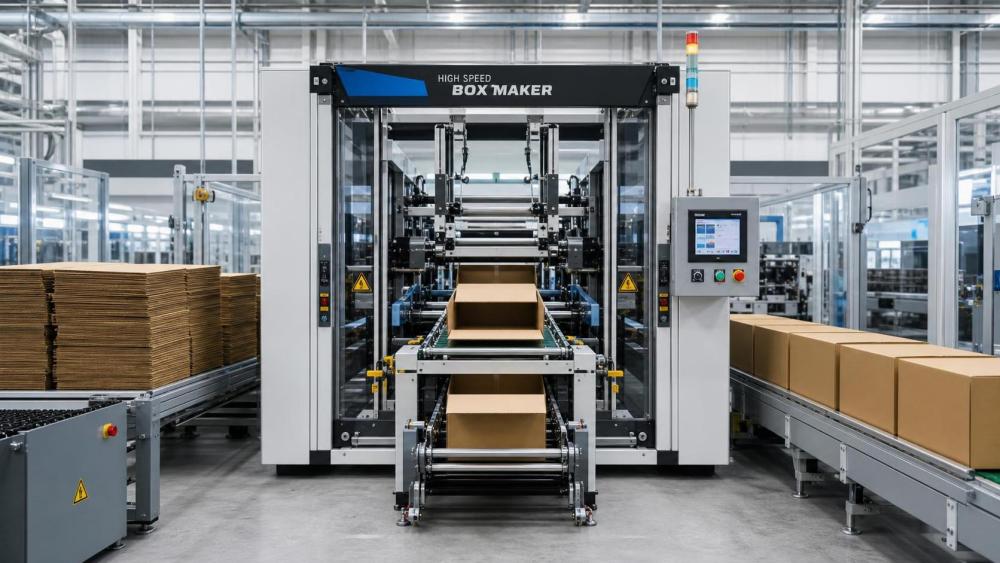
A corrugated case erecting machine can reduce packaging labor costs by automating the repetitive formation of regular slotted cases and similar blank formats. Its value is not simply that it “replaces people.” It removes a labor-intensive task from the line, stabilizes the supply of erected cases, reduces the need for workers to alternate between box handling and packing, and allows labor to be reassigned to work that still requires judgment, product handling, quality checks, replenishment, or exception management. The strongest savings usually appear when the machine is matched to a stable process rather than installed as an isolated piece of equipment.
Where manual case erection creates hidden cost
Manual case setup often looks inexpensive because the equipment requirement is limited to worktables, tape dispensers, and access to bundles of flat corrugated blanks. That view misses the operational cost of keeping the station productive. Case erectors must reach for blanks, separate cases that may cling together, open each case fully, align its panels, fold bottom flaps in the correct sequence, seal the base, and present the case in a usable orientation. Repetition can be demanding even at moderate output, especially when case sizes change during the shift.
The labor requirement also fluctuates. A line may need one person at low demand, then need additional support when packing rates increase or an order backlog develops. In practice, supervisors may pull staff from nearby tasks to prevent the packing line from running short of empty cases. That response can move the constraint rather than solve it. Product loading slows, labeling waits, palletizing becomes less balanced, and the end-of-line team spends time recovering from an upstream shortage.
Case quality is another labor issue. A partially squared case, poorly folded bottom flap, inconsistent tape application, or case opened in the wrong orientation may not be detected until a product is being loaded. The result can be repacking, tape rework, interrupted product flow, or a weakened shipping case. An operator must then correct an error that began before the product entered the box.
Automation is most useful where these conditions occur repeatedly: a predictable demand for corrugated shipping cases, a regular supply of compatible blanks, and an end-of-line process that loses time when formed cases are unavailable. A machine cannot remove every packaging role, but it can make the remaining roles less dependent on constant manual case preparation.
Labor reduction comes from task redesign, not just headcount
Project teams sometimes make the mistake of comparing one machine directly against one case erector. That comparison is too narrow. The relevant question is how work changes across the full packaging cell. Once a machine consistently forms and seals cases, a worker who previously stayed at the erection station may monitor material supply, perform changeovers, clear occasional faults, inspect case quality, or support product loading. In some layouts, one operator can oversee the erector while also serving a nearby pack station. In others, the labor benefit is better described as avoiding the need to add a dedicated person as throughput grows.
This distinction matters for investment planning. Labor savings may take several forms:
- Fewer dedicated hours spent forming and bottom-sealing cases.
- Less temporary redeployment during high-volume periods.
- Lower overtime exposure when the packing area must maintain output late in a shift.
- Reduced rework caused by incorrectly formed or weakly sealed cases.
- More consistent staffing because the process is less dependent on individual speed and technique.
- Better use of trained operators for product-sensitive, quality-critical, or troubleshooting work.
Not every site will realize all of these benefits. A low-volume operation with irregular orders may retain manual erection because machine attendance and setup time would outweigh the available savings. A high-volume line may obtain more value from continuity than from direct labor removal: fewer pauses at the pack station can improve the use of existing labor across the entire line.
Start with the actual case demand profile
Before selecting equipment, map when and why cases are consumed. Do not rely only on a daily shipment total. A packaging line can have a modest average requirement but sharp peaks caused by batch completion, shift change, order release timing, or seasonal demand. The machine must support the real operating pattern, including the periods when manual formation becomes a bottleneck.
Useful inputs include case consumption by hour, the number of active case sizes, blank bundle replenishment frequency, the time needed to change between formats, and the distance between case storage and the packing line. It is also important to record how often packers wait for cases and whether operators perform other tasks while erecting. A worker who only forms boxes presents a different automation opportunity from a worker who must stop packing products every few minutes to prepare another group of cases.
The analysis should separate average output from required output. Equipment sized only for an average rate may still create labor pressure when production reaches normal peak demand. Conversely, specifying an unnecessarily high-speed system can increase cost and complexity without reducing more labor. The goal is a stable supply of formed cases that keeps the downstream station working at its intended pace.
Match the machine to corrugated material and case geometry
A corrugated case erecting machine handles physical materials with natural variation. Blank dimensions, board grade, flute structure, moisture condition, storage method, scoring quality, print coverage, and bundle condition can affect opening and squaring performance. A machine may be mechanically capable of running a published size range while still needing trials to confirm that the site’s actual blanks feed reliably.
For project planning, collect representative samples of every case style expected to run. Review the minimum and maximum length, width, and height; blank squareness; slot and flap geometry; board thickness; and bottom sealing method. If tape is used, the tape specification and application pattern matter. If hot-melt adhesive is planned, the process must consider glue temperature control, adhesive access, cleaning, and the time required to achieve a secure bond before the case is conveyed onward.
Case format variety has a direct effect on labor savings. A line using a limited family of regularly scheduled case sizes can often gain meaningful automation value because changeovers are controlled and operators do not need to constantly adjust a manual station. A line with many short runs and highly varied dimensions may still benefit, but the equipment should be evaluated for changeover method, recipe management where applicable, adjustment points, and verification steps. Fast changeovers are only useful when they can be performed accurately by the available operating team.
Material handling around the machine matters
Automation does not eliminate the need to bring flat blanks to the machine. Bundles still need to be delivered, opened, loaded into the magazine, and replenished safely. If blank storage is far away or replenishment requires frequent manual lifting, part of the labor burden may simply move upstream. Consider whether the magazine height, access side, bundle weight, floor space, and material route suit the intended workflow.
A poorly planned loading arrangement can make a good machine feel labor-intensive. The operator may spend excessive time walking, breaking down bundles, or clearing congested areas. In contrast, a nearby blank staging area and a magazine sized for practical replenishment intervals can reduce interruptions without requiring excessive inventory at the line.
Use the equipment as part of an integrated packaging cell
The greatest labor reduction usually comes when case erection is connected logically to packing, sealing, labeling, inspection, and palletizing. The erector should deliver cases at a controlled rate and orientation that matches the next operation. A machine that forms cases quickly but discharges them into an awkward accumulation area may still require manual handling before product loading.
There are several common arrangements. In a semi-automatic packing cell, erected cases may be supplied to a manual pack station where operators load product and close the top flaps. In a more continuous line, cases move directly from erection to automatic or assisted loading. The proper arrangement depends on product characteristics, packing method, production variability, and available floor space. There is no universal layout that produces the lowest labor requirement.
Line controls also deserve early attention. The case erector should respond appropriately when downstream equipment stops, when the case magazine is low, or when a case is not correctly formed. Basic fault signaling helps operators address the real cause rather than discovering a shortage after the packing station has already stopped. Where production monitoring is used, case erection status can be included in the broader view of end-of-line availability.
Protect savings through reliable operation
A machine that runs inconsistently can consume labor through repeated intervention. The investment case should therefore include routine maintenance, cleaning, consumable replacement, operator training, and access for clearing jams. These are not secondary details. They determine whether case erection becomes a stable automated process or a station that requires continuous attention.
Daily operating discipline is especially important with corrugated materials. Dust, worn vacuum cups, poorly adjusted guides, unsuitable tape, damaged blanks, and inconsistent magazine loading can all affect performance. Operators need clear instructions for recognizing the difference between a material issue, an adjustment issue, and a mechanical fault. Maintenance personnel need access to inspection points and components that require periodic service. Keeping approved spare parts and consumables available can prevent a minor wear item from forcing manual case erection during a busy run.
Training should cover more than start and stop controls. Staff should understand safe loading practices, format setup, case quality checks, fault recovery boundaries, and the correct response to repeated misfeeds. If an issue occurs several times, simply resetting the machine may hide a problem with blanks, settings, or sealing materials. Recording recurring stoppage types gives engineering teams a more useful basis for improvement than relying on general impressions.
Build the labor case with realistic operating assumptions
A credible project proposal should not promise that every manual role disappears. Instead, identify the current tasks, their duration, the demand pattern, and what personnel will do after automation. Include blank loading, planned changeovers, routine checks, tape or adhesive replenishment, and expected maintenance time. These activities remain part of the process, even though they require less repetitive effort than continuous manual box formation.
It is also wise to account for the cost of instability in the existing process. When an operator leaves product packing to form cases, the effect is larger than the minutes spent folding cartons. The line may lose rhythm, downstream equipment may idle, and product may queue in an inconvenient location. A well-applied machine reduces these disruptions by decoupling case preparation from the worker who needs to focus on loading, inspection, or order accuracy.
For many projects, the practical decision is not whether automation can form a box faster than a person. It is whether a stable case supply will let the packaging cell meet demand with fewer manual interventions and less schedule pressure. When the case format, material quality, replenishment method, line layout, and maintenance plan are aligned, a corrugated case erecting machine becomes a controlled labor-saving step rather than another isolated machine to manage.
Related News
 What to Check Before Ordering Pallet Wrappers Direct From a FactoryBuying from a pallet wrappers factory? Check load compatibility, output, film costs, safety, and support before ordering. Use this checklist to avoid costly mistakes and buy with confidence.Spatial Folding Strategist
 How an Automatic Folder Gluer System Reduces Carton Setup ErrorsAutomatic folder gluer system solutions reduce carton setup errors with precise feeding, folding, glue control, and compression. Discover how to improve quality and changeovers.Spatial Folding Strategist
 How to Choose a Folder Gluer Machine for Folding CartonsChoose the right folder gluer machine for folding cartons with proven guidance on speed, carton styles, glue quality, automation, testing, and lifecycle costs.Spatial Folding Strategist
 When Chain Pallet Conveyors Improve Warehouse Flow and ThroughputChain pallet conveyors improve warehouse flow by reducing forklift delays, adding controlled accumulation, and protecting packaging throughput. Discover when they deliver the strongest ROI.Spatial Folding Strategist
 How to Compare Automatic Strapping Machine Price and Total CostAutomatic strapping machine price comparison made simple: evaluate installation, throughput, consumables, labor, downtime, and total cost for a smarter investment.Spatial Folding Strategist
 What to Compare When Choosing a Pallet Wrappers SupplierCompare a pallet wrappers supplier by load stability, film efficiency, automation integration, service support, and total cost to choose the right solution.Spatial Folding Strategist