Choosing Pallet Conveying Systems for High-Load Warehouse Operations
Enterprise buyers searching for Pallet Conveying Systems under this topic are usually trying to make a capital decision, not learn basic definitions. Their core intent is to compare system options for heavy-load warehouse operations, understand which design fits their throughput and automation goals, and reduce the risk of downtime, safety incidents, and underperforming investments.
What matters most to this audience is practical selection logic: load profile, throughput, layout fit, integration with AS/RS and end-of-line equipment, maintenance burden, safety, lifecycle cost, and ROI. They also want clarity on where different conveyor architectures succeed or fail, especially in high-volume facilities handling dense pallet flows and limited labor.
The most useful content therefore is decision-oriented guidance: how to match conveyor type to operational conditions, which specifications actually affect performance, what hidden risks to look for, and how to evaluate suppliers beyond headline speed claims. Broad educational content about conveyors in general should stay secondary.
The article should emphasize business value, system design criteria, integration readiness, operational risk, and a realistic procurement checklist. Generic descriptions, overly technical theory without business context, and repetitive claims about automation should be minimized.
Choosing Pallet Conveying Systems for High-Load Warehouse Operations
Choosing the right Pallet Conveying Systems is a critical decision for high-load warehouse operations where uptime, safety, and throughput directly impact profitability. For enterprise leaders managing heavy cartons, dense pallet flows, and nonstop material handling demands, the ideal system must deliver precise movement, low maintenance, and seamless integration with automated storage and end-of-line logistics. In an era defined by labor pressure, e-commerce acceleration, and efficiency targets, pallet conveying is no longer just infrastructure it is a strategic lever for operational resilience and long-term OEE improvement.
What Enterprise Buyers Need to Decide First
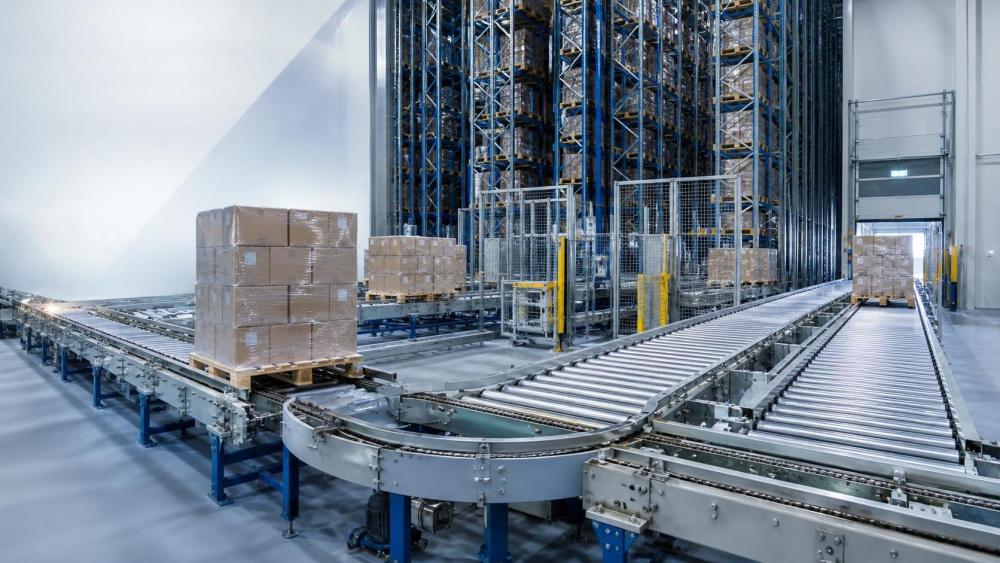
The first question is not which conveyor is fastest. It is whether the system matches the real operating profile of the warehouse, including pallet weight, SKU variation, shift pattern, buffer logic, and automation roadmap.
In high-load environments, a conveyor that looks cost-effective on paper can become expensive if it creates transfer instability, excessive wear, or bottlenecks between production, palletizing, storage, and shipping zones.
For decision-makers, the right Pallet Conveying Systems choice usually balances five factors: load integrity, throughput, maintainability, integration capability, and total lifecycle cost. Those factors matter more than headline speed alone.
Why System Selection Has Become a Strategic Issue
Warehouse operations now face heavier SKU complexity, rising labor costs, and tighter delivery windows. At the same time, packaging and corrugated production lines are pushing more volume into end-of-line logistics with less tolerance for interruption.
That makes pallet conveying a system-level decision. If pallet flow is unstable, upstream equipment loses efficiency and downstream shipping operations absorb the disruption. In practical terms, poor conveyor selection reduces OEE across the facility.
For packaging-intensive sectors, especially corrugated and print-related operations, this matters even more. High-speed converting lines and robotic palletizers depend on stable, repeatable pallet movement to prevent backup, product damage, and avoidable idle time.
Which Pallet Conveying Systems Fit High-Load Operations Best
There is no universal best design. The correct choice depends on pallet type, accumulation logic, routing complexity, and the mechanical demands of the load. Still, several system categories dominate high-load warehouse applications.
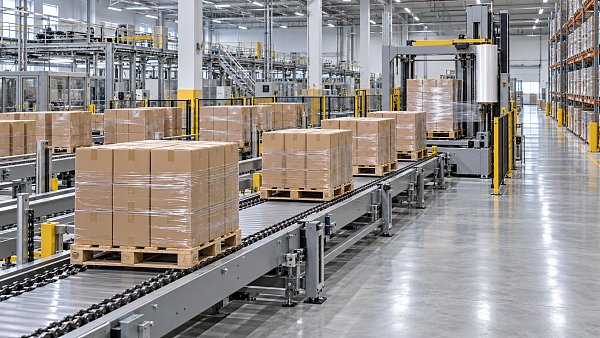
Chain conveyors are often preferred for heavy pallets and harsh-duty environments. They provide strong load support and perform well where pallet bottoms are inconsistent or where load weight exceeds the comfortable range of lighter-duty roller designs.
Roller pallet conveyors are common where consistent pallet geometry allows smooth transport and zoning. They can be effective for accumulation, merges, and controlled flow, especially when integrated with sensors and warehouse control software.
Transfer cars, turntables, and lift stations become important when facilities need directional changes, level changes, or compact routing. These modules are not peripheral extras. In many layouts, they determine whether flow remains efficient under peak conditions.
For highly automated facilities, the best Pallet Conveying Systems often combine multiple technologies rather than relying on a single conveyor type end to end. Hybrid architecture is usually the practical answer for mixed operational demands.
How to Match the System to Your Actual Load Profile
Load profile should drive specification. Decision-makers should start with actual pallet weight ranges, not nominal values. A system sized for average loads but exposed to frequent peak loads will suffer earlier wear and more unstable performance.
Pallet condition also matters. Damaged boards, uneven runners, stretch-wrap overhang, and variable footprint dimensions can all reduce transfer reliability. Many conveyor issues originate from pallet inconsistency rather than motor or control failure.
Another key factor is center of gravity. High stacked cartons, unstable packaging formats, or asymmetrical unit loads create risk during starts, stops, transfers, and turns. In these cases, conveying precision matters as much as rated capacity.
Facilities moving printed cartons, corrugated bundles, or packaged consumer goods should also consider surface sensitivity. Excessive vibration, abrupt stopping, or poor zone control can affect load quality and downstream handling performance.
What Throughput Metrics Actually Matter
Throughput should be measured across the whole material flow, not at a single conveyor segment. A supplier may show attractive meters-per-minute performance while the full system still underperforms at merges, scans, or shipping accumulation points.
Decision-makers should ask for pallet-per-hour calculations under realistic traffic conditions. That includes empty zones, blocked discharge points, routing conflicts, and the effect of mixed inbound and outbound demand during peak periods.
Buffer strategy is another overlooked issue. High-load warehouses rarely operate at perfectly even flow rates. Good Pallet Conveying Systems create controlled accumulation and decoupling so that short disruptions do not cascade across the site.
If upstream production runs continuously, the conveyor system should be sized for operational resilience rather than average-state efficiency. That distinction is where many procurement mistakes begin.
Integration Often Determines the Real Return on Investment
In modern facilities, conveyor performance is inseparable from controls integration. The best mechanical platform can still disappoint if it does not communicate effectively with palletizers, barcode systems, WMS, AS/RS, shuttle systems, or dock sequencing tools.
Enterprise buyers should evaluate control architecture early. Questions around PLC standards, software interoperability, diagnostics visibility, and remote support capability often have more long-term impact than small differences in equipment pricing.
Integration also affects commissioning speed. When Pallet Conveying Systems are designed with clear control logic and tested interfaces, startup risk is lower and the warehouse reaches stable productivity faster.
This is especially important in facilities where end-of-line packaging equipment feeds automated storage or shipping operations. Every handoff point becomes a possible source of latency, misrouting, or blocked flow if integration is weak.
Maintenance Burden Is a Financial Issue, Not Just a Technical One
Enterprise leaders should treat maintenance intensity as a board-level cost driver. Frequent chain adjustment, difficult access to wear parts, poor spare-parts standardization, or sensor contamination can quietly erode the economics of automation.
Good system design reduces intervention frequency and shortens repair time. Features such as modular zones, accessible drive components, predictive diagnostics, and standardized spare parts can produce measurable gains in uptime.
Ask suppliers for mean time to repair assumptions, recommended spare-parts lists, and maintenance labor expectations under heavy-duty operation. These answers often reveal whether a system is truly designed for industrial endurance.
In high-load applications, small maintenance inefficiencies scale quickly. A few avoidable stoppages per week can materially affect labor planning, truck scheduling, and output consistency.
Safety and Load Control Should Be Evaluated Together
Safety cannot be separated from load behavior. Heavy pallets create risk when a system allows uncontrolled accumulation, abrupt discharge, poor stopping accuracy, or unstable transfer at intersections and elevation changes.
Buyers should assess zone logic, guarding design, emergency-stop architecture, and safe maintenance access. At the same time, they should confirm how the system manages skewed or partially damaged pallets during normal flow.
A robust Pallet Conveying Systems design protects people and product together. In enterprise environments, that reduces not only injury risk but also claims, rework, and avoidable disruption to shipping schedules.
How to Build a More Defensible Business Case
ROI should include more than labor reduction. The most credible business case also quantifies uptime improvement, pallet damage reduction, better dock utilization, lower forklift traffic, reduced congestion, and smoother synchronization with automated production.
For operations linked to corrugated converting, printing, or packaging lines, reduced interruption can have a large economic effect. Stable pallet flow prevents backpressure that would otherwise slow high-value upstream equipment.
Decision-makers should ask suppliers to model multiple scenarios: current state, expected growth, and peak seasonal load. A conveyor system that works today but cannot absorb growth may create a second capital event sooner than expected.
Total cost of ownership is the right lens. That includes equipment, controls, installation, commissioning, maintenance, energy, training, software support, and the cost of operational underperformance.
Questions to Ask Before You Select a Supplier
Supplier evaluation should go beyond brochure specifications. Ask for references in comparable heavy-load environments, not just general warehouse installations. Similar operating conditions matter more than generic project volume.
Request validation on pallet types tested, sustained throughput achieved, control platform standards, spare-parts availability, and fault-response procedures. Those details reveal how mature the offering really is.
It is also worth asking how the supplier handles future change. Warehouse systems rarely stay static. Expansion flexibility, modular layout options, and software adaptability can protect the investment over a longer horizon.
The strongest suppliers usually demonstrate not only equipment capability but also a clear understanding of operational risk, commissioning discipline, and post-installation support.
Conclusion
Choosing Pallet Conveying Systems for high-load warehouse operations is ultimately a decision about reliability, control, and business continuity. The right system supports throughput, protects upstream and downstream assets, and improves resilience under real operating pressure.
For enterprise decision-makers, the best choice is rarely the cheapest unit-cost option or the most aggressively marketed technology. It is the system that fits the true load profile, integrates cleanly with automation, and delivers stable performance over time.
When evaluated through that lens, pallet conveying becomes more than a transport layer. It becomes a core operational asset that strengthens OEE, lowers risk, and supports scalable warehouse performance in a demanding logistics environment.
Related News
 How an Automatic Folder Gluer System Reduces Carton Setup ErrorsAutomatic folder gluer system solutions reduce carton setup errors with precise feeding, folding, glue control, and compression. Discover how to improve quality and changeovers.Spatial Folding Strategist
 How to Choose a Folder Gluer Machine for Folding CartonsChoose the right folder gluer machine for folding cartons with proven guidance on speed, carton styles, glue quality, automation, testing, and lifecycle costs.Spatial Folding Strategist
 When Chain Pallet Conveyors Improve Warehouse Flow and ThroughputChain pallet conveyors improve warehouse flow by reducing forklift delays, adding controlled accumulation, and protecting packaging throughput. Discover when they deliver the strongest ROI.Spatial Folding Strategist
 How to Compare Automatic Strapping Machine Price and Total CostAutomatic strapping machine price comparison made simple: evaluate installation, throughput, consumables, labor, downtime, and total cost for a smarter investment.Spatial Folding Strategist
 What to Compare When Choosing a Pallet Wrappers SupplierCompare a pallet wrappers supplier by load stability, film efficiency, automation integration, service support, and total cost to choose the right solution.Spatial Folding Strategist
 How an Automatic Case Erecting Machine Reduces Packing DelaysAutomatic case erecting machine solutions reduce packing delays by delivering consistent, sealed cases, improving line flow, uptime, and end-of-line efficiency.Spatial Folding Strategist