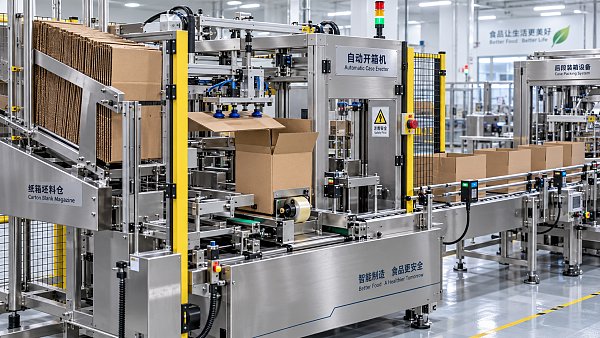
Case Erecting Machines That Reduce Packaging Line Downtime
A case erector that runs quickly but stops whenever carton blanks vary is not reducing downtime; it is moving the bottleneck upstream. The most reliable Case Erecting Machines are selected around the real behavior of the cartons, the pace of the line, and the way operators must recover from faults. Rated speed matters, but stable case presentation, repeatable squaring, accessible maintenance points, and sensible integration with downstream equipment matter more over a full production shift.
In a packaging line, the case erector is often treated as a simple utility machine: pick a flat blank, open it, form the case, seal the bottom, and release it to the packer. In practice, it sits at a sensitive point. A poorly formed case can create a jam at loading, poor tape sealing, unstable coding, or pallet quality issues later in the line. When the erector pauses, machines that depend on open cases may be starved. When it releases defective cases, the line may keep moving briefly before a more difficult stoppage occurs downstream.
The practical goal is therefore not merely to automate manual case forming. It is to create a dependable supply of correctly formed, correctly sealed cases at the speed and in the sequence the rest of the operation requires.
Start With the Downtime Pattern, Not the Machine Specification
Before comparing suppliers, identify what is actually causing lost time today. “Case erector downtime” can describe several different problems that need different remedies. A machine cannot compensate for poor carton blanks, inconsistent tape, unsuitable line layout, or a downstream conveyor that pulls cases out of square.
This diagnosis changes the buying decision. If a line runs one or two stable case formats for long periods, a robust semi-automatic or manually adjusted automatic system may be entirely appropriate. If it handles many short jobs, varied dimensions, and frequent order changes, the project should place greater weight on guided adjustment, recipe control, and a setup process that does not rely on individual operator judgment.
A common mistake is to specify a higher output rate because the current machine appears to be the constraint. Sometimes the actual constraint is the recovery time after a minor stop. A machine that restarts cleanly after an empty magazine, tape roll change, or misfed blank can protect line availability more effectively than a faster unit that requires repeated intervention.
Carton Compatibility Is the First Reliability Test
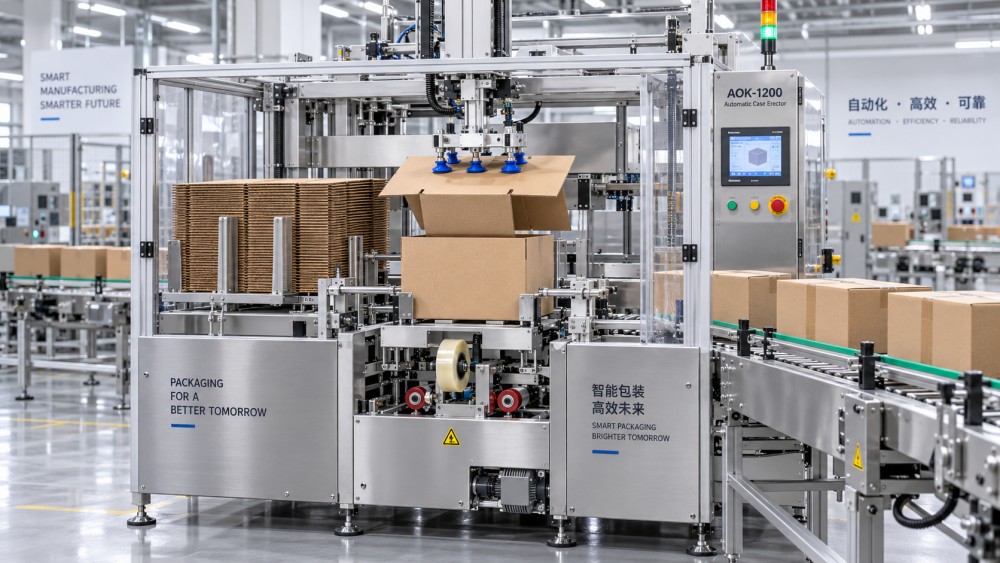
Case erectors handle corrugated blanks, but “corrugated case” is not a single material condition. Blank stiffness, score quality, board caliper, moisture exposure, print coverage, storage conditions, and die-cut accuracy all influence how a blank opens and folds. A case format that runs reliably in a supplier demonstration may behave differently after transport, warehouse storage, or a change in board source.
Define the real carton range before requesting a proposal. This should include the smallest and largest case dimensions, regular production formats, occasional formats, board grades, flap arrangements, print treatments, and any cases with hand holes, windows, heavy ink coverage, or unusual die cuts. It is useful to separate “must run routinely” from “would be useful to run occasionally.” Trying to force a broad theoretical range into one machine can add complexity and compromise reliability for the formats that generate most of the volume.
Carton blanks should also be reviewed as an engineering input rather than a purchasing commodity. If blanks arrive bowed, poorly bundled, or with inconsistent scores, operators may compensate by changing magazine pressure or guide positions. Those adjustments can make one batch run while creating instability for the next. A stronger solution is to establish acceptable blank condition and packing requirements with the carton supplier, then confirm the erector can tolerate normal production variation without constant tuning.
For operations connected to corrugated conversion, this is an important link between equipment decisions. Die-cutting accuracy, crease quality, bundle squareness, and storage conditions affect not only carton appearance but also end-of-line automation. A case erector project should involve the teams responsible for corrugated case supply early enough to address these upstream causes.
Match Speed to the Entire End-of-Line System
A case erector should be sized against required sustained demand, not the nameplate speed of the fastest downstream machine. The relevant question is whether it can maintain a stable buffer of usable cases through normal interruptions, including product changeovers, operator tasks, replenishment, and brief downstream holds.
Consider the relationship among the erector, case packer or manual packing station, checkweigher, coder, sealing equipment, conveying, and palletizing. If the erector feeds a high-speed automated packer, gaps in case supply can stop product flow quickly. If cases are used at several packing positions, accumulation and distribution controls may matter as much as erector speed. An oversized machine without correctly designed buffering can still cycle unnecessarily, create case collisions, or deliver cases in a way that prevents smooth loading.
There is also a difference between a machine that can cycle quickly and one that can keep forming acceptable cases at the required rate. Project acceptance criteria should reflect both. During evaluation, ask how the system handles a realistic sequence of cartons, normal operator actions, startup after a stop, and the transition from a full magazine to replenishment. This provides a more useful picture than observing a short run of ideal blanks.
Do Not Let Downstream Equipment Twist the Case
After erection, the case must remain square and supported until the next process takes control. Conveyor height, guide rail placement, transfer gaps, case orientation, and acceleration all affect that handoff. A freshly taped case can be vulnerable to distortion if it is pushed, turned, or stopped abruptly before the bottom is fully supported.
This is why layout review should include more than the erector footprint. Confirm where operators load blanks and tape, how rejected cases are removed, how cases accumulate, and where maintenance staff can access sealing heads, sensors, and drive components. A compact layout that restricts access often converts a short correction into a longer line stop.
Changeover Performance Is Often More Valuable Than Maximum Output
Operations with frequent SKU changes need a clear answer to a simple question: what must an operator physically adjust when case size changes? The response should be specific. It should identify guides, magazine settings, forming mechanisms, sealing head positions, conveyor widths, and software recipes. Terms such as “quick changeover” have little value unless the adjustment work is visible and repeatable.
Manual changeovers can work well when the format range is limited and the production schedule is stable. They become risky when changes are frequent, when several operators share responsibility, or when a minor setting error produces defects only after cases have reached the packer. In those conditions, tool-less adjustments, position indicators, servo-controlled settings, or recipe-driven adjustments can reduce variation. The appropriate level of automation depends on the number of changes, the cost of lost production time, and the skill structure of the shift team.
Automated adjustment does not remove the need for verification. The first few cases after a format change should be checked for squareness, flap closure, tape placement, and bottom integrity before the line returns to full output. A simple documented approval step prevents a small setup error from becoming a prolonged downstream investigation.
Design for Recovery, Replenishment, and Maintenance
Minor stops are unavoidable in real packaging environments. The difference between a resilient line and a frustrating one is how quickly an operator can understand the condition, correct it, and restart safely. Machine design should make the likely interventions straightforward: loading the blank magazine, changing tape rolls, clearing a misfeed, adjusting guides, and confirming sensor status.
Look for fault messages that identify a usable location or condition rather than offering only a general alarm. Clear guarding and visible material paths help operators find a folded flap, damaged blank, or tape tracking issue without dismantling covers. The same principle applies to maintenance. Components subject to routine cleaning, inspection, lubrication, or replacement should be reachable without turning a short task into a shutdown involving multiple people.
Maintenance requirements should be considered during project planning, not after installation. Confirm the availability of wear parts, the service model, electrical and pneumatic utility needs, and the spare parts that the site should hold. The objective is not to stock every component. It is to prevent a common, predictable failure from becoming a lengthy production interruption.
Control data can also improve recovery. When the erector exchanges status signals with the packer and line controller, it becomes easier to distinguish a machine fault from a blocked discharge, a product-side stoppage, or a case supply shortage. Event history and alarm trends can reveal repetitive issues that are otherwise treated as isolated operator errors. In connected packaging plants, this data is most useful when it leads to a practical action: improve blank handling, adjust a setup standard, replace a wearing part, or revise the control sequence.
Choose the Right Level of Automation
There is no universal “best” case erection configuration. The correct choice follows the operating pattern.
- Semi-automatic case forming can suit low-volume work, seasonal peaks, unusually varied case designs, or processes where labor remains available and the cost of full automation cannot be justified. It offers flexibility, but it does not eliminate dependence on manual consistency.
- Automatic case erectors with manual size adjustment are often a practical fit for stable case families and longer runs. They can provide dependable throughput when carton quality and setup discipline are controlled.
- Recipe-based or servo-adjusted systems are better aligned with frequent format changes, mixed order schedules, and lines where setup time directly affects delivery performance. Their value comes from repeatability, not from automation for its own sake.
- Integrated end-of-line systems deserve consideration when case erection, packing, coding, sealing, inspection, and palletizing are closely linked. Integration can reduce handoff errors, but it must preserve fault isolation so that one local issue does not unnecessarily stop the entire line.
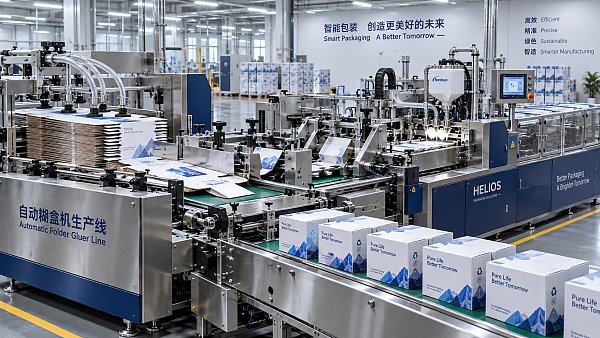
For carton factories, commercial printers, and packaging producers assessing broader automation projects, case erection should not be evaluated in isolation. Platforms such as CPCS examine paper-based packaging machinery and end-of-line automation as connected production systems. That perspective is useful when a project must balance case quality, line controls, conversion capability, labor planning, and long-term operating cost rather than simply compare machine purchase prices.
Build a Better Factory Acceptance Test
A meaningful factory acceptance test is one of the best opportunities to uncover avoidable downtime before equipment reaches the site. Provide representative blanks from normal supply, including formats that are most important to production and those known to be demanding. Ask to see routine operations, not only continuous running: blank loading, tape replacement, fault recovery, empty-magazine behavior, format changes, startup, and restart after a downstream stop.
The project team should document what “acceptable” means in operational terms. That can include stable forming, consistent bottom closure, readable machine status, reasonable access, and orderly transfer to the next equipment. Avoid acceptance language that focuses only on a peak production rate. A line is paid for by the usable cases it supplies over time, not by the highest speed shown during a controlled demonstration.
Installation planning should carry the same discipline. Confirm utility connections, guarding interfaces, floor conditions, operator access, safety interlocks, discharge elevations, controls signals, and the actual path used to bring blanks to the magazine. A case erector may be mechanically sound yet perform poorly because the surrounding installation makes replenishment awkward or the receiving conveyor cannot maintain case control.
The Next Project Step: Define the Operating Envelope
Before issuing a request for quotation, create a concise operating envelope for the system. Include the case range, daily format changes, required case flow, blank supply method, downstream interfaces, sealing method, layout restrictions, utilities, operator responsibilities, and expected maintenance access. Add the current causes of lost time and identify which ones the project is intended to remove.
That document gives suppliers a basis for proposing an appropriate solution and gives the project team a way to compare proposals on more than speed and price. It also exposes where the real solution may sit outside the machine itself: in carton quality, buffer design, control logic, training, or the interface between converting and end-of-line operations.
Reliable case forming is a system outcome. When carton blanks, machine design, setup method, line integration, and recovery procedures are aligned, the erector becomes a stable source of cases rather than a recurring reason for the packaging line to wait.
Related News
 How an Automatic Folder Gluer System Reduces Carton Setup ErrorsAutomatic folder gluer system solutions reduce carton setup errors with precise feeding, folding, glue control, and compression. Discover how to improve quality and changeovers.Spatial Folding Strategist
 How to Choose a Folder Gluer Machine for Folding CartonsChoose the right folder gluer machine for folding cartons with proven guidance on speed, carton styles, glue quality, automation, testing, and lifecycle costs.Spatial Folding Strategist
 When Chain Pallet Conveyors Improve Warehouse Flow and ThroughputChain pallet conveyors improve warehouse flow by reducing forklift delays, adding controlled accumulation, and protecting packaging throughput. Discover when they deliver the strongest ROI.Spatial Folding Strategist
 How to Compare Automatic Strapping Machine Price and Total CostAutomatic strapping machine price comparison made simple: evaluate installation, throughput, consumables, labor, downtime, and total cost for a smarter investment.Spatial Folding Strategist
 What to Compare When Choosing a Pallet Wrappers SupplierCompare a pallet wrappers supplier by load stability, film efficiency, automation integration, service support, and total cost to choose the right solution.Spatial Folding Strategist
 How an Automatic Case Erecting Machine Reduces Packing DelaysAutomatic case erecting machine solutions reduce packing delays by delivering consistent, sealed cases, improving line flow, uptime, and end-of-line efficiency.Spatial Folding Strategist