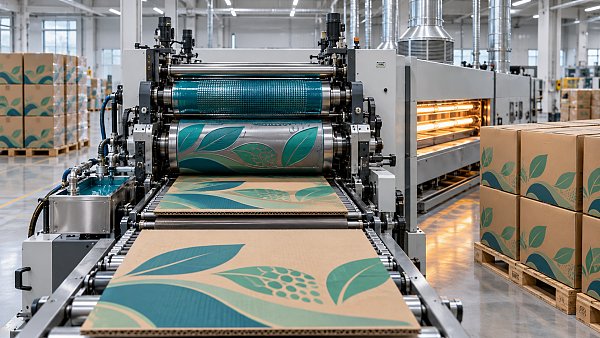
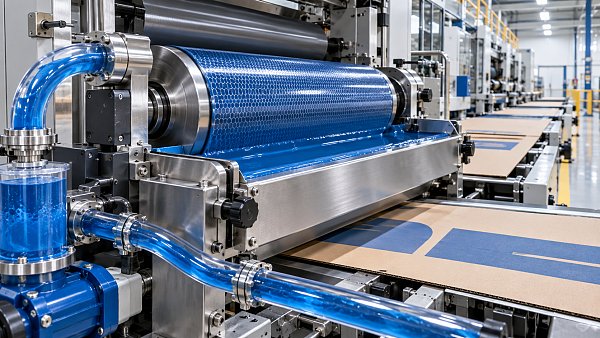
What Determines Print Dryers Price for Industrial Production Lines
What Determines Print Dryers Price for Industrial Production Lines
For procurement teams building or upgrading industrial printing lines, print dryers price is shaped by far more than the physical size of the machine. Heating technology, drying capacity, web or sheet width, ink compatibility, energy efficiency, automation, safety design, and installation conditions all influence the investment. A dryer that appears less expensive on an initial quotation can become the higher-cost choice if it limits press speed, requires excessive energy, creates quality instability, or is difficult to maintain during production.
This matters especially in commercial printing, corrugated packaging, paper converting, and folding-carton production. Drying is not a standalone utility step. It is tied to ink adhesion, color consistency, barcode readability, downstream die-cutting and folding performance, and the ability to release finished work on time. In a busy plant with short runs and frequent job changes, a drying bottleneck can affect far more than one press.
The useful way to evaluate a quotation is therefore not “Which supplier has the lowest dryer price?” but “What operating condition is this dryer actually designed to support?” That shift prevents many expensive misunderstandings during project execution.
Drying Method Is Usually the First Major Cost Driver
Industrial print dryers use different mechanisms to remove water, solvent, or reactive components from inks and coatings. Each method has a different equipment structure, energy profile, safety requirement, and production fit. Comparing prices without separating these technologies can lead to an unrealistic benchmark.
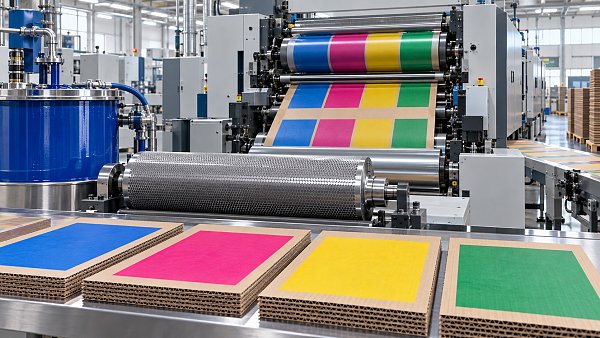
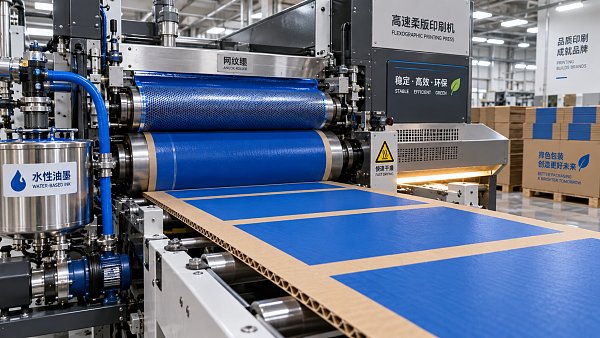
Hot-air dryers are widely used for water-based inks, coatings, and many paper or corrugated applications. Their cost depends on blower capacity, heater configuration, airflow recirculation, exhaust design, nozzle layout, and temperature-control accuracy. A basic hot-air unit may look straightforward, but a system intended to dry heavily inked corrugated sheets at high speed needs balanced airflow across the full working width. Uneven air delivery can leave one side dry while the other remains tacky, creating problems at the stacker, die-cutter, folder gluer, or palletizing stage.
Infrared drying can provide rapid surface heating and is often selected where space is limited or fast response is required. The initial equipment price may rise when the system needs zoning, precise power control, shielding, or integration with sensitive substrates. Infrared is not automatically the best choice for every ink system. On some materials, aggressive surface heating can create curl, distortion, or a dry surface over insufficiently cured ink beneath. Suppliers should be asked how the proposed system performs with the actual substrate, ink coverage, and press speed—not just under ideal test conditions.
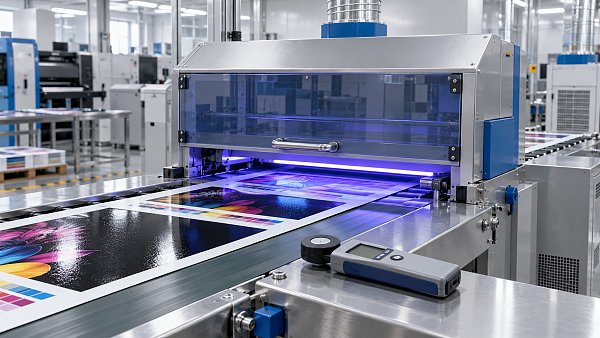
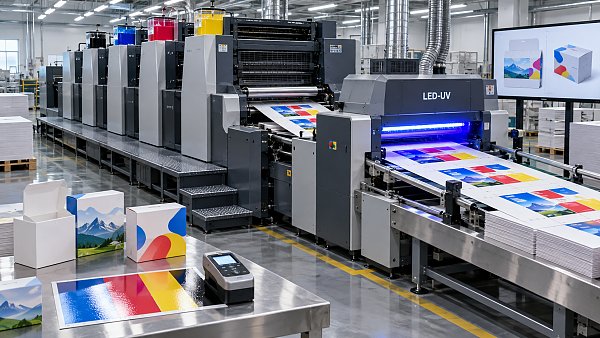
UV and LED-UV curing systems operate differently from conventional evaporation dryers. Their pricing reflects lamp or LED-head configuration, cooling method, electrical controls, shielding, curing window, and compatibility with UV inks, varnishes, coatings, and substrates. LED systems can offer operational advantages in suitable applications, but they should not be judged simply by electrical consumption. Buyers need to review the full ink and coating ecosystem, curing performance on difficult colors, maintenance access, and whether existing press components can tolerate the required installation arrangement.
For solvent-based printing, dryer design becomes more complex because vapor extraction, airflow management, fire prevention, and local compliance requirements can influence the whole package. The price difference between two solvent dryer quotations may reflect a real difference in safety engineering rather than a supplier markup. This is an area where cutting scope too aggressively is rarely a sound procurement decision.
Capacity Is Not Just About Length or Rated Temperature
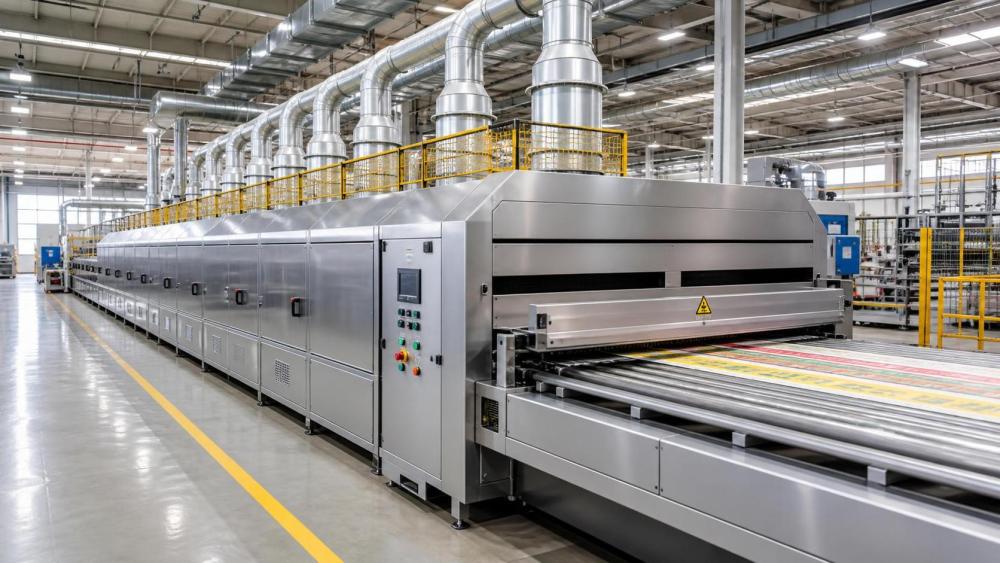
When reviewing print dryers price, many buyers start with chamber length, installed power, or maximum temperature. These figures are relevant, but none tells the full story. Drying capacity is determined by the relationship between ink load, coating weight, substrate moisture, press speed, dwell time, airflow, heat transfer, and exhaust performance.
A wide-web flexographic press running light graphics on absorbent paper does not impose the same load as a line printing dense solids, high-coverage process colors, or water-based coatings on less absorbent board. Similarly, a dryer suitable for a conventional commercial print job may be undersized for corrugated packaging where board variation, warp control, and production speed are constant concerns.
The practical question for suppliers is not only the rated maximum speed. Ask what substrate, ink coverage, ambient condition, and moisture level were assumed when that speed was stated. A supplier that cannot explain the basis of its capacity claim may be offering a generic figure rather than a project-specific calculation.
Oversizing also deserves caution. Extra capacity provides a useful buffer when future jobs become more demanding, but a substantially oversized dryer can increase capital cost, occupied floor space, installed utility demand, and unnecessary energy use. The right reserve margin depends on the product mix and expansion plan. A plant focused on stable, repeatable packaging work will make a different decision from a converter handling seasonal promotions, frequent material changes, and unknown future brand requirements.
Working Width, Transport Design, and Integration Raise the Real Project Cost
A dryer is often priced as an individual machine, while the project cost is created by the production line around it. Wider systems require more heating area, wider airflow distribution, larger housings, stronger structural support, and more demanding access provisions. For sheetfed equipment, the transport system may need belts, chains, grippers, vacuum support, or carefully controlled sheet handling. Web systems bring additional requirements for tension stability, rollers, web guiding, and safe threading.
Integration is where apparently comparable quotations begin to separate. One offer may include only the dryer module. Another may include inlet and outlet conveyors, electrical cabinets, press interlocks, speed synchronization, exhaust duct interfaces, safety guarding, installation supervision, and commissioning support. Neither approach is inherently wrong, but they are not the same scope.
In corrugated and carton plants, downstream equipment should be part of the discussion. If sheets leave the dryer too warm, too damp, or with uneven moisture, die-cutting registration, creasing quality, glue application, and stacking behavior can suffer. The dryer must work with the press, conveyor path, inspection equipment, and finishing line rather than merely fit between them.
A useful procurement habit is to map every interface before requesting final pricing: mechanical footprint, floor loading, electrical supply, gas or steam connection where applicable, compressed air, exhaust routing, control signals, data communication, and operator access. Missing interface scope is one of the most common reasons a “low equipment price” becomes a difficult installation budget.
Energy Efficiency Should Be Evaluated as an Operating Profile
Dryers can be among the more energy-intensive sections of a printing line. Yet an energy-efficient design is not defined by one feature or one utility type. It is the result of how heat is generated, delivered, recovered, controlled, and reduced when production is not running at full load.
Features that can affect long-term cost include insulated housings, variable-speed fans, recirculated air, zoning, standby modes, automatic temperature adjustment, and heat-recovery arrangements where the plant configuration justifies them. Some of these options add to the initial print dryers price. Their value depends on shift pattern, job mix, local utility rates, ventilation conditions, and the stability of production scheduling.
There is a subtle operational point here: the lowest energy consumption is not always achieved by running at the lowest possible temperature. If inadequate drying forces the press to slow down, creates reject material, or causes rework later in converting, the total energy and material cost per saleable unit may worsen. Procurement should ask for a transparent operating concept rather than relying on a single consumption claim detached from output.
Controls, Automation, and Safety Are Not Cosmetic Options
Manual dampers, fixed fan speeds, and basic temperature settings may be adequate for simple, stable work. They become less attractive when a factory runs varied substrates, changing ink systems, multiple SKUs, or increasingly short order cycles. In those environments, automatic recipe management, zone control, line-speed tracking, fault alarms, and production data access can reduce setup uncertainty and help operators repeat proven settings.
These controls increase equipment cost, but the decision should be linked to plant reality. If an operation has one consistent product and experienced operators, advanced automation may not pay back quickly. If jobs change throughout the day and quality traceability matters, basic controls can become a false economy.
Safety features also need to be read as engineering scope, not optional decoration. Depending on the drying process, this may involve over-temperature protection, emergency stops, airflow monitoring, interlocked access doors, fire detection provisions, exhaust monitoring, electrical protection, and safeguards for combustible vapor. Requirements vary by country, site, and ink chemistry, so buyers should confirm responsibilities early with the supplier, plant engineering team, and relevant local authorities.
What a Procurement Comparison Should Actually Include
The strongest comparison is built around a common technical brief. Without one, suppliers may quote different drying technologies, different capacities, or different inclusion levels, making a price comparison nearly meaningless. The brief does not need to be excessively complicated, but it should identify the intended press type, material range, maximum working width, production speed range, ink or coating chemistry, coverage pattern, site utilities, available footprint, expected operating hours, and downstream process constraints.
It is also worth separating mandatory requirements from preferred options. A dryer must meet process capacity, safety, and integration needs. Remote monitoring, enhanced data connectivity, extended automation, or extra future capacity may be valuable, but they should be priced openly rather than bundled into an opaque configuration. This gives project teams room to make a deliberate trade-off instead of accepting or rejecting a complete package on headline price alone.
The Cheapest Quote Often Omits the Most Expensive Questions
A low quotation is not necessarily a bad quotation. It may reflect a simpler process, local fabrication, fewer controls, or a scope that genuinely suits the application. Trouble begins when it is compared against a more complete system without identifying what has been excluded.
Buyers should be cautious when a supplier avoids discussion of ink chemistry, exhaust requirements, drying verification, access for maintenance, or performance at normal production conditions. These are not minor technical details. They determine whether the equipment supports a stable line or simply occupies a position on the layout drawing.
For packaging plants assessing broader automation investments, drying should be considered alongside press capability, inspection, coding, converting, and material flow. Industry resources such as CPCS are useful in this stage because they help teams frame machinery in terms of process fit, uptime, waste control, maintenance needs, and total operating behavior—not only specification sheets.
The best purchasing decision usually comes from a clear operating scenario and a line-by-line scope comparison. Before accepting any print dryer price, verify what it can dry, at what speed, on which materials, using which utilities, and with what support after installation. Those answers are more valuable than a discount that disappears during commissioning.
Related News
 Why UV Inks Stay Tacky After Curing and How to Fix the ProblemUV Inks still tacky after curing? Discover common causes, from low UV energy to oxygen inhibition, and practical fixes to prevent blocking, reduce waste, and restore print quality.Print Fluidics Scientist
 What Drives Water Based Flexographic Ink Price in 2026Water based flexographic ink price in 2026 depends on raw materials, color strength, performance, and service. Discover how to compare true print costs and choose smarter.Print Fluidics Scientist
 Water Based Flexographic Ink Selection for Consistent Print QualityWater Based Flexographic Ink selection guide for consistent color, fast drying, strong adhesion, and lower production costs across paper and corrugated board applications.Print Fluidics Scientist
 How to Choose UV Inks for Reliable Color and Fast Production RunsUV Inks for reliable color and fast packaging runs: learn how to match cure systems, substrates, adhesion, finishing, and compliance for consistent results.Print Fluidics Scientist
 How Low Odor Water Based Flexographic Ink Supports Safer PackagingLow odor water based flexographic ink supports safer packaging by reducing residual odor and emissions while delivering reliable color, drying, and rub resistance. Explore practical process control tips.Print Fluidics Scientist
 How a Water Based Ink Metering System Reduces Color VariationWater based ink metering system: discover how stable anilox delivery, circulation, and blade control reduce color variation and improve flexo print consistency.Print Fluidics Scientist