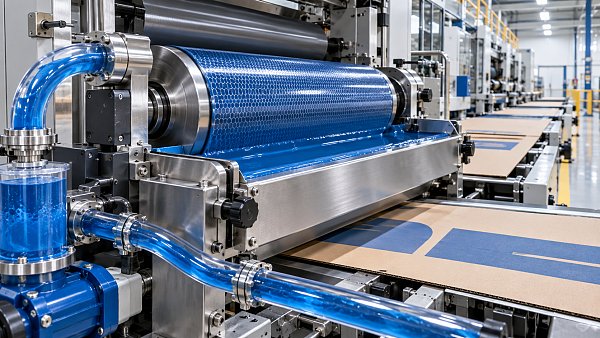
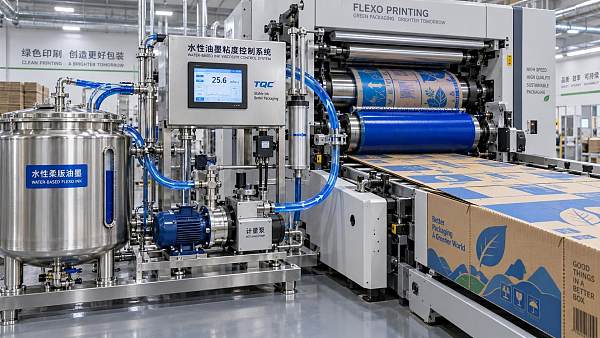
Water Based Flexographic Ink Selection for Consistent Print Quality
A press can appear stable during a short approval run and still produce costly variation once production speed rises, the board surface changes, or a new batch of ink is introduced. The first signs are often practical rather than dramatic: solids look weaker at one side of the sheet, small type fills in, a barcode scans inconsistently, or drying improves only after operators slow the press. These symptoms are not always press faults. They can begin with an ink selected for the wrong substrate, drying window, anilox volume, or end-use requirement.
The right Water Based Flexographic Ink should therefore be selected as a matched production system, not as a color sample approved in isolation. For purchasing and quality decisions, the core question is whether the ink can maintain required color, adhesion, drying, rub resistance, and low-odor performance under the actual conditions of the press. A lower purchase price can become a higher operating cost when it requires excess viscosity adjustment, causes frequent wash-ups, increases rejected sheets, or limits machine speed.
Start with the failure mode the ink must prevent
Before comparing suppliers or requesting samples, define the production issue that matters most. “Better print quality” is too broad for a useful ink specification. A plant printing uncoated corrugated shipping cases faces different risks from one producing coated paperboard cartons or pre-print liner. The quality target should be connected to the point where defects create loss: at press inspection, in converting, during distribution, or when the package reaches a scanner or retail shelf.
For example, an ink may look acceptable immediately after printing but fail during die-cutting or folding because the surface scuffs. Another formulation may adhere well to a porous kraft liner yet show uneven density on a recycled board with variable absorbency. If printed packs are stacked before full drying, blocking and setoff may become the controlling issue even when the printed image itself looks correct.
Substrate is the first selection boundary
Water-based systems interact strongly with paper and board surfaces. Porosity, sizing, coating, recycled content, surface strength, moisture condition, and roughness all influence holdout and drying. An ink that produces strong color on a smooth, well-sized liner may penetrate more deeply into an absorbent substrate, reducing apparent density and increasing consumption. Conversely, a formulation designed to remain near the surface may dry more slowly on a less absorbent coated stock.
Procurement specifications should identify the actual substrate family rather than simply stating “paper” or “corrugated board.” Include whether printing is on kraft liner, white-top liner, test liner, coated paperboard, recycled-content board, or a laminated surface. Also identify expected variation between suppliers and grades. A single laboratory sheet cannot represent a production stream with changing board batches.
Surface strength deserves particular attention. Weak or dusty surfaces can lead to poor image definition, contamination of plates and anilox cells, and uneven transfer. Increasing ink strength to compensate may not solve the root cause; it can increase drying demand and make buildup more visible. A realistic evaluation uses representative board from the intended supply base, including the grades most likely to challenge print consistency.
For corrugated post-print work, assess the substrate after converting conditions as well. Flute profile, board compression, and surface irregularity can change contact between plate and liner. A good ink cannot fully compensate for poor impression settings, but its flow and transfer behavior should remain workable without forcing excessive pressure that crushes flutes or spreads fine graphics.
Do not approve color before checking the operating window
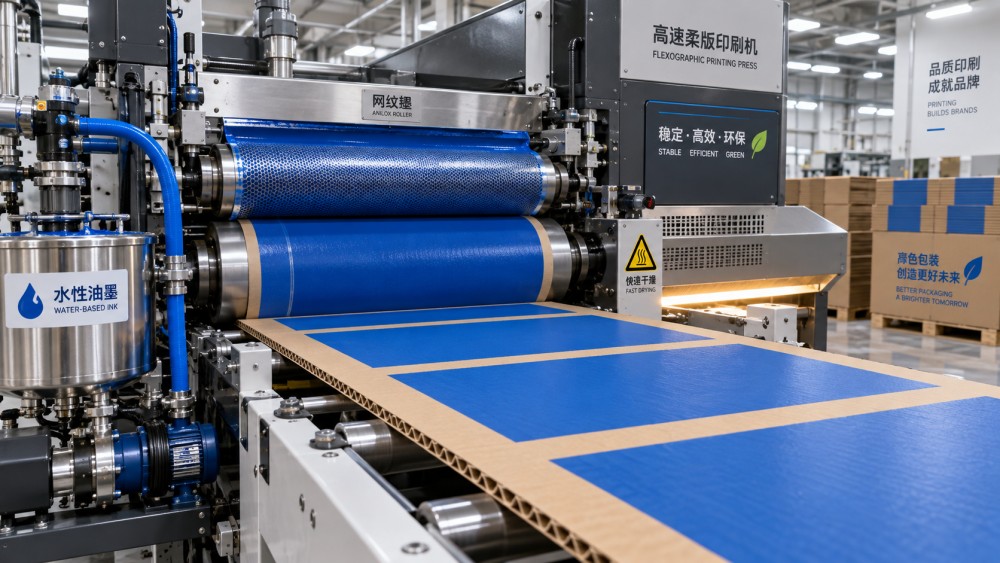
A color drawdown is useful for early shade review, but it is not a production approval. Flexographic performance depends on the relationship among ink, anilox roller, plate, doctor blade or chamber system, viscosity control, drying capacity, and press speed. The same formula can produce different results when anilox volume changes or when an operator adjusts viscosity to recover density.
Ask ink suppliers to state the recommended viscosity measurement method, temperature range, pH control approach where relevant, and the acceptable adjustment materials. Those details matter because uncontrolled addition of water can lower color strength, change drying behavior, and disturb the balance of the formulation. Additions should be logged during trials. If a sample only works after repeated correction, the apparent unit cost may be misleading.
Foam control is another selection point that is easy to overlook. Excessive foam can interfere with ink transfer, create pinholes or voids, and cause unstable circulation. Adding defoamer without control can introduce its own print defects. The preferred approach is to test the ink in the intended delivery system and observe whether foam develops during an extended run, particularly at normal pump speed and recirculation conditions.
Questions that reveal whether a formulation is practical
- Can the required color density be maintained at normal production speed without operating at the edge of the recommended viscosity range?
- Does the ink remain stable during planned run length, or does density drift as water evaporates and temperature changes?
- Is the anilox volume appropriate for the image coverage, solid areas, line screens, and drying capacity?
- Does the print remain clean after routine stopping and restarting, without excessive plate plugging or dried ink buildup?
- Can operators clean the system using the plant’s standard wash-up process without unusual time, water use, or residue?
These questions move the decision away from a simple price-per-kilogram comparison. They show whether the ink supports stable production or merely produces an acceptable first impression.
Evaluate drying as a process condition, not a promise
Water-based flexographic inks dry through water removal and film formation. Drying depends on more than the ink itself: air volume, air temperature, exhaust balance, dwell time, printed coverage, coat weight, ambient humidity, and substrate absorbency all matter. A formulation that dries reliably on a lightly covered job may behave differently on large solid panels or when the press is running near capacity.
During a trial, record the press speed and dryer settings used to obtain acceptable results. Then test reasonable operating variation. The aim is not to find the single best setting for one sample run; it is to determine whether the ink has enough process latitude for normal production. An ink that requires unusually high dryer output may affect energy consumption, create board warp concerns, or reduce the capacity available for demanding jobs.
Drying should also be evaluated after the print leaves the press. Check for setoff in stacks, transfer onto conveyor surfaces, blocking under package weight, and rub damage after routine handling. For printed corrugated cases, verify performance after the board has been folded, glued, and moved through downstream equipment. Immediate visual dryness does not prove that the film has developed adequate resistance.
Adhesion, rub resistance, and safety requirements need separate checks
It is tempting to treat adhesion and rub resistance as the same property. They are related but not identical. Adhesion concerns whether the dried film remains attached to the substrate. Rub resistance concerns how the printed surface withstands contact and abrasion. A print may adhere well but still scuff when it passes through a folder gluer, is stacked tightly, or encounters rough transport conditions.
The intended package use should define the test emphasis. Shipping containers may need reliable readability and resistance to warehouse handling. Display packaging may place greater weight on visual appearance and surface scuff resistance. Where packaging is intended for sensitive contents, the ink evaluation must also align with the buyer’s documented material, odor, and application requirements. Do not assume that “water-based” alone answers every safety or suitability question. Water is the primary carrier, but the complete formulation, printed-side location, drying condition, and final package construction remain relevant.
Request technical documentation that identifies recommended substrates, intended application conditions, storage guidance, and handling precautions. Safety documentation should be reviewed alongside production performance information. This is especially important when multiple colors, varnishes, coatings, or cleaning agents are used together, because the finished-package risk is determined by the complete process rather than by one ink component.
Build the purchase comparison around total operating cost
Two inks with different quoted prices cannot be compared fairly without normalizing for usable color strength, consumption, waste, downtime, and cleaning demand. A less expensive product may require more volume to achieve target density. It may also create more rejected material when board quality changes or more labor when plates and chambers need attention. On the other hand, a premium formulation is not automatically economical if its performance advantage is unnecessary for the application.
A purchasing review becomes more useful when it records the following for each candidate:
- Delivered color performance: assess density, shade consistency, and fine-detail reproduction on the target board.
- Consumption at target quality: compare usage only after the same visual and functional requirements are met.
- Speed and dryer demand: note whether normal output is maintained without increasing drying intensity beyond typical practice.
- Waste exposure: include startup sheets, color correction material, defects during long runs, and rejected converted packs.
- Cleaning and maintenance effect: document wash-up time, residue, foaming behavior, and potential anilox or plate contamination.
- Supply consistency: confirm batch identification, storage life, lead-time expectations, and a process for shade or performance changes.
Use the same artwork, substrate, anilox configuration, and inspection criteria wherever possible. If conditions differ between trials, the comparison can become a comparison of setup choices rather than ink capability. Quality teams should retain approved drawdowns, press samples, and agreed tolerances so that later deliveries can be checked against a documented reference.
A controlled trial should include the conditions most likely to expose defects
Short trials often hide the problems that create daily operating cost. A more meaningful approval run includes solid coverage and fine graphics where relevant, normal and higher production speeds, standard drying settings, realistic circulation time, and downstream handling. It should also involve the intended cleaning method and, where feasible, a normal changeover sequence. The goal is to establish a repeatable operating recipe, not simply to prove that ink can print.
When a defect appears, avoid changing several variables at once. First identify whether the issue is linked to substrate variation, viscosity, pH, anilox condition, plate cleanliness, impression, drying, or ink formulation. A structured response prevents the common cycle of adding water, increasing pressure, raising dryer temperature, and changing ink settings simultaneously. That sequence can temporarily hide the defect while making root-cause analysis impossible.
When the best choice is a narrower specification
Plants sometimes seek one universal ink series for every board grade, print coverage, and package use. Standardization can simplify inventory, but excessive simplification may reduce print control. A dedicated formulation can be justified where there is a distinct requirement: difficult recycled liners, high-speed solid printing, demanding rub resistance, low-odor applications, or fine barcode work. The decision should be based on a recurring production need, not on a preference for more product variants.
A practical specification describes the application boundary clearly: approved substrate range, target color standards, anilox and viscosity guidance, drying expectations, rub or adhesion criteria, storage conditions, and change-control requirements. This gives purchasing, production, and inspection personnel a shared basis for evaluating alternatives. It also makes it easier to detect whether a future quality shift comes from ink, board, press condition, or a changed operating practice.
Consistent flexographic quality is rarely achieved by selecting ink on shade and price alone. The most dependable choice is the one that delivers the required print result with a stable operating window, manageable drying demand, appropriate safety documentation, and a cost profile that remains acceptable after waste, labor, and downstream handling are considered.
Related News
 What Drives Water Based Flexographic Ink Price in 2026Water based flexographic ink price in 2026 depends on raw materials, color strength, performance, and service. Discover how to compare true print costs and choose smarter.Print Fluidics Scientist
 Water Based Flexographic Ink Selection for Consistent Print QualityWater Based Flexographic Ink selection guide for consistent color, fast drying, strong adhesion, and lower production costs across paper and corrugated board applications.Print Fluidics Scientist
 How to Choose UV Inks for Reliable Color and Fast Production RunsUV Inks for reliable color and fast packaging runs: learn how to match cure systems, substrates, adhesion, finishing, and compliance for consistent results.Print Fluidics Scientist
 How Low Odor Water Based Flexographic Ink Supports Safer PackagingLow odor water based flexographic ink supports safer packaging by reducing residual odor and emissions while delivering reliable color, drying, and rub resistance. Explore practical process control tips.Print Fluidics Scientist
 How a Water Based Ink Metering System Reduces Color VariationWater based ink metering system: discover how stable anilox delivery, circulation, and blade control reduce color variation and improve flexo print consistency.Print Fluidics Scientist
 How Water Based Ink Viscosity Control Systems Stabilize Print QualityWater based ink viscosity control systems stabilize flexographic print quality, reduce waste, and deliver consistent color, sharper graphics, and reliable production.Print Fluidics Scientist