How to Evaluate a Print Dryers Factory Before Placing an Order
A print dryer should be evaluated against the production job it must perform, not just its quoted speed or purchase price. A factory may build a sound machine that still fails to dry a particular ink on a particular board at the required line speed. The most useful supplier evidence therefore links equipment design to the actual substrate, ink system, coverage, operating conditions, and acceptance criteria.
Before placing an order, establish whether the factory can demonstrate the required drying result, integrate the equipment safely into the line, and support it after delivery. These checks also make competing quotations easier to compare: a lower initial price can lose its appeal once exhaust work, energy use, spare parts, and installation are included.
Define the drying duty before requesting a firm quotation
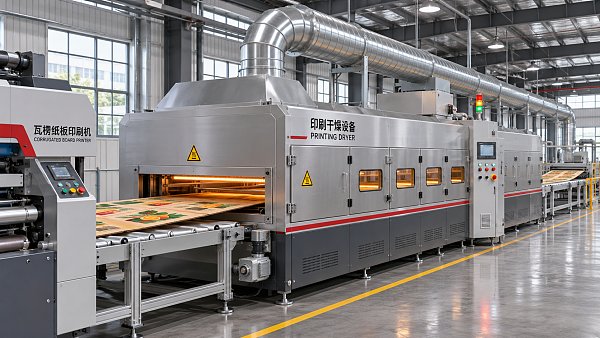
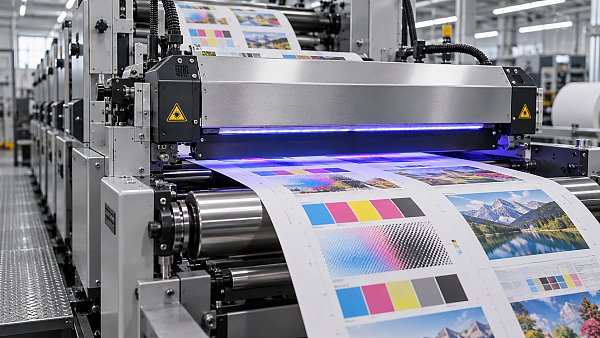
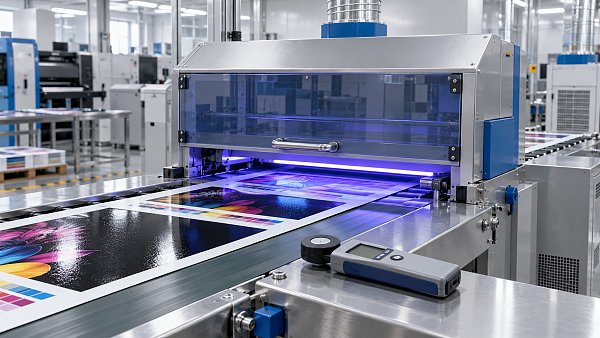
“Print dryer” can describe equipment with very different functions. A hot-air dryer removes water or solvent by evaporation; an infrared system transfers heat to the printed material; a UV unit cures compatible ink or coating through a photochemical process. These are not interchangeable choices. UV curing, for example, requires a compatible formulation, while evaporation-based drying requires enough heat transfer, airflow, and residence time.
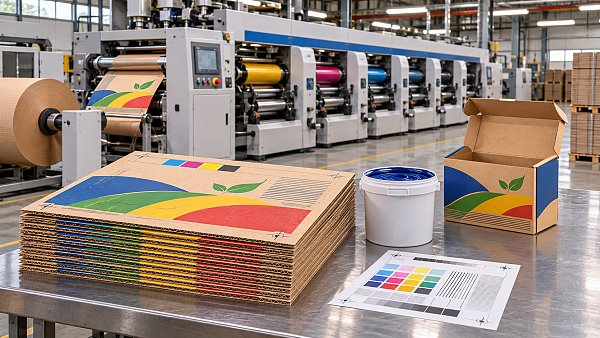
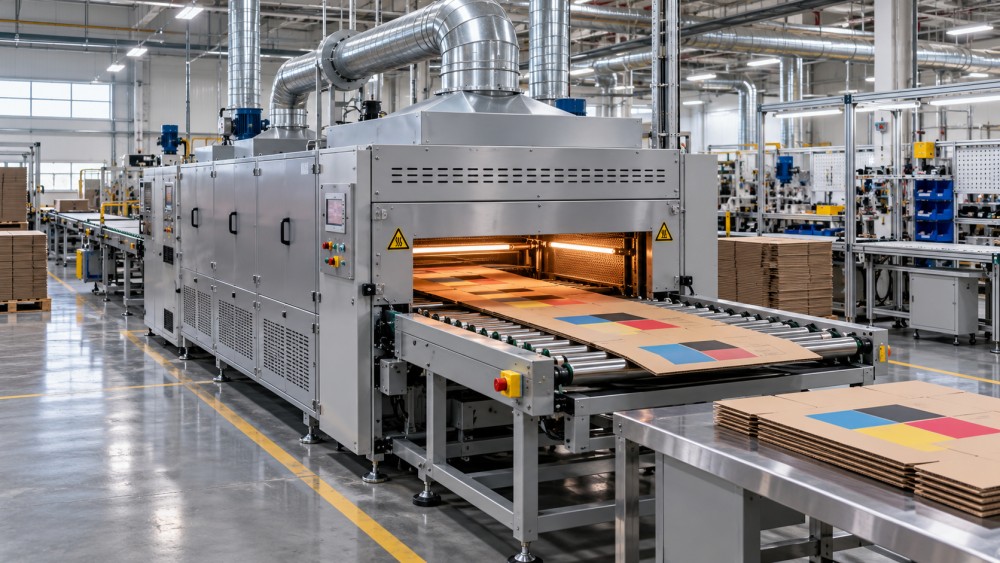
The specification sent to each factory should describe the production range rather than a single ideal job. Include the printing process, ink or coating type, substrate grades and thicknesses, maximum sheet or web dimensions, normal and peak line speeds, and representative print coverage. For corrugated board, flute construction and moisture sensitivity also matter: excessive heat or uneven drying can contribute to warping or other handling problems.
Define what “dry” means at the next process. A sheet that feels dry to the touch may still block in a stack, rub during conveying, or create trouble in folding and gluing. The requirement should identify the intended downstream operation, the delay before it occurs, and the checks used to judge the result. Where packaging has food-contact or other controlled end uses, provide the relevant ink and packaging requirements; successful drying alone does not establish finished-packaging compliance.
Ask suppliers to state the operating window behind their quoted capacity. A speed claim is meaningful only alongside substrate, ink, coverage, dryer length, power input, and the acceptance method. If a quotation assumes light coverage while the demanding job has heavy solid areas, the nominal speed is not a reliable comparison.
Check whether the factory can deliver the proposed design
A capable print dryers factory should be able to explain which activities it performs itself and which it assigns to external partners. Fabrication, electrical assembly, control programming, burner or UV-module supply, and commissioning may be handled by different organizations. Outsourcing is not automatically a weakness, but responsibility for the complete machine should remain clear.
Request a process flow from design review through assembly, inspection, functional testing, packing, and shipment. Ask for drawings or examples of comparable equipment, with commercially sensitive details removed where necessary. The relevant comparison is not merely whether the factory has built dryers before, but whether it has handled similar substrate transport, drying load, line interfaces, and installation constraints.
During a site visit or a live video review, look for evidence that supports the proposed delivery plan: assembly capacity, access to critical components, electrical test arrangements, identification of parts, and control of work in progress. A large workshop or a polished demonstration machine does not establish that a specific order has been engineered or that key components are available.
Separate factory identity from sales representation. Confirm the contracting legal entity, manufacturing location, and the party responsible for warranty performance. If a trading company coordinates the order, clarify whether technical questions, design changes, and spare-parts requests go through it or directly to the manufacturer. This avoids uncertainty when a problem requires the machine builder’s engineering records.
Make a production-relevant test part of the purchase decision
A demonstration using the factory’s standard material is useful for observing machine operation, but it does not prove performance on the intended job. Where practical, arrange a trial with representative substrate, ink or coating, and print coverage. Agree in advance who supplies the materials, how they are prepared and transported, and whether the test equipment matches the proposed configuration.
The trial should cover a defined line speed, product temperature where relevant, dryer settings, and the condition of the material entering and leaving the dryer. Allow enough continuous running time to assess whether the result remains consistent after the system reaches its normal operating condition. Inspect samples using agreed criteria, such as rub resistance, blocking after stacking, appearance, adhesion, or downstream handling performance. The appropriate checks depend on the ink, coating, and end use; no single test establishes suitability for every application.
Record the settings and results in a signed report. If a full trial is not feasible, distinguish clearly between demonstrated performance, engineering estimates, and conditions that will only be verified after installation. Do not convert an estimate into an unconditional guarantee without agreeing how the remaining uncertainty will be managed.
Compare total installed and operating cost
The machine price is only one part of the investment. Ask each supplier to identify what is included in the same scope, especially where an existing press or converting line is being modified. A useful comparison separates the equipment itself from the work and resources needed to make it operational.
For energy comparisons, request consumption under the same stated production duty rather than comparing installed power ratings alone. Installed power indicates equipment capacity; it does not by itself show the energy consumed per production hour. Ask for assumptions about line speed, print coverage, ambient conditions, set points, and operating mode, including standby behavior.
A practical estimate multiplies expected energy use by local energy prices and annual operating hours, then adds anticipated maintenance and consumables. Use more than one production scenario if job coverage and running hours vary substantially. Treat the result as an estimate, not a guaranteed saving, unless the supplier accepts a measurable performance commitment under defined conditions.
Review integration and safety responsibilities early
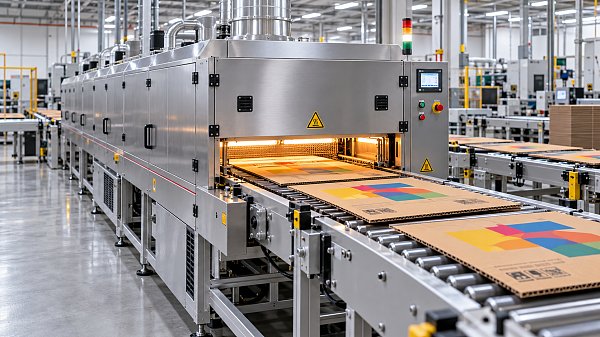
A dryer affects the line around it. Confirm the available footprint, working height, material path, transfer points, and access for cleaning or replacement of components. The supplier should provide interface drawings showing connection locations and utility requirements before site preparations begin.
Controls deserve particular attention. Agree how dryer speed, temperature, airflow, and alarms interact with the press or conveyor. Establish what happens when the line stops, power is lost, an exhaust fan fails, or a guard is opened. Heat must not continue to threaten stationary material, and a restart should not depend on an unclear sequence of manual actions.
The applicable safety and environmental requirements depend on the equipment, ink chemistry, installation, and destination. Solvent-containing products can introduce fire, explosion, and emissions considerations that differ from those for water-based systems. UV equipment requires suitable protection against UV exposure, and the design may need to address heat and other process-specific hazards. Engage the relevant site and safety specialists to determine the applicable obligations; a supplier’s general declaration should not replace a review of the complete installation.
Request the documentation appropriate to the destination and purchase scope, such as electrical schematics, operating and maintenance instructions, risk-related information, and declarations or certificates where required. Verify what each document covers and who issues it. A component certificate is not necessarily evidence that the complete installed system meets every local requirement.
Turn supplier promises into acceptance terms
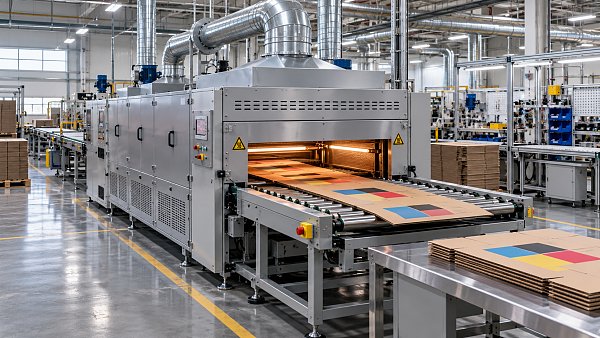
The order should distinguish factory acceptance from site acceptance. A factory acceptance test can check assembly, controls, safety functions, and agreed operating behavior before shipment. It may not reproduce the final installation or production materials. Site acceptance should address the remaining performance requirements once utilities, interfaces, and representative materials are available.
For each performance commitment, specify the test conditions, measurement method, pass criteria, and responsibilities. A drying-speed commitment, for example, should identify the ink, coverage, substrate, incoming condition, machine settings, and required finished result. Also state how failed tests will be handled, including correction, retesting, and the allocation of reasonable costs. If site conditions or materials are the buyer’s responsibility, define when they must be ready and how deviations affect the test.
Delivery terms should identify the shipment milestone and transport responsibilities under the agreed Incoterms rule and named place, as well as packing requirements and who handles import formalities. Tie payment milestones to events that can be objectively confirmed, such as approved drawings, completion of agreed factory tests, shipment documents, or site acceptance. Avoid treating dispatch as equivalent to an operating production line.
Assess support before the equipment leaves the factory
Ask for a recommended spare-parts list with part numbers, quantities, prices, lead times, and the expected replacement purpose. Pay special attention to items that can stop the line, including critical sensors, control components, drive parts, and dryer-specific modules. Confirm whether substitutes are permitted and whether essential software, parameter files, and technical records will be available to the equipment owner under agreed conditions.
The warranty should state its start date, duration, exclusions, response process, and responsibility for replacement parts, travel, and labor. A remote response commitment is different from an on-site repair commitment; both should be expressed in clear terms. Training should cover normal operation, safe shutdown, routine cleaning, fault identification, and the maintenance tasks the site is expected to perform.
The strongest quotation is the one that leaves the fewest material assumptions unresolved. If a factory cannot explain the basis of its speed claim, identify its supply scope, or agree on a realistic acceptance method, the apparent price advantage should be weighed against the cost of resolving those gaps after the order is placed.
Related News
 How to Choose a Print Dryers Supplier for Your Production LineChoose the right print dryers supplier with practical tips on drying performance, integration, safety, and lifetime costs. Compare with confidence.Print Fluidics Scientist
 How to Choose Low Odor Water Based Flexographic Ink for PackagingChoose low odor water based flexographic ink with confidence. Explore substrate compatibility, drying, safety documentation, and practical packaging trials.Print Fluidics Scientist
 How to Set Hot Air Drying Oven Temperatures for Water-Based InksOptimize your hot air drying oven for water-based inks. Learn how to balance temperature, airflow, exhaust, and speed for reliable print quality.Print Fluidics Scientist
 How to Evaluate a Print Dryers Factory Before Placing an OrderEvaluate a print dryers factory with confidence. Compare production tests, safety, total costs and after-sales support before placing your order.Print Fluidics Scientist
 How Does LED UV Curing Affect Print Quality on Web Offset Presses?Web Offset Presses can benefit from LED UV curing with less ink transfer and better handling durability. Discover what drives sharper detail, stable color, and reliable cure at production speeds.Print Fluidics Scientist
 Why UV Inks Stay Tacky After Curing and How to Fix the ProblemUV Inks still tacky after curing? Discover common causes, from low UV energy to oxygen inhibition, and practical fixes to prevent blocking, reduce waste, and restore print quality.Print Fluidics Scientist