How Water Based Inks Improve Packaging Compliance and Print Quality
Water Based Inks Improve Packaging Compliance Only When the Process Is Controlled
Water Based Inks are increasingly specified for corrugated boxes, paper bags, folding cartons, retail displays, and other paper-based packaging. The reason is not simply that they are water-based. Packaging converters are under pressure to manage workplace exposure, customer restricted-substance requirements, odor concerns, waste handling, and increasingly demanding print-quality expectations at the same time.
For quality control and safety teams, the practical question is more demanding: can the chosen ink system deliver stable colour, clean barcodes, adequate rub resistance, and documented compliance across real production conditions? A water-based system can support that objective, but it does not make a packaging line compliant by default. Ink selection, substrate, drying capacity, coating, print coverage, application side, and the final pack’s intended use all matter.
This distinction is especially important in corrugated packaging. A flexographic press may produce a sharp print sample at low speed, then show edge build-up, mottling, poor trapping, or scuffing after a production run begins. The root cause is often not “the ink” alone. It can be an anilox specification, board surface variability, excessive dilution, inadequate drying, unstable pH, or a mismatch between ink and coating.
Why Water-Based Formulations Matter in Packaging Compliance
In general terms, water-based printing inks use water as their main carrier, alongside pigments, binders, additives, and, depending on the formulation, co-solvents or other functional components. Compared with many solvent-based systems, they may help reduce the use of certain volatile organic compounds in the print process. That can make them attractive where site environmental controls, operator comfort, customer sustainability policies, or local emissions obligations are part of the production decision.
However, “water-based” should never be treated as a compliance claim by itself. A quality manager still needs to review the supplier’s technical data sheet, safety data sheet, declaration information, and any relevant restricted-substance documentation. The necessary review depends on the market, packaging application, customer specification, and whether the printed surface could come into direct or indirect contact with food, pharmaceuticals, personal-care products, or other sensitive contents.
For food packaging in particular, the location of the print is not a minor detail. Printing on the outside of a corrugated shipping case is a different risk scenario from printing on the reverse side of a food carton, or printing a structure that may be exposed to migration through the substrate. Compliance evaluation should consider the complete package construction, including barriers, coatings, adhesives, varnishes, storage conditions, and the intended contact conditions. An ink supplier’s statement should be read in the context of those conditions rather than copied into a customer file without technical review.
A disciplined approval process also prevents a common problem in packaging plants: an approved ink is substituted with a visually similar alternative during an urgent run because the original colour is unavailable. The colour may look acceptable, but the substitute may have different drying behavior, resistance properties, or documentation status. Change control is therefore a compliance tool, not just a purchasing procedure.
Print Quality Depends on the Whole Flexographic System
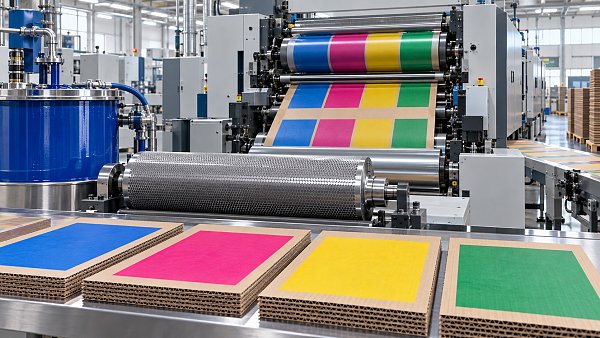
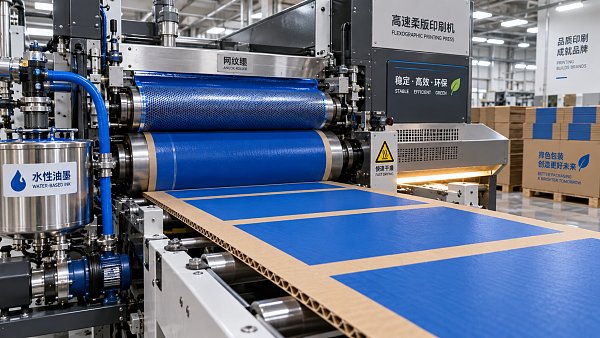
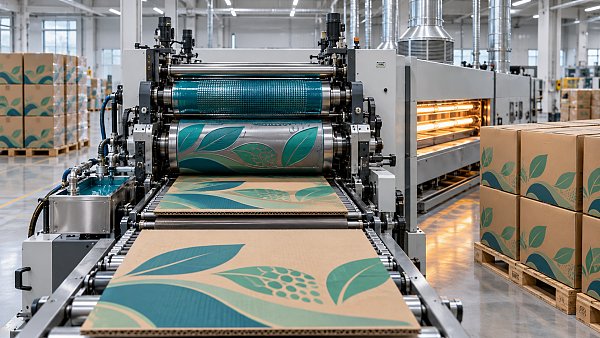
Water-based inks are widely used in flexographic printing because they work well with absorbent paper and corrugated substrates. They can provide strong, clean graphics when matched to the board and press configuration. Yet their performance is closely tied to water evaporation. That makes dryer condition, airflow, web or sheet temperature, press speed, humidity, and ink film thickness operationally important.
On a corrugated post-print line, a production team may notice that solid areas look weak while fine type appears reasonable. The instinct is often to increase ink strength or lay down more ink. In many cases, that creates a second problem: slower drying, more set-off risk, and weaker rub resistance after converting. A better investigation starts with anilox volume, doctor blade condition, plate quality, board absorbency, and whether the ink has been adjusted within the supplier’s recommended operating range.
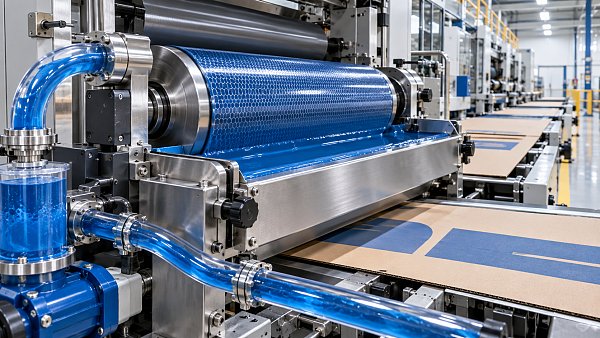
pH and viscosity control deserve particular attention. Water-based flexo inks can change during a shift as water and volatile components evaporate. If operators compensate inconsistently, colour density and transfer behavior may drift from one pallet to the next. Automated dosing can improve repeatability, but it does not eliminate the need for verified operating procedures. Manual adjustments still need to be recorded, especially for repeat brand colours and regulated packaging programs.
For colour-critical work, the target should not be a subjective “looks close enough” decision under variable factory lighting. Defined colour standards, approved drawdowns, controlled viewing conditions, and instrument-based measurement provide a more reliable basis. Where appropriate to the print process, teams may refer to recognized process-control practices such as ISO 12647, including the flexographic provisions in ISO 12647-6. The exact tolerances and test methods, however, should be agreed with the brand owner and confirmed for the actual substrate.
Drying Is Where Compliance and Production Reality Meet
A package can leave the press looking good and still fail later in the workflow. Incomplete drying may lead to blocking in stacks, ink transfer during bundling, scuffing on conveyor systems, or contamination of rollers and downstream equipment. These failures create more than appearance issues. They can compromise traceability codes, cause rejected deliveries, and make it harder to demonstrate consistent process control during a customer audit.
The risk becomes more visible during high-coverage jobs, humid weather, short order changeovers, or periods when a line is pushed beyond its stable drying window. In these situations, increasing dryer temperature is not always the correct answer. Excess heat can affect board moisture balance, contribute to warp, or alter the performance of some coatings and adhesives. The sensible approach is to validate the workable combination of ink film, air volume, temperature, line speed, and stacking conditions.
Quality checks should be taken at the point where the package is most likely to fail, not only immediately after printing. Depending on the pack and customer requirement, this may include rub testing after conditioning, tape adhesion checks, water resistance checks, visual inspection of solids and fine text, and assessment after die-cutting, folding, gluing, or palletizing. A test plan should reflect actual handling conditions. A lightly printed e-commerce shipper and a premium retail display do not have the same exposure profile.
Barcode and Traceability Performance Need Separate Control
Barcode failure is one of the clearest examples of why visual approval is not enough. A code may appear dark and sharply printed to the eye but scan poorly because of gain, insufficient contrast, streaking, rough board texture, or inconsistent quiet zones. Water-based black inks can perform very well for coding, but the final result depends on print definition and substrate interaction.
For packaging that carries logistics codes, serialized information, batch data, or retail barcodes, verification should be built into the job setup and monitored through production. ISO/IEC 15416 is commonly used for linear barcode print-quality verification, while other code types may require different methods. The customer’s scanning environment matters too. A code intended for warehouse scanning on corrugated board may need a different control plan from a small code on coated folding carton.
Vision inspection systems can help identify missing print, registration shifts, wrong artwork, or unreadable variable data, particularly on high-speed production lines. Still, inspection equipment should be configured around genuine defect criteria. If tolerances are too loose, defects pass through. If they are unrealistically strict, the line produces nuisance rejects and operators may bypass alarms. The acceptance threshold needs to be proven during job qualification, not guessed after complaints occur.
What Quality Teams Should Request Before Approving an Ink
The most useful approval file is not the longest one. It is a set of documents and production evidence that clearly connects the ink to the intended packaging application. Before a new water-based ink is released for routine use, quality and safety teams should normally clarify the following points:
- The exact substrate, coating, print side, print coverage, and end-use condition.
- Supplier documentation relevant to the customer’s restricted-substance, food-contact, or product-safety requirements.
- Compatibility with the press, anilox rollers, plates, doctor blades, dryers, varnishes, adhesives, and cleaning system.
- Validated criteria for adhesion, rub resistance, colour, barcode readability, odor where relevant, and drying performance.
- Lot traceability, storage requirements, shelf-life control, and a documented process for approved substitutions.
It is worth adding one practical warning: lab trials are necessary, but they are not full production validation. A short trial may not expose problems caused by long runs, recirculation, summer humidity, operator shift changes, board variability, or stacked product cooling. The first commercial runs should therefore be treated as a controlled qualification stage, with samples retained and process settings recorded.
Using Production Data to Prevent Repeat Defects
Modern packaging plants increasingly connect press data, quality records, inspection results, and order information. This is particularly helpful for water-based ink systems because many quality issues are process-sensitive. When a complaint occurs, the useful question is not merely whether the ink batch was correct. Teams should be able to review press speed, drying settings, viscosity or pH records, anilox configuration, substrate lot, operator adjustments, and inspection outcomes.
That level of traceability is relevant across the corrugated packaging value chain. The board itself is influenced by paper grade, moisture, glue application, tension, steam control, and corrugator stability. A print defect may originate upstream, even when it becomes visible at the flexographic press. Quality decisions improve when printing, converting, maintenance, and board-production teams work from the same evidence rather than treating each defect as an isolated pressroom issue.
This systems view is central to the information covered by Global Commercial Print & Corrugated Packaging Intelligence (CPCS): equipment performance, ink compatibility, inspection, automation, and production management are connected. A high-speed press, a vision system, and an automated palletizing line do not guarantee consistent packaging on their own. Their value comes from stable process settings, usable data, trained operators, and clear release criteria.
A Better Standard Than “Water-Based Is Safer”
Water Based Inks can be a strong choice for paper and corrugated packaging when the formulation is appropriate for the application and the print process is under control. They can support lower-emission production strategies, dependable graphics, and better alignment with customer compliance expectations. But no ink category replaces application-specific assessment.
The reliable standard is more concrete: the approved ink must be documented for its intended use, run consistently on the selected substrate, dry adequately at production speed, survive downstream converting and handling, and maintain readable codes throughout the pack’s journey. When those conditions are verified together, water-based printing becomes a controlled packaging process rather than a hopeful material substitution.
Related News
 Why UV Inks Stay Tacky After Curing and How to Fix the ProblemUV Inks still tacky after curing? Discover common causes, from low UV energy to oxygen inhibition, and practical fixes to prevent blocking, reduce waste, and restore print quality.Print Fluidics Scientist
 What Drives Water Based Flexographic Ink Price in 2026Water based flexographic ink price in 2026 depends on raw materials, color strength, performance, and service. Discover how to compare true print costs and choose smarter.Print Fluidics Scientist
 Water Based Flexographic Ink Selection for Consistent Print QualityWater Based Flexographic Ink selection guide for consistent color, fast drying, strong adhesion, and lower production costs across paper and corrugated board applications.Print Fluidics Scientist
 How to Choose UV Inks for Reliable Color and Fast Production RunsUV Inks for reliable color and fast packaging runs: learn how to match cure systems, substrates, adhesion, finishing, and compliance for consistent results.Print Fluidics Scientist
 How Low Odor Water Based Flexographic Ink Supports Safer PackagingLow odor water based flexographic ink supports safer packaging by reducing residual odor and emissions while delivering reliable color, drying, and rub resistance. Explore practical process control tips.Print Fluidics Scientist
 How a Water Based Ink Metering System Reduces Color VariationWater based ink metering system: discover how stable anilox delivery, circulation, and blade control reduce color variation and improve flexo print consistency.Print Fluidics Scientist