How Low Odor Water Based Flexographic Ink Supports Safer Packaging
Low odor water based flexographic ink supports safer packaging by reducing the amount of volatile material released during printing while maintaining the color, coverage, and drying behavior needed for paper and corrugated substrates. Its value is not limited to a less noticeable smell on the pressroom floor. A suitable ink system can reduce unwanted exposure, lower the chance of odor transfer to the finished pack, and create a more controllable process for applications where packaging cleanliness and consistent print appearance matter.
Odor is an important signal, but it is not a complete safety measurement. A strong odor can indicate the presence of volatile components, residual solvents, cleaning chemicals, or insufficient drying. Yet a product that smells mild should not automatically be treated as suitable for every packaging application. The formulation, substrate, print coverage, drying conditions, intended use of the pack, and any downstream converting process all affect the final result.
What “low odor” means in a flexographic ink system
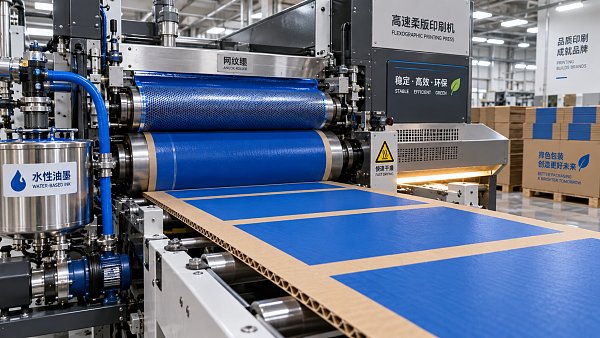
Water based flexographic inks use water as the main carrier rather than relying primarily on conventional solvent systems. They still contain functional components such as pigments, resins or binders, additives, and, in some formulations, limited quantities of co-solvents. These ingredients determine how the ink transfers from the anilox roller to the plate, wets the board surface, dries, resists rubbing, and remains stable during a production run.
A low odor formulation is designed to limit odor-causing substances and reduce residual smell after printing and drying. This often requires attention to the entire chemical package, not just the main carrier. Pigment dispersions, defoamers, wetting agents, pH-control materials, preservatives, and cleaning residues can each influence the odor profile. A water based label alone therefore does not confirm low odor performance.
The relevant question is whether the printed packaging remains acceptably neutral after the ink has dried under normal plant conditions. Freshly printed board can smell different from a converted carton that has been stacked, wrapped, transported, and stored in a warm warehouse. Odor can become more noticeable in enclosed packs because volatile residues have less opportunity to dissipate. This is why evaluation should include finished, fully dried samples rather than relying only on the smell of wet ink in its container.
Safer packaging begins with fewer uncontrolled emissions
During flexographic printing, material is exposed to air across several stages: ink mixing, circulation, anilox transfer, plate contact, drying, wash-up, and waste handling. If a system releases excessive volatile compounds, the concern extends beyond odor. Air quality, housekeeping, ignition-control requirements for certain chemistries, and the potential for residual odor on packaging can all become harder to manage.
Water based inks can reduce reliance on high-solvent formulations, particularly in corrugated and paper-based packaging lines. However, lower VOC exposure is a process outcome, not a label claim that applies equally to every job. Heavy solid coverage requires more ink deposition than line art. Slow drying on absorbent or coated board can leave more residual moisture or volatile material before stacking. A press run with frequent stops may also behave differently from a stable long run because drying conditions and ink viscosity change over time.
Safer packaging depends on controlling these variables together. The ink must dry sufficiently, but excessive dryer temperature or airflow can create other defects, including board curl, loss of registration stability, surface disruption, or variable gloss. The objective is a stable dried ink film with the required performance, achieved without forcing the press beyond the operating window of the substrate.
The connection between odor, drying, and print quality
Drying is frequently misunderstood as a simple pass-or-fail condition. A surface can feel dry while the ink film still contains retained water, co-solvent, or other volatile components. This becomes apparent later as blocking in a stack, scuffing during conversion, odor in enclosed cartons, or inconsistent adhesion near folds and glue areas.
Absorbent kraft liner and uncoated paperboard often accept water based ink readily, but their absorbency varies by grade, moisture level, recycled content, surface treatment, and storage condition. A board that absorbs too quickly can reduce color strength or cause print mottle. A more closed surface may hold the ink nearer the top layer, which can improve density but require more controlled drying. Neither condition is automatically better. The press settings and ink formulation must match the surface behavior.
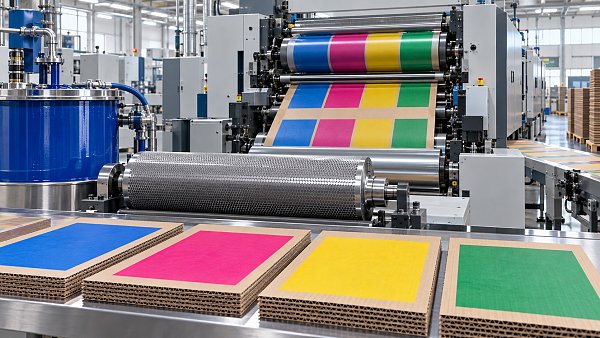
Corrugated board adds another layer of variation. Flute structure, board flatness, liner quality, adhesive moisture, and the elapsed time since corrugating can affect how the sheet runs and how the ink dries. When moisture from board production is still high, an ink film may dry more slowly even though dryer settings have not changed. Raising ink strength or increasing anilox volume to compensate for weak color can make this problem worse by increasing the wet film thickness.
Color density should therefore be evaluated alongside drying and rub resistance. A dark, visually strong print can still be unsuitable if the film is not sufficiently dry before stacking. Conversely, a lighter print that dries reliably may be the better production result when the design permits it. The correct balance comes from controlling ink film volume, not simply pursuing the highest possible density.
Parameters that need to be interpreted together
Viscosity is often treated as the main control point for water based ink, but it provides only part of the picture. A viscosity reading can appear correct while pH drift, temperature increase, foam, contamination, or anilox plugging changes transfer behavior. Water evaporation in the tray or circulation system can raise solids concentration during the run. Adding water may restore a viscosity target but may not restore the original pH or color balance.
- pH and viscosity: The binder system can respond poorly when pH moves outside its intended range. Poor resolubility, unstable flow, weaker adhesion, or reduced color development may follow even when viscosity seems acceptable.
- Anilox condition and ink film: A clean, correctly selected anilox roller delivers a controlled ink volume. Plugged cells often lead to attempts to compensate through higher viscosity, stronger ink, or altered pressure, each of which can introduce a different defect.
- Dryer balance and board moisture: Air temperature alone does not describe drying capacity. Air volume, exhaust performance, press speed, humidity, and the moisture already present in the board influence the result.
- Print coverage and stack behavior: A small logo and a broad solid panel place very different loads on the drying system. Finished sheets should be assessed after stacking because blocking may not appear on a single sheet.
These relationships also explain why a change in odor does not always originate from the ink itself. Incomplete dryer exhaust, contaminated wash water, retained cleaning fluid in a chamber system, aged ink, microbial spoilage, or material left in poorly sealed containers can produce an unusual smell. Treating every odor complaint as an ink-formulation issue can delay the real correction.
Packaging suitability is application-specific
Paper shipping cases, retail display cartons, folding cartons, and packages intended for sensitive contents do not place identical demands on an ink system. The printed side may face outward and never contact the packed product, or the structure may create a tightly enclosed internal space where residual odor becomes more apparent. Subsequent lamination, varnishing, gluing, die-cutting, or heat exposure can also alter the final odor and surface properties.
For corrugated shipping packaging, abrasion resistance and rapid drying may dominate the process discussion. The printed surface can experience conveyor contact, stacking pressure, warehouse handling, and distribution friction. A low odor water based flexographic ink that dries cleanly but lacks adequate rub resistance can create colored scuff marks, barcode degradation, and visible transfer onto adjacent cases.
For folding carton work, creasing and glue application deserve closer attention. Ink laid heavily across a crease may crack or interfere with folding appearance if the substrate and binder system are not compatible. In a glue flap, poor ink anchorage or an unsuitable coating interface can weaken adhesion. These are not necessarily odor problems, but they can emerge after an ink change intended to improve workplace or packaging odor performance.
Where packaging is associated with food, pharmaceuticals, personal care, or other sensitive contents, suitability must be assessed against the actual pack design and applicable requirements. Ink placement, functional barriers, curing or drying conditions, and the possibility of set-off or transfer during storage all matter. Broad descriptions such as “water based” or “low odor” cannot replace application-specific documentation and controlled validation.
Sampling should reflect the finished pack, not only the press sheet
A useful evaluation sequence begins with representative production material. Samples printed on a laboratory drawdown sheet can help compare color and basic drying, but they do not reproduce press speed, airflow, anilox transfer, board moisture, or stacking pressure. Press samples should be collected after the process has stabilized and should include the heaviest coverage areas as well as fine text, barcodes, and reverse panels.
Assessing samples at several stages reveals different failure modes. Immediately after printing, surface dryness and smearing are relevant. After a defined dwell period in a stack, blocking, set-off, and residual odor become clearer. After die-cutting or folding, cracking, scuffing, and glue-area behavior can be observed. Packaging that will be sealed or nested should also be reviewed in a configuration that resembles its real use, because enclosed space can concentrate a low-level odor that was not obvious on an open sheet.
Change control prevents false conclusions
Introducing a lower-odor ink should be treated as a controlled process change rather than a direct substitution. Ink chemistry interacts with plates, tape, chamber seals, anilox cleaning methods, dryer settings, color-management targets, and cleaning materials. Changing several of these at once makes it difficult to identify the source of an improvement or defect.
A practical trial keeps the substrate, artwork, anilox specification, and normal press conditions as stable as possible. Record the ink batch, viscosity, pH, temperature, press speed, dryer settings, ambient conditions, and any adjustments made during the run. The record does not need to be complicated; it needs to make later differences explainable. When odor, print density, rub resistance, or drying changes, the information should reveal whether the issue followed the ink, the material, or the operating conditions.
Cleaning is part of the transition as well. Residual solvent-based material or incompatible wash chemicals in trays, hoses, pumps, chambers, and return lines can affect odor and ink stability. A line that appears clean may still retain deposits in low-flow areas. Proper flushing and separation of materials reduce the risk of assigning contamination effects to the new water based formulation.
Storage and handling can change the result before printing begins
Water based inks should be kept in closed, clearly identified containers and protected from unsuitable temperature conditions. Excessive heat can accelerate water loss and alter stability; freezing conditions can damage a formulation or make it unreliable after thawing. Long storage without appropriate rotation can increase the chance of settling, skinning, or odor changes caused by degradation or contamination.
Mixing should restore uniformity without introducing unnecessary foam. Foaming reduces consistent anilox filling and can create pinholes, weak solids, and unstable color. A defoamer addition may correct a visible foam issue, but excessive addition can affect wetting, print appearance, or odor. The better response is to identify whether the source is agitation, return-line turbulence, air leakage, incompatible additives, or contamination.
Safer packaging is supported when lower odor materials are paired with disciplined drying, clean circulation systems, representative finished-pack testing, and records that connect print results to actual press conditions. That combination turns a formulation choice into a controlled packaging process rather than an assumption based on smell alone.
Related News
 Why UV Inks Stay Tacky After Curing and How to Fix the ProblemUV Inks still tacky after curing? Discover common causes, from low UV energy to oxygen inhibition, and practical fixes to prevent blocking, reduce waste, and restore print quality.Print Fluidics Scientist
 What Drives Water Based Flexographic Ink Price in 2026Water based flexographic ink price in 2026 depends on raw materials, color strength, performance, and service. Discover how to compare true print costs and choose smarter.Print Fluidics Scientist
 Water Based Flexographic Ink Selection for Consistent Print QualityWater Based Flexographic Ink selection guide for consistent color, fast drying, strong adhesion, and lower production costs across paper and corrugated board applications.Print Fluidics Scientist
 How to Choose UV Inks for Reliable Color and Fast Production RunsUV Inks for reliable color and fast packaging runs: learn how to match cure systems, substrates, adhesion, finishing, and compliance for consistent results.Print Fluidics Scientist
 How Low Odor Water Based Flexographic Ink Supports Safer PackagingLow odor water based flexographic ink supports safer packaging by reducing residual odor and emissions while delivering reliable color, drying, and rub resistance. Explore practical process control tips.Print Fluidics Scientist
 How a Water Based Ink Metering System Reduces Color VariationWater based ink metering system: discover how stable anilox delivery, circulation, and blade control reduce color variation and improve flexo print consistency.Print Fluidics Scientist