How Food Grade UV Flexographic Ink Supports Safer Packaging Compliance
For quality control and safety managers, food grade UV flexographic ink is not just a pressroom consumable. It directly affects migration risk, curing reliability, traceability, audit readiness, and the overall compliance stability of food packaging production.
The practical conclusion is clear: when properly specified, validated, and controlled, food grade UV flexographic ink can support safer packaging compliance by improving print consistency, reducing contamination risk, and strengthening process control across demanding packaging operations.
However, the ink itself is never the whole compliance answer. Safety performance depends on the complete printing system, including substrate compatibility, curing conditions, press setup, hygiene control, supplier documentation, and verification procedures inside the packaging plant.
What Quality and Safety Teams Are Really Evaluating
When professionals search for food grade UV flexographic ink, they are usually not looking for a basic definition. They want to know whether this ink can help them meet food packaging requirements without creating hidden compliance risk.
That means the real questions are operational. Will the ink cure fully at production speed? Can it deliver low migration performance when the package structure requires it? Is there enough supporting documentation for audits and customer approval?
Quality teams also want to know how repeatable the process is. A technically suitable ink still becomes a problem if curing windows are narrow, color performance drifts, or traceability records are weak during multi-shift production.
For safety managers, the issue is broader than print appearance. Ink choice influences chemical exposure risk, downstream converting behavior, odor control, and the credibility of the packaging supplier when brand owners ask for evidence, not assumptions.
Why Food Grade UV Flexographic Ink Matters in Food Packaging Compliance
Food packaging compliance is built around risk management. In printed packaging, inks are one of the most scrutinized input materials because they can become a potential source of migration, set-off, contamination, or process instability.
Food grade UV flexographic ink is valued because it is designed for packaging applications where safety, print precision, and production efficiency must work together. It supports fast curing, high-definition graphics, and stable output on modern flexo lines.
For packaging plants, that matters because compliance is rarely judged by a single lab result alone. It is judged by whether the production system can repeatedly deliver packaging that meets specification under normal commercial operating conditions.
A suitable UV flexographic ink system helps by reducing uncontrolled variation. It can improve dot reproduction, barcode readability, adhesion consistency, and resistance performance, all of which contribute to safer and more dependable packaging supply.
In regulated packaging environments, consistency is a compliance asset. A stable ink system makes it easier to define validated process windows, train operators, investigate deviations, and maintain documented control over finished pack quality.
Low Migration Performance Is Often the First Question
For food-contact and indirect food-contact packaging, migration is usually the first concern raised by quality and safety teams. The main issue is whether components from the printed layer can transfer into food at unacceptable levels.
This is why many buyers focus on low migration UV systems rather than standard UV inks. The phrase food grade UV flexographic ink is often used commercially, but professional evaluation should go deeper and ask what migration-related design and testing support exists.
Teams should confirm whether the ink is intended for food packaging structures, what regulatory framework the supplier references, and whether migration performance depends on specific curing energy, substrate types, varnishes, or barrier layers.
They should also distinguish between direct food contact and non-contact or indirect contact applications. In many cases, safe use depends less on a general label and more on the exact packaging design, print location, and functional barrier performance.
That is why supplier claims alone are insufficient. Safety managers need a defensible use-case assessment supported by formulation declarations, compliance statements, and, where required, migration testing under realistic end-use conditions.
Full UV Curing Is a Compliance Control Point, Not Just a Process Setting
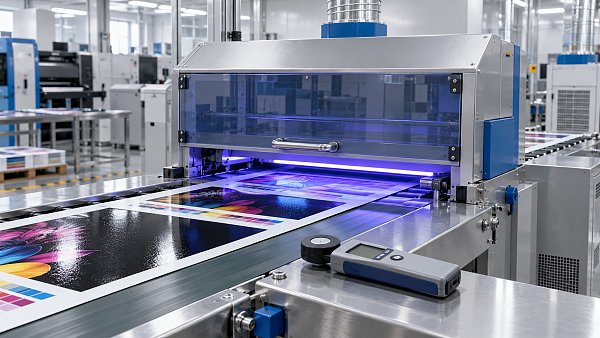
One of the biggest practical reasons food grade UV flexographic ink supports safer packaging compliance is that proper curing helps reduce residual reactive substances that could otherwise increase migration or odor risk.
In real production, incomplete curing can happen for many reasons. Lamp output may drift, line speed may exceed the validated window, anilox selection may deliver too much ink film, or the substrate surface may affect curing response.
From a quality perspective, curing must be treated as a critical control parameter. It should be monitored with defined operating standards rather than left to operator judgment or visual checks alone.
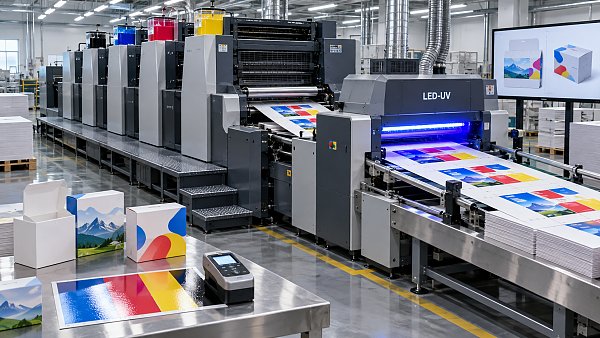
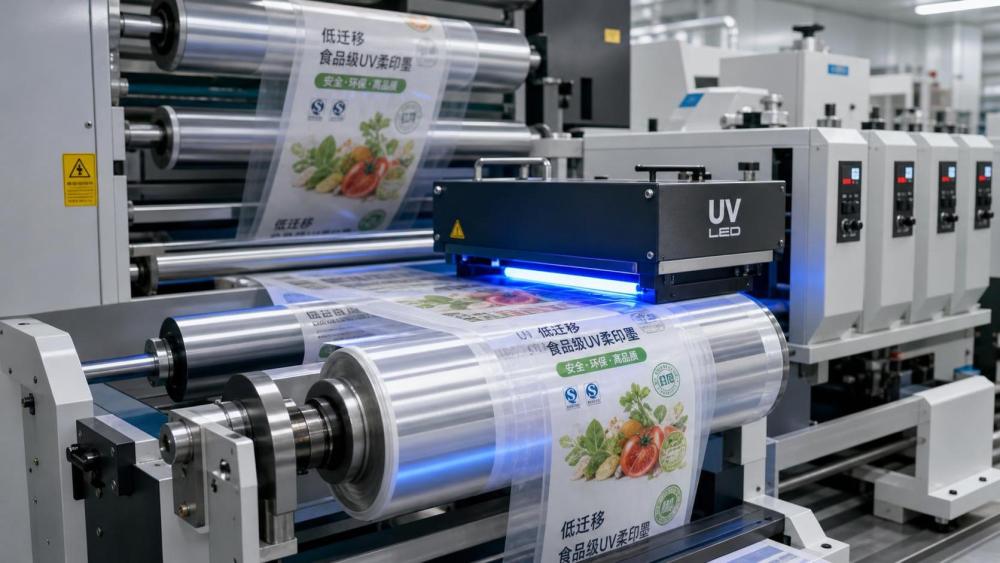
Safety managers should work with production and maintenance teams to verify lamp condition, energy delivery, reflector cleanliness, and process settings. If LED UV systems are used, spectral compatibility with the ink formulation also becomes essential.
Reliable curing controls do more than protect compliance. They also reduce rework, improve rub resistance, stabilize gloss and color, and help keep downstream die-cutting, gluing, and stacking operations free from avoidable print-related defects.
Documentation Quality Often Determines Audit Readiness
In food packaging, a technically strong material can still create business risk if the supporting documentation is weak. Audits, customer approvals, and incident investigations all depend on clear records and traceable material information.
For that reason, quality teams should evaluate food grade UV flexographic ink suppliers on documentation discipline as carefully as they evaluate print performance. A compliant-looking product without adequate paper support increases approval delays and operational uncertainty.
Useful documentation typically includes compliance statements, composition-related declarations where appropriate, technical data sheets, safety data sheets, curing guidance, storage recommendations, and batch traceability details.
It is also important to confirm change management practices. If the supplier modifies raw materials, photoinitiators, pigments, or recommended process conditions, the packaging plant needs timely notification and an internal review path.
For safety managers, this matters because packaging compliance is dynamic. Customer standards change, brand owner expectations rise, and regulatory interpretation evolves. Good documentation creates the foundation for controlled response instead of reactive firefighting.
Print Quality and Safety Compliance Are More Connected Than They Look
Some teams separate print quality from safety performance, but in food packaging these areas overlap more than they appear. Poor print control can trigger compliance concerns even when the ink chemistry itself is acceptable.
For example, unstable laydown may affect barcode readability or date code contrast. Excessive ink film thickness may make curing more difficult. Smearing or set-off can transfer material to unintended surfaces and raise contamination concerns.
Color inconsistency can also create commercial risk. Brand owners often interpret variable print quality as a signal that other process controls may also be weak, including hygiene, traceability, or material verification.
Food grade UV flexographic ink supports safer packaging when it performs predictably within the actual press environment. That includes compatibility with anilox volume, plate design, substrate absorbency, press speed, and post-print converting conditions.
For quality control personnel, the practical lesson is straightforward: safety evaluation should include print process capability, not just chemical compliance paperwork. A stable visual result is often evidence of a stable manufacturing process.
How to Evaluate Whether an Ink System Is Fit for Your Packaging Line
For execution teams, the most useful approach is a structured fit-for-use review. Start with the packaging application: food type, contact scenario, barrier design, shelf-life conditions, and any brand-owner or export-market requirements.
Next, assess the printing process itself. Review substrate range, ink coverage, line speed, curing equipment, print sequence, varnish use, and downstream operations such as lamination, die-cutting, folding, and gluing.
Then verify supplier capability. Ask for relevant declarations, application limits, curing recommendations, and evidence that the ink was developed for packaging conditions similar to your own production environment.
Trial planning is equally important. A proper qualification trial should not only check color and adhesion. It should also examine curing robustness, odor behavior, rub resistance, set-off tendency, and consistency across different shifts or press conditions.
Finally, define release controls. Incoming verification, batch recording, approved parameter windows, nonconformance handling, and retention of traceability data all help turn a promising material into a controlled packaging standard.
Common Risks When Plants Treat the Ink as a Standalone Solution
The most common mistake is assuming that purchasing a food grade UV flexographic ink automatically solves packaging compliance concerns. In reality, compliance failures usually come from weak system control rather than from one isolated material choice.
A plant may buy a suitable ink but run it with insufficient UV energy. Another may use it on an unvalidated substrate combination. In other cases, production teams may lack documented controls for batch segregation, storage rotation, or press-side contamination prevention.
There is also a communication risk between departments. Procurement may focus on price and lead time, production may prioritize speed, and quality may assume supplier claims cover all end-use scenarios. That gap creates preventable exposure.
To avoid this, packaging plants need cross-functional ownership. Quality, safety, production, maintenance, and supplier management should align on application limits, qualification evidence, and ongoing monitoring expectations before full-scale rollout.
That alignment is especially important in high-output flexographic environments, where minor process drift can quickly affect large packaging volumes and turn a local issue into a broad containment event.
Business Value for Packaging Plants and Brand-Facing Suppliers
Although compliance is the primary concern, there is also a strong operational and commercial case for using the right food grade UV flexographic ink system. Better control lowers the probability of waste, complaint handling, and emergency corrective action.
For packaging suppliers serving food brands, stable compliance performance supports customer confidence. It helps demonstrate that the plant can manage not only graphic quality, but also material risk, traceability expectations, and change control discipline.
That can influence supplier approval, business retention, and the ability to participate in higher-value packaging programs where audit standards are strict and documentation review is routine.
On the factory side, a well-matched UV flexographic ink system can also improve throughput stability. Faster curing response, fewer print defects, and less downstream disturbance contribute to stronger overall equipment effectiveness and more predictable delivery performance.
In that sense, safer packaging compliance is not separate from production economics. For many converters, it is part of the same decision framework: reduce risk, improve repeatability, and protect long-term customer relationships.
What Quality and Safety Managers Should Take Away
Food grade UV flexographic ink supports safer packaging compliance when it is treated as part of a validated production system rather than a simple consumable. Its value comes from controlled migration risk, reliable curing, consistent print behavior, and strong documentation support.
For quality control teams, the priority is to verify fitness for the actual packaging structure and production conditions. For safety managers, the priority is to ensure that supplier claims are backed by traceable records, defined process limits, and practical verification steps.
The strongest decision framework combines three questions. Is the ink suitable for the intended food packaging application? Can the plant control curing and print performance consistently? Can the business defend its compliance position during audits or customer review?
When the answer to all three is yes, food grade UV flexographic ink becomes more than a material specification. It becomes a measurable contributor to safer packaging, stronger process discipline, and more credible packaging supply performance.
Related News
 Why UV Inks Stay Tacky After Curing and How to Fix the ProblemUV Inks still tacky after curing? Discover common causes, from low UV energy to oxygen inhibition, and practical fixes to prevent blocking, reduce waste, and restore print quality.Print Fluidics Scientist
 What Drives Water Based Flexographic Ink Price in 2026Water based flexographic ink price in 2026 depends on raw materials, color strength, performance, and service. Discover how to compare true print costs and choose smarter.Print Fluidics Scientist
 Water Based Flexographic Ink Selection for Consistent Print QualityWater Based Flexographic Ink selection guide for consistent color, fast drying, strong adhesion, and lower production costs across paper and corrugated board applications.Print Fluidics Scientist
 How to Choose UV Inks for Reliable Color and Fast Production RunsUV Inks for reliable color and fast packaging runs: learn how to match cure systems, substrates, adhesion, finishing, and compliance for consistent results.Print Fluidics Scientist
 How Low Odor Water Based Flexographic Ink Supports Safer PackagingLow odor water based flexographic ink supports safer packaging by reducing residual odor and emissions while delivering reliable color, drying, and rub resistance. Explore practical process control tips.Print Fluidics Scientist
 How a Water Based Ink Metering System Reduces Color VariationWater based ink metering system: discover how stable anilox delivery, circulation, and blade control reduce color variation and improve flexo print consistency.Print Fluidics Scientist